Disclosure: As an Amazon Associate, we earn from qualifying purchases. If you click a link on this page and make a purchase, we may receive a small commission at no extra cost to you.
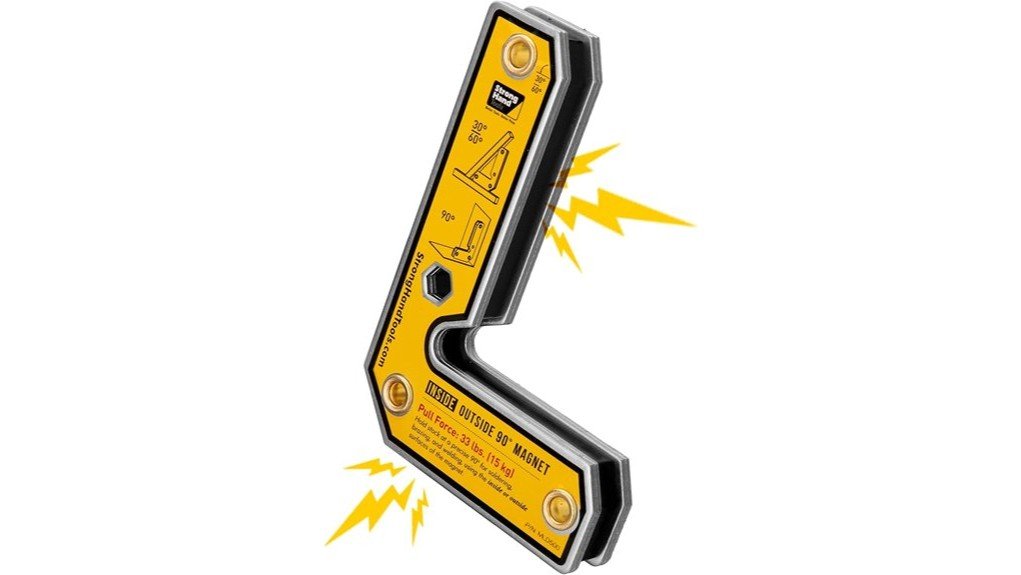
Holding two metal pieces at the right angle can slow you down, especially when you are tacking small brackets, tubing, or sheet metal by yourself. The Strong Hand Tools MLD600 magnetic square is made to act like a compact third hand, using a 40 lb magnetic pull force to help keep steel parts positioned while you set up a weld. It is light enough to move around the bench, but strong enough for many small fabrication and repair tasks. This review helps you decide where the MLD600 makes sense, where you should still use clamps, and what to confirm before you buy.
Quick Verdict
Rating: Recommended with caveats, 8.3/10
Best For: Welders, metalworkers, and DIY fabricators who need a compact magnetic square for light to medium fit-up work.
Bottom Line: The MLD600 is a useful positioning aid when you need fast setup for steel parts, especially at common fabrication angles. Its main limitation is that magnetic squares are support tools, not a full replacement for clamps, fixtures, or a final angle check.
| Specification | Detail |
|---|---|
| Brand | Strong Hand Tools |
| Model | MLD600 |
| Product type | Magnetic welding square |
| Primary use | Holding metal workpieces during fit-up and tack welding |
| Magnetic pull force | 40 lb |
| Length | 6 in |
| Weight | 1.68 lb |
| Listed angle positions | 90°, 30°, and 60° |
| Compatible workpieces | Sheet metal, flat stock, and round pipe when surface contact is secure |
| Design notes | Independent magnets and mounting holes |
| Best use | Fast positioning before tack welding, layout, and light-duty metal fit-up |
What Is the Strong Hand Tools MLD600?
The Strong Hand Tools MLD600 is a magnetic square for holding ferrous metal parts in position while you prepare a weld, check alignment, or tack a small assembly. Instead of trying to hold two parts by hand, you place the magnet against the workpieces so it can support the joint while you make adjustments.
The listed 40 lb pull force gives it enough grip for many bench projects, small brackets, tubing setups, and flat stock layouts. At 1.68 lb, it is still easy to move with one hand, which matters when you are setting several joints or working around a compact welding table.
This tool is best viewed as a fit-up aid. It helps you get parts close to position faster, but your final angle, weld gap, and joint stability should still be checked with a square, clamps, or a dedicated fixture when accuracy matters.
Before You Buy: Confirm the current Amazon listing before ordering. The product is described as a 90° fixed-angle magnetic square while also listing 30° and 60° positioning, so the exact angle layout should be checked on the product page.
Who Should Buy It?
Best For
- Welders who need quick magnetic support while tacking small steel parts.
- DIY metalworkers building frames, brackets, carts, gates, or repair pieces.
- Shops that want a compact, easy-to-store positioning tool for repeated layout work.
Skip If
- You need a heavy-duty fixture for large or high-load assemblies.
- You mostly work with aluminum, stainless grades with weak magnetic response, wood, plastic, or painted parts.
- You need verified angle accuracy for critical fabrication without using a separate measuring tool.
Design and Build Quality
The MLD600 is built around a simple magnetic-square format, which keeps the tool easy to understand and quick to place. The article describes a durable metal design with an ergonomic shape, so you can handle it during repeated setup without fighting a bulky fixture.
The 6-inch length gives you more contact area than a very small corner magnet, while the 1.68 lb weight keeps it manageable for one-handed placement. That balance helps when you need to reposition parts several times before the joint is ready for a tack.
Because it relies on magnetic contact, clean surface contact matters. Mill scale, paint, rust, heavy weld spatter, and curved contact points can reduce grip and make the part easier to shift.
Magnetic Holding Power
The listed 40 lb magnetic pull force is the main reason to consider this tool. For common steel fit-up work, that pull can help keep a part from sliding while you mark, align, or tack it. It is especially useful when one hand is already holding a torch, filler rod, clamp, or square.
That said, magnetic pull force is not the same as load rating in every position. The hold can feel different depending on steel thickness, surface condition, part weight, and whether the workpiece is pulling straight off the magnet or sliding across it.
For best results, treat the magnet as a positioning aid. Use clamps or a fixture when a part is heavy, when the joint has stress on it, or when a slipped part could damage the work or create a safety risk.
Angle Support and Fit-Up Accuracy
The article lists support for 90°, 30°, and 60° positioning, giving you useful options for common fabrication setups. The 90° position is the most important for frames, brackets, shelves, gates, carts, and small square assemblies.
The 30° and 60° positions can help when you are mocking up angled braces, decorative metalwork, or support pieces. They are helpful for layout speed, but you should still check the angle with a gauge or square before welding anything that must meet a tight tolerance.
Independent magnets are also useful because they can improve stability when the two sides of the joint do not contact the tool in the same way. This can help with mixed shapes such as flat stock against tubing, but it does not remove the need for final measurement.
Compatibility With Common Metalwork
The MLD600 is most practical on ferrous metal parts that give the magnet a clean, flat contact surface. It can support sheet metal, flat stock, and round pipe when enough surface area touches the magnet.
Flat stock is usually the easiest match because both faces can sit firmly against the tool. Round pipe can work, but it may require more careful placement because the contact point is smaller and the pipe can roll if it is not supported.
This is not the right tool for non-magnetic materials. If you work mostly with aluminum, some stainless steel, plastic, wood, or painted parts, a mechanical clamp or welding fixture will usually be more dependable.
How It Performs in Real Use
For Tack Welding Small Frames
For small steel frames, the MLD600 can speed up setup by holding two pieces in position while you tack the corner. It is most useful when the parts are already cut square and do not need heavy force to pull them into alignment.
For Brackets and Repair Tabs
When you are adding a tab or bracket to a frame, cart, tool stand, or shop project, the magnet can hold the part long enough for marking and first tacks. You should still clamp the part if it wants to twist or if the bracket carries load.
For Round Pipe and Tubing
The product description lists round pipe as a compatible workpiece, and the tool can help during light pipe or tubing fit-up. Because round surfaces reduce contact area, check the grip before you strike an arc, and support the pipe so it cannot roll.
For Small Shops and Mobile Work
The 1.68 lb weight makes the MLD600 easy to keep in a toolbox, welding cart, or small garage shop. It gives you fast setup help without taking up the storage space of a larger fixture plate or dedicated jig.
How to Use It Correctly
Start by wiping the magnet faces and workpieces so metal chips, dust, and weld spatter do not hold the parts off the surface. Better contact gives you better grip and more repeatable alignment.
Place the magnet so it supports the joint without sitting directly in the weld path. After you tack the joint, let the area cool as needed, remove the magnet, and continue welding with clamps or a fixture if the assembly needs more support.
Before final welding, check the joint with a square, angle finder, or measuring tool. Heat movement, tack shrinkage, and part stress can shift a joint even when the initial magnetic hold feels solid.
Pro Tip: Use the MLD600 to hold the first tack, then verify the angle before adding more weld. This gives you a chance to correct small movement before the joint becomes harder to adjust.
Safety and Material Notes
A magnetic square can pinch fingers, attract metal chips, and shift suddenly if it snaps onto a workpiece. Keep your fingers out of the contact area, and do not place the magnet near loose grinding dust, sharp chips, or sensitive electronics.
Heat is another concern. Welding heat can affect magnets and can also make the tool uncomfortable or unsafe to handle. Keep the magnet away from direct weld heat when possible, and follow the current product instructions for cleaning, heat exposure, and use limits.
The MLD600 should not be treated as a load-bearing safety device. Do not use it to support suspended parts, hold material over people, or replace proper clamping when a part could fall, swing, or spring out of position.
Buyer Feedback Themes
Feedback on tools in this category usually centers on three points: magnetic strength, angle stability, and ease of cleaning. The MLD600’s 40 lb pull force and compact body make it a practical choice for buyers who want a simple square for repeat shop tasks.
The most common frustration with magnetic squares is not usually the concept, but the setup. If the metal is dirty, too thin, curved, painted, or under tension, even a strong magnet can feel less secure than expected.
Pros and Cons
Pros
- 40 lb pull force gives useful holding power for small steel fit-up jobs.
- 6-inch body offers more contact area than very small corner magnets.
- 1.68 lb weight is easy to carry, store, and reposition around the bench.
- Supports common fabrication angles, including 90°, 30°, and 60°.
- Mounting holes and independent magnets add flexibility for shop fixturing.
Cons
- Not a substitute for clamps or a fixture on heavy, stressed, or critical assemblies.
- Magnetic hold depends on steel thickness, cleanliness, surface shape, and contact area.
- Product angle details should be confirmed on the current listing before purchase.
Is It Worth the Price?
The Strong Hand Tools MLD600 is worth considering if you want a compact magnetic square for everyday metal fit-up tasks. It fits best in the mid-range value category because it combines a known welding-tool brand, a listed 40 lb pull force, and a portable 6-inch design.
You get the most value from it if you often work alone or need quick help positioning steel parts before tack welding. It is less valuable if your projects need heavy clamping pressure, certified angle accuracy, or support for non-magnetic materials.
The best reason to buy it is setup speed. The best reason to skip it is if your work requires a rigid fixture rather than a magnetic helper.
How It Compares to Alternatives
Compared with basic mini welding magnets, the MLD600 offers a larger 6-inch body and a more useful listed pull force for bench fabrication. Mini magnets can be cheaper and easier to fit into tight corners, but they may not feel as stable on longer pieces of flat stock or tubing.
Strong Hand Tools also sells other magnetic workholding options, including Adjust-O Magnet Squares and Adjust-O 90° Dual Switch Magnet Squares. Those alternatives are worth comparing if you want switchable magnets, higher pull force options, or a more specialized fixture, while the MLD600 makes more sense if you want a simpler magnetic square for routine shop use.
Frequently Asked Questions
Is the Strong Hand Tools MLD600 strong enough for welding?
It is strong enough for many small steel fit-up and tack welding tasks, with a listed 40 lb magnetic pull force. It should not replace clamps or fixtures when the part is heavy, under stress, or safety-critical.
Can you use it on aluminum or stainless steel?
It works best on ferrous steel that attracts magnets. Aluminum will not work with a magnetic square, and some stainless grades may have weak or inconsistent magnetic response.
Does the MLD600 replace a welding clamp?
No. It helps hold and position parts during setup, but clamps are still better when you need pressure, load support, or resistance against movement during welding.
Can this magnetic square hold round pipe?
The product description lists round pipe as a compatible use, but round surfaces need extra care because the contact area is smaller. Support the pipe so it cannot roll, and check the grip before welding.
How do you clean and maintain it?
Wipe the faces clean after use and remove metal chips before storage. Avoid abrasive cleaning that could damage contact surfaces, and follow the current product instructions for deeper care.
Should you leave the magnet on while completing the weld?
Use the magnet mainly for setup and tack welding unless the current instructions say otherwise. Keeping magnets away from direct heat helps protect the tool and gives you more room to finish the weld.
Who should skip the MLD600?
Skip it if you need heavy-duty clamping pressure, work mostly with non-magnetic materials, or require a certified fixture for critical assemblies. In those cases, a mechanical clamp, fixture table, or dedicated jig is a better choice.
The Bottom Line
The Strong Hand Tools MLD600 magnetic square is a smart buy if you need a compact helper for steel fit-up, tack welding, and light shop fabrication. Its 40 lb pull force, 6-inch body, and portable weight make it useful for everyday work, but you should skip it if you need heavy-duty clamping or verified precision without a separate measuring tool.