
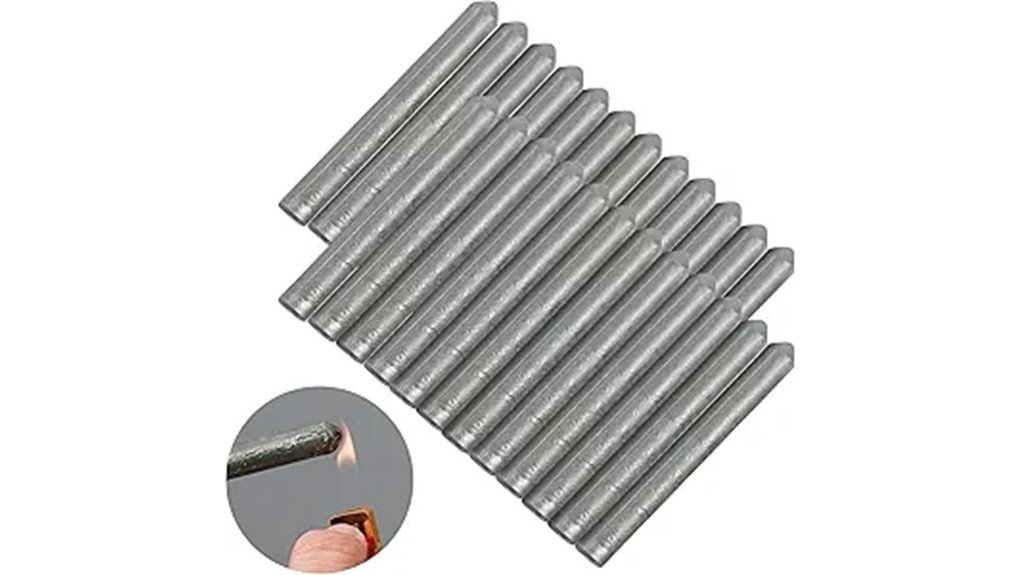
Small metal repairs can be frustrating when a full MIG, TIG, or stick setup is too large for the job. The Tandefio 24-Piece Low Temperature Universal Welding Rod set is sold as a compact repair option that melts with a low-output heat source and fits easily in a toolbox. Its 3.07-inch rods and included flux make it convenient for practice and non-critical patching, but the product should not be treated as a substitute for a structural weld. This review explains the verified specifications, realistic use cases, safety limits, and buying tradeoffs.
Quick Verdict
Rating: 6.5/10, recommended with caveats
Best For: Hobbyists who need a small pack of low-temperature filler rods for practice, light patching, and non-structural repairs.
Bottom Line: The 24-piece pack is compact, inexpensive to store, and easy to test on scrap material. Its main limitation is strength and consistency, so you should not rely on it for load-bearing, pressure-containing, vehicle-safety, or code-regulated work.
Key Specifications
| Specification | Detail |
|---|---|
| Brand | Tandefio |
| Manufacturer part number | Tandefio-Temperature Universal-1 |
| ASIN | B0CZ7TBFTW |
| Product type | Low-temperature universal repair rods with flux |
| Pack size | 24 rods |
| Rod length | About 3.07 inches (78 mm) |
| Item weight | 8.5 ounces |
| Package dimensions | 3.78 × 3.5 × 3.07 inches |
| Color and style | Silver, Classic |
| Listed materials | Tin powder, aluminum powder, solvent, and flux |
| Included components | 24 low-temperature universal welding rods |
| Power requirement | No battery or welding machine is listed as required; the seller describes lighter-based melting |
| Claimed compatible materials | Stainless steel, iron, copper, aluminum, electronic components, and PVC pipe applications are named by the seller |
| Package note | The seller states that the rods are brittle and may arrive with some breakage |
| Best use | Practice, hobby work, small non-structural patches, and portable repair kits |
What Is the Tandefio Low Temperature Welding Rod Set?
This Tandefio product is a 24-piece set of short, silver-colored repair rods. The seller describes them as low-temperature universal welding rods, although the way they melt and flow is closer to a low-temperature soldering or brazing-style repair process than conventional arc welding with a stick electrode.
Each rod is about 3.07 inches long, and the full package weighs 8.5 ounces. The listed blend includes tin powder, aluminum powder, solvent, and flux. The product page says the rods can be melted with an ordinary lighter and applied to several materials, including aluminum, copper, iron, and stainless steel.
The main selling point is convenience. You can store the pack in a small drawer or tool bag and use individual rods for experiments or minor fixes. The tradeoff is that the listing does not provide a verified joint-strength rating, working-temperature specification, certification, or structural-use approval.
Before You Buy: Do not use these rods for fuel tanks, oil tanks, pressure vessels, brake or suspension parts, load-bearing structures, electrical safety components, or any repair that must meet a code. The seller lists some broad applications, but it does not provide the engineering data needed to validate safety-critical use.
Who Should Buy It?
Best For
- Hobbyists practicing low-temperature metal joining on scrap pieces
- Home users who need a compact filler material for small, non-critical patches
- Toolbox owners who value a 24-piece backup pack that takes little storage space
Skip If
- You need the penetration or predictable strength of MIG, TIG, or stick welding
- Your repair holds pressure, fuel, structural load, or moving vehicle parts
- You need a published alloy specification, tensile rating, certification, or warranty-backed procedure
Feature-by-Feature Review
Low-Temperature Melting
The listing says you can ignite and melt the rod with an ordinary lighter. That can reduce setup time for a tiny repair, but it does not guarantee that the base material reaches the temperature needed for a sound bond. Material thickness, surface condition, heat loss, and joint shape can all affect the result.
This low-temperature approach is most useful for controlled experiments and small cosmetic or non-load-bearing patches. It is less suitable when you need deep fusion into the parent metal or repeatable mechanical strength.
Compact 3.07-Inch Rods
The 78 mm length makes each piece easy to hold over a small work area and simple to store. You can place the entire 24-piece package in a compact repair kit without carrying long filler rods or a full electrode tube.
The short length is also a limitation. Larger seams can consume several pieces, and frequent starts may make it harder to maintain an even bead or continuous fill.
24-Piece Practice Pack
A 24-piece count gives you room to test the material before touching the final part. That matters because low-temperature repair rods often require trial and error with heat, joint clearance, surface cleaning, and application speed.
The seller notes that the material is relatively brittle and that some pieces may arrive broken. Short fragments may still melt, but damaged rods are less convenient to grip and control. Check the package as soon as it arrives so you know how many full-length pieces are usable.
Integrated Flux and Powder Blend
The listed composition includes tin powder, aluminum powder, solvent, and flux. The built-in flux is intended to help the molten material flow without adding separate solder powder. The exact alloy percentages and melting range are not published on the listing, so you cannot compare the filler precisely with a standardized brazing alloy.
The product page also warns that an odor may occur during use. Treat that as a ventilation issue, not a minor comfort problem. Heating flux, coatings, oil, paint, or unknown base metals can produce irritating or hazardous fumes.
Small-Box Portability
At 3.78 × 3.5 × 3.07 inches and 8.5 ounces, the package is easy to keep in a garage cabinet, workshop drawer, or mobile tool bag. It does not need batteries, a charger, or a dedicated electrode holder.
Portability does not remove the need for safe equipment. You still need eye protection, heat-resistant gloves, a fire-safe surface, ventilation, and a suitable heat source for the job.
How It Performs in Real Use
For Practice on Scrap Metal
This is the strongest use case for the Tandefio set. The 24-piece count lets you test how the rod melts and flows on clean scrap before working on an item you care about. Practice also shows whether the filler wets the specific base material or simply beads up on the surface.
For Small Household Patches
The rods may be useful for a small, non-critical crack, gap, or cosmetic patch when the base material accepts the filler. Keep expectations modest. A patch that looks filled is not automatically strong enough for impact, heat cycling, water pressure, or repeated flexing.
For Toolbox or Emergency Storage
The compact package is easy to carry as a backup material. It can be useful when you need a temporary, low-load fix and have a safe place to apply heat. Store it dry and protected from crushing because the rods are listed as brittle.
For Structural or High-Risk Repairs
This product is a poor fit for structural frames, ladders, trailers, automotive safety parts, pressurized plumbing, fuel systems, or electrical repairs where failure could cause injury or damage. Those jobs require the correct process, filler classification, joint design, inspection, and often a qualified welder or technician.
How to Use the Rods More Safely
The seller’s illustrated process is simple: melt the rod, apply the molten material to the work area, position the parts, and allow the joint to set. In practice, good preparation and safe heat control matter more than speed.
- Identify the base material. Do not assume every silver-colored metal is aluminum or stainless steel. Unknown alloys, plated parts, and coated metals can react differently when heated.
- Clean the joint. Remove grease, corrosion, loose paint, and oxidation with a method suitable for the base material. Never heat a surface contaminated with fuel, solvent, or unknown chemicals.
- Test on scrap. Use a matching offcut when possible. Confirm that the filler flows and bonds before working on the final part.
- Support the pieces. Clamp the work so it cannot shift while the filler cools. Keep clamps away from the immediate heat zone unless they are designed for hot work.
- Use controlled heat. Follow the product instructions and avoid overheating thin metal, nearby seals, wiring, finishes, or plastic.
- Let the repair cool naturally. Do not handle or load the joint until it is fully cool. Inspect it for cracks, gaps, or poor adhesion before use.
Pro Tip: Use the first few rods only on clean scrap pieces of the same material and thickness as your project. A successful scrap test is a better guide than the product’s broad compatibility list.
Materials and Safety Notes
Wear safety glasses or a face shield, heat-resistant gloves, long sleeves, and closed-toe footwear. Work on a nonflammable surface with a fire extinguisher nearby. Keep children, pets, paper, sawdust, solvents, and other combustible materials away from the area.
Use strong ventilation and avoid breathing smoke or fumes. The listing states that the rods may produce an odor, and any paint, plating, grease, or residue on the base metal can add other hazards. A simple dust mask does not protect against every metal or chemical fume, so use respiratory protection selected for the actual hazard or move the work to a properly ventilated setup.
Never heat a sealed container. Do not attempt repairs on fuel tanks, oil tanks, propane cylinders, pressure vessels, refrigerant lines, batteries, energized circuits, or parts with unknown contents. Even an apparently empty container can hold flammable vapor or pressure.
Pros and Cons
Pros
- Includes 24 pieces for practice, small repairs, and backup use
- Each 3.07-inch rod is easy to store and position over a small area
- Listed flux blend removes the need to add separate solder powder
- Compact 8.5-ounce package fits easily in a tool bag or drawer
- No battery or conventional welding machine is listed as required
Cons
- No published tensile strength, alloy standard, melting range, or structural-use approval
- The rods are brittle and may arrive with some pieces broken
- Bond quality depends heavily on material identification, cleaning, joint design, and heat control
Is It Worth the Price?
The Tandefio set fits the budget repair-material category. Its value comes from getting 24 compact pieces in one package rather than from documented professional performance. It makes the most sense when you want inexpensive practice material or a small non-critical repair option.
You get less value if you need a known alloy, a stated working temperature, or predictable joint strength. In that case, a manufacturer-specified brazing rod, solder, or welding filler matched to the base metal is a better purchase, even when it costs more.
Check the current product page before ordering because seller options, package counts, and styles can change. Confirm that the selected variation is the 24-piece Classic pack reviewed here.
How It Compares to Alternatives
Bernzomatic Aluminum Brazing and Welding Rods are a more specific choice for aluminum work because the manufacturer publishes a working-temperature range and tensile-strength figure. The tradeoff is a two-rod package and a higher-temperature torch-based process.
Forney Easy-Flo Aluminum Brazing Rod is another material-specific option for aluminum and zinc-based metals, with a published melting point and propane or oxy-acetylene torch guidance. The Tandefio set makes more sense when pack quantity, compact storage, and low-cost experimentation matter more than documented alloy performance.
Frequently Asked Questions
Are Tandefio rods a replacement for MIG, TIG, or stick welding?
No. They are low-temperature repair rods for small, non-critical applications. They do not provide the same penetration, process control, or documented strength as a correctly set up welding process.
Can an ordinary lighter really melt these rods?
The seller says an ordinary lighter can ignite and melt the material. Actual results can vary with flame output, wind, rod condition, base-metal thickness, and heat loss, so test the process on scrap first.
Which materials can I use them on?
The listing names aluminum, copper, iron, stainless steel, electronic components, and PVC pipe applications. Treat that as a seller compatibility claim, not proof that one filler forms an equally strong bond on every material.
Why might some rods arrive broken?
The seller describes the material as brittle and says breakage can occur during shipping. Small fragments may still melt, but full-length pieces are easier to grip, position, and control.
Can I use these rods on a water, oil, or fuel tank?
Do not use them on a sealed, pressurized, fuel, or oil container. Heating a tank can ignite residue or trapped vapor, and the listing does not provide pressure-rating or code-compliance data for the finished repair.
Do I need ventilation or a respirator?
Yes, use effective ventilation and avoid breathing fumes. The seller notes that an odor may occur, and the correct respiratory protection depends on the rod, base metal, coatings, contaminants, and ventilation conditions.
How should I store unused rods?
Keep them dry, clean, and protected from crushing. A small rigid container is better than a loose tool-bag pocket because the rods are short and brittle.
Who should skip this product?
Skip it when failure could injure someone, damage a vehicle, release pressure, or create a fire or electrical hazard. You should also choose a specified filler material when your project requires repeatable strength or code compliance.
The Bottom Line
Tandefio’s 24-piece low-temperature rod set is best for buyers who want compact practice material or a convenient option for minor, non-structural patches. Its 3.07-inch size, built-in flux blend, and generous piece count are useful, but the lack of published strength and alloy data keeps it out of serious repair work. Choose a specified brazing or welding filler, and qualified help, when the joint carries load, pressure, fuel, electricity, or safety risk.
Ready to Buy?
Check the latest package details and confirm that the selected option is the 24-piece Classic set.


