Disclosure: As an Amazon Associate, we earn from qualifying purchases. If you click a link on this page and make a purchase, we may receive a small commission at no extra cost to you.
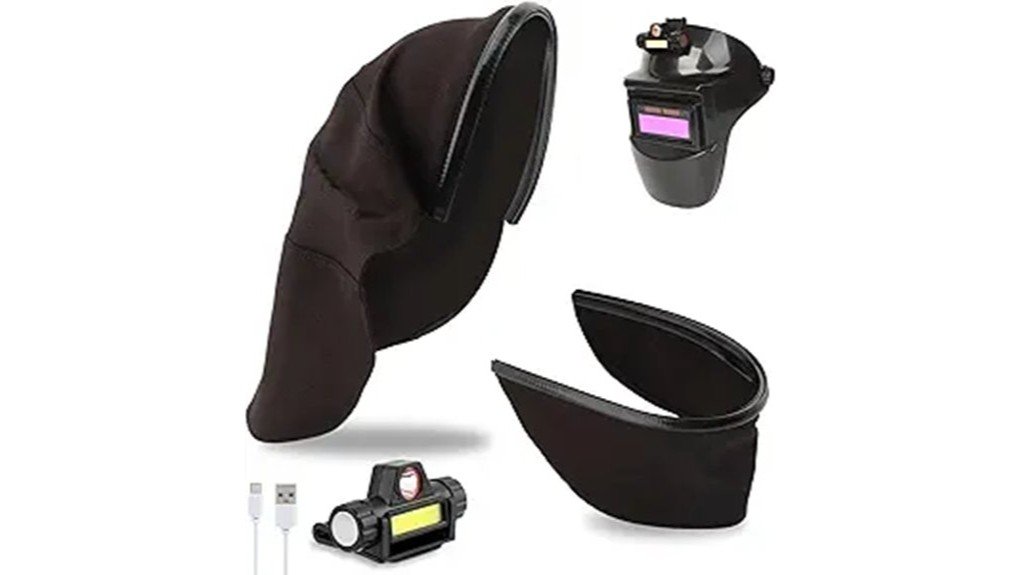
Welding sparks and reflected arc light can reach areas that your helmet shell does not fully cover, especially around the neck, sides, and top of your head. The Welding Helmet Cover and Bib Set is designed to add another layer around those exposed areas using a two-layer leather-and-cloth construction and a wrap-around design. It looks most useful for welders who want extra coverage without replacing their existing helmet, although fit and included accessories should be checked carefully before ordering. This review explains what the set can realistically add, where its limits are, and what you should confirm on the current product listing.
Quick Verdict
Rating: 7.5/10, Recommended with caveats
Best For: Welders who want added head, neck, and chest-side coverage around an existing welding helmet.
Bottom Line: The wrap-around two-layer design can add useful coverage against welding spatter, heat, and unwanted light around the edges of your helmet. The main caution is compatibility, because exact sizing, material certification, and the advertised headlamp feature should be confirmed on the current listing before you buy.
Key Specifications
| Specification | Detail |
|---|---|
| Product type | Welding helmet cover and bib accessory set |
| Construction | Two-layer leather and cloth design as described for this product |
| Coverage style | Wrap-around helmet and neck coverage with bib protection |
| Primary use | Added protection from welding spatter, slag, heat, and unwanted arc light around exposed areas |
| Fit | Designed for use with welding helmets; exact helmet compatibility should be confirmed before purchase |
| Headlamp | An adjustable headlamp is described for the product, but current package contents should be verified on the listing |
| Safety role | Supplemental welding coverage, not a replacement for an approved welding helmet or other required PPE |
Before You Buy: Confirm that the current Amazon listing shows the same cover-and-bib configuration you expect. Pay particular attention to helmet compatibility, included pieces, material description, and whether a headlamp is actually included with the version being sold.
What Is the Welding Helmet Cover and Bib Set?
This product is an add-on cover designed to sit around an existing welding helmet and extend protection beyond the helmet shell. The cover surrounds more of the head area, while the bib helps reduce exposure around the lower helmet and upper chest or neck area.
The main idea is simple: your welding helmet protects your eyes and face, but gaps can remain around its edges. A wrap-around cover can help intercept some flying spatter, hot particles, stray light, and debris before they reach exposed clothing or skin. The two-layer leather-and-cloth construction described for this set is intended to provide a tougher barrier than a thin fabric extension alone.
This is still an accessory rather than a complete welding safety system. You should continue using the correct helmet shade, welding clothing, gloves, footwear, ventilation, and any other PPE required for your process.
Key Takeaways
- The set adds coverage around areas that may remain exposed beyond the edges of a standard welding helmet.
- Its described two-layer leather-and-cloth construction is intended to resist welding spatter, heat, and everyday shop wear.
- The wrap-around layout is the main practical advantage, especially if you frequently notice light or sparks reaching your neck or the sides of your helmet.
- Comfort depends heavily on how well the cover fits your particular helmet and how tightly it sits around your neck.
- An adjustable headlamp is described for this product, but you should verify that feature and the package contents on the current Amazon listing.
- This accessory should supplement proper welding PPE, not replace an approved welding helmet, jacket, hood, or other protection required for your work.
Who Should Buy It?
Best For
- Welders who want more head and neck coverage around an existing helmet.
- Shop users who regularly deal with spatter, slag, or reflected arc light reaching helmet gaps.
- Buyers who prefer a combined helmet cover and bib rather than a small rear-neck flap alone.
Skip If
- You need a documented flame-resistant certification or exact material rating that is not shown on the current listing.
- You cannot confirm that the attachment system fits your helmet.
- You need a complete welding hood or PPE system rather than an accessory for an existing helmet.
Protection Features of the Welding Helmet Cover and Bib Set
The strongest reason to consider this set is its extended coverage. Welding helmets are built primarily to protect your face and eyes, but sparks and reflected light can still reach the neck, sides, or top depending on your position. The cover and bib are intended to close some of those gaps.
The wrap-around design is particularly useful when you weld in positions where sparks do not travel straight down. Overhead work, awkward joints, and confined fabrication positions can send spatter in less predictable directions. Extra material around the helmet can provide another physical barrier.
You should not interpret that additional coverage as permission to reduce your normal PPE. Hot metal can travel around or through gaps, and no accessory should be treated as completely spark-proof unless the manufacturer specifically provides an appropriate rating for that use.
Material Quality and Comfort Compatibility
The product is described as using a two-layer leather and cloth construction. That combination makes sense for an accessory that needs both abrasion resistance and enough flexibility to conform around a helmet.
Leather can provide a tougher outer surface than lightweight cloth, while the fabric portion can help the cover flex instead of behaving like a rigid shell. In practical terms, that balance matters because a helmet accessory that is too stiff can interfere with head movement, while one that is too thin may not provide the coverage you expect.
The original design also uses a snug, wrap-around fit near the neck. A close fit can help block stray light and reduce open gaps, but it should not restrict breathing, visibility, helmet movement, or your ability to remove your PPE quickly.
Pro Tip: Test the full range of helmet movement before you start welding. Flip the helmet up and down, turn your head left and right, and check that the bib does not catch on your jacket collar or respirator.
Headlamp Functionality and Ease of Use
The product description supplied for this review references an adjustable headlamp intended to improve visibility in low-light work areas. If the version currently sold includes that feature, an adjustable beam can be useful while positioning parts, inspecting a joint, or preparing the work area before striking an arc.
However, the headlamp should be treated as a convenience feature rather than a reason to choose the product until you confirm that it is included. Marketplace listings can change by seller, package, or variant, and the current listing should show the exact components you will receive.
A work light also does not replace correct helmet optics or adequate shop lighting. During welding, your helmet lens and shade system remain responsible for eye protection.
Helmet Compatibility and Fit
A cover can only work properly if it stays positioned around your helmet without interfering with the lens, headgear, adjustment knobs, ventilation, or flip-up mechanism. Although this set is presented as compatible with welding helmets generally, no exact universal-fit dimensions are confirmed here.
Before buying, compare the product photos and attachment points with your own helmet. Pay extra attention if your helmet has an unusually large shell, external controls, side-mounted accessories, a respirator connection, or a grinding visor.
After installation, look through the complete viewing area and make sure no fabric enters your peripheral vision. The cover should stay clear of the lens and should not pull the helmet off its normal position when you turn your head.
How It Performs in Real Use
For Bench and Shop Welding
For routine shop work, the bib can be most useful when reflected arc light or small sparks regularly reach the gap between your helmet and jacket. The extra coverage gives those particles another surface to hit before reaching your clothing or skin.
For Awkward Welding Positions
When you weld above shoulder level or work around frames and assemblies, spatter may come from angles that a standard helmet shell does not cover well. A wrap-around cover can reduce some of those open paths, provided it remains securely fitted.
For Longer Sessions
During longer welding sessions, comfort becomes just as important as coverage. Any added layer can retain warmth, so you should check for excessive heat and make sure the cover does not restrict normal head movement. Take normal work breaks and follow your shop’s heat-safety practices.
For Low-Light Preparation Work
If your specific package includes the advertised headlamp, it may help during setup, joint inspection, or tool handling in dim areas. Confirm that the lamp is securely attached before working around moving equipment or hot metal.
Setup Tips Before First Use
- Inspect the cover first. Look for torn fabric, damaged leather, loose seams, or damaged attachment points before installing it.
- Fit it with the helmet off. Attach the cover according to the seller or manufacturer instructions instead of adjusting it while wearing the helmet.
- Check lens clearance. Nothing should block the viewing area, sensors, controls, vents, or moving parts.
- Check neck movement. Turn and tilt your head through the positions you normally use while welding.
- Test your other PPE together. Make sure the bib works with your welding jacket, collar, respirator, hearing protection, and other equipment.
- Inspect it regularly. Replace or stop using the accessory if heat, sparks, or abrasion create significant holes, thinning, or damaged attachment points.
Compatibility and Safety
This helmet cover and bib should be treated as supplemental protection. It does not replace an approved welding helmet, proper shade selection, protective clothing, gloves, footwear, ventilation, or other PPE required for your welding process.
Material descriptions such as leather, cloth, heat resistance, or flame resistance should not be treated as proof of a specific safety certification unless the current manufacturer documentation provides that certification. If your workplace requires PPE that meets a particular standard, verify the product documentation with your employer or safety professional before relying on it.
Also keep the cover away from open flames and inspect it after heavy spatter exposure. A damaged cover should not be assumed to provide the same level of protection it did when new.
Pros and Cons
Pros
- Wrap-around design adds coverage beyond the normal helmet shell.
- Two-layer leather-and-cloth construction is designed for welding-related heat and spatter exposure.
- Combined cover and bib can protect more area than a small rear-neck extension alone.
- Snug design can help reduce unwanted light entering around helmet gaps.
- Advertised adjustable headlamp could be useful for preparation work if included with the current version.
Cons
- Exact helmet compatibility and dimensions need to be confirmed before ordering.
- The headlamp feature and exact package contents may depend on the current listing or variant.
- Extra material around the helmet and neck may feel warmer during long welding sessions.
Cleaning and Maintenance
There is not enough verified information here to recommend machine washing. Leather, coated fabric, seams, and attachment hardware can respond differently to water and detergent, so follow the care instructions provided with the actual product.
For routine maintenance, remove loose dust and welding debris after the cover has cooled. Inspect high-exposure areas for burns, holes, hardened material, or damaged seams. Do not continue using the accessory merely because the outer surface still looks acceptable if the underlying material has been damaged.
If cleaning instructions are missing, contact the seller or manufacturer rather than assuming the cover can be soaked or machine washed.
Is It Worth the Price?
The value of this set depends less on extra features and more on whether you actually need additional coverage around your existing helmet. If sparks, reflected light, or hot debris regularly reach the neck and side areas, a combined cover-and-bib design can be a practical upgrade.
It is also more appealing if you want a single accessory that covers several gaps instead of buying separate rear and lower helmet extensions. The two-layer construction described for the product strengthens that value proposition.
On the other hand, it is not the best purchase if you need documented safety certification, exact universal-fit dimensions, or a guaranteed headlamp bundle that the current listing does not clearly confirm. Check those details before deciding whether the current asking price makes sense for your setup.
How It Compares to Alternatives
Basic welding helmet bibs usually concentrate on the lower edge of the helmet and neck. They can be simpler and less bulky, but they do not provide the same wrap-around concept as a full helmet cover and bib combination.
Full welding hoods and specialized protective systems can provide more complete coverage, but they may also cost more and require different helmet or respirator configurations. This set makes the most sense when you already have a helmet you like and only want to add coverage around its exposed edges.
Frequently Asked Questions
Does this replace a welding helmet?
No. The cover and bib are supplemental accessories designed to extend coverage around an existing welding helmet. You still need the correct approved helmet, lens shade, clothing, gloves, and other PPE for your welding process.
Will it fit every welding helmet?
You should not assume universal compatibility. Compare the attachment method and product photos with your helmet, particularly if your helmet has side controls, external accessories, unusual shell dimensions, or a respirator connection.
Is a headlamp included?
A headlamp is described as a feature of the product reviewed here, but you should confirm the current Amazon photos, bullet points, and package contents before ordering. Marketplace packages and variants can change.
Is the helmet cover machine washable?
Machine-washing compatibility is not confirmed. Follow the care instructions supplied with the product, especially because leather, fabric, seams, and attachment components may require different cleaning methods.
Can I use it instead of a welding jacket or hood?
No. It is intended to add coverage around the helmet, not replace protective clothing or other PPE required for your job. Use it only as one part of a complete welding safety setup.
What should I check after installing it?
Make sure the cover does not block your lens, sensors, vents, controls, or helmet movement. Turn your head through your normal working range and confirm that the bib does not catch on your jacket, respirator, or other equipment.
Who should skip this welding helmet cover?
Skip it if you cannot confirm compatibility with your helmet or if your workplace requires a documented PPE certification that is not provided for this accessory. You should also consider another solution if a full welding hood is required for your application.
The Bottom Line
The Welding Helmet Cover and Bib Set is worth considering when your existing helmet leaves uncomfortable gaps around your head or neck and you want an additional barrier against spatter, heat, and stray light. Its wrap-around design and described two-layer leather-and-cloth construction are the main strengths, while uncertain fit details and the need to verify the advertised headlamp are the biggest reasons to check the current listing carefully.
It is best for welders who already have suitable primary PPE and want extra coverage. Skip it if you need a certified full hood, guaranteed universal compatibility, or specifications that the seller cannot document.
Ready to Buy?
Check the latest product details, compatibility information, and package contents before you decide.