Disclosure: As an Amazon Associate, we earn from qualifying purchases. If you click a link on this page and make a purchase, we may receive a small commission at no extra cost to you.
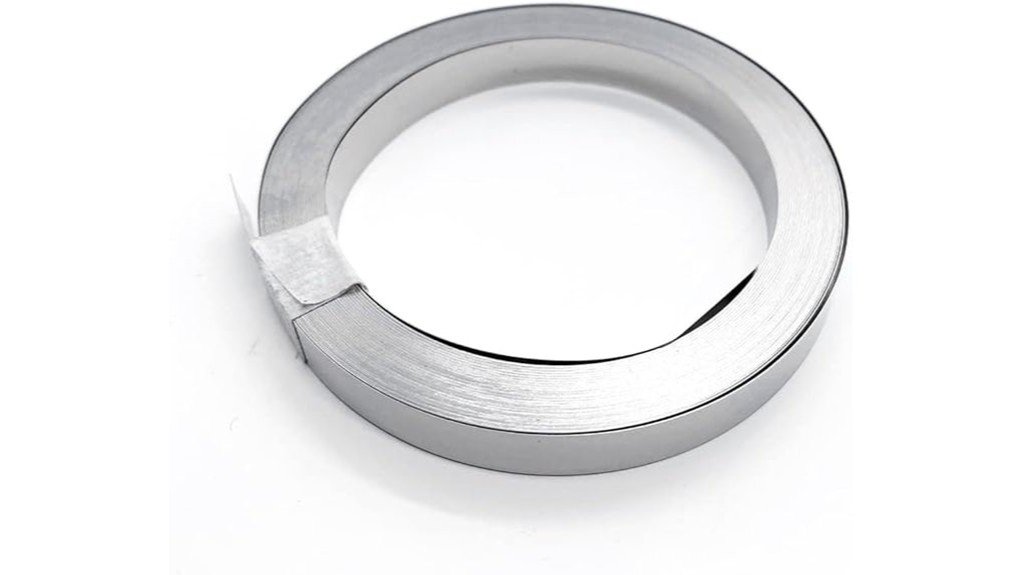
Building or repairing a battery pack depends on small connection materials that are easy to overlook. The E-outstanding Ni Plate Strip gives you a 0.1 mm x 8 mm nickel-plated steel strip designed for joining battery cells and terminals, with 5 meters (16.4 feet) of material to cut as needed. Its thin, flexible construction is useful for DIY battery packs and electronics work, but you should understand that this is nickel-plated steel rather than a strip that should automatically be treated as solid pure nickel. This review explains where it makes sense, where its limitations matter, and what you should check before using it in a battery project.
Quick Verdict
Rating: 8/10 Editorial Rating
Best For: DIY battery builders, electronics hobbyists, and repair work that calls for thin nickel-plated battery tab material.
Bottom Line: The 0.1 mm x 8 mm format, 5-meter length, flexibility, and weldable surface make this strip convenient for battery-pack connections. Its main tradeoff is the nickel-plated steel construction, which means buyers specifically requiring solid pure nickel should compare materials carefully before ordering.
| Specification | Detail |
|---|---|
| Brand | E-outstanding |
| Product Type | Battery connection strip / spot-welding tape |
| Thickness | 0.1 mm |
| Width | 8 mm |
| Length | 5 meters / 16.4 feet |
| Base Material | Low-carbon cold-rolled steel strip (SPCC) |
| Surface | Nickel plated |
| Workability | Flexible, cuttable, and intended for welded battery connections |
| Battery Applications | Lithium battery packs, 18650 cells, AA/AAA applications, power-tool packs, and related electronics |
| Primary Use | Battery tabs and electrical interconnections |
Key Takeaways
- You get a 5-meter roll measuring 0.1 mm thick and 8 mm wide.
- The product uses low-carbon cold-rolled SPCC steel with a nickel-plated surface.
- Its thin construction provides useful flexibility when cutting and arranging battery connections.
- It is intended for battery-pack work such as 18650, AA, AAA, power-tool, and electronics applications.
- You should not confuse nickel-plated steel with solid pure nickel when choosing material for a specific electrical design.
What Is the E-outstanding Ni Plate Strip?
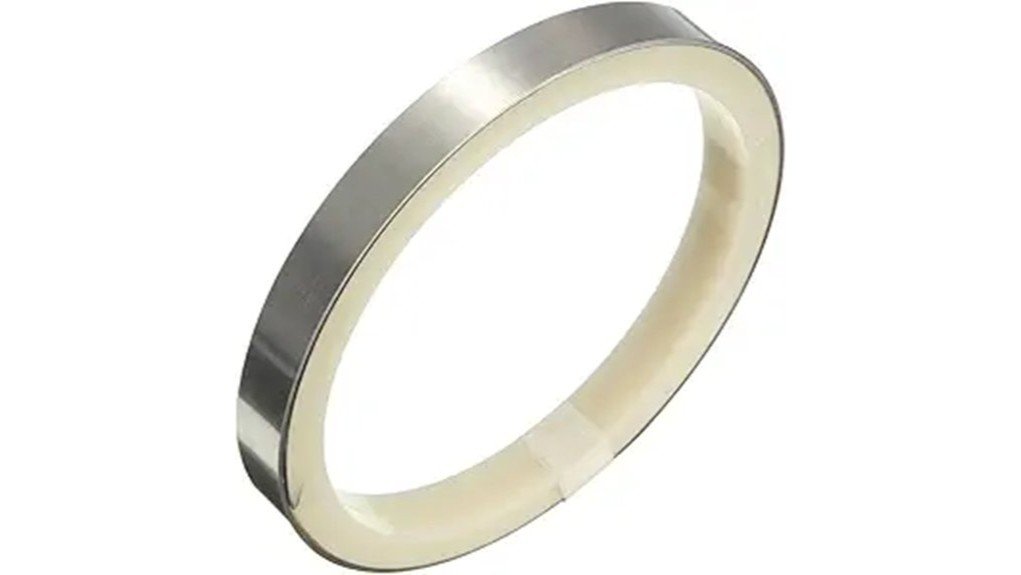
The E-outstanding Ni Plate Strip is a thin metal connection strip intended primarily for battery assembly and related electrical projects. It measures 0.1 mm x 8 mm and comes in a 5-meter roll, giving you enough material to cut individual tabs or longer connecting sections according to your pack layout.
The base material is low-carbon cold-rolled steel, commonly identified as SPCC, with a nickel-plated surface. This combination is designed to provide useful ductility, a clean surface, and good weldability while keeping the strip thin enough to shape around battery layouts.
Its main appeal is convenience. Instead of buying individual pre-cut tabs, you can measure and cut the roll for different cell arrangements. That flexibility is particularly useful when you work on custom battery packs, repairs, prototypes, or electronics projects where tab length varies.
Before You Buy: This product is described as nickel-plated steel. Do not assume it has the same electrical or corrosion characteristics as a solid pure-nickel strip. If your battery design specifically requires pure nickel, verify the material requirement before ordering.
Who Should Buy It?
Best For
- DIY battery builders making custom cell connections.
- Electronics hobbyists working with 18650, AA, AAA, or similar battery projects.
- Repairers who want a cut-to-length roll rather than fixed-size battery tabs.
Skip If
- Your design specifically requires solid pure nickel.
- You need pre-shaped or pre-cut tabs that require no measuring or trimming.
- You do not have suitable battery-welding equipment or experience working safely around cells.
Performance and Features
0.1 mm x 8 mm Format
The 0.1 mm thickness keeps the strip relatively thin, while the 8 mm width gives you a practical contact area for common battery-tab arrangements. For DIY work, this balance makes the material easier to cut and shape than much heavier sheet metal.
The dimensions also make planning more predictable. Once you determine the spacing between cells, you can cut repeated lengths from the roll rather than working around oversized pieces.
Five-Meter Roll
You receive 5 meters, or about 16.4 feet, of strip. A continuous roll is useful when several connection lengths are required because you can cut only what you need for each section.
The roll format can also reduce waste compared with using tabs that are already cut to dimensions that do not match your project. The exact number of connections you can make will depend on the length of every piece you cut.
Nickel-Plated SPCC Steel Construction
The strip uses low-carbon cold-rolled steel with a nickel-plated surface. The original product description emphasizes good gloss, ductility, weldability, draw tension, and a surface designed to resist obvious peeling, spots, and scratches.
The important buying distinction is the steel core. Nickel plating gives the surface properties associated with the coating, but it does not turn the entire strip into pure nickel. That distinction matters when electrical resistance and material requirements are tightly specified in a battery design.
Weldability and Flexibility
Battery interconnect material needs to remain workable while you position it over terminals. The thin strip is designed to bend and cut without requiring heavy fabrication tools, which makes it suitable for small DIY layouts and repair work.
Its listed weldability is another practical advantage. When used with appropriate battery spot-welding equipment, you can create connections without relying on loose mechanical contacts.
Pro Tip: Measure and dry-fit every connection before welding. Cutting several matching tabs from a template can help you keep spacing consistent and avoid wasting the 5-meter roll.
Applications and Compatibility
The strip is positioned for several battery and electronics applications rather than general decorative metalwork. The original product information lists lithium batteries, battery packs, power tools, polymer batteries, telecommunications equipment, instrumentation, and specialized electronics among its possible uses.
- 18650 lithium-ion battery pack connections
- AA and AAA battery assemblies
- Power-tool battery pack tabs
- Consumer-electronics battery connections
- Mobile power and rechargeable battery projects
- Instrumentation and telecommunications applications
Compatibility still depends on your electrical design. Cell chemistry alone does not determine the correct strip thickness, width, current capacity, or welding setup, so you should match the connection material to the requirements of the pack you are building.
How It Performs in Real Use
For DIY 18650 Packs
The roll format is convenient when connecting groups of cylindrical cells because you can trim each piece according to the spacing in your holder or pack. The 8 mm width offers a useful contact area while the 0.1 mm thickness keeps the material easy to position.
For Battery Repairs
When an existing pack needs a damaged tab replaced, a continuous strip gives you flexibility to reproduce different connection lengths. You still need to confirm that the replacement material and electrical characteristics are appropriate for the original pack.
For Prototype Electronics
Prototype work often involves layouts that change before the final design is settled. A 5-meter roll is more adaptable than a small collection of pre-cut tabs because you can create short or long connections as the layout changes.
For Repeated Workshop Projects
The strip can also suit a small workshop that performs occasional battery work. Five meters provides material for multiple small jobs, although production environments may prefer larger rolls, pre-cut busbars, or material specified more precisely for the required current load.
How to Use It Correctly
Start by confirming the battery layout and required conductor material for your project. Measure the distance between contact points, then cut the strip cleanly so it lies flat against the intended terminals without unnecessary overlap.
Before making permanent connections, position the pieces and make sure no loose strip can bridge terminals unintentionally. Battery cells can supply very high current during a short circuit, so metal tools, offcuts, and unused strip should be kept away from exposed terminals.
Use equipment designed for the type of battery connection you are making and follow the instructions for the cells, battery pack, and welding equipment. Do not guess at welding settings simply because the strip is thin.
Battery Work Safety
Battery assembly involves more risk than ordinary sheet-metal work. A misplaced strip or metal tool can short a cell, and excessive heat can damage some rechargeable batteries. Wear appropriate eye protection, keep the work surface free of conductive debris, and work only with cells that are in suitable condition.
Spot welding is commonly used for battery tabs because it concentrates the connection process at the tab and terminal. If you are unfamiliar with battery-pack construction, learn the correct procedure for your exact cell type and equipment before attempting a live pack.
Do not rely on the strip itself as a fuse, protection circuit, insulation layer, or battery-management device. Those functions require components selected specifically for the electrical design.
Pros and Cons
Pros
- 5-meter roll can be cut to different tab lengths.
- Thin 0.1 mm construction is flexible and easy to shape.
- 8 mm width works with many common battery-tab layouts.
- Nickel-plated SPCC steel is designed for good weldability.
- Useful for 18650 packs, power tools, electronics, and repair projects.
Cons
- Nickel-plated steel is not the same material as solid pure nickel.
- You need to cut and position each tab yourself.
- Correct suitability depends on the pack’s current and connection requirements.
Is It Worth the Price?
The E-outstanding strip makes the most sense when you value a convenient cut-to-length roll for occasional battery building or repair. The 5-meter length, narrow 8 mm width, and thin construction give you flexibility without forcing you to buy many different pre-cut tab sizes.
Value depends heavily on the material your project requires. For a design that specifically calls for nickel-plated steel of this size, the format is practical. If you need solid pure nickel because of current, resistance, corrosion, or engineering requirements, paying for a product that clearly specifies that construction would be the better choice.
How It Compares to Alternatives
The main alternative is a solid pure-nickel battery strip. Products sold as 99.6% pure nickel, including options from brands such as VekAuto and NIONSUPPLY, target buyers who specifically want a nickel conductor rather than nickel-plated steel. Pure-nickel options may therefore be worth comparing when material composition is a critical part of your battery design.
Pre-cut nickel or plated-steel tabs are another option. They save measuring and cutting time when your cell spacing matches their dimensions, while the E-outstanding roll gives you more freedom to create custom lengths. Your choice should be based on required material, current handling, tab dimensions, and your pack layout rather than appearance alone.
Frequently Asked Questions
Is the E-outstanding Ni Plate Strip pure nickel?
The product information used for this review describes it as low-carbon cold-rolled SPCC steel with a nickel-plated surface. You should therefore treat it as nickel-plated steel rather than assume the entire strip is solid pure nickel.
What size is the strip?
The reviewed version is 0.1 mm thick and 8 mm wide. The roll contains 5 meters, equivalent to about 16.4 feet, so you can cut pieces to suit different battery layouts.
Can it be used with 18650 batteries?
Yes, 18650 battery-pack work is one of the listed applications. You still need to confirm that the strip dimensions and material meet the electrical requirements of your specific pack.
Can the strip be cut to custom lengths?
Yes. The continuous 5-meter format is intended to let you cut individual pieces according to your battery layout. Measure carefully before cutting so repeated tabs remain consistent.
Is it suitable for battery spot welding?
Yes. Battery spot welding is a primary intended use of this strip. Use suitable welding equipment and follow the instructions for your cells and welder rather than assuming one setting is correct for every battery.
Who should skip this strip?
Skip it if your design requires confirmed solid pure nickel, a different thickness or width, or pre-cut tabs. It is also not a good starting point for someone who lacks the equipment or knowledge needed to work safely with battery cells.
The Bottom Line
The E-outstanding Ni Plate Strip is a practical choice for DIY battery builders who need a flexible 0.1 mm x 8 mm nickel-plated steel strip that can be cut from a 5-meter roll. Its weldability and adaptable length are the main strengths, while the steel core is the key limitation for projects that specifically require solid pure nickel.
Choose it when its dimensions and nickel-plated SPCC construction match your battery design. Skip it and compare pure-nickel alternatives when material composition or lower-resistance interconnect requirements make pure nickel necessary.
Ready to Buy?
Check the latest product details and confirm that the material and dimensions match your battery project before you decide.