Disclosure: As an Amazon Associate, we earn from qualifying purchases. If you click a link on this page and make a purchase, we may receive a small commission at no extra cost to you.
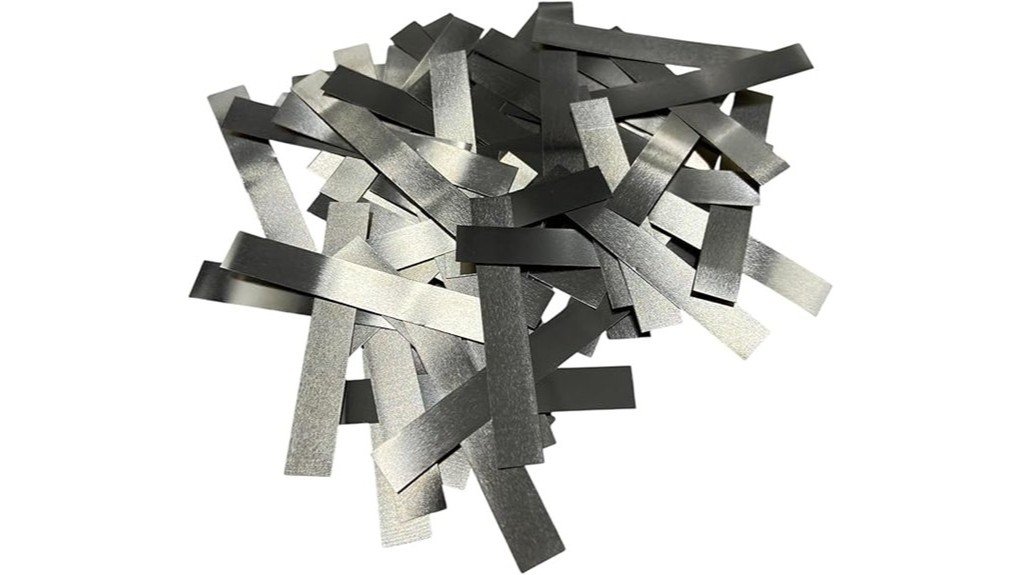
Battery pack work depends on clean, consistent connections, and thin strip material can affect both welding ease and electrical contact. The 50pcs Nickel-plated Steel Strip set is made for DIY battery connections where you need pre-cut strips for lithium, Ni-MH, polymer, or similar battery projects. This review helps you decide whether the 0.1mm x 7mm x 45mm size fits your setup, where these strips make sense, and where you may want a different strip type or thickness. The main strength is easy handling for small battery connections, while the main limitation is that nickel-plated steel is not the same as pure nickel strip.
Quick Verdict
Rating: 8.2/10, Recommended with caveats
Best For: DIY battery builders who need small pre-cut nickel-plated steel strips for spot-welded battery connections.
Bottom Line: This 50-piece strip set is useful when you want thin, easy-to-handle strips for common battery tab work. Skip it if your project requires verified pure nickel, a thicker conductor, or confirmed current ratings from the cell or pack design.
| Specification | Detail |
|---|---|
| Product type | Nickel-plated steel strip set |
| Count | 50 pieces |
| Thickness | 0.1mm |
| Width | 7mm |
| Length | 45mm |
| Material | Nickel-plated steel |
| Primary use | Battery connection and spot-welding projects |
| Supported battery examples | Lithium batteries such as 18650 and 21700 cells, plus Ni-MH and polymer battery applications mentioned in the source article |
| Care note | Keep dry and protect unplated edges from moisture |
Key Takeaways
- This 50-piece set gives you small pre-cut strips for battery tab work, so you do not need to cut every connector from a longer roll.
- Each strip measures 0.1mm thick, 7mm wide, and 45mm long, which suits compact battery connections and light DIY pack layouts.
- The nickel-plated steel design supports low-resistance contact for many battery projects, but it is not the same as verified pure nickel strip.
- These strips are best suited to spot welding, especially when you are joining common cylindrical cells or building small battery assemblies.
- Dry storage, careful handling, and protection from moisture help preserve the strips before use.
What Is the 50pcs Nickel-Plated Steel Strip Set?
The 50pcs Nickel-plated Steel Strip set is a small pack of pre-cut metal strips for making battery connections. Each strip is 0.1mm thick, 7mm wide, and 45mm long, which gives you a compact size for tabbing cells or joining battery terminals in smaller layouts.
The article-supported material is nickel-plated steel. That matters because the nickel-plated surface helps with welding and corrosion resistance, while the steel core keeps the product different from pure nickel strip. For many DIY users, this set works best as a practical connector material for battery pack repairs, test builds, and small power projects.
You should match the strip to your battery design instead of choosing by size alone. A thin 0.1mm strip may be easy to weld and bend, but your pack current, cell type, weld quality, and safety layout still decide whether it is the right choice.
Before You Buy: This is nickel-plated steel, not verified pure nickel. Choose pure nickel or a thicker strip if your battery design requires lower resistance, higher current handling, or a specific conductor material.
Who Should Buy It?
Best For
- DIY users who need pre-cut strips for small spot-welded battery connections.
- Battery hobbyists working with compact lithium cell layouts such as 18650 or 21700 packs.
- Repair or test-bench users who want a 50-piece pack for quick connector work.
Skip If
- Your project requires verified pure nickel strip instead of nickel-plated steel.
- You need a known current rating, official battery-pack design data, or certified pack components.
- You need wider, longer, or thicker strip material for a high-current battery layout.
Key Features of Nickel-Plated Steel Strips
These strips focus on simple battery assembly rather than complex accessories. The 0.1mm thickness makes them thin enough for small spot-welding work, while the 7mm width and 45mm length give you a usable contact area for many compact battery tabs.
The nickel-plated surface is the main feature. It helps reduce surface corrosion and supports cleaner welding than bare steel in battery-connection projects. The benefit is easier handling and more predictable contact when you prepare cells carefully and use the right welding settings.
The tradeoff is material certainty. Since the article describes the strips as nickel-plated steel, you should not treat them as pure nickel. That distinction matters most when you build packs where resistance, current draw, heat, and long-term reliability are critical.
Materials and Build Quality
The strip material is described as nickel-plated steel. In practical use, that gives you a steel base with a nickel-plated surface layer. The plating can help with corrosion resistance, but cut edges and unplated areas still need protection from moisture.
The pre-cut format also improves consistency. Instead of measuring and trimming every strip from a roll, you can use the same 45mm length across repeated connections. That saves time when you are building several similar cell links.
Because each strip is thin, you should avoid sharp folds, deep scratches, or repeated bending. Damaged strips can weld poorly or create weak contact points, especially if the strip surface becomes contaminated with oil, dust, or moisture.
Applications in Battery Connections
These nickel-plated steel strips are designed for battery connections where a small strip can bridge terminals or join cells. They are most useful in spot-welding work because a spot welder can attach the strip without forcing you to heat the whole cell area for a long time.
Common applications mentioned in the original article include:
- Spot welding lithium batteries, including common cylindrical cells such as 18650 and 21700 cells.
- Joining Ni-MH and polymer batteries in energy storage and repair projects.
- Integrating power batteries in telecommunications equipment or similar battery-powered systems.
The strips can support compact battery layouts, but your final design still depends on the cell, current load, insulation, weld quality, and protective circuitry. For critical packs, check the battery cell datasheet and use components that match your required current and safety limits.
Welding and Ease of Use
The 0.1mm thickness is the key handling advantage. Thin strip material usually needs less welding energy than thicker strip, which can make setup easier for small DIY spot welders. It also helps when you need a strip that conforms to a compact battery layout.
For best results, keep the strip surface clean before welding. Dirt, oil, or oxidation can weaken the weld and create uneven contact. You should also test your spot welder settings on spare strips before working on the final battery pack.
Pro Tip: Make a few test welds on spare cells or scrap material first. A good weld should hold firmly without tearing through the strip or overheating the battery cell.
Compatibility and Safety
Battery work can be risky because cells can short, overheat, vent, or fail if handled incorrectly. These strips are only one part of the connection system. You still need correct insulation, proper spacing, a suitable spot welder, and a battery design that matches your cells.
Use gloves when handling strips, especially around cut edges. Keep the work area dry and clear of loose metal pieces that could bridge terminals. If you are working with lithium cells, avoid short circuits and follow the cell manufacturer’s safety guidance.
Do not choose these strips for a high-current pack unless your design confirms the strip material and size are suitable. Nickel-plated steel can have different resistance behavior than pure nickel, so it may not be the right option for demanding battery builds.
How It Performs in Real Use
For DIY Battery Repairs
For small repair work, the pre-cut 45mm length can save time. You can use a strip without measuring a new piece for every connection, which helps when you are replacing a tab or rebuilding a simple pack layout.
For 18650 and 21700 Cell Projects
The strip size can work for common cylindrical cell layouts when the required connection length matches your pack design. Because the strip is 7mm wide, you should check terminal spacing and insulation before welding.
For Test Builds and Prototyping
The 50-piece count makes the set useful for test welds and small prototype packs. You can use extra pieces to tune welding pressure and pulse settings before making final connections.
For Storage Before Use
The strips should stay dry until you need them. Moisture can attack exposed edges and reduce long-term reliability, so storage matters even before the strips are welded into a pack.
Tips for Optimal Usage and Handling
Good handling helps these strips perform more consistently in battery connections. The most important steps are dry storage, clean surfaces, careful bending, and regular inspection before use.
| Tip | Why It Matters |
|---|---|
| Use gloves | Gloves help protect your hands from sharp edges and reduce oil transfer onto the strip surface. |
| Keep strips dry | Dry storage helps protect plated surfaces and exposed edges from corrosion. |
| Avoid sharp bends | Hard bends can weaken the strip and reduce contact consistency. |
| Test weld settings first | A test weld helps you avoid weak welds, burn-through, or excess heat near the cell. |
| Inspect before use | Skip strips with visible corrosion, deep scratches, or bends that could affect the connection. |
Pros and Cons
Pros
- 50-piece pack gives you enough strips for small builds, repairs, and test welds.
- Pre-cut 45mm length saves measuring time during repeated battery connections.
- 0.1mm thickness can be easier to spot weld than thicker strip material.
- Nickel-plated surface helps resist corrosion better than bare steel when stored and handled well.
- Works for common article-supported battery applications, including lithium, Ni-MH, and polymer battery projects.
Cons
- Nickel-plated steel is not the same as pure nickel strip.
- No verified current rating is included in the article, so you must match it carefully to your pack design.
- The 45mm length and 7mm width may not fit every battery layout.
Is It Worth the Price?
This strip set can be a strong value for the price if you need a small quantity of pre-cut connector strips for battery projects. The 50-piece count is useful for hobby work because you can use some strips for testing before making final welds.
You get the most value if the 0.1mm x 7mm x 45mm size already matches your battery layout. You get less value if you need a different strip width, a longer bridge, a thicker conductor, or verified pure nickel material.
For basic DIY use, it is worth considering if you care about simple handling and quick spot-welding preparation. For high-current battery packs, professional repairs, or safety-critical builds, choose components with confirmed electrical ratings and material data.
How It Compares to Alternatives
Compared with pure nickel strip, this nickel-plated steel set is usually a more basic option for lighter battery connection work. Pure nickel may be better when your design requires lower resistance and verified conductor material.
Compared with wider or thicker battery strips, this 0.1mm x 7mm strip is easier to handle in compact layouts but may not suit high-current builds. Compared with a full strip roll, the pre-cut format is more convenient, though it gives you less control over custom lengths.
Frequently Asked Questions
Are these strips pure nickel?
The article identifies them as nickel-plated steel strips. That means you should not treat them as verified pure nickel. If your battery design requires pure nickel, choose a product that clearly states that material.
What size is each strip?
Each strip is listed as 0.1mm thick, 7mm wide, and 45mm long. Check those dimensions against your cell spacing and pack layout before you buy.
Can I use these strips for 18650 or 21700 lithium cells?
The article mentions spot welding for lithium batteries, including 18650 and 21700 cells. You still need to confirm that the strip size and material match your pack current, cell type, and safety design.
Are these strips reusable after spot welding?
They are generally not a reusable part after welding. Removing a welded strip can deform it, weaken the contact area, or leave surface damage that makes the next weld less reliable.
Can I cut the strips to a smaller size?
Yes, you can cut them when your layout needs a shorter piece. Use appropriate cutting tools, avoid sharp burrs, and keep cut edges away from places where they could short a battery terminal.
What tools do I need for effective welding?
For battery tab work, a suitable battery spot welder is the main tool. You should also use eye protection, gloves, insulation materials, and test pieces so you can check weld strength before working on the final pack.
How should I store the strips to prevent corrosion?
Store the strips in a cool, dry place. An airtight container with moisture-absorbing material can help protect the plated surface and exposed edges until you are ready to use them.
Who should skip this strip set?
Skip it if you need verified pure nickel, a specified current rating, or a thicker strip for a demanding battery pack. It is better for lighter DIY connection work where the listed size and nickel-plated steel material fit the project.
The Bottom Line
The 50pcs Nickel-plated Steel Strip set makes sense if you need small, pre-cut strips for spot-welded battery connections and the 0.1mm x 7mm x 45mm size fits your layout. Its main strength is simple handling for DIY battery work, while its main limitation is the nickel-plated steel construction. Skip it if your project requires verified pure nickel, higher-current material data, or a different strip size.