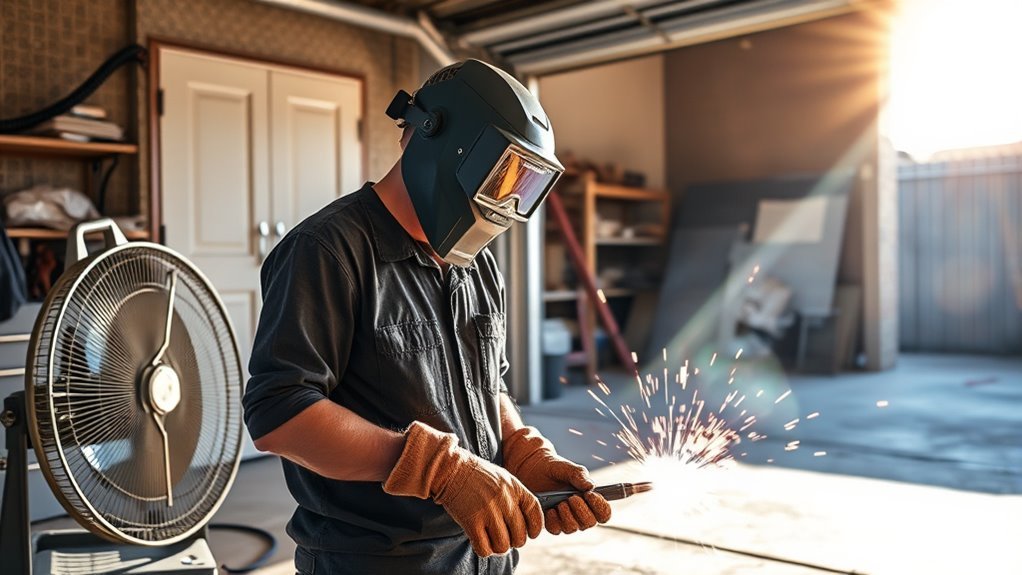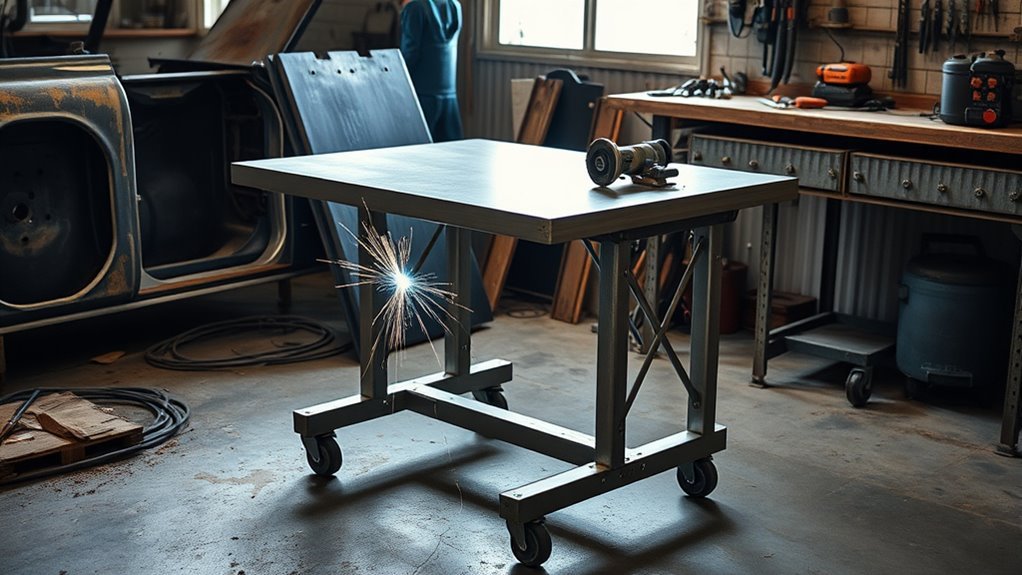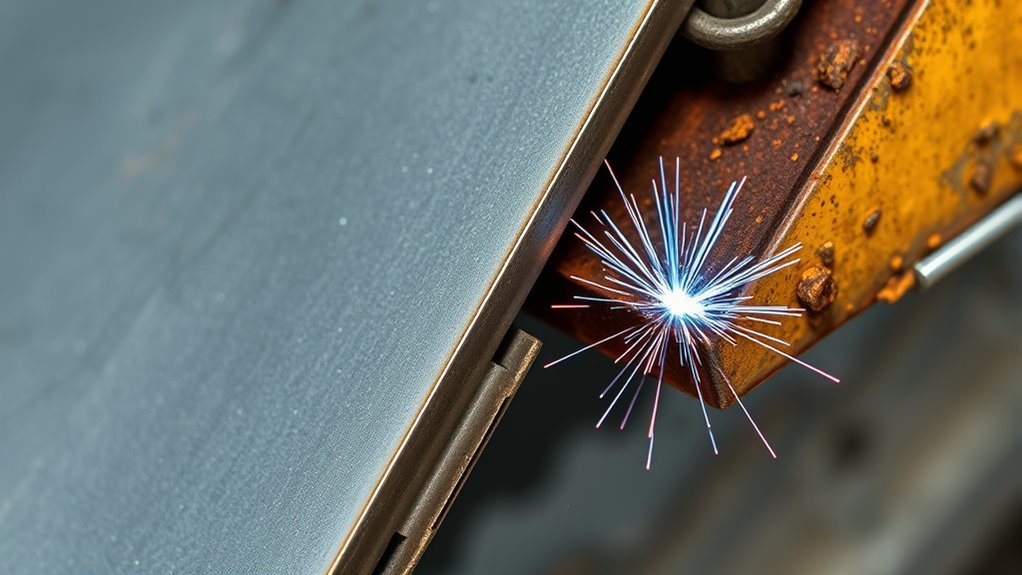
Weld-through primer helps protect steel where two panels overlap and the inner faces will become difficult or impossible to coat after welding. It is useful on properly prepared mating flanges, reinforcements, and plug-weld seams, but it is only one part of corrosion control. The vehicle repair procedure, welding method, and product instructions determine exactly where it belongs.
Quick Answer
Yes—but only in the hidden steel overlap where the coating remains. Weld-through primer reduces corrosion risk between mating flanges, but it is not a final rustproofing layer. Follow the vehicle and product instructions, clear the direct GMA/MIG weld zone when required, then restore epoxy primer, seam sealer, finish coatings, and cavity wax.
Key Takeaways
- Use weld-through primer only on mating steel surfaces approved by the vehicle maker and coating manufacturer.
- For GMA/MIG plug welding, remove the coating from the direct weld site whenever the OEM or product instructions require it.
- Resistance spot welding, GMA welding, MIG brazing, and weld bonding do not share one universal flange-preparation rule.
- Most collision-repair guidance centers on zinc-based coatings; some products are zinc-based and copper-enriched.
- Excess coating, trapped solvent, rust, oil, or poor fit-up can contribute to spatter, porosity, and poor fusion.
- Long-term protection comes from restoring the complete post-weld coating system, including seam and cavity protection where specified.
At a Glance
| Time Required | Often 20–40 minutes for flange preparation, coating, and drying; welding, inspection, refinishing, sealing, and curing can extend the complete repair to several hours or longer |
| Difficulty | Moderate; application is simple, but correct flange preparation, weld-zone cleaning, fit-up, settings, and corrosion restoration require care |
| Tools Needed | OEM repair information, approved surface cleaner, specified abrasive, clean towels, weld-through coating, masking materials, matching test coupons, welder, clamps, PPE, fire-control equipment, and final corrosion-protection materials |
| Cost | Usually low for the weld-through coating alone; a complete repair may also require epoxy primer, seam sealer, undercoat, paint materials, and cavity wax |
What Weld-Through Primer Does
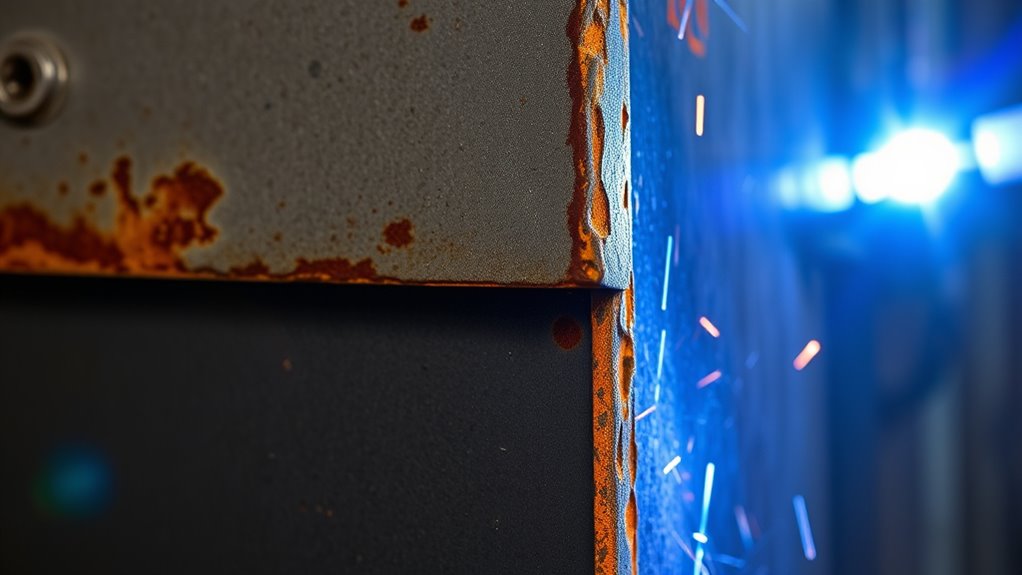
Weld-through primer is a conductive, corrosion-resistant coating applied to approved metal contact surfaces before panels are assembled. Its purpose is to leave protection between welded panels where ordinary primer, paint, or cavity material cannot be applied later.
For example, the 3M Weld Thru II technical data sheet describes its product as a zinc-rich coating for use before resistance spot or MIG/MAG welding. It also says the coating is not a normal paint primer and should be removed from the direct MIG plug-weld site for best results.
Zinc-based material can provide sacrificial corrosion protection where cured zinc remains electrically connected to the steel. In simple terms, the zinc reacts before the nearby steel does. The effect is useful inside a protected overlap, but it does not make an open or water-filled seam rustproof.
The welding process disturbs coating at the immediate weld. The material that remains between unwelded parts of the flange is what continues to protect that hidden interface.
Note: Despite its name, many weld-through products are not suitable as a base for body filler, epoxy primer, or paint. Remove exposed overspray and residue as directed before applying the next coating.
Does Weld-Through Primer Stop Rust?
Weld-through primer can delay corrosion in a hidden steel overlap, but it cannot guarantee that rust will never form. Its performance depends on clean metal, correct film thickness, proper drying, sound welds, sealed seams, drainage, and the condition of the final coatings.
It cannot protect rust that was left under the coating, bare metal exposed by grinding, a porous weld, or an unsealed joint that continues to collect water and road salt. These weak points often control how long a repair lasts.
Weld-through primer protects an inaccessible interface; it does not replace inspection, sound welding, seam sealing, refinishing, or cavity protection.
On a vehicle, final protection is especially important around wheel openings, floors, rocker panels, pillars, rails, and other areas exposed to condensation or road spray.
Where Weld-Through Primer Works Best
Use the coating where the vehicle repair information and product data sheet call for it. Typical approved locations may include:
- Mating faces of automotive steel flanges
- Steel reinforcement inserts that lack factory e-coat
- Lap joints that will be inaccessible after assembly
- Areas surrounding approved plug-weld locations
- Replacement-panel flanges prepared for resistance spot welding
- Small steel patch-panel overlaps that will be sealed and refinished
Common automotive zinc-based products are intended for ferrous metal, not as a universal coating for aluminum, stainless steel, plastic, or composite parts. Some OEMs also restrict the product to zinc-based formulations. Always confirm the substrate, attachment method, and approved material in the vehicle-specific body repair manual.
Do not remove intact factory e-coat from an entire replacement panel merely to apply weld-through primer. Remove only the coatings required at the specified flange and weld locations. Preserve factory corrosion protection everywhere the repair procedure allows it to remain.
Do not apply weld-through coating over rust, oil, dirt, seam sealer, adhesive, foam, or an incompatible primer. It also should not be placed where a structural adhesive must directly contact the substrate unless the OEM procedure specifically permits that combination.
The Weld Method Changes the Preparation
The name “weld-through primer” does not mean every welding process should pass directly through the coating. Preparation changes with the attachment method.
| Attachment Method | Typical Primer Treatment | Key Rule |
|---|---|---|
| GMA/MIG plug weld | Protect the approved surrounding mating flange, then clear coating from the direct weld site when required | Primer in the weld pool can contribute to porosity and unstable welding |
| Squeeze-type resistance spot welding | The approved coating may remain between the flanges when the OEM and product allow it | Use the required electrode condition, squeeze force, current, weld time, and test method |
| Weld bonding with adhesive | Use only the surface treatment specified for the adhesive and OEM procedure | Do not place weld-through coating in the adhesive bond area unless expressly approved |
| MIG brazing or another OEM-specified process | Follow the exact vehicle procedure and approved coating system | Do not assume GMA plug-weld instructions apply to a different joining process |
I-CAR’s weld-through primer guidance says the coating should be removed from the direct weld zone before GMA welding. It also warns that some vehicle makers do not recommend weld-through primer in certain repairs.
OEM rules may be even more specific. Current FCA/Stellantis guidance summarized by I-CAR, for example, requires zinc-based material, removes it from the GMA weld zone, and restricts its use in certain weld-bonding operations.
Caution: Generic instructions cannot replace a vehicle-specific repair manual. The wrong flange coating or attachment method can affect weld quality, adhesive performance, corrosion protection, and structural repair integrity.
Epoxy Primer or Weld-Through Primer?
Both materials may be used during one repair, but they perform different jobs and are applied at different stages. Neither should automatically be substituted for the other.
| Coating | Best Use | Main Limit |
|---|---|---|
| Weld-through coating | Approved hidden mating surfaces before assembly and welding | Not normally a topcoat base or complete barrier system; direct GMA weld sites may need to be cleared |
| Epoxy primer | Prepared, accessible metal after welding and weld dressing | Do not weld through cured epoxy unless the exact product and repair procedure permit it |
| Seam sealer | Closing specified seams against water and contamination | Application over bare steel or primer depends on the product and OEM coating system |
| Cavity wax or anti-corrosion compound | Backsides of panels and enclosed pillars, rockers, rails, and cavities | Normally applied after hot work and at the stage required by the refinishing procedure |
A common sequence is to protect approved hidden flanges before welding, complete and inspect the welds, prepare accessible metal, apply the specified primer and finish system, seal the required seams, and treat enclosed cavities. The exact order can change with the seam sealer, refinishing system, and OEM instructions.
Products Worth Considering

ETCHES AND PRIMES IN ONE STEP: Self-etching formula chemically bites into bare steel and aluminum, no separate acid etch or sanding primer needed

High quality, fast drying surface
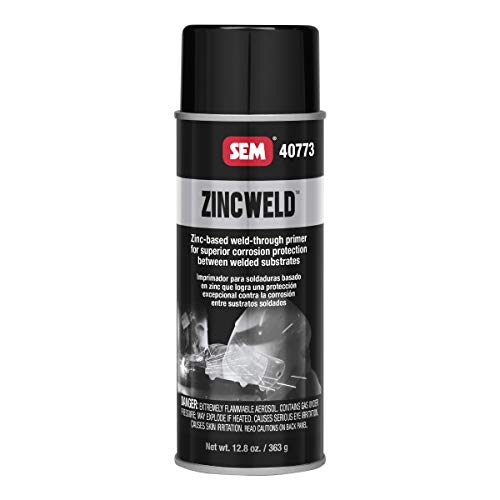
Weld thru primer
Zinc-Based vs. Copper-Enriched Weld-Through Products
Zinc-based material is the standard reference in much collision-repair guidance because the remaining zinc can provide sacrificial protection to nearby steel. Some OEMs specifically require a zinc-based product.
Products marketed with copper in the name may still be primarily zinc-based. For example, SEM describes current Copperweld as zinc-based and copper-enriched, with copper added in part for conductivity and welding performance.
- Zinc-based: Commonly specified for corrosion protection between approved ferrous mating surfaces.
- Zinc-based and copper-enriched: A product-specific formulation that may combine sacrificial zinc with added conductivity.
- Aerosol: Convenient, but metal solids settle and excessive material is easy to apply.
- Brush-on: May give more placement control, but it must still be an approved weld-through product.
Do not select a coating only by color, marketing name, metal percentage, or a claim of easier welding. Check the current technical data sheet, safety data sheet, and vehicle repair procedure.
Pro Tip: Prepare test coupons with the same metal type, thickness, flange stack, coating, weld-hole size, and fit-up as the repair. A clean weld on bare scrap does not prove that the coated production joint will weld correctly.
Products Worth Considering


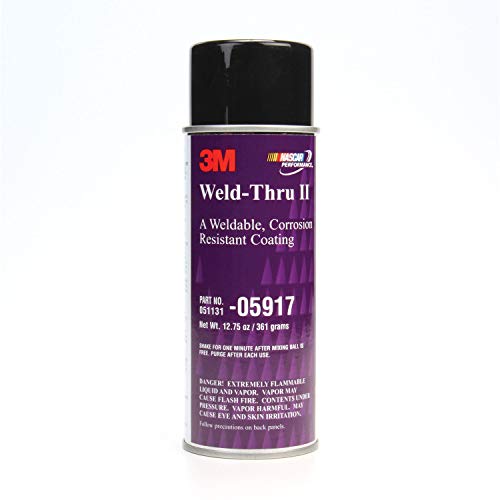
PREVENTS COSTLY COMEBACKS: Protects bare metal panels and parts from corrosion after welding
When Weld-Through Primer Makes Sense
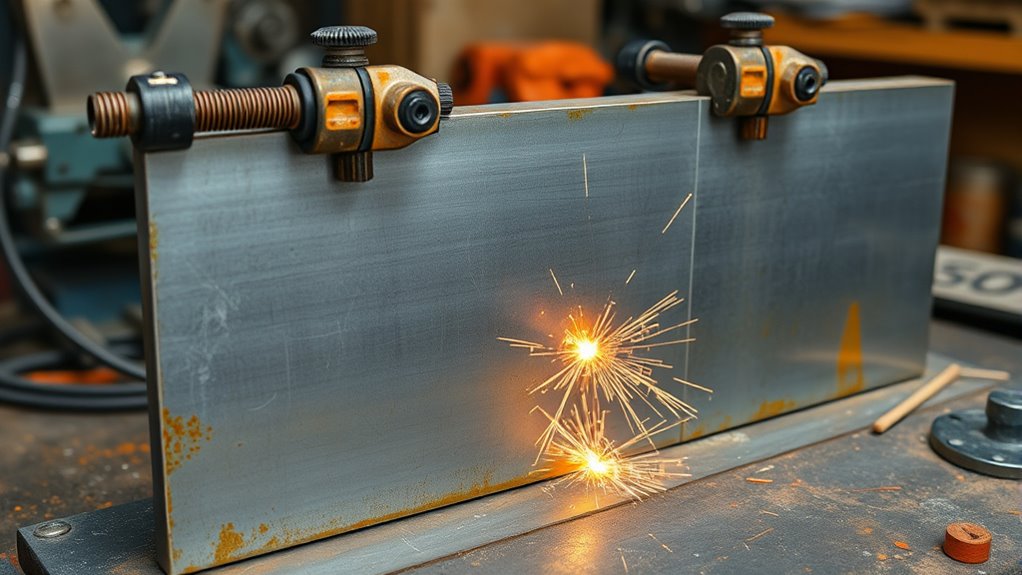
Weld-through primer makes the most sense when approved bare steel will be trapped between panels after assembly. Without suitable protection, an enclosed overlap may retain condensation, dust, salt, or water that enters through an unsealed edge.
Apply it only to the required contact faces. Do not spray the whole exposed repair as though it were ordinary primer. Excess outside the flange can interfere with later filler, primer, paint, adhesive, or sealer.
It may not be the correct choice when:
- The OEM requires a different corrosion inhibitor or weldable sealer
- The joint uses adhesive or weld bonding and requires a clean bonding surface
- The replacement panel’s factory e-coat must remain intact
- The substrate is aluminum, stainless steel, or another material not listed by the coating maker
- The joint is a butt weld with no hidden overlap requiring between-panel protection
- The area can be fully cleaned, primed, painted, and cavity-treated after welding
Safety Before You Spray or Weld
Warning: Welding zinc-bearing coating, galvanized steel, paint, sealer, or contaminated metal can create hazardous fumes. Read the coating label and SDS, use effective source ventilation, keep your head out of the plume, and use respiratory protection when required by the SDS, exposure assessment, or applicable workplace rules. OSHA identifies zinc oxide from zinc-enriched coatings as a cause of metal fume fever. Review OSHA welding-fume guidance.
Before spraying, shut down ignition sources and keep the aerosol away from flames, hot surfaces, sparks, and energized welding equipment. Do not weld until the product has reached the condition stated in its technical data sheet.
Before hot work on a vehicle:
- Inspect both sides of the panel and every enclosed area affected by heat or sparks.
- Locate fuel lines, fuel tanks, brake lines, wiring, batteries, restraint-system parts, glass, trim, insulation, adhesives, foam, seam sealer, undercoat, and cavity wax.
- Remove or protect combustible material as required by the repair procedure.
- Follow OEM procedures for disconnecting or protecting electrical and electronic systems.
- For a hybrid or electric vehicle, complete the model-specific high-voltage disable and verification procedure before working near affected components.
- Keep suitable fire-control equipment available and monitor hidden areas during and after welding.
OSHA’s general welding and hot-work requirements address fire prevention, combustible materials, ventilation, and worker protection. Workplace requirements may be stricter than general hobby-shop practices.
How to Apply Weld-Through Primer
There is no universal coat count, abrasive grit, spray distance, or drying time for every product. Use the following workflow together with the vehicle repair manual and the selected coating’s current instructions.
- Confirm the repair plan. Identify the substrate, replacement part, flange locations, welding process, weld count, adhesive requirements, and approved corrosion-protection materials.
- Make the vehicle safe. Inspect hidden areas, remove fire hazards, and follow the required fuel, electrical, restraint-system, battery, or high-voltage procedures.
- Dry-fit the panels. Mark the mating faces, weld sites, plug-weld holes, adhesive areas, and sections of factory coating that must remain.
- Expose only the required metal. Remove rust and incompatible coating from the specified flange area without stripping sound factory protection elsewhere.
- Clean the surfaces. Use the approved surface cleaner and clean towels. Keep silicone, oil, wax, moisture, and grinding residue away from the joint.
- Abrade as specified. Use the abrasive type and surface profile listed in the weld-through coating’s data sheet rather than assuming one grit fits every product.
- Mix the metal solids fully. Shake or stir for the stated time. Metal-rich solids settle quickly and poor mixing changes the applied film.
- Apply the specified coats. Coat only the approved mating faces. Follow the stated spray distance, coat weight, number of coats, and between-coat flash time.
- Allow the coating to dry as directed. Do not trap wet solvent inside an assembled flange. Temperature and humidity can change drying time.
- Prepare the direct weld site. For GMA/MIG plug welding, clear the coating from the weld site when required. For resistance spot welding, follow the OEM and product instructions for the coated flange.
- Make and evaluate test welds. Use matching coated coupons and confirm arc stability, nugget size, penetration, fusion, and the required destructive-test result before welding the vehicle.
- Assemble, clamp, and weld. Maintain tight fit-up and use the settings established during testing.
- Clean and inspect the repair. After cooling, remove spatter, soot, grinding residue, loose coating, and exposed overspray. Check for porosity, pinholes, cracks, poor fusion, or incomplete welds before coating.
Caution: More coating is not automatically better. Excess material can increase electrical resistance, trap solvent, contaminate a GMA weld, increase spatter, and interfere with later filler or refinishing products.
After Welding: Restore the Full Corrosion-Protection System
Once the joint is sound and the metal is cool, rebuild every corrosion-protection layer disturbed by the repair.
- Clean and prepare the metal: Remove weld residue, loose coating, surface contamination, and grinding dust without thinning the panel unnecessarily.
- Inspect every weld: Correct porosity, pinholes, incomplete fusion, cracks, or missed welds before applying coatings.
- Prime accessible bare metal: Apply the epoxy or other primer specified by the refinishing system and vehicle maker.
- Restore seam sealer: Seal the same functional seams protected by the original design. Apply it over the substrate or cured primer required by the sealer instructions.
- Restore paint, chip guard, and undercoat: Match the original function and coverage in exposed or abrasion-prone areas.
- Treat panel backs and cavities: Apply cavity wax or the specified anti-corrosion compound to rockers, rails, pillars, door shells, enclosed reinforcements, and other disturbed cavities.
- Reassemble only after required curing: Avoid wiping away or blocking newly applied cavity material when installing trim and plugs.
I-CAR’s corrosion-protection timing guidance notes that seam sealer may be applied before or after refinishing depending on the product, while cavity protection is commonly applied after refinish materials and before trim installation. Follow the exact system used for the repair.
Note: Do not apply cavity wax before nearby welding is complete. Many cavity compounds, foams, undercoats, and seam sealers are combustible and can create a hidden fire during hot work.
Common Mistakes and Fixes
| Problem | Likely Cause | Fix |
|---|---|---|
| Plug weld spits or pops | Wet or excessive coating, contamination in the direct weld site, poor grounding, or incorrect settings | Let the product dry, clear the weld site as required, confirm the ground, and repeat test welds |
| Porosity appears after grinding | Primer, rust, oil, paint, moisture, trapped solvent, or shielding-gas problems | Remove the defective weld, correct the contamination or gas issue, and validate new settings on coated coupons |
| Weak or undersized weld nugget | Low heat, excessive resistance, loose fit-up, incorrect hole size, or coating left in the weld zone | Correct fit-up and preparation, then adjust settings through the required test process |
| Rust returns along the seam | Open seam, poor drainage, missed backside coating, damaged finish, or absent cavity protection | Repair the corrosion, restore primer and finish, reseal the joint, and treat the cavity as specified |
| Coating has poor adhesion | Rust, oil, dust, silicone, wrong abrasive profile, or an incompatible substrate | Strip the failed material, clean and abrade according to the data sheet, and reapply under suitable conditions |
| Filler or primer lifts later | Exposed weld-through overspray was used as a topcoat base | Remove exposed residue and prepare the surface for the approved filler or primer system |
| Adhesive bond fails or will not wet the flange | Weld-through coating was placed in a required adhesive bond area | Stop and restore the flange preparation required by the OEM and adhesive manufacturer |
Frequently Asked Questions
Does weld-through primer stop rust?
It can delay rust between properly prepared steel mating surfaces, but it cannot stop corrosion by itself. The completed repair still needs sound welds, primer, seam protection, finish coatings, and cavity treatment where specified.
Should I remove weld-through primer before plug welding?
Remove it from the direct GMA/MIG plug-weld site when required by the product or vehicle instructions. The approved coating can remain on the protected mating flange outside that weld site. Resistance spot-welding instructions may differ.
Do I apply weld-through primer to both mating surfaces?
Some products instruct users to coat both prepared contact faces, while others give different directions. Follow the coating data sheet and OEM repair procedure rather than assuming every joint needs the same application.
Will epoxy primer prevent rust?
Epoxy primer provides strong barrier protection when applied to correctly prepared metal and kept intact. It is normally used on accessible metal after welding, but it still needs compatible seam sealer, paint, undercoat, or cavity protection where the repair system requires them.
Can I weld through epoxy primer?
Not unless the exact coating manufacturer and vehicle procedure approve it for that welding operation. Ordinary cured epoxy can contaminate the weld and is not a substitute for an approved weld-through product.
What is the best primer to stop rust on metal?
For accessible bare steel, the best choice is normally the approved primer and finish system specified for the repair. For an inaccessible welded flange, use the approved weld-through material. Long-term protection depends on the complete coating system rather than one universal primer.
What are the risks of using weld-through primer?
Risks include porosity, spatter, weak fusion, trapped solvent, poor adhesive or topcoat performance, hazardous fumes, aerosol fire hazards, and misplaced confidence in an incomplete corrosion-protection system. Correct preparation, ventilation, test welds, and post-weld coatings reduce these risks.
Can I use weld-through primer instead of seam sealer?
No. Weld-through coating protects approved contact faces before welding. Seam sealer closes specified joints after welding and surface preparation. They perform different jobs and may both be needed in a complete repair.
Conclusion
Weld-through primer can reduce rust risk between hidden steel mating surfaces, but only when the vehicle maker permits it and the joint is prepared for the actual welding process. Use the approved product in the approved location, remove it from direct GMA/MIG weld sites when required, confirm the weld on matching test coupons, and then restore every primer, sealer, finish, and cavity-protection layer disturbed by the repair.
Sources
- 3M Weld Thru II Coating 05917 Technical Data Sheet — product purpose, surface preparation, coat application, drying, test welds, weld-site cleaning, and overspray removal.
- I-CAR: How to Use Weld-Through Primer — thin-film guidance, GMA weld-zone removal, porosity concerns, and OEM-dependent use.
- I-CAR: FCA/Stellantis Weld-Through Primer Guidelines — zinc-based material requirements, GMA and resistance spot-welding rules, and weld-bonding restrictions.
- SEM Copperweld Product Information — current zinc-based and copper-enriched product description.
- OSHA 29 CFR 1910.252 — hot-work fire prevention, welding safety, and ventilation requirements.
- OSHA Welding Fume Hazard Information — zinc oxide exposure, metal fume fever, and ventilation controls.