Disclosure: As an Amazon Associate, we earn from qualifying purchases. If you click a link on this page and make a purchase, we may receive a small commission at no extra cost to you.
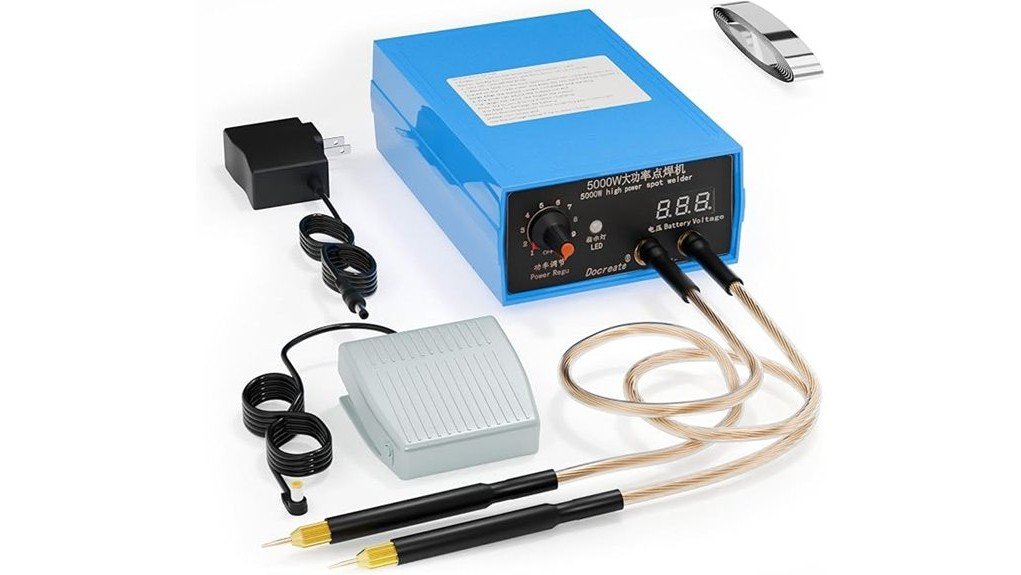
Small battery pack repairs and DIY cell projects need clean, controlled welds, not bulky equipment that takes over your bench. The 5000W Battery Spot Welder is built for spot welding thin nickel sheets and small metal connection points with adjustable output current, two welding pens, and foot switch control. It makes the most sense for hobby battery work, light shop use, and compact workspaces. The main limitation is that its strongest article-supported use is nickel strip welding, so copper, aluminum, and thicker materials need extra caution and test welds before you rely on them.
Quick Verdict
Rating: 7.6/10, Recommended with caveats
Best For: DIY battery pack builders, repair hobbyists, and users who need a compact spot welder for thin nickel sheets.
Bottom Line: The 5000W Battery Spot Welder is a practical choice if you need a portable unit for light nickel strip welding and quick bench work. It is not the best fit if you need verified industrial performance, heavy-duty continuous welding, or guaranteed results on copper and aluminum.
| Specification | Detail |
|---|---|
| Product Name | 5000W Battery Spot Welder |
| Product Type | Compact battery spot welder |
| Claimed Output | 5000W |
| Recommended Nickel Sheet Range | 0.1 to 0.25 mm, based on the article claim |
| Dimensions | 6.5 x 3.86 x 2.36 inches |
| Shell Material | ABS shell |
| Controls | Adjustable output current and foot switch operation |
| Included Working Ends | Two spot welding pens with replaceable tips |
| Listed Materials | Nickel-plated steel, pure nickel, stainless steel, copper sheets, and aluminum sheets, with caution for non-nickel use |
| Listed Charging Time | Approximately 3 to 4 hours |
| Best Use | Small battery pack construction, nickel strip welding, and light repair projects |
| Safety Note | Use eye protection, avoid welding directly on battery cells, and follow the product instructions before use. |
What Is the 5000W Battery Spot Welder?
The 5000W Battery Spot Welder is a compact spot welding tool designed for thin metal connection work, especially nickel sheets used in battery pack projects. The article-supported welding range focuses on nickel sheets from 0.1 to 0.25 mm, which makes it better suited to small connection points than heavy fabrication.
The unit uses two welding pens and a foot switch, so you can hold the workpiece in position while triggering the weld with your foot. Its ABS shell, replaceable tips, and low-contact-resistance pen design support regular bench use, although buyers should still treat it as a small-format welder rather than an industrial machine.
Before You Buy: The strongest supported use case is nickel sheet welding for battery work. Do not assume the same results on copper, aluminum, stainless steel, or thicker material without checking the product instructions and making safe test welds first.
Who Should Buy It?
Best For
- DIY users building or repairing small battery packs with thin nickel strips.
- Hobbyists who want a compact welder that fits on a crowded workbench.
- Users who prefer foot switch control while positioning two welding pens by hand.
Skip If
- You need a verified professional shop welder for high-volume daily production.
- You mainly weld thick metal, large tabs, or materials outside thin nickel sheets.
- You need confirmed manufacturer specs, warranty terms, and certifications before buying.
Performance and Durability of the 5000W Battery Spot Welder
The main performance claim centers on welding nickel sheets from 0.1 to 0.25 mm. That range is useful for small battery pack connections, where too much heat can damage the work area and too little energy creates weak contact points.
The adjustable output current gives you more control than a fixed-output tool. You can start low, make test welds, and increase output only when the weld does not hold. That matters because nickel-plated steel, pure nickel, and other thin metals can respond differently to the same setting.
Durability depends on more than claimed power. The ABS shell helps protect the body during normal handling, while replaceable tips can extend service life when the contact points wear down. The two welding pens also help maintain direct contact, which can reduce weak welds caused by poor positioning.
Application and Operation Features
The welder is designed around simple hand-and-foot operation. You press the nickel sheet into place with the two welding pens, then step on the foot switch briefly to trigger the weld. This setup lets you keep both hands focused on alignment, which helps when working with small strips or tight battery pack layouts.
| Material Type | Article-Supported Thickness Range | Best Use | Buyer Note |
|---|---|---|---|
| Nickel-Plated Steel | 0.1 to 0.15 mm | Battery pack construction | Good fit for common strip welding tasks. |
| Pure Nickel Sheets | Up to 0.1 mm | Higher-conductivity battery connections | May need careful output adjustment. |
| Stainless Steel | Varies | Light metal joining | Test first because results can vary by grade and thickness. |
| Copper Sheets | 0.1 to 0.25 mm | Small electrical connections | Copper can be harder to weld cleanly, so do not skip test welds. |
| Aluminum Sheets | 0.1 to 0.15 mm | Lightweight applications | Follow the product instructions and avoid assuming universal compatibility. |
Design and Portability Highlights
At 6.5 x 3.86 x 2.36 inches, this welder is small enough for a bench, repair cart, or storage drawer. That compact footprint is helpful if you work in a garage, small electronics corner, or shared workshop where space is limited.
The lightweight body also makes it easier to move between work areas. You can keep it with your battery-building supplies, bring it out for small repairs, and store it away when the job is done. That convenience is one of the main reasons to consider it over a larger benchtop unit.
Build Quality and Materials
The ABS shell gives the unit a practical protective housing for normal use and storage. ABS is common in tool housings because it balances impact resistance with low weight, which matches the portable design of this spot welder.
The replaceable tips are another important detail. Spot welding tips wear from heat, pressure, and repeated contact with metal. Being able to replace them helps you maintain cleaner contact points instead of replacing the whole tool when the tips degrade.
Ease of Use and Controls
The foot switch makes operation simpler once your workpiece is aligned. Instead of trying to press a button with one hand while holding two probes, you can keep both welding pens steady and trigger the weld with your foot.
The adjustable output current also helps you tune the welder for different strip thicknesses. Start with scrap material that matches your project, check the weld strength, and adjust gradually. This approach helps reduce burn-through, weak welds, and inconsistent contact.
Pro Tip: Before welding on a real battery pack, make several test welds on the same nickel strip thickness you plan to use. A good test should hold firmly without burning through the strip or overheating the work area.
How It Performs in Real Use
For DIY Battery Pack Work
This welder fits small battery pack projects where thin nickel strips need consistent contact points. The two-pen setup gives you direct control over placement, which helps when working across individual cells or narrow connection tabs.
For Repair Bench Use
For occasional repairs, the compact size is a major advantage. You can store it near other electronics tools and bring it out when you need to attach thin strips or make small metal connections.
For Small Workspaces
The 6.5-inch body makes it easier to use in a garage, apartment workspace, or hobby bench. It does not require the same footprint as a full-size shop welder, but you still need a clear, stable, fire-safe work surface.
For Longer Sessions
Longer use depends on heat control, tip condition, material thickness, and how often you fire the weld. Let the tool rest if it gets hot, keep the contact tips clean, and avoid rushing repeated welds on live battery projects.
How to Use It Correctly
Set up the welder on a stable surface with good lighting and enough room to position the workpiece. Make sure the tips are clean, the nickel strip sits flat, and the welding pens contact the strip evenly before you press the foot switch.
Use short, controlled welds instead of holding the trigger longer than needed. Too much heat can damage thin material, while too little energy can create weak joints. Always check weld strength on scrap material before moving to the final project.
For battery work, avoid welding directly to cells unless the product instructions and your battery-building knowledge support the method. Battery cells can be dangerous when overheated, shorted, punctured, or connected incorrectly.
Compatibility and Safety
The article lists several materials, including nickel-plated steel, pure nickel, stainless steel, copper sheets, and aluminum sheets. In practical use, thin nickel strip remains the clearest fit because it is the main material referenced throughout the product description.
Use proper eye protection, avoid flammable clutter, and keep your hands away from the contact area during welding. Work in a safe, ventilated area and follow the product label or manual. If you are building battery packs, make sure you understand cell orientation, current handling, insulation, and short-circuit risks before you begin.
Pros and Cons
Pros
- Compact 6.5 x 3.86 x 2.36 inch body is easy to store and move.
- Adjustable output current helps you tune weld strength for thin materials.
- Foot switch operation lets you keep both hands on the welding pens.
- Replaceable tips can help extend useful service life.
- Works well as a small bench tool for nickel strip battery projects.
Cons
- Independent product verification was limited, so confirm listing details before buying.
- Non-nickel materials may require trial and error for clean welds.
- Not ideal for thick metal, high-volume production, or heavy shop welding.
Is It Worth the Price?
The 5000W Battery Spot Welder is worth considering if you want a compact tool for small nickel strip welding and occasional repair work. It offers strong value for the price when you care most about portability, adjustable output, and simple foot switch operation.
It is not the best fit if you need verified industrial specs, a known brand history, or heavy-duty output for demanding shop use. Buyers who only need light battery pack work will likely get more value from it than users expecting professional production performance.
How It Compares to Alternatives
Compared with larger benchtop spot welders, this model is easier to store and move, but it gives you less confidence for high-volume or heavy-duty use. Compared with smaller low-power handheld units, the claimed 5000W output and foot switch setup make it more appealing for users who want better control during nickel strip welding.
The best alternative depends on your workload. Choose a larger welder if you need repeatable production performance. Choose this compact model if your priority is small battery pack work, portability, and a lower-effort setup.
Frequently Asked Questions
What is the 5000W Battery Spot Welder best used for?
It is best used for small spot welding tasks, especially thin nickel sheets for battery pack construction. The article-supported nickel sheet range is 0.1 to 0.25 mm.
Can you use it for materials other than nickel sheets?
The article lists stainless steel, copper sheets, and aluminum sheets, but the clearest use case is nickel strip welding. For non-nickel materials, make test welds first and follow the product instructions closely.
How do you operate the foot switch?
Place the welding pens firmly on the nickel sheet, keep the material aligned, and press the foot switch briefly to trigger the weld. Do not hold the switch longer than needed because too much heat can damage thin material.
How long does the battery take to charge?
The article lists a charging time of approximately 3 to 4 hours. Actual charging time may vary, so confirm the current listing details and follow the charger instructions included with the product.
Are replacement tips important?
Yes. Tips wear down from heat, pressure, and repeated contact, so replaceable tips can help maintain stable weld quality. Check the product listing or seller information before buying extra tips.
Is this spot welder safe for battery pack projects?
It can be useful for battery pack work, but battery projects require care. Use eye protection, avoid short circuits, do not overheat cells, and make sure you understand battery pack safety before welding.
Who should skip this welder?
Skip it if you need a verified professional-grade machine for daily production, thick metals, or demanding shop work. It is better matched to compact DIY and light repair tasks.
The Bottom Line
The 5000W Battery Spot Welder is a practical pick if you need a compact tool for thin nickel strip welding, small battery pack work, and light repair jobs. Its main strengths are portability, adjustable output, foot switch control, and replaceable tips. Skip it if you need verified industrial specs, heavy-duty material capability, or guaranteed performance on copper, aluminum, or thicker metals.