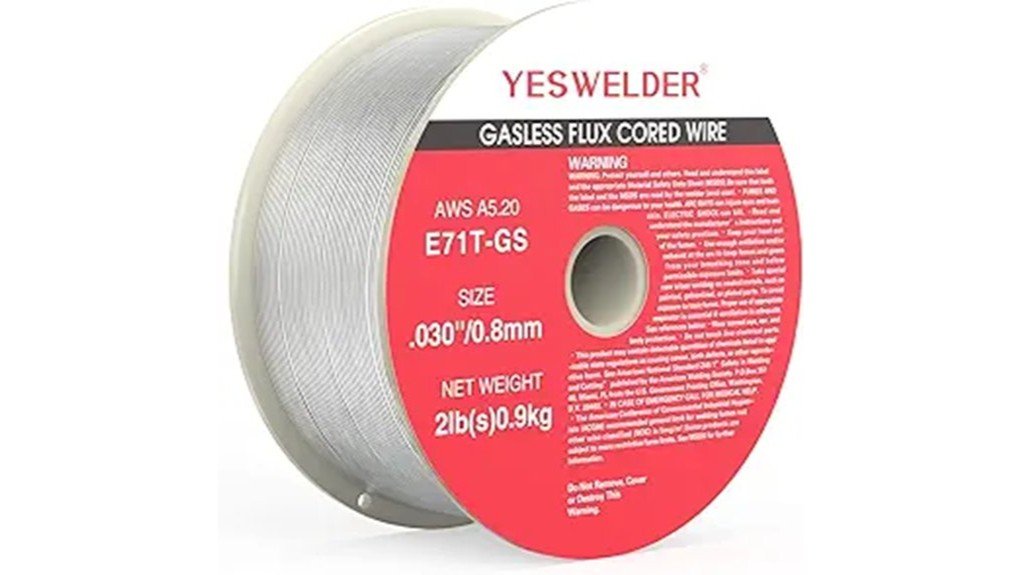
Gasless flux-core wire can simplify outdoor welding, but the wrong diameter, classification, or spool size can lead to feeding problems and poor results. The YESWELDER E71T-GS Flux Core MIG Wire reviewed here is a .030-inch (0.8 mm), 2-pound spool made for self-shielded welding on mild and carbon steel. Its strongest points are portability, all-position single-pass use, and a compact spool that suits repairs and occasional projects. Its main limits are the smoke and slag that come with flux-core welding, plus the need to confirm that your machine accepts this wire size and spool.
Quick Verdict
Rating: 8.3/10, Recommended with caveats
Best For: DIY welders, outdoor repairs, light fabrication, and portable mild-steel work
Bottom Line: This is a practical gasless wire when your welder supports .030-inch E71T-GS consumables. The 2-pound spool is convenient for occasional use, but you still need correct machine setup, ventilation, surface preparation, and slag cleanup.
Key Specifications
| Specification | Detail |
|---|---|
| Brand | YESWELDER |
| Model / Classification | E71T-GS |
| ASIN | B07W41G6P3 |
| Product Type | Self-shielded flux-core MIG welding wire |
| Wire Diameter | .030 inch (0.8 mm) |
| Spool Weight | 2 pounds |
| Package Quantity | One spool |
| Shielding Gas | Not required |
| Compatible Base Metals | Mild steel and carbon steel |
| Welding Position | All-position, single-pass applications |
| Spool Material | ABS plastic |
| Best Use | Outdoor repair, DIY fabrication, garage work, and farm or field maintenance |
| Important Safety Note | Use proper PPE and fume control, and follow your welder manual and the wire label |
Quick Answer
The YESWELDER E71T-GS wire is a good match when you need a compact .030-inch self-shielded spool for mild-steel repair or fabrication. You do not need a shielding-gas cylinder, so the setup is easier to move and less vulnerable to wind than gas-shielded solid wire. It is not a universal replacement for every MIG wire, and it should not be used for aluminum or stainless steel.
Key Takeaways
- The listing is for one 2-pound spool of .030-inch (0.8 mm) E71T-GS wire.
- The wire is self-shielded, so it does not need external shielding gas.
- YESWELDER lists smooth arc performance, stable feeding, low spatter, easy slag removal, and all-position single-pass use.
- The compact spool is convenient for occasional work, but high-volume welders may prefer a larger spool.
- Your machine must support the wire diameter, spool format, contact tip, drive system, and required setup.
What Is the YESWELDER E71T-GS Flux Core Wire?
This product is a tubular welding electrode with flux inside the wire. During welding, the flux helps shield the molten weld pool, which removes the need for a separate shielding-gas bottle. That design is useful for mobile work, outdoor repairs, and garages where a gas setup would add cost, weight, and complexity.
The specific Amazon listing uses YESWELDER model E71T-GS in .030-inch diameter on a 2-pound ABS plastic spool. YESWELDER describes it for mild and carbon steel, including outdoor repair, DIY work, light fabrication, and farm or field maintenance. You can review the current technical description on the YESWELDER product page.
Who Should Buy It?
Best For
- DIY welders using a machine that accepts .030-inch self-shielded wire
- Outdoor repair and maintenance where wind can disturb shielding gas
- Occasional mild-steel projects that do not justify a large spool
Skip If
- You need aluminum, stainless-steel, or gas-shielded solid wire
- Your welder does not accept .030-inch wire or the supplied spool format
- You need a low-smoke process or cannot provide adequate fume control
Feature-by-Feature Review
Self-Shielded Design for Portable Work
The main advantage is simple setup. You can run the wire without a gas cylinder, regulator, or gas hose when your welder is configured for self-shielded flux-core operation. This helps for fence repair, equipment maintenance, and other jobs where carrying gas is inconvenient.
Gasless operation does not mean the process is free of shielding or cleanup. The flux creates shielding and leaves slag over the bead. You need to remove that slag before inspecting the weld or placing another bead where permitted by the procedure.
.030-Inch Diameter and E71T-GS Classification
The .030-inch diameter is common in compact 120-volt and multiprocess welders, but compatibility must be confirmed in your machine manual. The listing identifies the wire as E71T-GS and describes it for all-position, single-pass welding. Do not assume it is approved for multi-pass structural work or code-regulated fabrication.
The machine setup matters as much as the wire. Use the correct .030-inch contact tip, the drive-roll groove recommended by the welder maker, and the polarity stated in your machine and wire documentation. An incorrect setup can cause an unstable arc, burnback, bird-nesting, or weak fusion.
Arc Behavior, Spatter, and Slag
YESWELDER states that the wire is designed for smooth arc performance, stable feeding, low spatter, full slag coverage, and easy slag removal. Those traits can reduce cleanup when voltage, wire-feed speed, stickout, travel speed, and work-clamp contact are set correctly.
“Low spatter” is not the same as “no spatter.” Flux-core wire normally creates more smoke and post-weld cleanup than gas-shielded solid wire. Surface condition and machine tuning can also change the bead appearance from one project to the next.
ABS Plastic Spool and Feed Consistency
The wire comes on an ABS plastic spool intended to resist damage during transport and use. A sound spool and even winding help the wire feed smoothly, but the hub tension still needs adjustment. Too much tension can strain the feeder, while too little can let the spool coast and loosen the wire.
How It Performs in Real Use
Outdoor Repairs
This is the strongest use case. Because the wire is self-shielded, wind does not strip away an external gas envelope in the same way it can with gas-shielded MIG. You still need a dry work area, safe footing, fire control, and protection from rain or moisture around electrical equipment.
Garage and DIY Fabrication
For brackets, carts, frames, and basic mild-steel projects, the 2-pound spool offers enough wire for occasional work without tying up money in a large roll. The tradeoff is more frequent spool replacement if you weld regularly.
Automotive Mild-Steel Work
The wire can suit non-critical mild-steel repairs when the welder, material thickness, and joint design are appropriate. Thin sheet can be easy to overheat, so practice on matching scrap and use short controlled welds as your machine manual recommends. Crash-critical, suspension, frame, and safety-related repairs should follow manufacturer procedures and may require a qualified professional.
Farm and Field Maintenance
The gasless process and small spool are useful for mobile maintenance. Clean the joint as well as practical before welding, even though the listing notes deoxidizing action. Dirt, paint, oil, heavy rust, and coatings can affect weld quality and create hazardous fumes.
Setup Tips Before First Use
- Confirm compatibility: Check that your welder supports .030-inch self-shielded flux-core wire and the spool size supplied.
- Match the consumables: Install a .030-inch contact tip and use the drive-roll setup specified by your welder manufacturer.
- Verify polarity: Do not guess. Follow the machine manual and the wire label before connecting the work lead and gun polarity.
- Set spool tension carefully: Use enough tension to prevent overrun without making the feeder pull against an over-tightened hub.
- Prepare the joint: Remove oil, moisture, loose rust, paint, and other contamination from the weld zone using a safe method.
- Test on matching scrap: Start with the welder chart or manual, then adjust voltage and wire-feed speed based on arc sound, penetration, bead shape, and spatter.
- Store the wire dry: Keep the spool protected from humidity, dirt, and damage when it is not in the machine.
Pro Tip: Cut off any bent or rusty wire before feeding a stored spool. A clean wire end and correctly sized contact tip can prevent avoidable feeding problems.
Compatibility and Safety
Flux-core welding creates metal fumes, ultraviolet radiation, heat, sparks, and electrical hazards. Use an appropriate welding helmet, gloves, protective clothing, hearing protection where needed, and suitable footwear. Keep flammable materials away and maintain a fire watch when the work area requires one.
Ventilation is essential. OSHA notes that welding hazards can include metal fumes, burns, eye damage, and electrical shock, and that local exhaust ventilation may be needed to control fumes near the breathing zone. Review OSHA welding hazard guidance and follow workplace rules, the wire label, and your equipment manual.
The Amazon and manufacturer pages display a California Proposition 65 warning for this product. Read the packaging before use and review the official Proposition 65 information if it applies to you. Do not weld sealed containers, unknown metals, or coated materials until the hazards and required controls have been identified.
Before You Buy: Confirm the wire diameter, spool fit, contact tip, drive-roll setup, polarity, and base-metal compatibility. This E71T-GS wire is not aluminum wire, stainless wire, or a universal consumable for every MIG machine.
Pros and Cons
Pros
- Self-shielded design eliminates the need for external shielding gas
- .030-inch diameter works with many compact flux-core welders
- Suitable for all-position, single-pass mild-steel work
- Manufacturer lists smooth arc, stable feeding, low spatter, and easy slag removal
- Compact 2-pound ABS spool is convenient for storage and mobile repairs
Cons
- Creates smoke and slag, so ventilation and cleanup are required
- Not suitable for aluminum or stainless-steel welding
- The 2-pound spool may be inefficient for frequent, high-volume work
Is It Worth the Price?
This wire offers strong value for occasional repairs and DIY mild-steel projects because it combines a common .030-inch size with a manageable 2-pound spool. You avoid the added cost and bulk of a shielding-gas system, provided your welder already supports self-shielded flux-core operation.
The small spool is less attractive for daily fabrication because you will replace it more often than a larger roll. Before ordering, check the current Amazon variant and package quantity, since similar YESWELDER listings include multi-pack and .035-inch options.
How It Compares to Alternatives
Lincoln Electric Innershield NR-211-MP is worth comparing when you want an established self-shielded wire with detailed application data. Hobart Fabshield 21B is another professional-grade option, while Forney E71T-GS is a close match in .030-inch, 2-pound form.
The YESWELDER spool makes the most sense when you want a compact, straightforward E71T-GS option for general repair and light fabrication. Compare classification, wire diameter, spool fit, approved pass limits, and your welder manual rather than choosing by brand name alone.
Frequently Asked Questions
Does this YESWELDER wire require shielding gas?
No. E71T-GS is self-shielded flux-core wire, so it creates its own shielding during welding. Your machine still must be configured for self-shielded flux-core operation.
What welder can use this .030-inch wire?
Use a MIG or flux-core welder that accepts .030-inch self-shielded wire and the supplied spool format. Confirm the contact tip, drive roll, polarity, and operating range in the machine manual.
Can it weld aluminum or stainless steel?
No. This listing is for E71T-GS wire intended for mild and carbon steel. Aluminum and stainless steel require the correct filler metal and a compatible welding process.
Is this wire suitable for outdoor welding?
Yes, outdoor repair is one of its main uses because there is no external shielding-gas cloud for wind to disturb. Protect the welder from rain and moisture, control sparks, and maintain safe ventilation.
What wire-feed speed should you use?
There is no universal setting. Start with the chart or manual for your welder, then adjust for metal thickness, joint design, voltage, stickout, position, and bead appearance.
Does the wire leave slag?
Yes. The flux forms a slag layer over the weld bead. Let the weld cool as appropriate, then remove slag before inspection or any permitted follow-up weld.
Can you weld over rust or paint?
The listing notes deoxidizing action, but you should still clean the joint as thoroughly as practical. Coatings and contamination can weaken the weld and create hazardous fumes, so identify and remove them using safe procedures.
Is the 2-pound spool enough for regular use?
It is convenient for repairs, learning, and occasional projects. A larger spool may offer better value and fewer changeovers if your machine accepts it and you weld frequently.
The Bottom Line
The YESWELDER E71T-GS Flux Core MIG Wire is a solid choice for welders who need a .030-inch, 2-pound gasless spool for mild-steel repairs, outdoor maintenance, and light fabrication. Its main strengths are portability, a common wire diameter, and all-position single-pass capability, while its main limits are slag, fumes, setup sensitivity, and material restrictions.
Buy it when your machine and project match those requirements. Skip it if you need aluminum or stainless wire, multi-pass code work without an approved procedure, a larger production spool, or a cleaner gas-shielded process.
Ready to Buy?
Check the latest variant, package quantity, price, and product details before you decide.