Disclosure: As an Amazon Associate, we earn from qualifying purchases. If you click a link on this page and make a purchase, we may receive a small commission at no extra cost to you.
A weak or awkward electrode holder can make stick welding harder than it needs to be. The A-316 250 Amp Electrode Holder is built for welders who want a secure electrode grip, insulated handling, and enough capacity for common shop and repair work. This review explains what the A-316 does well, where its limits are less clear, and what you should check before buying. It looks strongest if you need a practical 250 amp holder with multiple jaw positions, but you should confirm fit, cable setup, and seller details before you order.
Quick Verdict
Rating: Recommended with caveats, 8/10
Best For: Stick welders who want a 250 amp electrode holder with a secure multi-position jaw design.
Bottom Line: The A-316 gives you a useful mix of capacity, grip control, and insulated handling for everyday welding tasks. The main tradeoff is that key buying details, such as exact weight, warranty, and full cable compatibility, should be confirmed on the current seller page before purchase.
| Specification | Detail |
|---|---|
| Model | A-316 |
| Product type | Stick welding electrode holder |
| Rated capacity | 250 amp capacity |
| Jaw design | 6-position jaw patterns for holding electrodes at different angles |
| Insulator detail | Reversible insulators made from Super-Mel material |
| Safety features | Fully insulated springs and insulated handling surfaces |
| Cable connection | Ball-point cable connection designed to reduce cable strand breakage |
| Best use | General stick welding, shop repairs, fabrication, and maintenance work within the holder’s rated capacity |
| Important note | Exact weight, warranty, and cable size range are not confirmed in the source article, so verify them on the seller page before buying. |
What Is the A-316 250 Amp Electrode Holder?
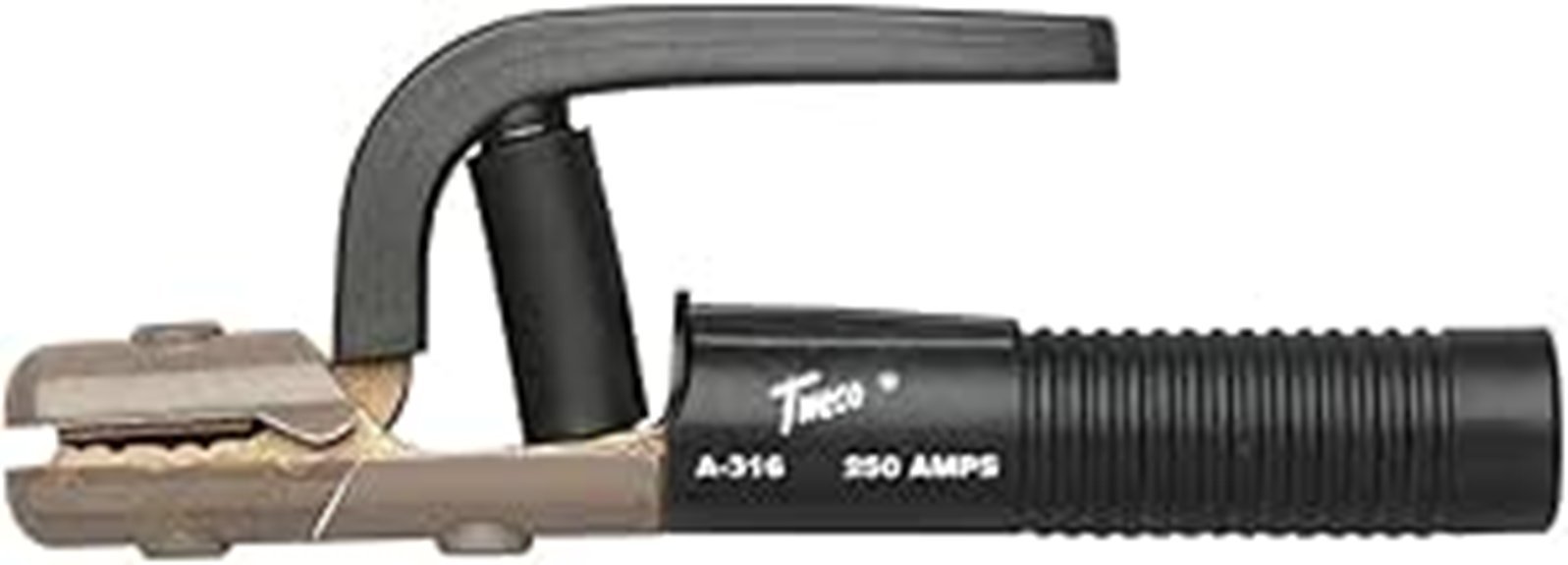
The A-316 250 Amp Electrode Holder is a hand-held stick welding electrode holder made to clamp welding rods while you work. Its job is simple but important: hold the electrode securely, transfer current, and give you a controlled grip during welding.
The article-supported standout feature is the 6-position jaw pattern. This lets you place the electrode at different angles, which can help when you are welding in tight spots, changing work positions, or trying to keep a steadier arc. The holder also uses Super-Mel reversible insulators, fully insulated springs, and a ball-point cable connection, all of which point toward a design focused on durability and safer handling.
This is not a full welding machine, and it will not fix poor welder settings, bad rods, or weak prep work. It is best viewed as an upgrade or replacement part for your stick welding setup when your current holder is loose, worn, uncomfortable, or not rated for the work you plan to do.
Key Takeaways
- The A-316 is rated for 250 amps, which suits many common stick welding tasks.
- The 6-position jaw pattern helps you hold electrodes at practical working angles.
- Super-Mel reversible insulators add useful protection and extend the working life of the holder.
- Fully insulated springs support safer handling during welding.
- The ball-point cable connection is designed to reduce cable strand breakage at the connection point.
- You should confirm cable fit, exact weight, and warranty terms before buying because those details are not clearly supported by the source article.
Before You Buy: Match the holder’s 250 amp rating to your welder output, electrode size, and cable setup. Do not assume it fits every cable or every welding job without checking the current listing and your equipment manual.
Who Should Buy It?
Best For
- Stick welders who need a 250 amp electrode holder for common shop and repair work.
- Users who want multiple electrode angles instead of a single fixed grip position.
- Buyers replacing a loose, worn, or uncomfortable holder on an existing welding lead.
Skip If
- You need a holder rated above 250 amps for heavier welding work.
- You need confirmed cable size, weight, or warranty details before purchase.
- You are looking for a complete welder, not a replacement electrode holder.
Design and Features of the A-316 Electrode Holder
The A-316 keeps the design focused on the parts welders use most: the handle, jaws, insulation, and cable connection. A secure holder matters because electrode movement can make your arc harder to control and can slow you down during repeated starts and stops.
The 6-position jaw patterns are the most useful design detail. They give you more control over how the rod sits in the holder, which helps when you need a different angle for flat, vertical, overhead, or awkward-position welding. A better rod angle can also reduce hand strain because you do not have to twist your wrist as much to reach the joint.
The reversible Super-Mel insulators add another practical benefit. Insulators help protect your hand from heat and electrical contact points, and reversible parts can extend usability when one side sees more wear. The article does not confirm exact replacement-part availability, so check the current product page if that matters to you.
Grip and Electrode Control
Electrode control is one of the main reasons to care about the holder. A rod that slips, sits at the wrong angle, or feels loose can make a simple weld feel frustrating. The A-316 addresses this with jaw patterns that are made to grip different electrode sizes securely.
For everyday stick welding, that secure grip can help you keep a steadier arc length. It also helps when you pause, reposition, or change rods during a job. You still need the right electrode, amperage, surface prep, and travel angle, but a stable holder gives you a better starting point.
Safety and Durability Aspects
Safety matters with any welding accessory because heat, current, and hand placement all come together at the holder. The A-316 includes fully insulated springs, which is a useful safety detail because the spring area can be close to your hand during use.
The source article also notes that the holder is built with materials that resist wear and heat. That does not mean the holder is indestructible. It still needs normal inspection, proper cable installation, and replacement if the insulation cracks, the jaws loosen, or the connection point becomes damaged.
The ball-point cable connection is another durability-focused feature. Cable ends can suffer from bending, pulling, and strand breakage over time. A connection design that reduces cable strain can help protect the lead, especially in a busy shop where welding cables are moved often.
Performance in Various Welding Applications
The A-316 is best matched to stick welding tasks that fit within a 250 amp holder rating. That includes many common repair, maintenance, and fabrication jobs, depending on your welder, electrode, base metal, and duty cycle.
The holder should be most useful when you need a stable rod grip and a comfortable working angle. The 6-position jaw design gives you more flexibility than a basic one-position holder, especially when working around frames, brackets, equipment, farm repairs, or shop fixtures.
For heavier work above the holder’s rating, choose a higher-rated holder instead. Welding accessories should never be pushed beyond their intended capacity because heat buildup, insulation wear, and connection stress can create safety risks.
How It Performs in Real Use
For Shop Repairs
For general shop repairs, the A-316 gives you the key features most users want in a replacement holder: a 250 amp rating, insulated handling, and a secure jaw setup. It makes sense for repairs where you change rod positions often and need a holder that does not feel flimsy.
For Fabrication Work
During fabrication, electrode angle can affect comfort and access. The 6-position jaw pattern helps when you move between flat surfaces, corners, brackets, and awkward joints. It will not replace good welding technique, but it can make setup and rod control easier.
For Longer Welding Sessions
The ergonomic design and insulated parts are useful when you are welding for more than a few quick tacks. A comfortable holder can reduce hand fatigue, especially if your current holder is bulky, loose, or poorly balanced. Exact weight is not confirmed, so buyers who are sensitive to tool weight should verify that detail first.
For Maintenance and Field Use
The durable build and ball-point cable connection are practical for maintenance work where cables get dragged, bent, and repositioned. The holder still needs regular checks because field use can damage insulation, jaws, and cable connections faster than clean bench work.
Setup Tips Before First Use
Before installing the A-316, inspect the holder, jaw area, insulation, and cable connection point. Make sure there are no cracks, loose parts, or visible damage. If anything looks worn or unsafe, do not use it.
Match the holder to your welding lead and welder output. The holder is rated for 250 amps, but your full setup also depends on cable size, cable condition, electrode size, duty cycle, and the welding machine. Follow your welder manual and the product instructions when connecting or replacing parts.
Pro Tip: After installing the holder, clamp a rod and gently test each jaw position before welding. The rod should feel secure without forcing the jaws or leaving the electrode at an unstable angle.
Maintenance and Care
Basic maintenance can help an electrode holder last longer. Let the holder cool after use, then remove dust, slag residue, and debris from the jaw area. Do not soak it or clean it in a way that damages the insulation.
Check the jaws often. If they become loose, rounded, or unable to hold an electrode firmly, performance and safety can suffer. Also inspect the cable connection because strain at that point can lead to heat, poor current transfer, or cable strand damage.
Store the holder in a dry place away from heavy impacts. Avoid tossing it into a bin with sharp tools or metal scrap that can cut or crack the insulation.
Pros and Cons
Pros
- 250 amp rating fits many common stick welding jobs.
- 6-position jaw patterns give you more electrode angle options.
- Super-Mel reversible insulators support safer and longer use.
- Fully insulated springs improve user protection around the grip area.
- Ball-point cable connection helps reduce cable strand breakage.
Cons
- Not the right choice for work that needs a holder above 250 amps.
- Exact weight, cable size range, and warranty details are not confirmed in the source article.
- Requires correct installation and routine inspection to stay safe.
Is It Worth the Price?
The A-316 looks like a strong value for the price if you need a practical replacement electrode holder and your welding work fits within a 250 amp rating. Its value comes from the combination of multi-position jaws, insulated springs, Super-Mel reversible insulators, and a cable connection designed to reduce strand breakage.
It is a smart buy for everyday use if your current holder slips, feels uncomfortable, or no longer grips electrodes reliably. You get the most value if you weld often enough to notice the difference between a basic holder and one with more grip-angle control.
It is not the best fit if you need verified premium specs, a known exact weight, or a higher amp rating. In that case, compare the current seller page with other holders before deciding.
How It Compares to Alternatives
Compared with basic lower-amp electrode holders, the A-316 offers more capacity and a more flexible jaw design. Compared with higher-amp holders, it may be lighter and easier to handle, but it will not be the right match for work that exceeds 250 amps.
You may also compare it with twist-style electrode holders if you prefer a different clamping feel. The A-316 makes the most sense if you want a familiar clamp-style holder with multiple jaw positions and supported safety-focused details.
Frequently Asked Questions
What is the A-316 250 Amp Electrode Holder used for?
It is used to hold stick welding electrodes during welding. It connects to your welding lead and gives you a hand-held grip for controlling the rod and maintaining your arc.
Is the A-316 compatible with every electrode size?
The source article says the 6-position jaw patterns can hold different electrode sizes securely. It does not confirm universal electrode compatibility, so check your rod size and the current seller details before buying.
Can you use it for AC and DC stick welding?
Electrode holders are commonly used in stick welding setups, but the source article does not verify a separate AC or DC rating for this model. Match the holder to your welder, electrode, and manual before use.
What does the 250 amp rating mean?
The 250 amp rating means the holder is intended for welding work within that capacity. Do not use it for jobs that require a higher-rated holder, and always consider cable size, duty cycle, and machine output.
What is the weight of the A-316 electrode holder?
The exact weight is not confirmed in the source article. If tool weight matters to you for long welding sessions, check the current product listing or seller specifications before ordering.
How do you maintain the electrode holder?
Let it cool, clean residue from the jaw area, and inspect the insulation, jaws, spring area, and cable connection. Replace or repair damaged parts before welding again.
What warranty comes with the A-316?
The source article does not verify a warranty period. Warranty terms can vary by seller, so review the current Amazon listing and seller policy before you buy.
Who should skip this electrode holder?
Skip it if you need a holder rated above 250 amps, need confirmed cable size compatibility before purchase, or want a complete welding machine. This is a replacement or upgrade holder, not a full welding setup.
The Bottom Line
The A-316 250 Amp Electrode Holder is worth considering if you want a stick welding holder with a secure 6-position jaw design, insulated springs, Super-Mel reversible insulators, and a cable connection made to reduce strand damage. It is best for everyday welding jobs within a 250 amp rating, but you should skip it if you need higher capacity or fully confirmed specs such as exact weight, warranty, and cable size range.