Disclosure: As an Amazon Associate, we earn from qualifying purchases. If you click a link on this page and make a purchase, we may receive a small commission at no extra cost to you.
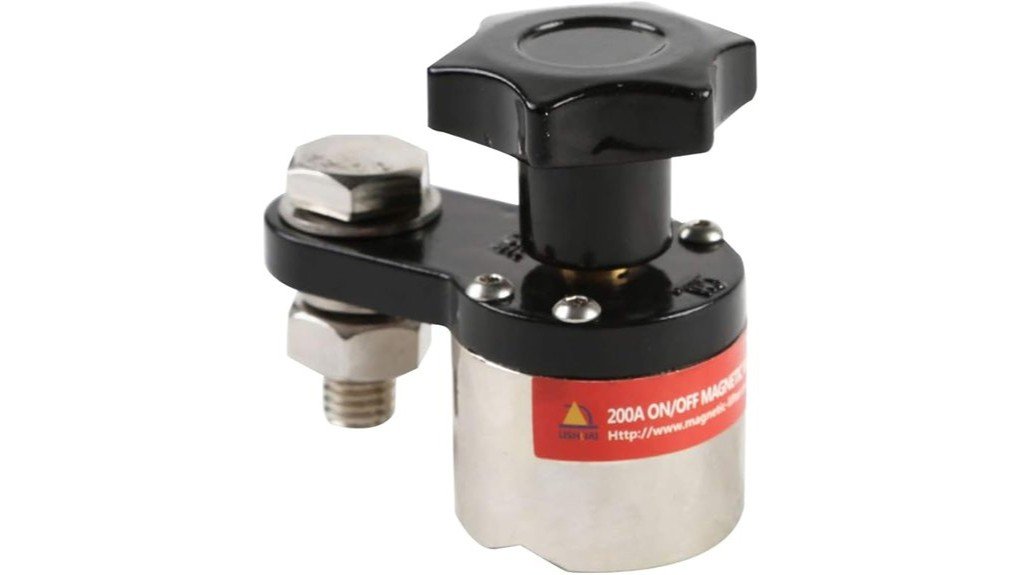
A weak ground connection can slow your welding job, create inconsistent arc behavior, and make setup more frustrating than it needs to be. The 200A Magnetic Welding Ground Clamp is built for welders who want a faster way to attach a work lead to flat or round ferromagnetic surfaces. Its main appeal is the switchable rare earth magnet, which helps you position and release the clamp more quickly than many traditional spring-style clamps. The tradeoff is simple: it only works properly on compatible magnetic metal, and you still need a clean contact area for the best grounding performance.
Quick Verdict
Rating: Recommended with caveats
Best For: Welders who need faster grounding on clean, magnetic steel surfaces.
Bottom Line: This 200A magnetic ground clamp is a practical upgrade if you often move your work lead around a steel bench, frame, pipe, or plate. It is not the best choice for aluminum, painted surfaces, rusty workpieces, or any setup where a magnetic clamp cannot make solid contact.
| Specification | Detail |
|---|---|
| Product name | 200A Magnetic Welding Ground Clamp |
| Product type | Magnetic welding ground clamp |
| Current rating | 200 A |
| Magnet type | Adjustable rare earth switchable magnet |
| Dimensions | 12.6 x 3.94 x 3.15 inches |
| Material | High-quality iron construction |
| Tensile strength | 2000 pounds |
| Pull force | 30 kg |
| Surface compatibility | Flat and round ferromagnetic surfaces |
| Best use | Fast grounding for welding on compatible steel workpieces |
| Safety note | Use only on clean, compatible metal and follow your welder’s setup instructions. |
What Is the 200A Magnetic Welding Ground Clamp?
The 200A Magnetic Welding Ground Clamp is a work lead clamp designed to attach magnetically to the welding surface instead of gripping it with a spring jaw. The article-supported specs list a 200 A current rating, a switchable rare earth magnet, a 30 kg pull force, and a 2000-pound tensile strength.
Its size, 12.6 x 3.94 x 3.15 inches, makes it larger than many small clamp-style grounds, so it is better suited to workpieces with enough clean steel surface for stable contact. The adjustable magnetic design is useful when you need to ground to a flat plate, welding table, pipe, tube, or rounded steel part.
This clamp is made for welders who value speed and repeatable placement. Instead of squeezing a jaw over an edge, you place the magnetic base on the workpiece, activate the switch, and connect your work lead according to your welder’s instructions.
Before You Buy: This clamp needs a clean ferromagnetic surface. It is not a universal replacement for a traditional clamp if you often weld aluminum, painted metal, heavily rusted parts, or small pieces with limited contact area.
Who Should Buy It?
Best For
- Welders who work on steel tables, flat plates, frames, pipe, or round ferromagnetic stock.
- Shops where the ground point changes often and quick placement saves setup time.
- Users who want a switchable magnetic ground instead of a spring-style clamp on compatible metal.
Skip If
- You mostly weld aluminum, stainless grades with weak magnetic response, or non-magnetic materials.
- Your workpieces are painted, oily, rusty, or too small for full magnetic contact.
- You need a compact clamp for tight spaces where this 12.6-inch body may feel bulky.
Features and Specifications
The biggest feature is the adjustable rare earth switchable magnet. This lets you place the clamp first, then activate the magnetic hold when it is in position. For repetitive work, that can be faster than opening and closing a standard ground clamp every time you move to a new part.
The listed 200 A rating makes it suitable for many light and medium welding jobs when used within your welder’s setup limits. The 30 kg pull force helps the clamp stay in place during normal shop movement, but it should still be treated as a grounding tool, not as a lifting magnet or workholding device.
The high-quality iron construction adds durability for shop use. Still, the contact surface matters. Paint, mill scale, rust, slag, or metal dust can weaken the connection and reduce grounding quality.
Magnetic Grip and Surface Compatibility
The magnetic design works best on clean steel surfaces with enough area for the base to sit flat. It can also attach to round surfaces, which is useful when you weld pipe, tubing, frames, or curved steel sections.
For flat surfaces, place the clamp where the full magnetic face can sit flush. For round surfaces, choose a position where the clamp feels stable before you start welding. If the clamp rocks, shifts, or sits on weld spatter, clean the area and reposition it.
This clamp is not ideal for every metal. Magnetic grounding depends on the workpiece being ferromagnetic, so you should not expect the same hold on non-magnetic metals. When in doubt, test the magnetic hold before connecting your work lead.
Setup and Ease of Use
Setup is straightforward. Choose a clean contact area, place the magnetic clamp on the workpiece, and turn the switch to activate the magnet. Once the clamp is secure, connect your welding ground lead as directed by your welder’s manual.
The switchable design is helpful because it makes placement and removal easier. You do not have to pry a strong magnet off the workpiece after each move. When the magnet is off and not attached to ferromagnetic material, loose metal dust can fall away more easily, which helps with basic cleanup.
For the most reliable result, keep the magnetic base and contact area clean. A fast magnetic setup does not replace the need for proper grounding, safe cable routing, and correct machine settings.
Pro Tip: Before welding, place the clamp as close to the work area as practical on clean bare steel. This helps reduce grounding issues caused by paint, rust, long current paths, or loose contact.
Materials and Build Quality
The article lists high-quality iron construction, which is a practical choice for a shop tool that may face heat, dust, sparks, and frequent handling. The 2000-pound tensile strength claim suggests a robust body, though you should not use that figure as permission to lift, suspend, or support workpieces with the clamp.
The rare earth magnet is the key part of the design. Rare earth magnets can provide strong hold in a compact area, but they still need clean metal contact. Metal dust buildup, slag, and grinding debris should be removed before and after use.
The larger body size may be a benefit on broad steel surfaces, but it can be a drawback inside tight engine bays, narrow brackets, or small fabrication assemblies. Measure your typical work area if space is limited.
How It Performs in Real Use
For Welding Tables and Flat Plate
On a clean steel welding table or flat plate, this clamp should be quick to position and easy to release. That makes it useful for layout work, tack welding, and jobs where the ground point needs to move as the part moves.
For Pipe and Round Stock
The article states that the clamp can attach to round surfaces. That can help when you are welding tube, pipe, or rounded frame sections where a traditional clamp may not grip cleanly. You should still check that the clamp does not roll or shift before starting the arc.
For Automotive and Frame Work
For steel frames, brackets, and body-related fabrication, the magnetic setup can save time. The limitation is surface condition. Paint, undercoating, rust, seam sealer, or oily residue can interfere with both magnet hold and electrical contact.
For Frequent Repositioning
This clamp makes the most sense when you reposition the ground lead often. If your work stays in one place all day, a traditional clamp may be enough. If you move between parts, the switchable magnet can reduce small setup delays.
How to Use It Correctly
Start by turning the magnet off before positioning the clamp. Set it on a clean, bare steel area that gives the base stable contact. Then turn the switch to activate the magnetic grip and confirm it does not slide or rock.
Keep the ground lead routed away from sharp edges, hot metal, and moving parts. A magnetic ground clamp is only one part of the welding circuit. Your cable, connector, workpiece, and welder settings also need to be in good condition.
After welding, let nearby hot metal cool before handling the area. Turn the magnet off before removing the clamp. Wipe away metal dust and debris before storing it so the base is ready for the next job.
Compatibility and Safety Notes
This clamp is best used on ferromagnetic materials such as suitable steel workpieces. It should not be treated as a solution for every metal or every welding setup. If the magnet does not hold firmly, do not weld until you have a secure ground connection.
Do not use the clamp as a lifting device, a fixture, or a structural support. Its job is to help create a welding ground connection, not to hold heavy work in position. Use proper clamps, stands, and fixtures to support the workpiece.
Always follow your welder’s manual and safe welding practices. Wear proper PPE, avoid damaged cables, keep the work area dry, and make sure the clamp is rated for the work you plan to do.
Pros and Cons
Pros
- 200 A current rating fits many light and medium welding tasks.
- Switchable rare earth magnet makes placement and removal faster.
- Works on both flat and round ferromagnetic surfaces.
- 30 kg pull force helps maintain a stable hold during normal use.
- High-quality iron construction supports regular shop use.
Cons
- Requires a clean magnetic surface for best performance.
- Not ideal for aluminum, painted metal, heavy rust, or non-magnetic workpieces.
- The larger 12.6-inch body may not fit tight work areas.
Is It Worth the Price?
The 200A Magnetic Welding Ground Clamp is worth considering if you want faster setup on steel workpieces and you often move your ground lead during a project. Its strongest value is convenience, especially for welders who use flat tables, steel frames, pipe, or plate.
It is a smart buy for everyday use if your projects match the clamp’s magnetic design. The 200 A rating, 30 kg pull force, and switchable rare earth magnet give it a practical feature set for many shop tasks.
It is not the best fit if you need a ground clamp for non-magnetic metals, painted automotive panels, small parts, or tight spaces. In those cases, a traditional clamp or a different grounding method may be more reliable.
How It Compares to Alternatives
Compared with a standard spring-style ground clamp, this magnetic clamp is faster to place on compatible steel and easier to reposition. A traditional clamp may still be better when you need to grip a small tab, thin edge, or non-flat area.
Compared with C-clamp style work lead grounds, the magnetic clamp is quicker but less universal. A C-clamp style ground can provide strong mechanical pressure, while the 200A Magnetic Welding Ground Clamp makes the most sense when speed and clean magnetic contact matter most.
Frequently Asked Questions
Can the 200A Magnetic Welding Ground Clamp replace a traditional ground clamp?
It can replace a traditional clamp for many steel setups where the magnet can sit on clean bare metal. It is not a full replacement for jobs involving non-magnetic metals, tight edges, painted surfaces, or parts too small for stable contact.
Will it work on vertical surfaces?
The article states that the clamp has strong magnetic adhesion and can be used on different surface orientations. Before welding on a vertical surface, test the hold and make sure the clamp cannot slide, twist, or pull loose from cable movement.
What surfaces does it work best on?
It works best on clean flat or round ferromagnetic surfaces. Bare steel with minimal rust, paint, oil, slag, or dust will give you the best chance of a solid magnetic hold and a reliable ground connection.
Is the 200 A rating enough for every welder?
No. The listed current rating is 200 A, so you should match it to your welder, process, settings, and duty cycle. Do not use it beyond the rating or against your equipment manufacturer’s guidance.
How do you clean and maintain it?
Wipe metal dust, grinding debris, and slag from the magnetic base after use. Keep the switch area clean, store the clamp dry, and inspect the contact area before each welding session.
Can it be used on automotive body panels?
It may work on suitable steel areas, but many automotive surfaces have paint, undercoating, rust, seam sealer, or thin metal that can limit contact. Use a clean steel grounding point and avoid relying on the clamp where the magnet cannot sit securely.
Who should skip this magnetic welding ground clamp?
Skip it if you mostly weld aluminum, non-magnetic stainless, painted parts, or small pieces with limited surface area. A standard clamp may be a better fit when you need mechanical grip more than fast magnetic placement.
What is the most common setup mistake?
The most common mistake is attaching the clamp to a dirty, painted, rusty, or unstable surface. Clean the area first, check the magnetic hold, and place the clamp close enough to the weld area for a dependable current path.
The Bottom Line
The 200A Magnetic Welding Ground Clamp is recommended with caveats for welders who want fast grounding on clean, magnetic steel surfaces. Its switchable rare earth magnet, 200 A rating, 30 kg pull force, and flat or round surface compatibility make it practical for many shop jobs.
Skip it if you need a universal ground for aluminum, painted parts, rusty workpieces, or tight spaces. Its main strength is speed, while its main limitation is dependence on clean ferromagnetic contact.