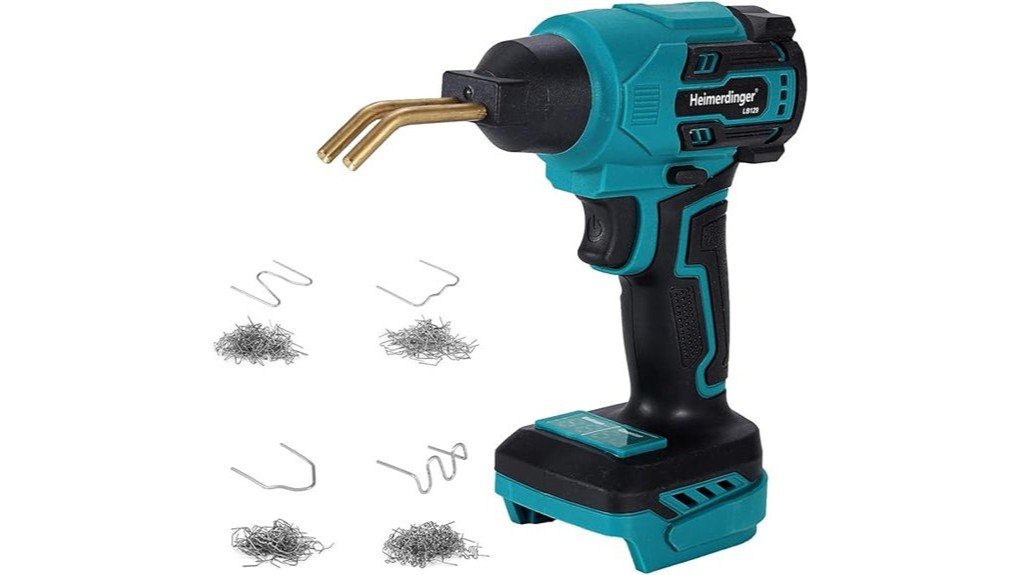
This cordless plastic welder for Makita 18V batteries is a hot-staple repair tool that, per the listing, reaches 500°C (932°F) in 5 to 8 seconds and weighs about 1.1 pounds. It suits bumper, trim and kayak repairs if you already own Makita 18V batteries. Skip it if you use another battery platform, or if you need to weld thick plastic or restore a structural part. Details are per the listing and were not hands-on tested.
Cordless Plastic Welder for Makita: What You Get
| Item | Detail |
|---|---|
| Product type | Cordless hot-staple plastic welder |
| Battery platform | Made for Makita 18V batteries (listing); a third-party tool, not made by Makita |
| Battery and charger | Check the listing, as these may not be included |
| Heat-up | Up to 500°C / 932°F in 5 to 8 seconds (listing claim) |
| Weight | About 1.1 pounds (listing) |
| Extras | Non-slip rubber handle and a front LED light |
Figures come from the product listing and were not independently measured.
How a Hot-Staple Plastic Welder Works
The tool heats a metal staple and presses it into the plastic across a crack, so the staple acts like a stitch that holds the two sides together. It reinforces a break; it does not melt the plastic into a new seamless weld like a hot-air welder with filler rod.
That makes it a good match for cracked bumper tabs, trim, bins and small boat or kayak parts, and a poor match for fuel tanks, pressurised parts or anything that carries load.
Where It Works Well
- Car parts: cracked bumper covers, tabs and headlight mounts
- DIY repairs: bins, toys, garden furniture and appliance housings
- Boats and kayaks: small cracks in plastic hulls and fittings, where the repair is not structural
How to Repair a Crack
- Clean the area and identify the plastic type if you can (the code is often moulded in the back).
- Drill a small stop hole at each end of the crack so it does not spread.
- Close the crack, tape the front if needed, and work from the back.
- Fit a charged Makita 18V battery, let the tool heat, and press staples across the crack at intervals.
- Let the plastic cool, trim any staple ends, then sand and fill the front if you want a neat finish.
Test on scrap or a hidden area first. Brittle, painted or aged plastic can crack under heat.
Safety
Wear eye protection and gloves, ventilate the area because melting plastic gives off fumes, and keep the hot tip away from fuel, solvents and upholstery. Remove the battery before changing staples or storing the tool.
Pros and Limitations
Pros
- Cordless, so you can work in a driveway or garage
- Light at about 1.1 pounds
- Uses a battery platform many tool owners already have
- Quick heat-up per the listing
Limitations
- Works only with Makita 18V batteries (per the listing)
- Battery runtime is not stated reliably, so it depends on your battery
- Staple repairs reinforce a crack but stay visible unless finished
- Not for structural, fuel-contact or pressurised parts
Related guides: Dewalt-battery plastic welder gun review | Milwaukee M18 plastic welder gun review | Cordless plastic welder tool kit review
Frequently Asked Questions
Is this welder compatible with other battery brands?
The listing says it is made for Makita 18V batteries. If you use Dewalt or Milwaukee, see the related versions linked above instead of forcing a fit.
How long does the battery last?
Runtime depends on your battery capacity, the plastic thickness and how many staples you set. The listing does not give a reliable figure, so charge fully before a big repair.
Can it repair different plastics?
It stitches many common plastics, but results vary with the material, thickness and age. Test on a hidden area, and do not use it on parts that carry load or fuel.
What safety gear do I need?
Safety glasses, gloves, ventilation and a non-flammable work surface. The tip is far hotter than a normal soldering iron.
Can I use it indoors and outdoors?
Yes, as long as you ventilate indoor use and keep the tool and battery dry. Do not use it near fuel or solvents.