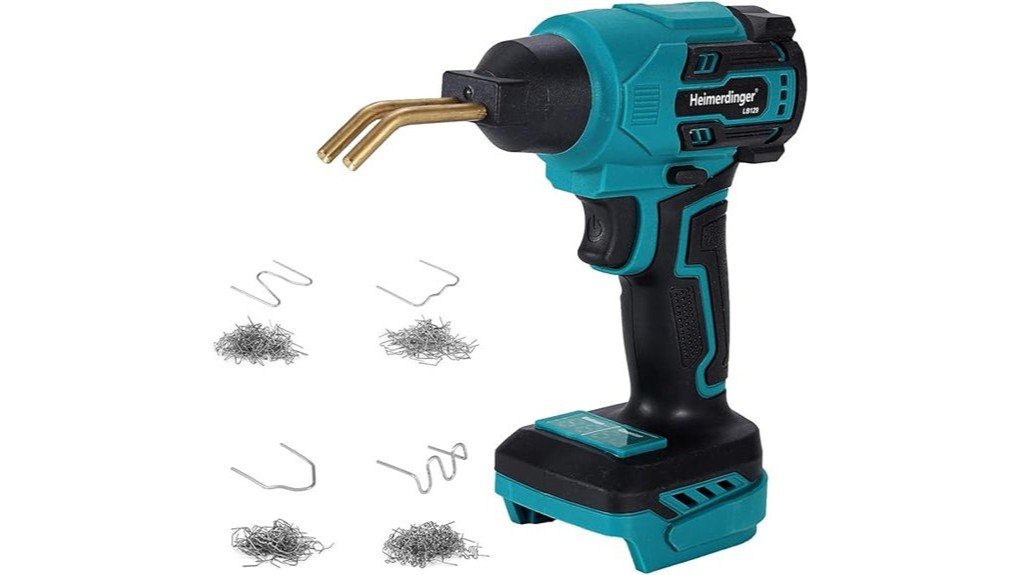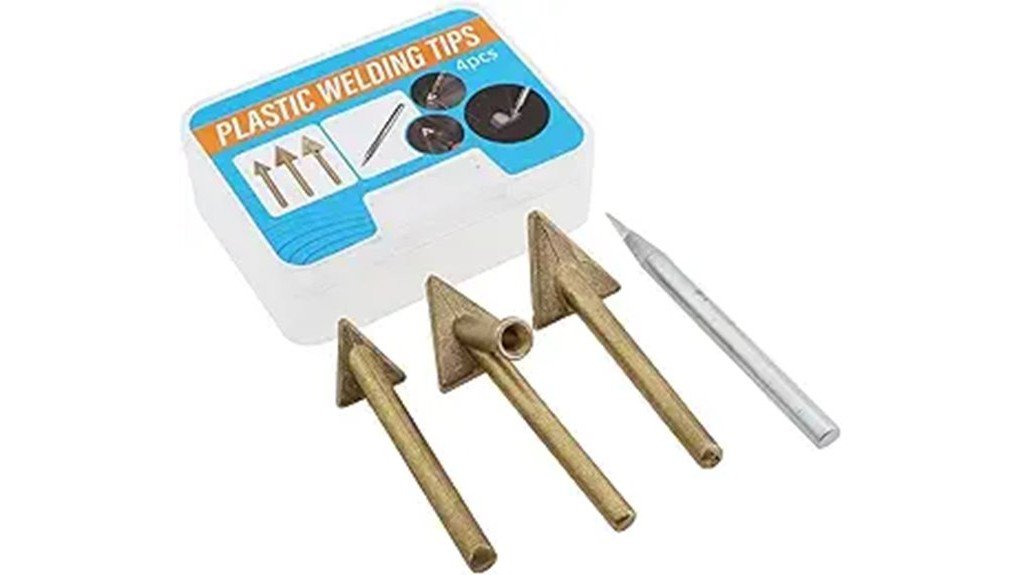
These plastic welding replacement cutter tips are a four-piece set of triangle-shaped tips for hand plastic-welding or hot-stapler-style tools. They are worth considering if your tool uses a shaft of about 0.2 to 0.22 inch and you want spare tip shapes for bumper and trim repairs. Skip them if your tool has a threaded tip or if you do not know your shaft size.
Quick specs at a glance
| Item | Per the listing |
|---|---|
| Type | Replacement plastic-welding tips (4 pieces) |
| Shapes | One small triangle (1 x 16 mm), one large triangle (1 x 20 mm), two large triangles with holes (20 mm) |
| Shaft size | Roughly 0.2 to 0.22 inch |
| Not for | Tools with threaded tips, per the listing |
| Storage | Small plastic storage box |
| Typical uses named | Bumper and bracket repair |
Check Current Price on Amazon →
What these cutter tips are for
Despite the word “cutter” in the name, these are heated tips. They press into plastic to melt a seam, push in a staple or smooth a weld bead. Triangular tips are handy for running along cracks, and tips with holes are used to feed or hold material.
They suit bumper cracks, trim tabs, plastic brackets and similar repairs, where you melt the broken edges together and reinforce them. They are replacement parts, not a complete welder. You need a compatible heated tool first.
How to check the tips fit your plastic welder
- Measure the shaft. Use calipers on your current tip shank or the heater socket. The listing says about 0.2 to 0.22 inch.
- Check the retention method. The tips are not for threaded designs. Look for a smooth shaft with a set screw or friction clamp.
- Check power and heat. A small soldering iron may not hold enough heat for plastic work. Plastic-welding tools are usually rated higher; check yours.
- Match the shape to the job. The small triangle suits tight cracks; the large triangles cover wider seams.
- Test on scrap plastic. This confirms the tip seats properly and the heat is right before you touch the real part.
Pros and limitations
Pros
- Four tips in different shapes, with a box that keeps them together.
- Useful as spares if you have worn out the original tip.
- Shape options help with seam, edge and corner repairs.
Limitations
- Fit is limited to a narrow shaft range. Compatibility is the main risk.
- They do not come with welding rods or a heater. Your tool and plastic type decide the result.
- The listing is a generic part; do not expect brand-specific compatibility unless the title says so.
- The ratings and reviews on this kind of item can be mixed because mismatched fit leads to complaints. Read recent reviews for your tool brand before buying.
Using the tips safely
- Ventilate. Melting plastic gives off fumes, and PVC releases hydrogen chloride and other harmful compounds. Weld outdoors or with extraction, and use a suitable respirator where needed.
- Identify the plastic. Look for the molded code (PP, ABS, PE, PC and so on) on the back of the part and use matching filler.
- Let the tool heat fully before you start, and let tips cool before swapping them. Use pliers or the supplied key rather than bare fingers.
- Rest the tool on a metal stand, away from fuel, paint thinner and flammable materials.
- Wear safety glasses and gloves. Hot melted plastic sticks to skin and burns.
Tip care
Wipe the tip with a damp rag or brass brush while warm to remove residue, but do not quench a hot tip. Check for bends or loose fit before each job and replace worn tips. Keep spares in the storage box away from moisture.
Related guides
- Plastic welding kit review if you need a complete tool, not just tips.
- Meccanixity 20-piece plastic welding rods for filler material.
- WEP 960-VII plastic welder kit to compare complete setups.
Frequently Asked Questions
What do plastic welding replacement cutter tips fit?
Per the listing, these tips are made for plastic-welding tools whose tip shaft is roughly 0.2 to 0.22 inch in diameter, and they are not meant for tools with threaded tips. Measure your tool’s shaft or check its manual before ordering, because tip shank sizes vary between brands.
Can I use these tips on a normal soldering iron?
Only if the iron’s shaft or heater accepts a tip of that diameter and the iron has enough power to melt plastic. Many small soldering irons are too weak, and threaded or fixed tips will not accept them. Check the listing and your iron’s specifications first.
What temperature should I use for plastic repair?
It depends on the plastic and the tool, so check the tool’s manual and test on scrap. Too cool and the plastic will not fuse; too hot and it burns, bubbles or gives off more fumes. Identify the plastic type first, as polypropylene, ABS and PVC behave differently.
How do I know the tip is worn out?
Replace the tip when it stops transferring heat evenly, stays black with hard-to-clean residue, bends, or no longer seats firmly in the shaft. A loose tip heats poorly and can slip during a repair. Wipe the tip while warm with a suitable cloth and keep spares in the storage box.
Conclusion
This tip set is a low-cost way to add spare shapes for plastic repair, but only if your tool takes a plain 0.2 to 0.22 inch shaft. Measure first, test on scrap and ventilate well.