You cannot TIG weld with a normal plasma cutter by itself. A plasma cutter is built to cut metal with a high-energy arc and fast-moving gas, while TIG welding needs a tungsten electrode, steady current control, and clean inert shielding gas. If your machine is a true multi-process unit, it may TIG weld only through its dedicated TIG mode, not through the plasma torch.
Quick Answer
A standard plasma cutter cannot TIG weld because its torch, gas flow, arc starting system, and output are designed for cutting, not joining metal. You need a TIG welder or a multi-process machine with a dedicated TIG function, TIG torch, tungsten electrode, argon shielding gas, and proper amperage control.
Key Takeaways
- A plasma cutter cuts metal; a TIG welder joins metal. The torch and arc design are different.
- A combo plasma/TIG machine can TIG weld only when set up with the TIG torch, argon, tungsten, and TIG output mode.
- You can TIG weld metal after plasma cutting, but you must remove dross, oxide, and rough edges first.
- Do not guess on safety settings. Check the machine manual and use proper eye, face, hand, fire, and ventilation protection.
At a Glance
| Time Required | 10 to 30 minutes to clean and prepare a plasma-cut edge before TIG welding |
| Difficulty | Moderate, because TIG is sensitive to contamination and fit-up |
| Tools Needed | TIG welder or TIG mode, TIG torch, tungsten, argon, regulator, filler rod, grinder or flap disc, stainless brush, clamps, PPE |
| Cost | Low if you already own TIG gear; higher if you need a TIG welder, argon cylinder, and torch setup |
Warning: Plasma cutting and TIG welding both create hot metal, bright arc radiation, electric shock risk, fumes, and fire hazards. Use a welding helmet with the correct filter shade, gloves, flame-resistant clothing, ventilation, and a fire watch. OSHA lists minimum protective filter shades for gas tungsten arc welding and plasma arc cutting in its eye and face protection standard.
Understanding Plasma Cutting and TIG Welding
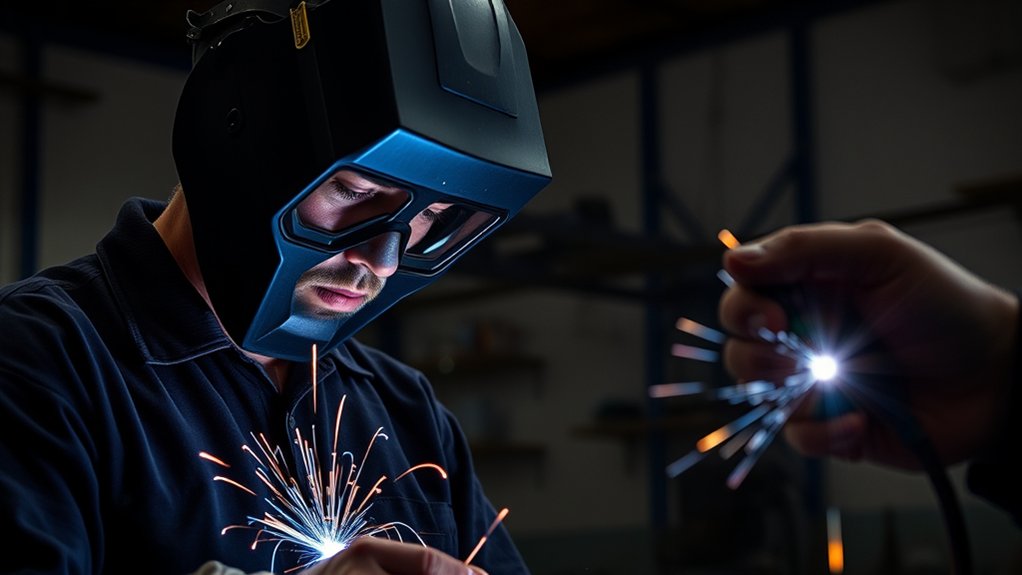
Plasma cutting and TIG welding both use an electric arc, but they use it for different jobs. A plasma cutter creates a narrow, hot arc and pushes high-speed gas through the torch to melt and blow metal out of the cut. The goal is separation.
TIG welding, also called gas tungsten arc welding or GTAW, uses a non-consumable tungsten electrode to create a controlled arc between the torch and the workpiece. The weld area is shielded with inert gas, usually argon, so oxygen and nitrogen do not contaminate the molten puddle.
That difference matters. A plasma cutter is not just a hotter TIG torch. Its torch, consumables, gas path, pilot arc, and output design are made for cutting. A TIG welder is made to hold a stable arc and control heat input so two pieces of metal can fuse cleanly.
Can a Plasma Cutter Be Used as a TIG Welder?
No, not if it is only a plasma cutter. You cannot screw on a TIG torch and expect it to weld correctly unless the machine was built with a dedicated TIG output and controls.
A true TIG setup needs:
- A TIG torch with the correct collet, cup, and tungsten electrode
- A constant-current welding output designed for TIG arc control
- Argon shielding gas and a regulator or flowmeter
- The correct work lead and polarity for the material
- Optional but useful amperage control, such as a foot pedal or torch control
- The right filler rod for the base metal
Some machines are sold as plasma/TIG/stick combo units. Those can work, but only when you use the TIG function with the TIG torch and gas setup. The plasma torch still cuts. It does not become a TIG welding torch.
Note: Plasma arc welding is a separate industrial welding process that uses a constricted arc and a special plasma welding torch. It is not the same as using a handheld plasma cutter for TIG welding.
Key Differences Between Plasma Cutting and TIG Welding
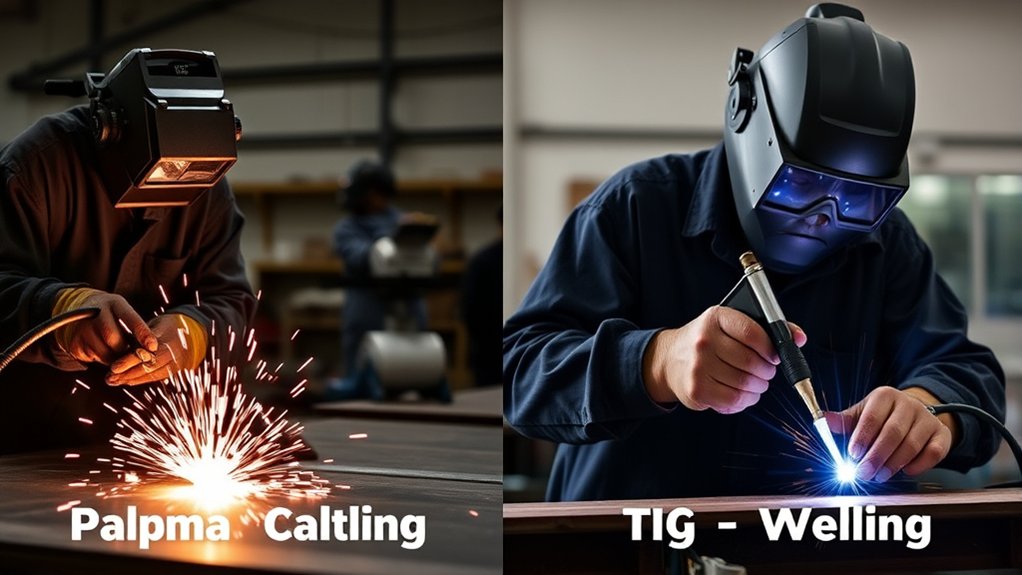
The easiest way to compare them is by the result they are designed to create. A plasma cutter removes metal. A TIG welder joins metal.
| Feature | Plasma Cutting | TIG Welding |
| Main purpose | Cuts metal apart | Joins metal together |
| Torch design | Nozzle and electrode are built to form a cutting jet | Torch holds a tungsten electrode and shielding cup |
| Gas | Often dry compressed air, nitrogen, oxygen, or other gases based on machine and material | Usually argon, sometimes argon/helium blends for specific work |
| Edge result | Kerf, dross, oxide, and heat tint may remain | Clean weld bead if the metal is prepared well |
| Control focus | Pierce, cut speed, standoff, and dross control | Puddle control, arc length, filler timing, and heat input |
The two processes share some electrical ideas, but their equipment is not interchangeable. That is why a clean shop setup often includes both: a plasma cutter for shaping parts and a TIG welder for joining them.
Voltage, Current, and Arc Behavior
Plasma cutting and TIG welding both create an arc through ionized gas, but the arc is controlled in different ways. A plasma cutter starts and maintains a cutting arc through its torch and gas stream. The gas helps form the plasma jet and carries molten metal out of the kerf.
TIG welding uses the arc to form a weld puddle. The shielding gas should protect the puddle without blasting it away. Too much turbulence, too much torch distance, or poor gas coverage can cause porosity, oxidation, and an unstable arc.
Voltage Requirements Explained
The exact open-circuit voltage and load voltage depend on the machine, so do not treat one number as universal. The important point is that a plasma cutter uses cutting circuitry and torch design, while TIG welding needs a welding output that can hold a stable arc at the puddle.
If your machine manual does not list a TIG mode, TIG torch connection, gas connection, and compatible polarity settings, it should not be used for TIG welding.
Current, Heat, and Penetration
Current affects heat. In TIG welding, you use current to control puddle size, penetration, and travel speed. Too little current can leave a cold bead with poor fusion. Too much current can burn through thin metal, overheat the tungsten, or create a wide, messy bead.
In plasma cutting, current affects cutting capacity, cut speed, kerf width, and dross. A setting that cuts well is not automatically useful for welding.
Gas Flow Dynamics
Gas flow is another major difference. Plasma cutting uses a focused, fast-moving gas stream to blow molten metal away. TIG welding uses shielding gas to protect the weld puddle and tungsten from the air.
For common TIG work, argon is the standard starting point. For common shop plasma cutting, dry compressed air is common. Always follow your machine manual because gas choice affects performance, safety, and consumable life.
Equipment Design and Requirements for Each Process
A plasma cutter and a TIG welder may both plug into power and clamp to the workpiece, but their internal design and front-end parts are different.
Products Worth Considering

Complete 123-Piece Set:All necessary TIG torch accessories and consumables for WP-17, WP-18, and WP-26 torches.

Complete TIG Torch Kit - 71pcs Tig Welding Torch accessories (consumables) kit. This set includes all the essential TIG torch accessories and consumables, so you can get started on your welding projects right away.
Power Source Differences
A TIG welder needs smooth current control. That is why TIG machines are built around a welding output that lets you set amperage for the material thickness and joint. Many TIG machines also support lift-arc or high-frequency starts, and some support AC output for aluminum.
A plasma cutter is built to start a pilot arc, transfer that arc to the work, and drive a plasma jet through the cut. That design is useful for cutting, but it does not give you the same torch control, shielding pattern, or filler-metal control you need for TIG.
Torch and Gas Setup
The TIG torch holds a tungsten electrode in a collet and directs shielding gas through a ceramic cup. You can tune the tungsten type, tungsten diameter, cup size, gas lens, argon flow, filler rod, and torch angle. For electrode selection and preparation, follow the welder manual and a trusted tungsten guide such as Miller Electric’s tungsten electrode guide.
The plasma torch uses consumables such as an electrode, nozzle, swirl ring, shield, and retaining cap. These parts are built to form and control a cutting jet. They are not a substitute for a TIG torch.
What If You Own a Plasma/TIG Combo Machine?
A multi-process machine can be useful, but the setup still matters. If it has a TIG mode, use the TIG torch port, set the correct polarity, connect argon, install the right tungsten, and use the work lead as directed by the manual.
Do not leave the plasma torch connected and try to weld with it. You are not TIG welding unless the machine is running through the TIG circuit and TIG torch.
Pro Tip: Before buying a combo unit, check whether it supports the TIG features you need. DC TIG is common on budget combo machines, but AC TIG for aluminum is a separate feature and is not always included.
Products Worth Considering

NON‑HF BLOWBACK PLASMA CUTTING READY: Non‑HF arc enables contact cutting on rusted or painted metal. Max cutting thickness up to 16 mm (5/8 inch) for steel, stainless steel and copper. Rated 30A@240V, delivers clean, smooth cut edges for DIY, maintenance and light professional tasks.

6-IN-1 WELDER & CUTTER: Outfit your entire shop for the price of one machine. MCT-520 multiprocess machine features 6 working modes: Gas MIG/Flux Core MIG/CUT/HF TIG/MMA/Spool Gun Aluminum Welding (Spool gun sold separately). This versatile welder covers all your project demands—from home DIY and garage projects to outdoor maintenance, farm equipment, and on-site fabrications.

6-IN-1 Multifunctional Welder Machine: This 6-in-1 multi welder supports FLUX MIG, GAS MIG, PLASMA CUTTING, HF TIG, and STICK,SPOT welding, provide a comprehensive solution for a wide range of welding and cutting tasks, suitable for both home DIY and industrial projects.
Challenges of Welding Over Fresh Plasma Cuts
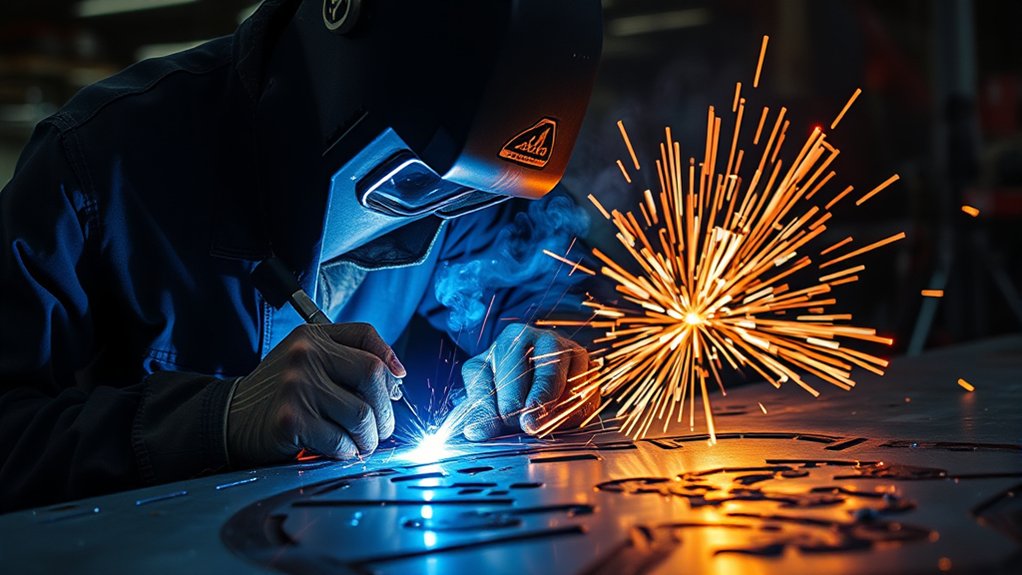
You can TIG weld after plasma cutting, but not over a dirty cut edge. Fresh plasma cuts often have dross, oxide, heat tint, slag-like residue, and a rough edge. TIG welding is sensitive to those problems because the puddle is small and the arc is precise.
If you weld over that contamination, you may see:
- Porosity, or small holes in the bead
- Black soot around the weld
- Unstable arc behavior
- Poor fusion at the joint edge
- Contaminated tungsten
- Weak or ugly welds
Plasma cut quality depends on factors such as cutting speed, arc current, standoff distance, and gas pressure. A recent Welding Journal study on plasma cut quality notes that cutting and shielding gas pressures can affect the final kerf and cut shape, which is why cleanup and fit-up matter before TIG welding.
How to Prepare a Plasma-Cut Edge Before TIG Welding
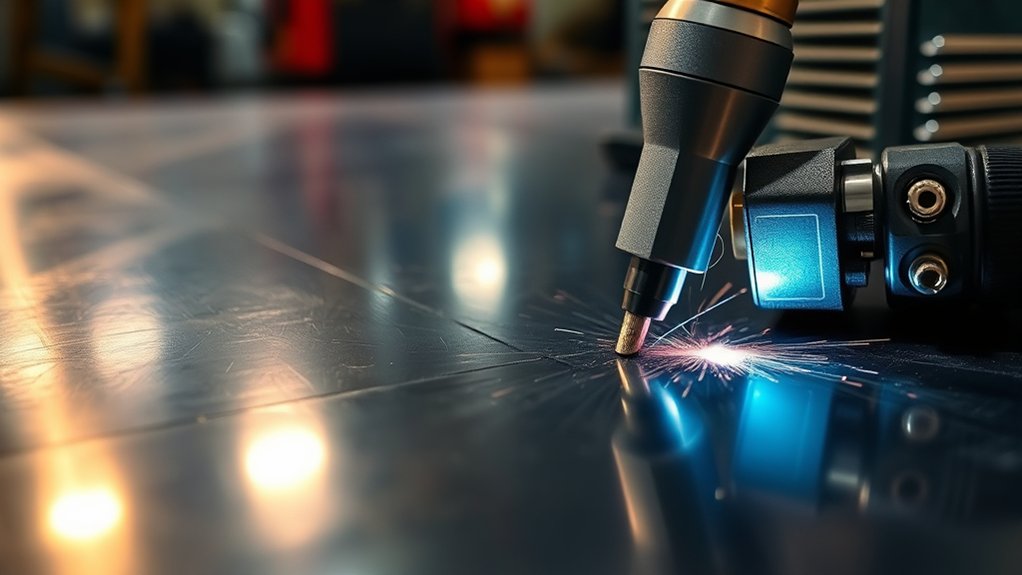
Good TIG welds start with clean metal. If the edge came from a plasma cutter, take a few extra minutes to prepare it before striking an arc.
- Knock off heavy dross. Use a chipping tool, file, grinder, or flap disc to remove the hard buildup on the cut edge.
- Grind to bright metal. Remove oxide, heat tint, and rough high spots from both sides of the joint.
- Deburr the edge. Sharp burrs can trap contamination and make fit-up harder.
- Clean with the right brush. Use a dedicated stainless brush for aluminum or stainless so you do not cross-contaminate the metal.
- Wipe the joint. Use a suitable metal-safe solvent and let it dry fully before welding.
- Check fit-up. Tight, even fit-up helps reduce overheating and filler rod overuse.
- Make a test tack. If the arc wanders or the puddle looks dirty, stop and clean again.
This prep step is especially important for stainless steel and aluminum because both show contamination quickly. Mild steel is more forgiving, but it still welds better after dross and oxide are removed.
Comparing Weld Quality: TIG Vs Plasma Cuts
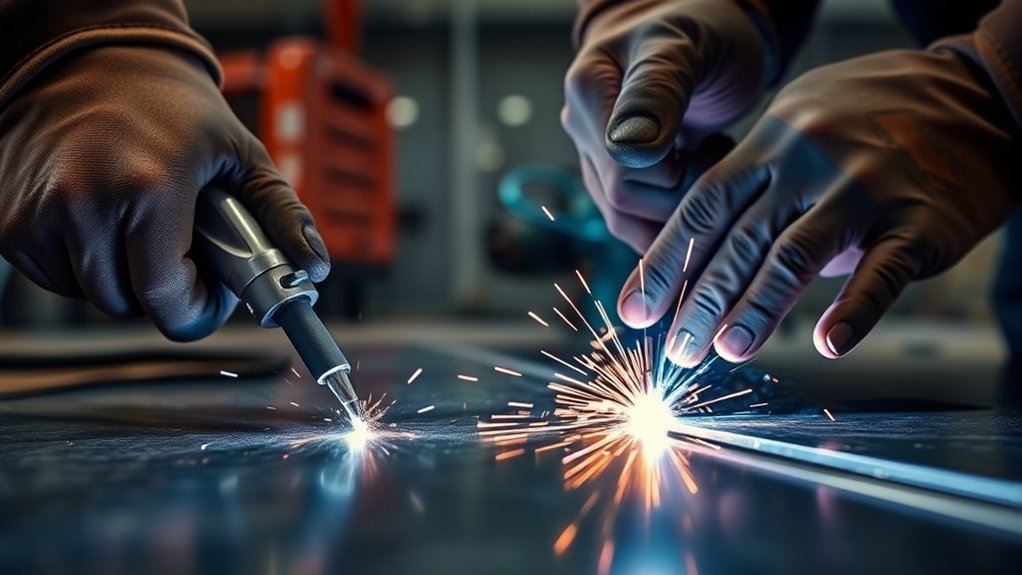
TIG welding can produce clean, precise, strong welds when the metal is prepared well. That is why it is often used for thin stainless, aluminum, chromoly, tubing, visible welds, and jobs where bead control matters.
A plasma cut edge is not a weld. It is a cut surface that may need finishing before it becomes a good weld joint. If the cut is square, clean, and free of dross, TIG welding can work well. If the cut edge is rough or oxidized, the weld puddle may pull in contamination and create a weak bead.
The plasma cutter can shape the part, but the TIG welder makes the joint. Treat cutting and welding as two separate steps.
Expert Tips for Achieving Strong and Appealing Welds
Use these tips when TIG welding parts that were cut with a plasma cutter:
- Cut slightly outside your final line. Leave a little material so you can grind to a cleaner final edge.
- Use clean consumables. A contaminated tungsten can make the arc wander and dirty the puddle.
- Match filler rod to the base metal. Do not guess on filler alloy, especially with stainless or aluminum.
- Control heat input. Thin metal can warp or burn through if you move too slowly.
- Protect the shielding gas. Drafts can blow argon away from the puddle and cause porosity.
- Inspect the backside. Poor penetration or sugaring on stainless can point to heat or shielding problems.
- Ventilate the area. NIOSH notes that welding, brazing, and thermal cutting can create respiratory hazards, so use local exhaust or safe ventilation when fumes are present.
If the weld keeps turning gray, black, porous, or rough, stop welding and solve the contamination problem first. More amperage will not fix a dirty joint.
Frequently Asked Questions
Can you use the same gas for both TIG welding and plasma cutting?
Usually not in a common home or shop setup. TIG welding usually uses argon. Many plasma cutters use clean, dry compressed air, though some plasma systems can use nitrogen, oxygen, argon-hydrogen, or other gases based on the machine and material. Always follow the machine manual.
How does plasma cutting affect metal before TIG welding?
Plasma cutting can leave dross, oxide, heat tint, and a rough kerf. Those leftovers can contaminate the TIG puddle and cause porosity, poor fusion, or an unstable arc. Grind or sand the edge to bright metal, deburr it, and wipe it clean before welding.
Are there safety risks when using both plasma cutting and TIG welding?
Yes. Both processes can expose you to arc radiation, hot metal, sparks, electric shock, fumes, and fire risk. Use correct PPE, keep flammables away, clamp the work lead correctly, ventilate the area, and use the proper filter shade for the process and amperage.
What materials can be TIG welded after plasma cutting?
Mild steel, stainless steel, and aluminum can be TIG welded after plasma cutting if the material is weldable and the cut edge is cleaned well. Stainless and aluminum need extra care because oxide and contamination can affect bead appearance and corrosion resistance.
How do you choose consumables for TIG welding after plasma cutting?
Choose the tungsten type and diameter for your amperage and material, then match the filler rod to the base metal. Use a clean cup, good gas coverage, and a properly sharpened tungsten. If the tungsten touches dross or the puddle, regrind it before continuing.
Can a 3-in-1 plasma cutter TIG weld aluminum?
Only if the machine specifically supports the right TIG process for aluminum. Many budget 3-in-1 machines offer DC TIG, which is useful for steel and stainless but not ideal for typical aluminum TIG work. Aluminum TIG usually needs AC output and proper cleaning action.
Conclusion
A plasma cutter and a TIG welder are not interchangeable. The plasma cutter is the right tool for cutting conductive metal, while the TIG welder is the right tool for making clean, controlled welds. If you own a combo machine, use the dedicated TIG mode with the proper TIG torch, argon, tungsten, and settings.
You can TIG weld after plasma cutting, but the cut edge must be cleaned first. Remove dross, oxide, burrs, and heat tint before you weld. That simple prep step can be the difference between a clean TIG bead and a weak, porous joint.
Sources
- OSHA 1910.133 Eye and Face Protection — supports filter shade and eye/face protection guidance for welding and plasma arc work.
- OSHA Welding, Cutting, and Brazing — supports hot-work hazard framing and safety context.
- NIOSH Criteria for a Recommended Standard: Welding, Brazing, and Thermal Cutting — supports ventilation and respiratory-risk guidance.
- Miller Electric Tungsten Electrode Selection and Preparation Guide — supports tungsten selection and preparation guidance for TIG welding.
- Cutting and Shield Gases Pressure Effects on Plasma Cutting Quality — supports the point that plasma cut quality depends on cutting and gas parameters.