A plasma cutter and a welding machine may appear in the same metalworking shop, but they solve different problems. A plasma cutter removes metal to create a cut, while a welding machine forms a joint between parts. Understanding their equipment needs, material limits, safety risks, and operating costs will help you choose the right tool for your project.
Quick Answer
A standard plasma cutter is not a welding machine. It uses a constricted plasma arc and gas flow to melt and eject conductive metal, creating a cut. A welder creates a joint. Some combo units contain both functions, and plasma arc welding exists, but neither makes a normal plasma-cutting torch suitable for welding.
Key Takeaways
- A plasma cutter separates electrically conductive metal, while a welding machine joins compatible materials.
- A multiprocess combo machine may contain cutting and welding modes, but each mode uses its own torch, leads, settings, and consumables.
- Plasma arc welding is a specialized welding process and is not the same as using a standard handheld plasma cutter.
- Choose equipment according to material, thickness, input power, duty cycle, air or gas requirements, and the result you need.
- Both processes create arc radiation, heat, fumes, noise, sparks, fire hazards, and electrical risks.
Last updated: July 20, 2026
What’s in This Article
- Understanding Plasma Cutters and Welding Machines
- Key Differences Between Plasma Cutters and Welding Machines
- Can One Machine Cut and Weld?
- Choose a Plasma Cutter If
- Choose a Welding Machine If
- Common Uses of Plasma Cutters
- Preparing Plasma-Cut Edges for Welding
- Essential Safety Measures for Plasma Cutting
- Advantages of Using Plasma Cutters
- Challenges and Limitations of Plasma Cutters
- Common Plasma-Cutting Problems
- Frequently Asked Questions
- Conclusion
- Sources
Understanding Plasma Cutters and Welding Machines
Plasma cutters and welding machines perform separate jobs in metalworking. A plasma cutter removes material along a narrow path. A welder forms a joint between two or more parts.
According to Hypertherm’s explanation of plasma cutting, the process sends an electric arc through a gas and turns part of that gas into plasma. A high-speed stream of this ionized gas melts the workpiece and ejects molten metal from the cut path, which is called the kerf.
Standard transferred-arc plasma cutting requires an electrically conductive workpiece. Common compatible metals include mild steel, carbon steel, stainless steel, aluminum, brass, and copper.
The exact cutting capacity depends on the power source, torch, consumables, gas or air quality, travel speed, input power, and the edge quality you expect. A machine’s clean-cut rating is more useful for normal work than its maximum severance rating, which describes a slower, rougher cut at the upper limit.
Welding covers a wider group of processes. The Welding Institute defines welding as joining parts through heat, pressure, or both. Common shop processes such as MIG, TIG, flux-cored, and stick welding use an electric arc to produce heat at the joint. Depending on the process, you may also use wire, a filler rod, an electrode, shielding gas, or flux.
Note: A plasma cutter can cut parts, remove damaged metal, bevel edges, or gouge a joint before welding. It does not create the finished welded joint.
Function and Purpose
A plasma cutter helps you cut plate, trim sheet metal, remove brackets, make openings, create shapes, and cut away damaged sections. With suitable gouging consumables, some systems can also remove a surface layer of metal without cutting completely through it.
A welding machine helps you assemble or repair parts. You can use welding to build frames, attach brackets, repair cracks, replace panels, fabricate gates, join exhaust tubing, and produce structural or non-structural joints.
Use a plasma cutter when the required result is a separated or shaped part. Use a welding machine when the required result is a permanent joint.
Technology and Operation
Plasma cutting uses a constricted arc and a fast gas stream. The arc supplies heat, and the gas stream clears molten metal from the kerf. Many portable systems use compressed shop air, while specialized systems may use oxygen, nitrogen, argon-based mixtures, or other process gases.
Air quality matters. Moisture, oil, and particles can disturb the arc, damage consumables, and reduce cut quality. Use the airflow, pressure, filtration, and dryer arrangement required by your machine’s manual.
Arc welding concentrates heat at the joint. In MIG welding, a machine feeds consumable wire continuously. TIG welding uses a non-consumable tungsten electrode and may use a separate filler rod. Stick welding uses a flux-coated consumable electrode. Each process has different controls, strengths, and limitations.
Material Compatibility
Standard plasma cutters work on electrically conductive metals. They do not cut wood, glass, masonry, or ordinary plastic in the way a saw, router, laser, or waterjet can.
Welding compatibility depends on both the material and the welding process. Mild steel is widely weldable with MIG, TIG, flux-cored, and stick processes. Stainless steel and aluminum require suitable filler metals, shielding, polarity, preparation, and machine capability.
TIG welding provides fine heat and puddle control for thin material and detailed work. MIG welding is often easier to learn for general fabrication. Flux-cored and stick processes can perform well outdoors because they do not always depend on an easily disturbed external shielding-gas cloud.
Key Differences Between Plasma Cutters and Welding Machines
Focus first on the final result. If you need to separate or shape conductive metal, use a plasma cutter. If you need to attach parts and create a joint, use a suitable welding process.
Quick verdict: Choose a plasma cutter for cutting, trimming, piercing, and gouging. Choose a welding machine for fabrication, assembly, crack repair, and permanent joints.
| Feature | Plasma Cutter | Welding Machine |
|---|---|---|
| Main result | Separates or removes metal | Joins compatible parts |
| Basic action | Melts and ejects metal from a kerf | Forms a weld through heat, pressure, or both |
| Material requirement | Electrically conductive workpiece | Depends on the welding process and material |
| Typical supplies | Electric power and compressed air or process gas | Electric power plus wire, electrodes, filler, gas, or flux as required |
| Consumables | Electrode, nozzle, shield, retaining cap, and related torch parts | Wire, rods, electrodes, contact tips, nozzles, tungsten, or liners depending on process |
| Typical cleanup | Dross removal, edge squaring, or grinding | Slag removal, spatter cleanup, brushing, or grinding as needed |
| Quality measure | Kerf width, bevel, dross, accuracy, and heat effect | Fusion, penetration, profile, soundness, and required joint strength |
| Main hazards | Arc radiation, sparks, molten metal, fumes, noise, fire, and electric shock | Arc radiation, hot metal, fumes, sparks, fire, gas hazards, and electric shock |
Cut Quality Versus Joint Quality
A plasma cutter is judged by how straight, smooth, accurate, and clean the cut is. Incorrect speed, torch angle, standoff, gas flow, or consumable condition can produce dross and a beveled edge.
A weld is judged by whether the joint meets its service requirements. Appearance alone does not prove strength. Fit-up, penetration, fusion, filler selection, heat input, shielding, joint design, and procedure all affect weld quality.
Equipment and Ownership Needs
A basic handheld plasma setup may require the cutter, torch, work lead, suitable electrical circuit, air compressor, moisture control, spare consumables, cutting guide, and PPE. A built-in-compressor model reduces setup needs but may have lower airflow or cutting capacity than a larger shop system.
A welding setup depends on the process. A MIG system may need wire, shielding gas, a regulator, contact tips, and a wire-feed gun. A stick setup can be simpler and more portable. A TIG setup may need shielding gas, tungsten electrodes, filler rods, a torch, and additional controls.
Do not compare purchase prices alone. Include electrical upgrades, air treatment, cylinders, regulators, consumables, replacement torch parts, maintenance, and protective equipment.
Can One Machine Cut and Weld?
Some multiprocess machines include plasma cutting together with TIG, stick, or other welding modes. This can save space and reduce the number of power supplies in a small shop.
However, the functions remain separate. You switch leads, torches, gas or air connections, consumables, and machine settings when you change processes. The plasma torch cuts, while the welding torch or electrode holder creates the joint.
A combination unit also creates a shared point of failure. If its main power supply needs repair, you may lose both your cutting and welding capability. Separate machines can offer more capacity, easier upgrades, and less setup switching.
Note: Plasma arc welding is a genuine welding process, but it uses dedicated equipment and carefully controlled plasma and shielding gases. It is not the same as trying to weld with an ordinary plasma-cutting torch. See ESAB’s explanation of plasma arc welding.
Warning: Do not improvise a welding machine as a plasma cutter or use a plasma cutter as a welder. The output characteristics, torch design, gas flow, controls, and safety systems are different.
Choose a Plasma Cutter If
Choose a plasma cutter when your main goal is to cut electrically conductive metal quickly and with good control. It is well suited to trimming sheet metal, cutting plate, making brackets, removing damaged panels, cutting openings, creating curves, and preparing pieces for fabrication.
Before buying, check these specifications:
- Rated cut capacity: Choose a machine rated for the thickness you cut regularly, not only its maximum severance thickness.
- Input power: Confirm the required voltage, phase, plug, breaker, wiring, and generator compatibility.
- Duty cycle: Make sure the machine can cut for the required time without repeated thermal shutdowns.
- Air demand: Match the compressor’s delivered airflow and pressure to the manual, not only the tank size.
- Air quality: Plan for filtration and moisture removal.
- Consumables: Check local availability, expected life, and cost.
- Torch features: Consider pilot arc, drag-cutting capability, gouging support, and torch length.
- Portability: Include the compressor, cables, and air-treatment equipment in your assessment.
A capable pilot-arc machine can cut through painted, rusty, or uneven conductive metal. You must still expose clean metal where the work clamp attaches so the cutting circuit has reliable contact.
Products Worth Considering

【Non-Touch Pilot Arc Function】The ARCCAPTAIN 55A plasma cutter features a pilot arc function. It utilizes a high-frequency non-touch arc starting mode. The torch head does not need to touch the metal plate, reducing energy consumption during non-cutting work, minimizing electrode burning, and extending service life. NOTE: Do not switch voltages until the screen turns off and the fan stops.

【Non-Touch Pilot Arc Function】The plasma cutter features a high frequency non-touch arc starting mode. It allows for cutting steel surfaces with dirt, rust or coatings. The torch head does not need to touch the metal plate, reducing energy consumption, minimizing electrode burning, and extending service life. NOTE: DO NOT power on until the screen turns off and the fan stops working!
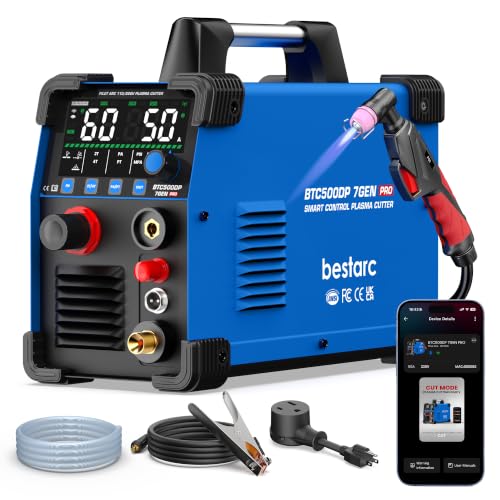
[Smart APP Remote Control Up to 98FT] Control your plasma cutter from up to 98 ft (30 m) away via Bluetooth APP. Adjust cutting current, switch cutting modes, save preferred settings, monitor operating status, and check error codes directly from your phone. Reduce trips back to the machine and work more efficiently—ideal for workshops, auto repair, farms, garages, and DIY projects.
Choose a Welding Machine If
Choose a welding machine when the job requires a permanent bond between two or more parts. Welding suits fabrication, frames, gates, brackets, exhaust systems, body-panel repairs, machinery, furniture, and structural work performed under an appropriate procedure.
Match the process to the project:
- MIG welding: A practical choice for general fabrication and automotive work when you can protect the shielding gas from wind.
- Flux-cored welding: Useful for faster steel fabrication and some outdoor work, depending on the wire.
- TIG welding: Offers precise heat and puddle control for clean, detailed work on suitable metals.
- Stick welding: Portable and useful for repairs, thicker steel, and outdoor conditions.
Also consider material thickness, joint design, required strength, welding position, power supply, portability, operator skill, and whether a code or manufacturer procedure controls the repair.
Products Worth Considering
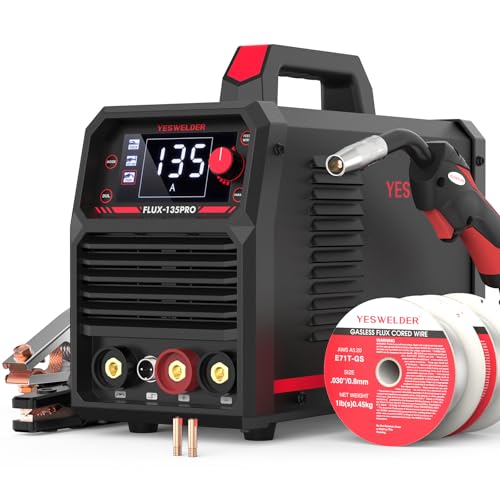
READY OUT OF THE BOX: Start welding immediately! It masterfully handles Gasless Flux Core MIG, Stick, and Lift TIG (Extra Lift TIG torch required). This budget-friendly 3-in-1 machine includes extra E71T-GS .030''&.035'' flux core wires, known for its smooth arc and high feedability. Say goodbye to heavy shielding gas cylinders—perfect for outdoor, windy, or all-position welding.

【200Amp Power for Home Repairs & DIY】 This 110V stick welder Adjustable Current: 20-200A. Easily weld metal materials with 0.06-0.2 inch thickness, such as cast iron, mild steel, etc. For stainless steel, use E308L-16 rods only. Includes 20 welding rods right out of the box, so you can start your first project immediately.

POWERFUL 6-IN-1 MIG WELDER: The multi-process welding machine that included Gas/Solid Wire MIG(GMAW), Gasless Flux Core MIG(FCAW), Stick/MMA, Spot welding, Lift TIG, spool gun connector optional (tig gun and spool gun not included). Suitable for all kinds of welding requirements .023”/.030”/.035” solid wire, .030”/.035” flux core wire, .035”/.040” aluminum wire. (.023”, .040” rollers need to buy separately)
Common Uses of Plasma Cutters
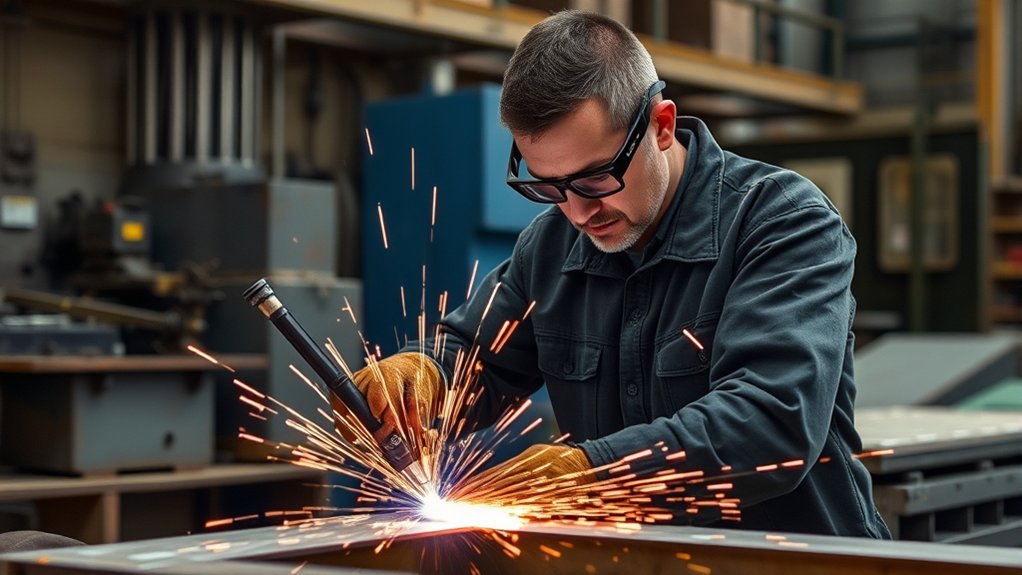
Plasma cutters support fabrication, maintenance, automotive work, construction, farming, metal art, and repair. They are especially useful when you need freehand control, fast setup, and the ability to cut several conductive metal types.
Good results depend on correct amperage, clean and dry air, suitable consumables, a stable torch angle, proper standoff, and steady travel speed.
Metal Fabrication Applications
In metal fabrication, plasma cutters can produce plates, brackets, frames, gussets, tabs, flanges, signs, and custom profiles. A straightedge, circle guide, template, track, or CNC table can improve repeatability.
Machines range from compact handheld units for sheet metal to industrial mechanized systems for thick plate. Capacity claims are not interchangeable, so compare the manufacturer’s recommended cut rating at the material and quality level you need.
Construction and maintenance crews may use plasma cutting on plates, supports, decking, machinery, and other conductive components. HVAC workers can use lower-powered systems for suitable sheet-metal parts, although snips, nibblers, shears, and other tools may be more appropriate for some thin materials.
Automotive Repair Efficiency
In automotive work, a plasma cutter can remove damaged body sections, brackets, exhaust components, seized hardware, and fabricated attachments. It can also trim replacement panels and create custom mounting pieces.
The process works on common vehicle metals such as mild steel, stainless steel, and aluminum when the machine and consumables suit the material. A controlled cut can reduce later grinding, but sparks and molten metal can travel behind panels and ignite insulation, seam sealer, wiring, carpet, fuel residue, or trim.
Follow the vehicle manufacturer’s repair guidance before cutting or welding structural, high-strength, coated, or safety-critical components. Disconnect or protect sensitive systems as directed by the repair procedure.
Preparing Plasma-Cut Edges for Welding
A plasma-cut edge is not automatically ready to weld. Inspect it before fit-up and remove anything that could affect fusion, joint geometry, or cleanliness.
- Remove dross: Chip, scrape, grind, or sand away resolidified metal from the lower edge.
- Correct excessive bevel: Square or bevel the edge to match the required joint design.
- Clean to bright metal: Remove paint, rust, scale, oxide, plating, oil, marker residue, and other contamination from the weld area.
- Check dimensions: Confirm the gap, root face, bevel angle, and alignment before tacking.
- Inspect for heat damage: Look for excessive warping, gouges, cracks, or an irregular edge.
- Use the correct welding procedure: Match the filler, shielding, polarity, preheat, and heat control to the base metal and application.
Pro Tip: Make a short test cut on scrap of the same material and thickness. Correct the amperage, speed, standoff, and air supply before cutting the finished part.
Essential Safety Measures for Plasma Cutting
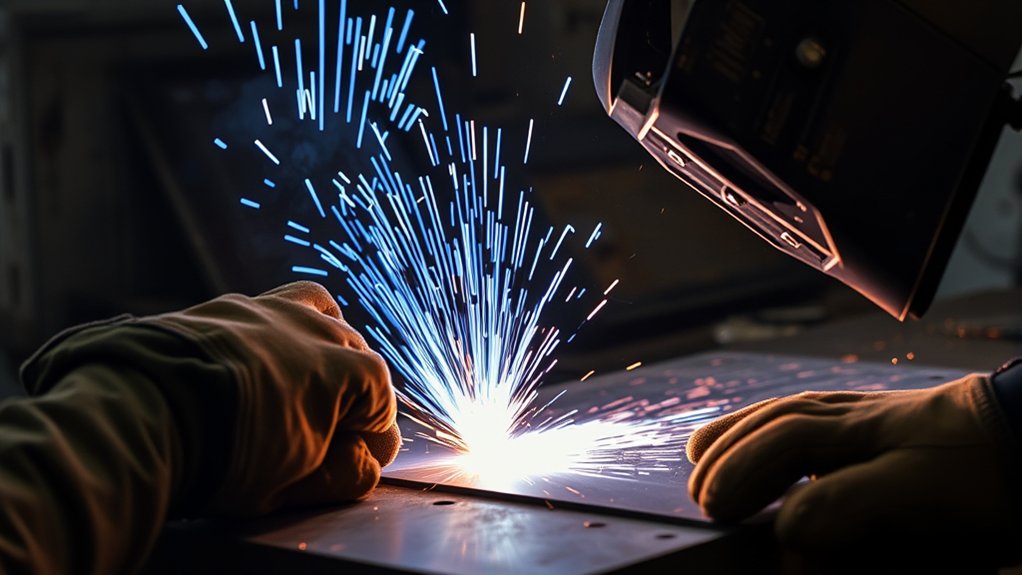
A plasma cutter creates intense arc radiation, hot sparks, molten metal, fumes, noise, hot surfaces, fire hazards, and electrical risks. Read the machine manual and complete appropriate hot-work training before using it.
Wear Suitable PPE
- Wear impact-rated safety glasses with side protection under your cutting shield or helmet.
- Use a filter shade suitable for plasma arc cutting at the machine’s operating current.
- Wear flame-resistant clothing that covers your skin.
- Use dry cutting gloves and suitable safety footwear.
- Use hearing protection when noise levels require it.
- Keep synthetic clothing, open pockets, cuffs, and exposed skin away from sparks.
OSHA’s eye and face protection standard bases filter selection on the process and operating range. Do not assume one helmet shade is correct for every plasma cutter.
Control Fumes and Coatings
Use local exhaust or effective general ventilation. Keep your head out of the fume plume, and do not cut in a confined space unless the work has been evaluated and controlled by qualified personnel.
Identify the base metal, plating, paint, primer, coating, and residue before heating it. Thermal cutting stainless steel can create hexavalent chromium exposure. Galvanized, lead-painted, cadmium-plated, or chemically coated materials may create other hazardous fumes.
If engineering controls do not keep exposure within the applicable limit, respiratory protection may be required as part of a proper respiratory-protection program. A disposable dust mask is not a universal solution for welding or cutting fumes.
Warning: Never cut a drum, tank, pipe, cylinder, or closed container that held fuel, solvent, oil, gas, or another unknown substance unless it has been emptied, cleaned, tested, isolated, and vented under an approved procedure. Residue or vapor can explode when heated.
Prevent Fire and Electric Shock
Move combustibles away from the spark path, including materials below or behind the workpiece. Use fire-resistant screens where needed, keep suitable fire-extinguishing equipment available, and inspect hidden spaces after cutting.
For covered workplaces, OSHA’s welding and cutting requirements can require a fire watch when appreciable combustible material is within 35 feet or when sparks could ignite material farther away.
Keep the machine, torch, gloves, floor, and work area dry. Inspect cables, torch parts, air lines, connectors, and the work lead before use. Turn off and isolate power before replacing consumables or opening the torch.
Attach the work clamp to clean, bare metal as close to the cutting area as practical. Do not attach it through paint, heavy rust, grease, or loose scale.
Inspect the Machine Before Cutting
- Confirm that the input circuit matches the machine requirements.
- Check the torch body, trigger, shield cup, nozzle, electrode, and retaining parts.
- Drain compressor moisture and inspect filters or dryers.
- Confirm the specified air pressure and delivered airflow.
- Route leads and hoses away from sharp edges, traffic, sparks, and hot metal.
- Make sure the workpiece is stable and the molten-metal stream has a safe exit path.
- Practice on scrap before cutting an important or safety-critical part.
Note: This article provides general information. Your machine manual, employer procedures, local rules, material safety information, and applicable welding or hot-work standards take priority.
Advantages of Using Plasma Cutters
Speed is one of the main benefits of plasma cutting. The process can start quickly and usually does not need the preheat cycle associated with oxy-fuel cutting.
Correct settings can produce a narrow kerf and an edge that needs limited cleanup. Plasma can also cut stainless steel, aluminum, brass, and copper, which an ordinary oxy-fuel cutting process cannot handle in the same way.
Pilot-arc systems can work on painted, rusty, dirty, or expanded metal. The work-clamp connection must still contact clean conductive metal.
| Advantage | What It Means | Practical Benefit |
|---|---|---|
| Fast cutting | A concentrated arc melts the cut path while gas ejects the molten metal. | Shorter cutting time on suitable material. |
| Usually no preheat cycle | The cutting arc can begin once the machine and workpiece are ready. | Faster setup for many routine cuts. |
| Material versatility | Works on many electrically conductive metals. | One system can cut steel, stainless, aluminum, brass, and copper within its capacity. |
| Freehand control | The torch can follow straight lines, curves, guides, and templates. | Useful for repairs and custom fabrication. |
| No oxy-fuel flame setup | Air-plasma systems use electricity and compressed air instead of oxygen and fuel gas. | Avoids the fuel-gas setup required for oxy-fuel cutting. |
Challenges and Limitations of Plasma Cutters
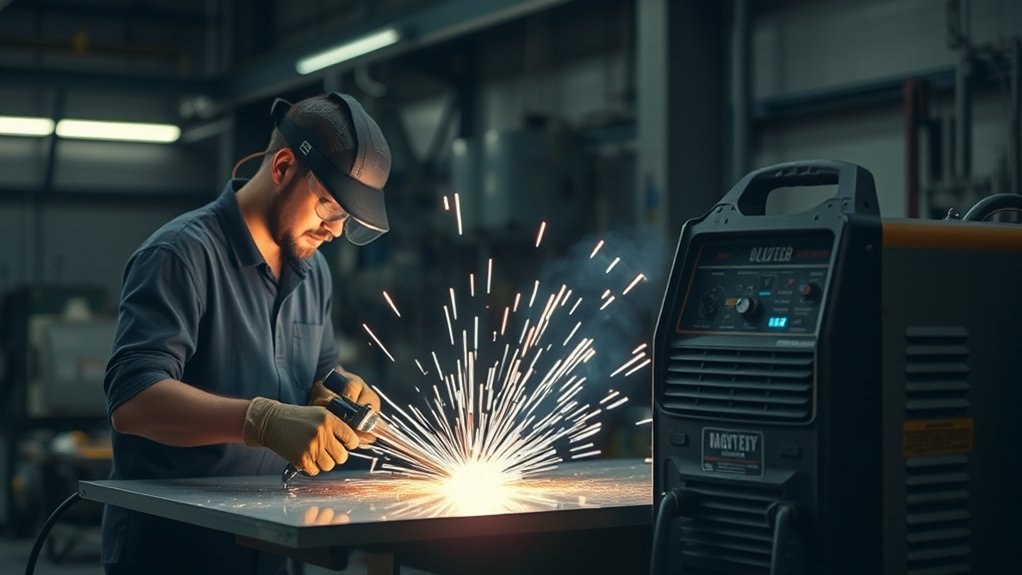
Plasma cutting is not the best option for every material, thickness, location, or finish requirement. Standard systems cannot cut non-conductive material, and cut quality falls when you push a machine beyond its recommended capacity.
Thicker cuts may have more bevel, dross, drag lines, and heat effect. A maximum severance cut may separate the plate but leave an edge that needs substantial grinding before assembly or welding.
Good manual cutting takes practice. You must coordinate torch angle, standoff, travel speed, direction, amperage, air supply, and consumable condition.
The complete setup may include a compressor, dryer, filters, spare consumables, electrical work, guides, ventilation, and PPE. That can make the total investment higher than the cutter’s purchase price suggests.
Plasma cutting also produces noise, bright light, fumes, sparks, molten metal, and a stream of hot material below the workpiece. These hazards can limit where you can cut safely.
Pro Tip: Keep the air supply clean and dry, and replace consumables as a matched set when the manual recommends it. A damaged nozzle or electrode can cause bevel, an unstable arc, and rapid wear of new parts.
Common Plasma-Cutting Problems
| Problem | Likely Causes | What to Check |
|---|---|---|
| Arc starts but will not transfer | Poor work-clamp contact, loose lead, dirty contact point, or excessive torch distance | Clamp to clean bare metal, inspect the work lead, and follow the starting method in the manual. |
| Arc sputters or cuts unevenly | Wet air, incorrect pressure, low airflow, worn consumables, or unstable input power | Drain the compressor, inspect filters, verify delivered airflow, and inspect the electrode and nozzle. |
| Heavy low-speed dross | Travel is too slow, amperage is too high, or the torch is too far from the work | Increase speed gradually and return to the manual’s recommended current and standoff. |
| High-speed dross or incomplete cut | Travel is too fast, current is too low, or the machine lacks capacity | Reduce travel speed and confirm that the material is within the rated cut range. |
| Beveled edge | Tilted torch, worn nozzle, wrong cutting direction, excessive speed, or incorrect standoff | Hold the torch square, inspect the nozzle opening, and test the required direction and speed. |
| Short consumable life | Wet or dirty air, piercing too close, incorrect pressure, excessive pilot-arc time, or mismatched parts | Improve air treatment, use the correct pierce height, and install the specified consumable set. |
| Excessive warping | Travel is too slow, amperage is unnecessarily high, or the cutting sequence traps heat | Use the lowest suitable current, move steadily, support the sheet, and plan a balanced cut sequence. |
Frequently Asked Questions
Can plasma cutters be used on non-metal materials?
A standard transferred-arc plasma cutter requires an electrically conductive workpiece. It is not the correct tool for cutting wood, ordinary plastic, glass, masonry, or other non-conductive materials.
How do I maintain a plasma cutter for longer service life?
Keep the air supply clean and dry, inspect the torch and leads, clean the machine as directed, and replace worn electrodes, nozzles, shields, and other consumables with the correct parts. Follow the inspection intervals and installation procedures in the manual.
Are plasma cutters suitable for hobbyists and beginners?
Yes, provided the user has a suitable work area, input circuit, air supply, PPE, ventilation, and safety training. Start with scrap metal and practice edge starts, straight cuts, travel speed, and shutdown procedures before cutting a finished part.
What costs should I budget for when buying a plasma cutter?
Budget for more than the power source. Your total may include a compressor, air dryer, filters, electrical upgrades, extension leads approved for the load, consumables, guides, ventilation, hearing protection, eye and face protection, gloves, and flame-resistant clothing. Prices vary too widely by region and capacity for one permanent range to remain useful.
Can plasma cutters be used underwater?
Specialized industrial systems and procedures can perform underwater plasma cutting. Do not immerse or operate a standard shop plasma cutter underwater. A CNC water table that holds water below the plate is also different from operating an ordinary handheld torch underwater.
Can you weld with a plasma cutter?
You cannot create a proper welded joint with a standard plasma-cutting torch. Use a suitable welding machine. Plasma arc welding does exist, but it uses specialized welding equipment, gas control, torch components, and procedures.
Do you need an air compressor for a plasma cutter?
Many portable plasma cutters require an external air compressor. Some compact models contain a built-in compressor, while specialized systems may use bottled process gases. Match the delivered airflow and pressure to the machine manual.
Is a plasma cutter better than a welding machine?
Neither tool is universally better because they perform different jobs. A plasma cutter is better for separating and shaping conductive metal. A welding machine is better for joining parts. Many fabrication projects require both.
Can a combination machine replace separate cutting and welding machines?
A combination machine can save space and suit occasional light work. Separate machines may offer greater duty cycle, capacity, process control, easier upgrades, and continued access to one process if the other machine needs repair.
What is the difference between plasma cutting and plasma arc welding?
Plasma cutting uses arc heat and a forceful gas stream to melt and eject metal from a kerf. Plasma arc welding uses a controlled, constricted plasma arc to create and protect a weld pool so parts can join. The equipment, gas flow, torch design, and operating goals are different.
Conclusion
A standard plasma cutter is not a welding machine. It cuts and removes electrically conductive metal, while a welding machine creates a joint between compatible parts.
Choose plasma cutting when you need to trim, pierce, shape, sever, or gouge metal. Choose welding when your project requires parts to remain joined and carry the expected load. A combo machine may provide both modes, but it still uses separate cutting and welding equipment within one unit.
Before working, confirm the material, thickness, machine capacity, electrical supply, air or gas requirements, consumables, ventilation, PPE, and fire controls. Inspect the equipment and follow the manufacturer’s manual each time you cut or weld.
Sources
- Hypertherm: How Does a Plasma Cutter Work? — plasma arc formation, conductive materials, and cutting action.
- Hypertherm: Guide to Plasma Gas Selection — compressed air, process gases, and air-quality considerations.
- The Welding Institute: What Is Welding? — the definition and purpose of welding processes.
- ESAB: GTAW and Plasma Arc Welding — the distinction between plasma arc welding and ordinary plasma cutting.
- OSHA: Welding, Cutting, and Brazing Standards — eye protection, ventilation, fire prevention, containers, and coated-material requirements.
- NIOSH: Control of Hexavalent Chromium Exposures — chromium exposure associated with stainless-steel welding and thermal cutting.