Converting an arc welder into a plasma cutter may sound like a practical way to reuse shop equipment, but the two machines are not interchangeable. A plasma cutter combines a purpose-built power supply, matched torch, controlled air or gas flow, arc-start system, cooling, insulation, fault protection, and operator controls. A standard arc welder does not provide that complete system.
Quick Answer
You should not convert an arc welder into a plasma cutter. A plasma cutter needs a matched DC power source, torch, start circuit, air or gas control, cooling, fault protection, and tested insulation. For home or small-shop use, choose a commercially manufactured, listed or certified plasma cutter and follow its manual.
Key Takeaways
- An arc welder and a plasma cutter both create an electric arc, but their power control, torch design, gas flow, and safety systems are different.
- Adding a rectifier, plasma torch, voltage booster, or air supply does not turn a welder into a tested cutting system.
- The work clamp completes the cutting-current circuit. It does not replace the machine’s protective electrical grounding.
- Use a purpose-built plasma cutter, suitable PPE, clean and dry air, effective ventilation, and hot-work fire controls.
- A licensed electrician can verify the shop circuit for a commercial cutter but does not automatically qualify as a plasma-system designer or product-certification engineer.
At a Glance
| Time Required | Commercial-cutter setup time varies by model, power connection, air system, and operator experience. Follow the manual rather than a universal time estimate. |
| Difficulty | Homemade conversion: not recommended. Setting up a commercial cutter: moderate, provided the correct electrical supply and air source are already available. |
| Tools Needed | Purpose-built plasma cutter, manufacturer-approved torch and consumables, clean and dry air supply when required, work clamp, rated PPE, fire extinguisher, and suitable ventilation. |
| Cost | Depends on cutting capacity, input power, air requirements, consumables, and accessories. A commercial unit avoids the custom engineering, enclosure, validation, and troubleshooting required by an experimental build. |
Understanding the Basics of Plasma Cutting
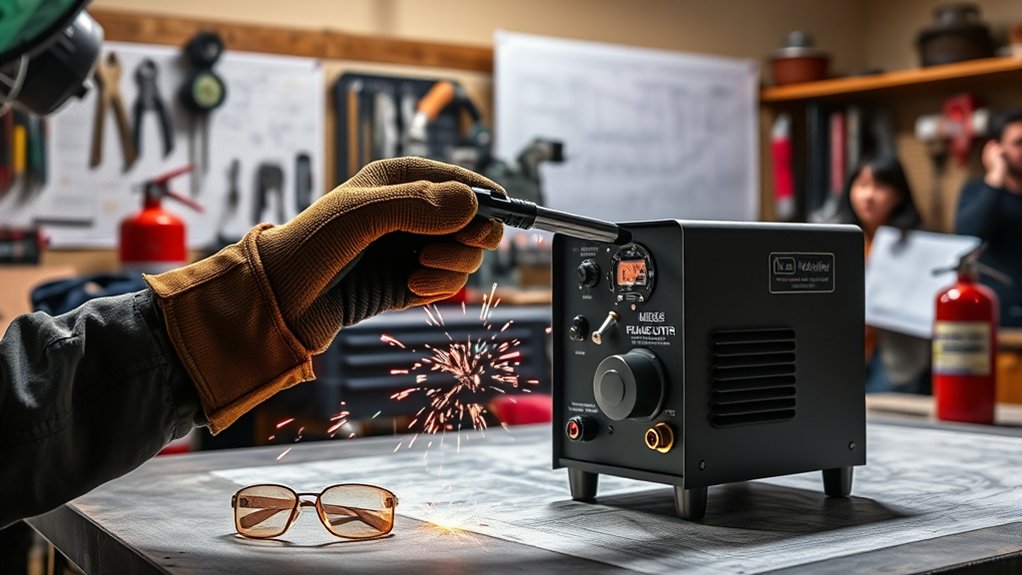
Plasma cutting uses a high-velocity jet of electrically conductive ionized gas to melt metal and blow the molten material out of the cut. It works on electrically conductive materials such as carbon steel, stainless steel, aluminum, copper, and brass.
A stick welder, also called a shielded metal arc welder, is designed to create a weld by maintaining an arc between a consumable electrode and the workpiece. A plasma cutter is designed to produce a narrow cutting arc through a torch while controlling electrical output and air or gas flow.
This difference matters because a plasma cutter is not simply a welder with a different torch or more voltage. The power source, torch, consumables, gas path, arc-start method, current regulation, cooling, enclosure, wiring, and fault protection must operate as one matched system.
| Feature | Stick Welder | Plasma Cutter |
|---|---|---|
| Main job | Joins metal with a consumable electrode and weld pool | Cuts conductive metal with a constricted plasma jet |
| Arc path | Electrode to workpiece | Through a matched torch and nozzle to the workpiece |
| Air or gas system | Not part of normal stick-welding operation | Controls plasma formation and removes molten metal |
| Consumables | Welding electrodes | Model-specific electrode, nozzle, shield, retaining cap, swirl ring, or cartridge |
| Controls and protection | Designed around welding output and duty cycle | Coordinates current, torch state, gas flow, arc starting, temperature, and faults |
Note: Many air-plasma cutters require clean, dry, oil-free compressed air. Moisture, oil, dirt, incorrect pressure, or insufficient flow can reduce cut quality, shorten consumable life, and prevent reliable arc starting. Use the pressure and flow listed for your exact model.
What a Complete Plasma Cutting System Requires
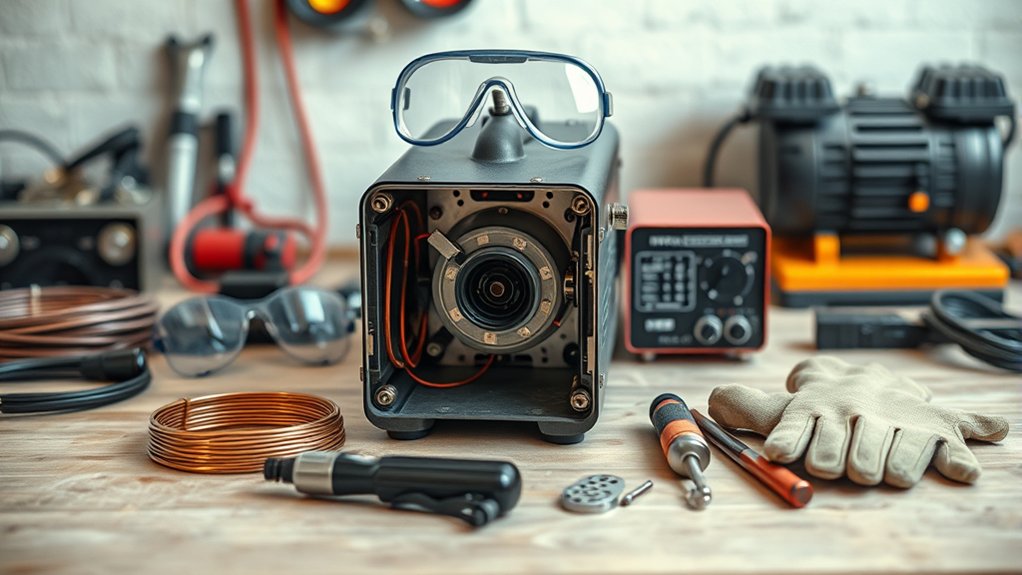
If your goal is safe plasma cutting, focus on the systems included in a purpose-built cutter rather than trying to assemble a cutting machine from unrelated high-voltage parts.
A complete setup normally includes:
- Plasma cutting power source: Sized for the material thickness and matched to the available input voltage, phase, breaker, plug, and wiring.
- Matched torch: Designed for the power source, output range, arc-start method, cooling system, and intended cutting process.
- Correct consumables: Depending on the model, these may include an electrode, nozzle, shield, retaining cap, swirl ring, or a one-piece cartridge.
- Air or cutting-gas supply: A compressor, regulator, filter, dryer, and hose capable of providing the pressure, flow, and cleanliness specified by the manufacturer.
- Work lead and clamp: Properly rated cables with secure contact on clean bare metal.
- Protective electrical grounding: A correctly installed supply circuit and equipment grounding conductor that are separate from the cutting-current work lead.
- Cooling and thermal protection: Fans, heat sinks, sensors, and shutdown controls designed around the machine’s output and duty cycle.
- Fault and interlock systems: Controls that respond to torch, consumable, gas, temperature, and electrical problems.
- Personal protective equipment: Suitable eye and face protection, safety glasses, gloves, flame-resistant clothing, hearing protection, and respiratory protection when the hazard assessment requires it.
Avoid salvaged microwave capacitors, ignition coils, television flyback transformers, open spark gaps, or improvised high-voltage modules. These parts may lack suitable insulation, guarding, discharge controls, fault protection, and a tested enclosure. Their failure can expose the operator to shock, fire, burns, flying debris, or damaged equipment.
Do not open or service a plasma cutter’s internal power electronics unless the manufacturer’s instructions permit the work and you are qualified for that service. User maintenance is normally limited to tasks such as cleaning accessible filters and vents, inspecting cables, and replacing approved torch consumables.
Products Worth Considering
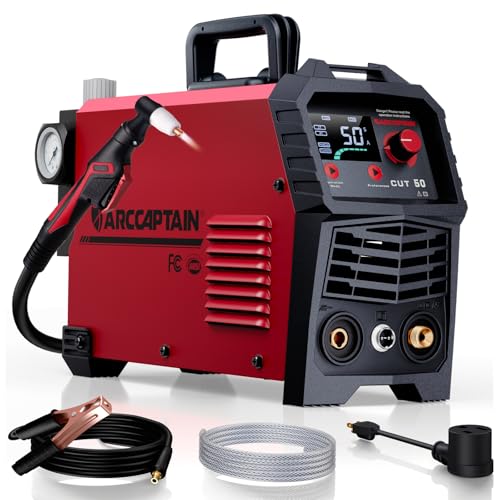
【Powerful Cutting Ability】Switch effortlessly between 110V and 220V for home or workshop use. Achieve professional 1/2" clean cuts on steel, aluminum, and copper with advanced LGBT technology. Perfect for DIY projects and heavy-duty tasks. Recommended maximum cutting thickness: 12mm @ 35A / 110V / 55 PSl; 18mm @ 50A / 220V / 75 PSI. Note: Requires compressed air (compressor sold separately).

【Non-Touch Pilot Arc Function】The ARCCAPTAIN 55A plasma cutter features a pilot arc function. It utilizes a high-frequency non-touch arc starting mode. The torch head does not need to touch the metal plate, reducing energy consumption during non-cutting work, minimizing electrode burning, and extending service life. NOTE: Do not switch voltages until the screen turns off and the fan stops.

【Non-Touch Pilot Arc Function】The plasma cutter features a high frequency non-touch arc starting mode. It allows for cutting steel surfaces with dirt, rust or coatings. The torch head does not need to touch the metal plate, reducing energy consumption, minimizing electrode burning, and extending service life. NOTE: DO NOT power on until the screen turns off and the fan stops working!
Safety Precautions and Best Practices
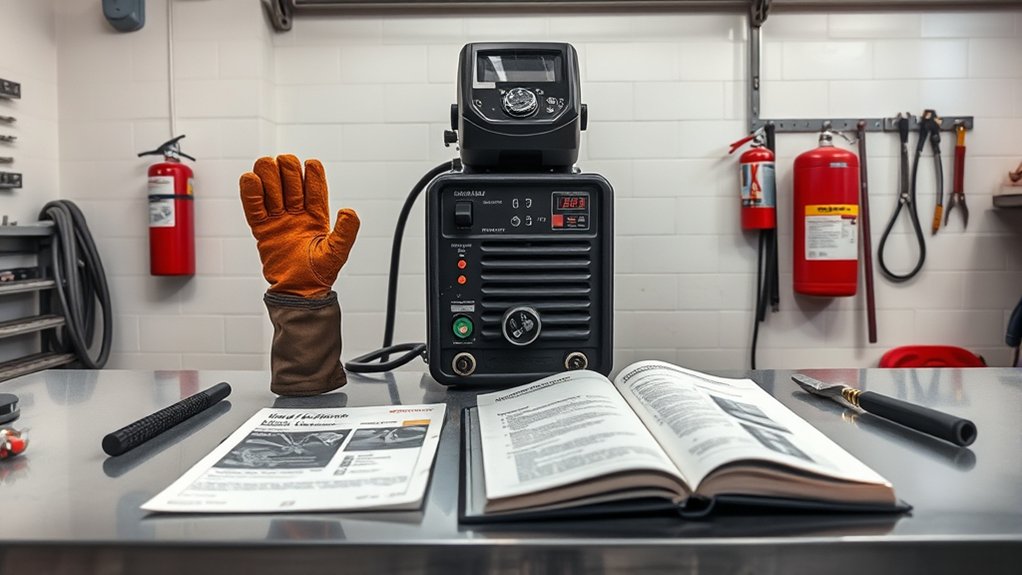
Plasma cutting is hot work. It produces sparks, molten metal, intense visible and ultraviolet radiation, noise, fumes, hot surfaces, and electrical hazards. In covered workplaces, review the applicable OSHA welding, cutting, and brazing requirements before starting.
Control Fire and Explosion Hazards
Move combustible material away from the cutting area whenever practical. Protect anything that cannot be moved with suitable fire-resistant barriers, and check wall openings, floor openings, ducts, concealed spaces, and the opposite side of metal partitions for anything that sparks or conducted heat could ignite.
For OSHA-covered workplaces, a fire watch is required under specified conditions, including when appreciable combustibles are within 35 feet of the work or when sparks could reach hidden or easily ignited material. When required, the fire watch must continue for at least 30 minutes after cutting ends. Keep suitable fire-extinguishing equipment ready for immediate use.
Do not perform hot work in an explosive atmosphere, near flammable vapors, or in an area with hazardous combustible-dust accumulation. Stop and correct the condition before cutting.
Protect Your Eyes, Face, Skin, and Hearing
OSHA’s eye and face protection table lists shade 8 as the minimum filter shade for light plasma arc cutting below 300 amps when the actual arc is clearly visible. The table advises starting with a shade that is too dark and moving lighter only as needed without going below the applicable minimum. Follow the cutter manual and any stricter workplace rule.
Wear safety glasses with side protection beneath a suitable cutting shield or helmet. Protect exposed skin with dry gloves and flame-resistant clothing. Use hearing protection when noise levels require it, and shield nearby people from direct arc rays and flying sparks.
Control Fumes and Coating Hazards
Thermal cutting can release metal fumes, gases, and decomposition products from paint, plating, oil, cleaners, and other coatings. NIOSH notes that welding fumes contain metals and commonly include some manganese. Stainless steel, galvanized steel, painted metal, and plated or coated material can present additional hazards.
Remove hazardous coatings where a safe procedure allows it, identify the base metal and coating, review the relevant safety data, and use effective local exhaust. Ventilation should remove contaminants from the operator’s breathing zone rather than simply moving fumes through the shop. Respirator selection must match the hazard and applicable respiratory-protection requirements.
Warning: Do not cut a used drum, tank, fuel container, sealed vessel, hollow structure, or unknown container unless it has been thoroughly cleaned, disconnected, vented, evaluated, and prepared under a qualified hot-work procedure. Heat can ignite hidden vapors or produce toxic gases even when a container appears empty.
Why an Arc Welder Conversion Is Unsafe
For home and small-shop users, modifying an arc welder into a plasma cutter is not recommended. The project appears simple only when the torch, gas path, current regulation, start sequence, cooling, electrical isolation, and fault protection are treated as separate accessories. In a real plasma cutter, those parts must be designed and tested as one system.
A welding power source is not designed to manage the complete plasma-cutting sequence. A cutter must establish the correct gas flow, initiate and transfer the arc, regulate cutting current, protect the torch and consumables, respond to faults, manage heat, and isolate the operator from hazardous electrical energy.
Why Converting AC to DC Is Not Enough
A rectifier changes alternating current to direct current. It does not create suitable output regulation, a matched plasma torch, correct gas timing, arc-transfer control, thermal shutdown, torch interlocks, tested insulation, or a protected enclosure.
Adding a rectifier may also change the electrical and thermal loading on the original welder in ways its transformer, wiring, switches, connectors, and cooling system were not designed to handle. Do not assume that an AC-only welder becomes suitable for plasma cutting when its output is rectified.
Why Voltage Boosters and Homemade Start Circuits Are Dangerous
Do not add homemade voltage boosters, open spark gaps, microwave capacitors, ignition parts, or scavenged high-voltage modules to a welding machine. Purpose-built plasma cutters contain their start circuitry inside a designed enclosure with matched insulation, spacing, controls, grounding, and fault protection.
A successful arc test does not prove that a homemade system is safe. It does not demonstrate adequate insulation, overcurrent protection, temperature control, electromagnetic compatibility, fault response, cable rating, enclosure strength, or protection after repeated use.
Why a Plasma Torch Cannot Be Connected Directly to a Stick Welder
A plasma torch is not a passive electrode holder. It depends on model-specific gas passages, consumables, current characteristics, arc-start behavior, and control signals. Connecting a torch directly to a stick welder can damage the torch or power source and expose the operator to uncontrolled electrical and thermal hazards.
Work Clamp Versus Protective Grounding
The work lead and clamp complete the cutting-current path from the workpiece back to the plasma power supply. The equipment grounding conductor protects exposed metal parts if an electrical fault energizes the machine enclosure. These functions are related to safety but are not interchangeable.
Attach the work clamp to clean bare metal as close to the cut as practical. Also confirm that the machine’s power cord, plug, receptacle, disconnect, and protective grounding meet the manual and applicable electrical requirements. Never use piping, chains, wire rope, bearings, hoists, or sensitive equipment as an intentional cutting-current path.
Cooling and Heat Management
Heat management is critical during plasma cutting. The torch, consumables, cables, power electronics, air system, and workpiece can all become hot. Commercial plasma cutters use designed airflow, heat sinks, temperature sensors, duty-cycle limits, and thermal shutdown protection.
Extra fans, oversized cables, homemade cooling coils, or bypassed temperature switches cannot make an experimental conversion safe. Cooling helps only when the electrical and mechanical system has already been correctly engineered.
Follow the Rated Duty Cycle
Duty cycle describes how long the machine can operate at a stated output and ambient condition during a defined test period. It is not the same for every amperage or input voltage. Read the rating plate and manual instead of assuming the highest output can be used continuously.
Reduce heat problems by using the correct amperage and consumables, maintaining clean air, keeping the work connection secure, following the recommended travel speed, and leaving all cooling vents unobstructed. If thermal protection activates, stop cutting and allow the machine to cool according to the manual.
Use Only Approved Cooling and Maintenance Procedures
Only use cooling upgrades or replacement parts approved by the manufacturer. An unapproved fan or altered vent may reduce airflow through critical components, introduce debris, change electrical clearances, or interfere with temperature sensing.
Before each use, inspect vents, fans, torch leads, power cables, connectors, consumables, and the torch body. A cracked torch, exposed conductor, burned connector, melted insulation, loose plug, damaged work clamp, persistent gas leak, or repeated unexplained fault is a stop-work condition.
Safe Setup and Wiring for a Commercial Plasma Cutter
Instead of assembling a homemade cutting system, set up a commercially manufactured plasma cutter according to its manual. This provides a matched power source, torch, consumables, controls, enclosure, and documented operating limits.
Before plugging in or cutting, check the following:
- Product marking: Choose equipment listed, labeled, or certified for the applicable market by a recognized testing or certification body when required. OSHA explains the role of recognized product-certification laboratories in its NRTL program guidance.
- Input power: Confirm the voltage, phase, frequency, breaker, disconnect, receptacle, plug, wiring, and grounding match the manual and rating plate.
- Extension cord: Avoid one unless the manufacturer permits it. When allowed, use the specified conductor size and length. An undersized cord can cause voltage drop, overheating, poor cutting, or nuisance trips.
- Air supply: Provide clean, dry air at the required pressure and flow. Drain the compressor and service filters or dryers as instructed.
- Torch and consumables: Install only the parts approved for the exact machine, torch, amperage, and process.
- Work clamp: Attach it securely to clean bare metal near the cut and keep the cutting-current path away from bearings, electronics, cables, cylinders, and lifting equipment.
- Protective grounding: Verify the power cord, plug, receptacle, and machine enclosure are properly grounded. Do not treat the work clamp as a substitute.
- Material condition: Remove oil, solvents, loose paint, flammable residue, and debris using a safe method before cutting.
- Ventilation: Position local exhaust so fumes move away from the operator’s breathing zone.
- Fire control: Remove or protect combustibles and inspect hidden spaces that sparks or heat could reach.
- Work support: Support the material so falling cut pieces cannot strike anyone, damage hoses, or start a fire.
Pro Tip: Ask a licensed electrician to verify or install the branch circuit, breaker, disconnect, receptacle, and protective grounding when the shop supply does not already match the cutter. Electrical installation work does not authorize alteration of the cutter’s internal design.
Testing and Operational Guidelines
Test only a complete plasma cutter connected according to its manual. Do not energize an exposed experimental high-voltage circuit on a bench, open worktable, damp floor, or temporary wiring setup.
Begin with clean scrap metal that matches the type and thickness of the planned work. Use the manufacturer’s cut chart or recommended starting settings for amperage, air pressure, consumables, torch mode, standoff, and travel speed. Make a short straight cut, then inspect the kerf, dross, edge angle, arc stability, and consumable condition.
| Check | Safe Action |
|---|---|
| Torch and consumables | Use the correct electrode, nozzle, shield, cap, swirl ring, or cartridge for the machine and output setting. |
| Air flow | Confirm clean, dry air at the pressure and flow specified in the manual. Check for leaks or a blocked filter. |
| Work clamp | Clamp to clean metal near the cut and avoid current paths through bearings, cables, electronics, or sensitive parts. |
| Electrical supply | Confirm the input voltage and circuit match the rating plate. Stop if plugs, cords, or connectors become hot. |
| Ventilation | Use effective local exhaust or another suitable control, especially for coated, galvanized, or stainless material. |
| Fire watch | Inspect nearby and concealed areas during and after cutting for sparks, smoke, hot fragments, or smoldering material. |
Common Plasma-Cutting Problems
| Problem | Checks to Make |
|---|---|
| Torch will not start | Check input power, fault indicators, torch assembly, consumable installation, air supply, work-lead connection, and any safety interlock described in the manual. |
| Cut does not pass through | Confirm the material is within the recommended cut capacity. Check amperage, speed, standoff, air flow, work connection, and consumable wear. |
| Heavy dross | Adjust travel speed in small steps and verify amperage, standoff, air supply, metal thickness, and consumable condition. Dross can result from several interacting process variables. |
| Consumables wear quickly | Check for moisture, oil, dirt, excessive starts, incorrect gas pressure, wrong consumables, piercing too close to the plate, or operation beyond the recommended range. |
| Thermal shutdown | Stop cutting, leave vents clear, and allow the machine to cool. Review the duty-cycle rating and confirm the fan and air passages are not blocked. |
| Breaker trips repeatedly | Stop using the machine. Verify input configuration and circuit requirements with the manual and a qualified electrician. Do not install a larger breaker without confirming the conductor and equipment ratings. |
How to Choose a Safer Plasma Cutter
Choose a cutter around the metal you cut regularly rather than the thickest material the machine can barely sever. A recommended or quality-cut rating is more useful for normal work than a maximum severance rating, which may produce a slower and rougher edge.
- Input power: Match the machine to the available voltage, phase, breaker, and receptacle. Dual-voltage capability can be useful, but output may change with the input supply.
- Recommended cut capacity: Select enough capacity for the material thickness you cut most often, with reasonable reserve rather than relying on the maximum severance claim.
- Air demand: Verify that the compressor can supply the required pressure and continuous flow after filters, dryers, hoses, and fittings are connected.
- Duty cycle: Choose a rating suited to the length and frequency of your cuts.
- Torch features: Consider whether you need drag cutting, a pilot arc for painted or expanded metal, gouging capability, a long torch lead, or compatibility with guides and templates.
- Consumables: Confirm that approved consumables are available and clearly identified for the torch and amperage range.
- Service and documentation: Look for a complete manual, cut charts, replacement parts, fault-code information, and accessible technical support.
- Product certification: Check for the listing or certification appropriate to your country and intended workplace.
Products Worth Considering

Powerful Cutting: This VEVOR plasma cutter delivers a maximum output current of 65A for powerful cutting. It supports clean cuts up to 1/2" (12mm) at 110V and 9/16" (14mm) at 220V, with a maximum cutting thickness of 5/8" (16mm) at 110V and 3/4" (20mm) at 220V

POWERFUL CUTTING THICKNESS: This plasma cutter handles 1/2" (12mm) steel at 120V/35A and 5/8" (16mm) at 240V/60A. Dual voltage auto-detection (10-35A@120V / 30-60A@240V) with PSI guidance (70-75 PSI / 0.48-0.52MPa). Optimized for quick, efficient cuts in automotive repairs and metal fabrication

[Powerful Cutting Ability] Dual voltage 110/220V good for home, workshop and hardware shop use. Professional performance 1/2" clean cuts on Iron, Steel aluminum and copper with Inverter IGBT Technology. Very powerful for DIY and heavy duty project. The Maximum cutting thickness is recommended to 1/2" @35A 110V 50PSI; 2/3" @50A 220V 65PSI. Dry and compressed air is required. Power breaker up to 60A@110V 35A; Up to 50A@220V 50A.
Safer Alternatives to a Homemade Conversion
If you need to cut metal and already own an arc welder, you still have safer options than converting the welder into a plasma cutter.
- Buy or rent a commercial plasma cutter: A good choice for fast cuts on conductive sheet and plate when suitable power, air, ventilation, and fire controls are available.
- Use an angle grinder with a cut-off wheel: Practical for short straight cuts, brackets, bolts, and smaller stock. Use the correct guard, wheel, and PPE.
- Use a reciprocating saw, portable bandsaw, or cold-cut saw: Useful when you want fewer sparks or do not have a suitable compressed-air supply.
- Use an abrasive chop saw: Suitable for supported bar, tube, angle, and other stock when sparks and abrasive dust can be controlled.
- Use air carbon arc gouging only with approved equipment: Gouging removes metal rather than producing the same narrow kerf as a plasma cutter. It requires a suitable power source, carbon electrode holder, compressed air, heavy PPE, and strong fume and fire controls. Confirm that the power source manufacturer allows the process.
- Hire a fabrication shop: Often the most practical option for thick plate, repeated parts, intricate shapes, close tolerances, or a one-time project.
The best choice depends on the metal type, thickness, required edge quality, quantity of cuts, available power, air supply, ventilation, fire risk, and your experience.
Frequently Asked Questions
Can I use any type of arc welder for conversion?
No. You should not assume that an AC, DC, transformer, inverter, or engine-driven welder can be turned into a plasma cutter. A plasma system requires a matched power source, torch, air or gas controls, arc-start system, current regulation, cooling, insulation, interlocks, and fault protection.
How does a plasma cutter differ from a traditional welder?
A traditional arc welder joins metal by forming a weld pool. A plasma cutter forces a constricted electric arc and high-velocity air or gas through a torch so molten metal is expelled from the kerf. The power control, torch, gas path, consumables, and safety systems are different.
Is converting AC to DC enough to make a plasma cutter?
No. Rectification only changes the current type. It does not add suitable current regulation, a matched torch, correct gas timing, arc-transfer control, thermal protection, interlocks, tested insulation, or fault response.
Can I connect a plasma torch directly to a stick welder?
No. A plasma torch is designed to operate with a specific power source, gas path, consumable set, arc-start method, current range, and control system. A stick welder does not provide those coordinated functions, even if its output amperage appears similar.
What are the costs associated with converting an arc welder?
There is no dependable general estimate. A responsible design would require matched electrical components, a safe enclosure, controls, cooling, air handling, protection devices, engineering validation, testing, PPE, ventilation, and significant labor. A commercial cutter avoids treating those requirements as an experimental shop project.
Are there specific brands of components recommended for this project?
Do not combine random components into a homemade cutter. Choose a complete plasma cutter from an established manufacturer, then use the torch, consumables, leads, filters, and accessories approved for that exact model.
How long does it take to complete the conversion?
There is no safe general completion time because this is not a routine DIY conversion. Commercial-cutter setup also varies by model, electrical supply, air system, and installation needs. Follow the manufacturer’s instructions rather than a fixed time estimate.
Can an electrician make an arc welder conversion safe?
A licensed electrician can inspect or install the branch circuit, disconnect, breaker, receptacle, plug, and protective grounding for a commercial cutter. Designing and validating the cutting machine itself requires product engineering, testing, documentation, and certification work beyond normal building-wiring services.
Is carbon arc gouging the same as plasma cutting?
No. Carbon arc gouging uses an electric arc and compressed air to remove metal, usually for gouging welds or preparing repairs. It does not normally produce the narrow, controlled kerf expected from plasma cutting. Use it only with a power source and accessories approved for gouging.
Conclusion
Turning an arc welder into a plasma cutter is not a practical or responsible shortcut for a home or small shop. A plasma cutter requires a purpose-built power source, matched torch, controlled air or gas flow, cooling, protective grounding, current regulation, interlocks, and fault protection. Use a commercially manufactured cutter that suits your power supply and material thickness, follow its manual, wear the correct PPE, control fumes and sparks, and stop whenever the equipment or work area is unsafe.
Sources
- OSHA 1910.252, General Requirements for Welding, Cutting, and Brazing — fire prevention, fire watches, container preparation, PPE, and ventilation requirements.
- OSHA 1910.133, Eye and Face Protection — minimum filter-shade guidance for plasma arc cutting.
- OSHA 1910.254, Arc Welding and Cutting — work-lead connections, machine grounding, wiring, and equipment-condition requirements.
- CDC/NIOSH, Welding Fumes and Manganese — metal-fume composition and health concerns related to inhaled manganese.
- Canadian Centre for Occupational Health and Safety, Welding Ventilation — controlling welding and cutting contaminants in the breathing zone.
- Hypertherm, How Does a Plasma Cutter Work? — plasma generation, conductive materials, torch operation, and cutting principles.