Converting a MIG welder into a plasma cutter may sound like a money-saving shop project, but the two machines are built for different electrical processes. A MIG welder feeds wire to join metal. A plasma cutter uses a specialized torch, controlled gas flow, and a focused cutting arc to remove metal. Turning one into the other requires far more than changing the gun or adding compressed air.
Quick Answer
No—not in a practical, manufacturer-approved way. A MIG welder uses a wire-feed welding system, while a plasma cutter needs a regulated cutting power source, specialized torch, arc-start controls, gas timing, clean compressed air, and safety interlocks. Building those systems around a MIG-only machine is unsafe and rarely economical.
Key Takeaways
- A MIG torch cannot be replaced with a plasma torch and expected to work safely.
- Basic MIG welders generally use constant-voltage output, while plasma cutters use a regulated cutting-current system with separate arc-start and gas controls.
- Plasma cutting requires a matched torch, consumables, clean air supply, work circuit, cooling cycle, and safety interlocks.
- Opening or modifying a welder can create fatal shock, fire, arc-radiation, and equipment-damage hazards.
- For most shops, a dedicated cutter, rental, mechanical cutting tool, or fabrication service is safer and less expensive.
What’s in This Article
- Understanding MIG Welders and Plasma Cutters
- Key Differences Between Welding and Cutting
- Can You Actually Convert a MIG Welder?
- Technical Challenges
- Safety Risks and Precautions
- Conversion Versus Safer Options
- Common DIY Failure Points
- Choosing a Metal-Cutting Solution
- Frequently Asked Questions
- Conclusion
Understanding the Basics of MIG Welders and Plasma Cutters
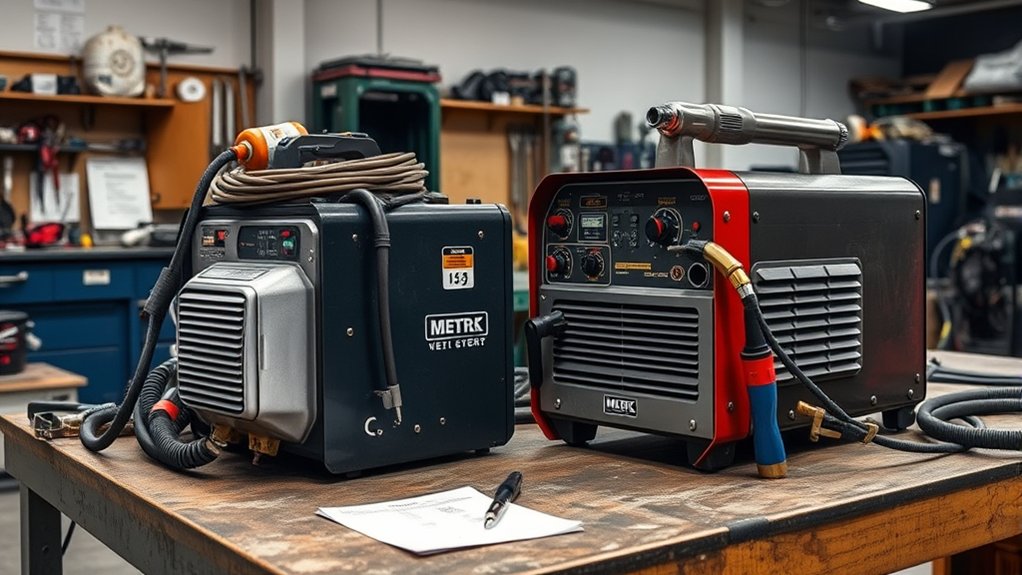
A MIG welder, also called a gas metal arc welding or GMAW machine, feeds a consumable wire electrode through a welding gun. The electric arc melts the wire and base metal to form a joint. Most MIG processes also use externally supplied shielding gas to protect the molten weld from the surrounding air, as explained in this OSHA welding-fume guide.
A plasma cutter removes metal instead of joining it. The machine forces a gas—commonly compressed air in a handheld system—through a small torch opening. Electrical energy ionizes the gas and forms a plasma arc. The arc melts a narrow path through the workpiece, and the fast gas stream blows the molten metal away. Hypertherm’s plasma-technology overview explains this process in more detail.
The processes may both use an electric arc, but their internal systems are not interchangeable. A standard MIG welder lacks the plasma torch, cutting-current regulation, gas timing, pilot-arc controls, and torch-protection circuits required for plasma cutting.
Key Differences Between Welding and Cutting Technologies
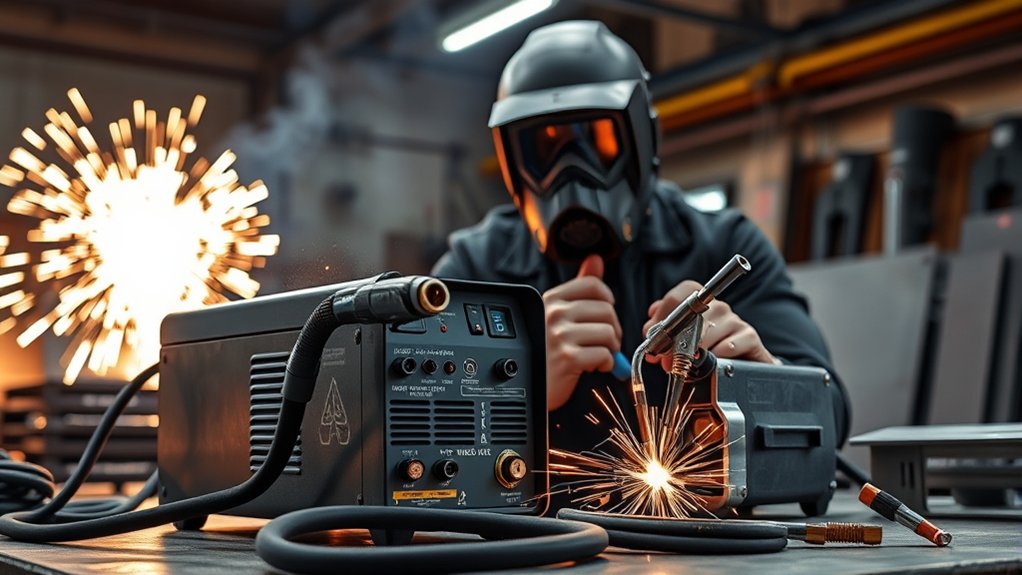
MIG welding adds filler metal to create a permanent joint. Plasma cutting concentrates heat and gas flow into a narrow path so the material separates.
A plasma torch is not a cutting attachment for a MIG welder. It is one part of a complete system designed around different power, gas, control, and safety requirements.
The power delivery also differs. A basic MIG machine normally controls a constant-voltage welding arc while its wire feeder controls how much electrode enters the weld. A plasma cutter regulates a cutting current and coordinates that output with torch starting, gas flow, pilot-arc transfer, and post-flow cooling.
| Feature | MIG Welder | Plasma Cutter |
|---|---|---|
| Main job | Joins metal | Cuts or gouges metal |
| Typical output control | Constant-voltage welding output | Regulated cutting-current output |
| Consumables | Wire electrode, contact tip, nozzle, and shielding gas | Torch electrode, nozzle or tip, swirl components, and shield |
| Gas function | Protects the weld pool from contamination | Forms the plasma stream and removes molten metal |
| Arc-start system | Starts as wire contacts or approaches the workpiece | Uses a matched contact, blowback, pilot-arc, or high-frequency system |
| Output result | Weld bead and fused joint | Kerf and cut edge |
Can You Actually Convert a MIG Welder to a Plasma Cutter?
An engineer could reuse selected electrical or enclosure parts while designing a custom cutting machine. That is not the same as converting a working MIG welder by changing its gun. Once the required power electronics, control circuits, gas system, torch, leads, protection, and cooling functions have been added or replaced, the result is essentially a custom-built plasma cutter.
A functional plasma system must coordinate all of the following:
- Cutting power: A regulated output designed to maintain the plasma arc.
- Torch assembly: A compatible electrode, nozzle, gas path, shield, and trigger system.
- Arc starting: Contact, blowback, high-frequency, or another manufacturer-designed starting method.
- Gas control: A regulator, filter, solenoid, purge cycle, and post-flow cooling cycle.
- Work circuit: A properly sized work lead, clamp, and arc-transfer path.
- Safety protection: Thermal shutdown, overcurrent protection, correct grounding, and torch-part interlocks.
- Cooling and duty cycle: Components rated for the heat and operating time created during cutting.
Warning: Do not open, bypass, or rewire a MIG welder to test a plasma conversion. Internal capacitors may retain dangerous energy after the machine is switched off or unplugged. Internal service should follow the manufacturer’s procedure and be performed only by a qualified technician.
Technical Challenges in Converting Welders to Plasma Cutters
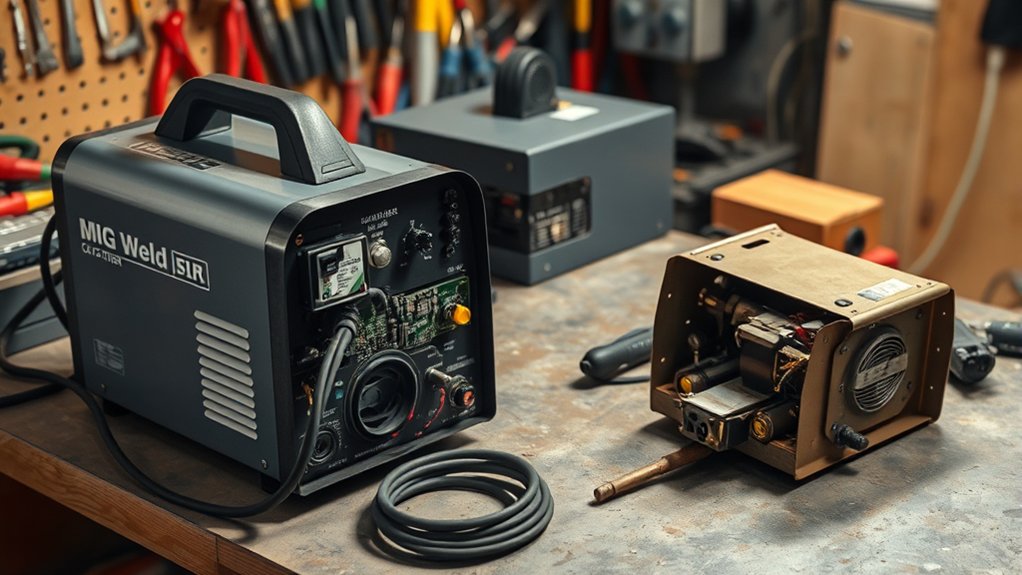
Converting a MIG welder involves more than finding a torch that fits the output terminals. The power source, arc controls, air path, insulation, leads, and safety circuits must operate as one matched system.
Power Output and Arc-Starting Requirements
Most basic MIG welders use constant-voltage output because that design works with a continuously fed wire electrode. Plasma cutters normally use a regulated cutting-current system. Lincoln Electric explains the difference between these power-source characteristics in its guide to constant-current and constant-voltage output.
The arc-start system is another major difference. Some plasma cutters use high-frequency energy, while many modern handheld units use contact or blowback starting. These systems create and transfer a pilot arc through components designed for that specific torch and power source. A MIG welder does not contain a compatible plasma start sequence merely because it can produce a welding arc.
Note: There is no universal starting-voltage figure that applies to every plasma cutter. Starting technology and electrical design vary by machine. Use the manufacturer’s wiring diagram, service manual, and approved torch only.
Air Supply and Torch Integration
A handheld air-plasma cutter needs the pressure and flow specified by its manufacturer. The air travels through the torch, helps form the plasma stream, removes molten metal, and cools the torch after the trigger is released.
The air must also be clean and dry. Oil, water, scale, and dirt can reduce cut quality, create an unstable arc, and shorten electrode and nozzle life. Lincoln Electric warns that poor filtration can even contribute to serious torch failure in its guidance on clean air for plasma cutting.
A MIG gas valve is designed to deliver shielding gas around a weld. It is not a substitute for the regulated flow, timing, filtration, and post-flow functions of a plasma cutter. A conversion would need a matched regulator, filter, solenoid, torch connection, pressure controls, and cooling sequence.
Component Compatibility and Circuit Protection
The torch, electrode, nozzle, lead set, pilot-arc circuit, work cable, and power source must be electrically and thermally compatible. A torch chosen only because its connector fits can still have the wrong current rating, gas path, starting method, or safety circuit.
Fuses and breakers alone are not enough. Purpose-built cutters may also monitor air pressure, temperature, torch-part installation, and internal faults. A homemade system can energize the torch or expose live components if its controls do not fail safely.
Warning: Never defeat a cover switch, torch interlock, work-ground connection, fuse, breaker, or thermal cutoff. A system that cuts during one brief test has not been proven safe for repeated use.
Safety Considerations and Risks Involved in Conversions
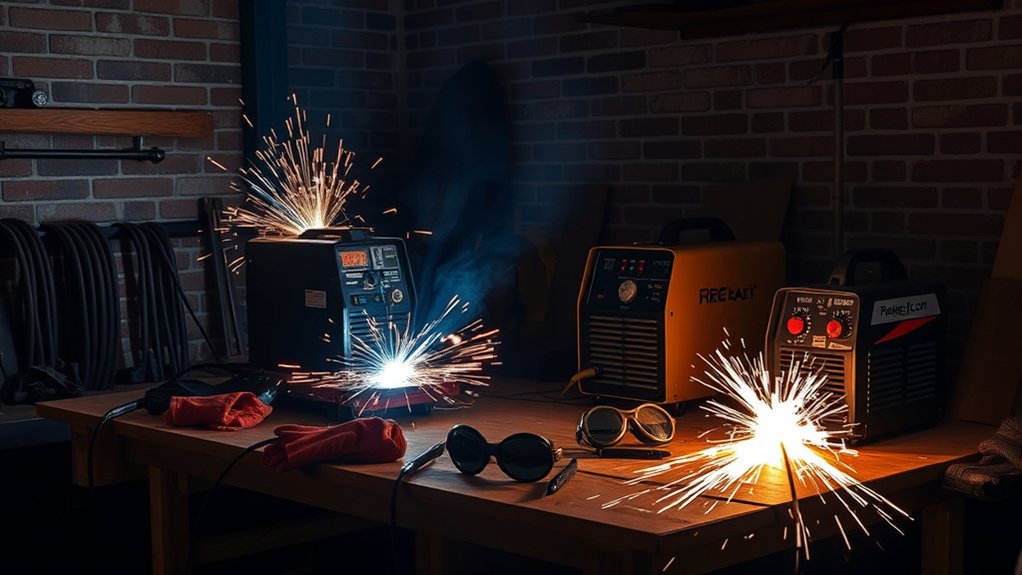
Plasma cutting involves electricity, hot metal, compressed gas, ultraviolet and infrared radiation, fumes, noise, and fire hazards. A custom conversion adds uncertainty because its enclosure, torch, cables, and controls were not tested together as a cutting system.
Protect Your Eyes, Face, Skin, and Hearing
Use safety glasses with side protection under a suitable cutting helmet or face shield. OSHA lists minimum protective shades for plasma arc cutting and specifies shade 8 for light plasma cutting below 300 amps when the arc is clearly visible. Follow the cutter manufacturer’s instructions and move to a darker shade when needed. See OSHA’s eye and face protection standard.
Wear dry, flame-resistant clothing, suitable gloves, hearing protection, and closed leather footwear. Cover exposed skin, including the neck and forearms. Keep the torch pointed away from your body whenever its trigger can be activated.
Control Sparks and Fire Hazards
Remove combustible materials from the hot-work area or protect them with fire-resistant covers and barriers. Check the other side of walls, floors, partitions, and workpieces because sparks and slag can travel through gaps or ignite hidden material.
Never cut a closed or pressurized container. Do not cut a tank, drum, pipe, or vessel that held fuel, solvent, chemicals, or another unknown substance unless a qualified person has cleaned, tested, and declared it safe for hot work.
Control Fumes and Coatings
Plasma cutting can create airborne metal fumes. Paint, plating, oil, solvent residue, galvanized coatings, stainless steel, lead, cadmium, and other materials may add hazardous contaminants. OSHA advises cleaning coatings that can create toxic exposure and using ventilation or local exhaust to keep fumes out of the breathing zone.
Do not assume that working outdoors guarantees safe ventilation. Keep your head out of the plume and use local exhaust when needed. Respiratory protection must be selected for the actual contaminant and used under a proper respiratory-protection program.
Keep the Air System Safe
Use hoses, filters, regulators, and fittings rated for the required pressure. Replace damaged hoses and leaking fittings rather than wrapping them with tape. Secure compressed-gas cylinders upright when a bottled gas is used.
Warning: Do not plasma cut in wet conditions, around flammable vapor, or where combustible dust may be present. Stop work if the cable insulation, torch, work clamp, regulator, or air hose is damaged.
Cost-Benefit Analysis of Conversion Versus Purchasing
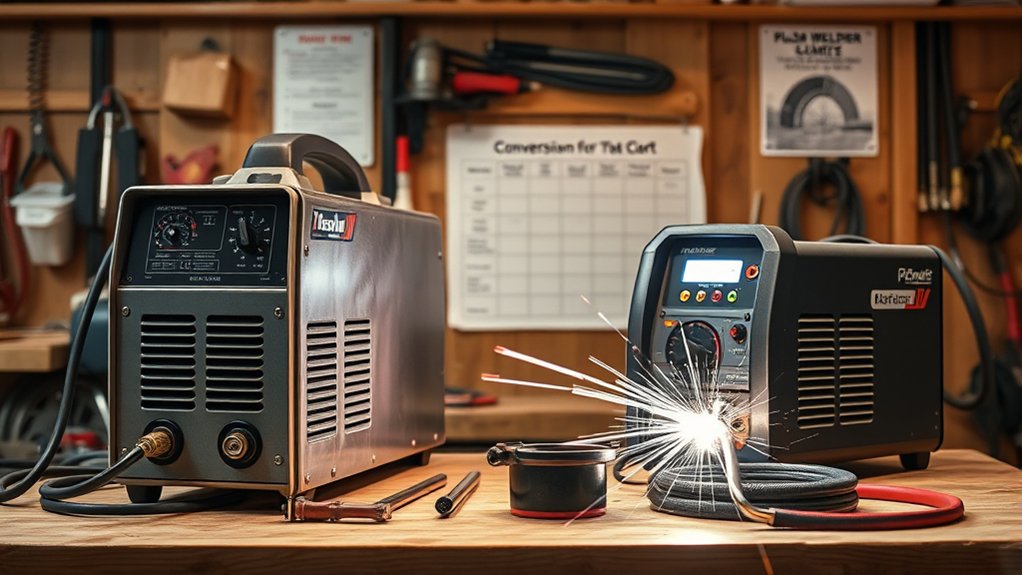
A MIG conversion may appear inexpensive if you count only the torch. The total project would also need cutting-rated power components, start controls, relays or solid-state controls, an air regulator and filter, a solenoid, compatible leads, protection devices, test equipment, an enclosure, and replacement consumables.
A purpose-built plasma cutter includes components designed and tested to work together. It also gives you published air requirements, duty-cycle information, consumable part numbers, troubleshooting procedures, and manufacturer support.
| Option | Best Use | Main Advantage | Main Tradeoff |
|---|---|---|---|
| Dedicated plasma cutter | Frequent cuts in conductive metal | Fast, controlled cutting with matched safety systems | Requires suitable input power, air, and consumables |
| Rental | Occasional projects | Access to proper equipment without long-term ownership | Availability, transport, and rental time limits |
| Saw, shear, or cutoff wheel | A few straight cuts or simple shapes | Uses common shop equipment | May be slower and less suitable for curves or internal shapes |
| Fabrication shop | Precision or one-time work | Professional equipment and repeatable results | Scheduling and service charges |
| DIY MIG conversion | Not recommended | Possible reuse of a few components | Unpredictable cost, serious safety risk, and no validated performance |
Modification may also affect warranty coverage. The exact result depends on the written terms and the cause of a failure. A manufacturer may deny a claim for damage connected to unauthorized wiring, misuse, or operation outside the machine’s intended purpose. The Federal Trade Commission’s warranty guidance recommends checking whether coverage applies when a product’s operation has been changed.
Products Worth Considering
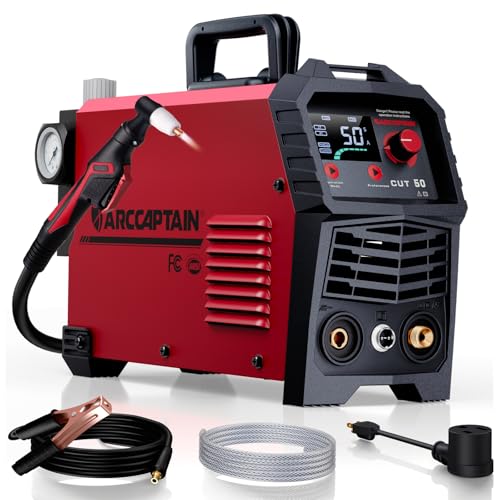
【Powerful Cutting Ability】Switch effortlessly between 110V and 220V for home or workshop use. Achieve professional 1/2" clean cuts on steel, aluminum, and copper with advanced LGBT technology. Perfect for DIY projects and heavy-duty tasks. Recommended maximum cutting thickness: 12mm @ 35A / 110V / 55 PSl; 18mm @ 50A / 220V / 75 PSI. Note: Requires compressed air (compressor sold separately).

[Powerful Cutting Ability] Dual voltage 110/220V good for home, workshop and hardware shop use. Professional performance 1/2" clean cuts on Iron, Steel aluminum and copper with Inverter IGBT Technology. Very powerful for DIY and heavy duty project. The Maximum cutting thickness is recommended to 1/2" @35A 110V 50PSI; 2/3" @50A 220V 65PSI. Dry and compressed air is required. Power breaker up to 60A@110V 35A; Up to 50A@220V 50A.

fit SG-55 AG-60 WSD-60 Plasma Cutter Torch
Common Problems in DIY Conversion Attempts
DIY conversion claims should be treated carefully. A photograph of a spark or one rough test cut does not show that the machine has safe insulation, correct fault protection, a suitable duty cycle, stable air flow, or reliable torch controls.
Electrical and Control Challenges
The most common design problem is trying to make welding controls perform a cutting sequence they were not built to handle. A plasma cutter must start gas flow, establish the pilot arc, transfer the arc to the workpiece, maintain cutting current, stop the arc, and continue cooling air for a set period.
If that sequence is incomplete, the system may fail to start, lose the arc, overheat the torch, damage consumables, or leave parts energized at the wrong time.
Why Safety Measures Matter
Custom wiring adds possible failure points to equipment that already handles enough energy to cause fatal shock and serious burns. Correct grounding, strain relief, insulation spacing, conductor sizing, fault protection, enclosure bonding, and torch interlocks are not optional finishing details.
If you do not have the manufacturer’s service information and professional experience with high-energy power electronics, do not attempt the modification.
Cut Quality and Reliability Limitations
A mismatched system may produce a spark without forming a stable cutting arc. Possible results include heavy dross, a wide or irregular kerf, slow travel, incomplete penetration, rapid nozzle wear, repeated breaker trips, and overheating.
- Power mismatch: The source may not regulate the arc correctly as the torch moves.
- Starting mismatch: The torch and power source may not establish or transfer a pilot arc safely.
- Air mismatch: Incorrect pressure, flow, moisture, or timing can damage consumables and weaken the cut.
- Duty-cycle mismatch: Components may overheat during a cutting load they were not designed to carry.
- Fault-protection gaps: A custom system may not shut down safely when a torch part, air supply, or cable fails.
Recommendations for Optimal Metal-Cutting Solutions
Choose the cutting method around the material, thickness, cut shape, finish, available power, and how often you will use it. Plasma cutting works on electrically conductive metals such as mild steel, stainless steel, aluminum, copper, and brass.
- Choose a dedicated plasma cutter for frequent freehand cuts, curves, internal shapes, expanded metal, and fast cutting of conductive material.
- Choose a band saw, reciprocating saw, shear, or cold-cut saw for controlled mechanical cuts where a plasma arc is unnecessary.
- Choose a guarded cutoff wheel for limited straight cuts when its sparks, dust, noise, and kickback hazards can be controlled.
- Consider oxy-fuel equipment for suitable thick carbon-steel work when the operator is trained and gas-cylinder hazards are properly controlled.
- Use a fabrication shop when you need accurate parts but do not cut often enough to justify equipment ownership.
Products Worth Considering

【Non-Touch Pilot Arc Function】The ARCCAPTAIN 55A plasma cutter features a pilot arc function. It utilizes a high-frequency non-touch arc starting mode. The torch head does not need to touch the metal plate, reducing energy consumption during non-cutting work, minimizing electrode burning, and extending service life. NOTE: Do not switch voltages until the screen turns off and the fan stops.
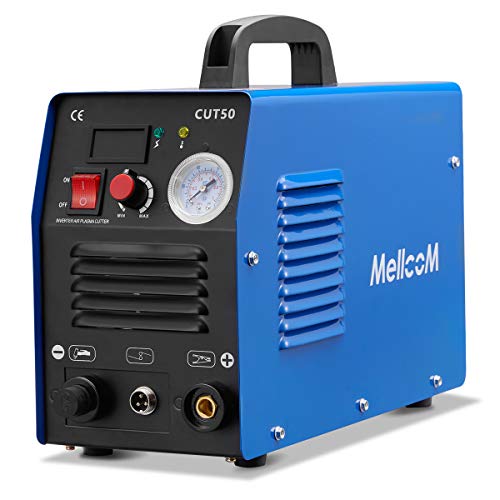
【Arc Pilot Function】The pilot arc plasma cutter efficiently cuts rough, painted, and rusted surfaces with minimal weld slag. Without touching the tip of the metal, pilot arc technology improves cutting quality and extends consumable lifespan.
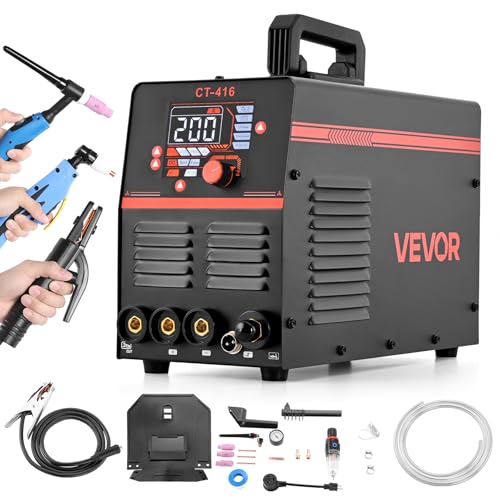
3-in-1 Combo: VEVOR 3-in-1 plasma cutter welder combo integrates plasma cutting, TIG and MMA welding functions. Featuring a maximum 50A plasma cutting and 200A welding capacity (at 220V), it delivers powerful performance for various metalworking tasks (Not Suitable For Welding Aluminum!)
What to Check Before Buying a Plasma Cutter
Compare machines using the work you perform most often, not the largest number on the product page.
- Rated cut thickness: Match the rated clean-cut capacity to the thickest metal you expect to cut regularly.
- Sever capacity: Treat this as an occasional maximum that may be slow and require more cleanup.
- Input power: Confirm the voltage, phase, plug, breaker, and generator requirements.
- Air demand: Check the required pressure and flow while the air is moving, not just the compressor’s tank pressure.
- Duty cycle: Make sure the machine can cut for the needed time without repeated thermal shutdowns.
- Starting method: Contact or blowback starting may be preferable around CNC controls and sensitive electronics.
- Consumables: Check local availability, cost, and whether the torch uses common or proprietary parts.
- Support: Look for a clear operator manual, replacement parts, service information, and a written warranty.
Pro Tip: Size the cutter around its rated clean-cut capacity for your normal material. A machine’s maximum sever rating describes a slower limit, not the thickness it will cut cleanly every day.
Frequently Asked Questions
Can a MIG welder be used as the power source for a plasma cutter?
A MIG-only power source should not be used unless the manufacturer specifically approves a plasma-cutting accessory or configuration. The output characteristics, arc-start circuit, gas controls, work circuit, and safety interlocks must all be designed for the plasma torch.
Can a converted plasma cutter damage the original MIG welder?
Yes. Altered wiring, unsuitable arc loads, excessive heat, failed insulation, and incompatible controls can damage the power electronics, transformer, rectifier, cables, or control board. The machine may also become unsafe for its original welding function.
Can you turn a MIG gun into a plasma torch by adding compressed air?
No. A MIG gun does not contain the electrode, nozzle, gas chamber, swirl components, pilot-arc circuit, cooling path, or safety parts used in a plasma torch. Adding air to a MIG gun does not create a controlled plasma-cutting system.
What materials can a plasma cutter handle?
A plasma cutter works on electrically conductive materials such as mild steel, stainless steel, aluminum, copper, and brass. Its clean-cut thickness depends on the machine’s output, torch, consumables, gas, travel speed, and the material being cut.
How can conversion affect the lifespan of a MIG welder?
Running a welder outside its intended electrical and thermal design can overheat components, damage insulation, shorten cable life, and stress the control electronics. A failure may also make the machine unsafe even after it is returned to its original configuration.
Are any standard MIG welder brands better suited to conversion?
No standard MIG-only brand should be assumed suitable. Service access, output capacity, or a large transformer does not make a machine compatible with a plasma torch. Use only functions and accessories approved by the equipment manufacturer.
Will converting a MIG welder void its warranty?
Modification may cause the manufacturer to deny coverage for a failure related to altered wiring, misuse, or operation outside the machine’s intended purpose. Warranty terms vary, so read the written coverage before changing the equipment.
Is a multi-process machine with plasma cutting a better option?
It can be, but only when the manufacturer designed and listed the machine for every advertised process. Confirm that the package includes the correct welding gun, plasma torch, work leads, gas or air connections, duty-cycle ratings, consumables, and safety instructions. Many multi-process welders do not include plasma cutting.
Conclusion
A MIG welder and a plasma cutter both create electric arcs, but they use those arcs in different ways and require different power, torch, gas, control, and safety systems. Swapping the gun or adding compressed air does not turn a MIG machine into a safe plasma cutter.
For regular metal cutting, use a dedicated plasma cutter sized for your normal material. For occasional jobs, renting the correct machine, using a suitable mechanical cutting tool, or hiring a fabrication shop is usually safer and less expensive than building an untested conversion.
Sources
- OSHA: Welding, Cutting, and Brazing — general hot-work hazards and applicable workplace standards
- American Welding Society Safety and Health Resources — welding and cutting safety guidance
- American Lung Association: Clean Air at Work — workplace exposure to welding fumes, gases, vapors, and airborne contaminants
- Hypertherm: What Is a Plasma Cutter? — plasma-cutting process, equipment, gases, and conductive materials
- Lincoln Electric: Constant Current vs. Constant Voltage Output — power-source characteristics used by different arc processes
- Federal Trade Commission: Warranties — written warranty coverage, modifications, misuse, and consumer considerations