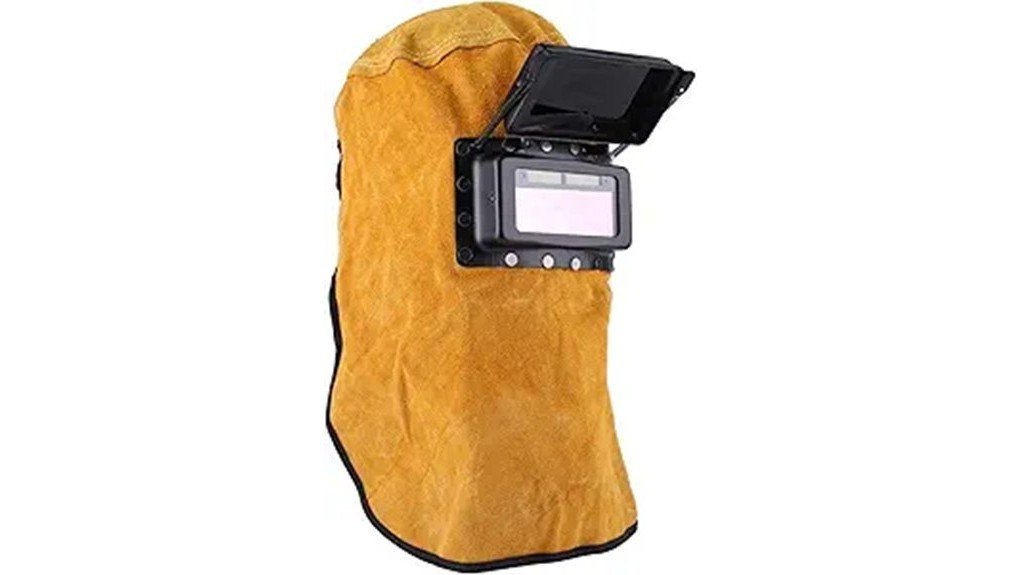
This auto-darkening leather welding hood is a cowhide head-and-neck hood with a built-in solar auto-darkening lens. The listing gives about 400 g in weight and an adjustable fit up to roughly 60 cm head circumference. It suits welders who want a lighter hood for tight positions, but check the head-size limit, the unstated shade range and the missing certification marking first.
Auto-Darkening Leather Welding Hood at a Glance
| Item | Detail (per the listing) |
|---|---|
| Material | Cow leather body |
| Lens | Solar auto-darkening lens with a 1/25,000 second switching claim |
| Weight | About 400 g |
| Height | About 32.5 cm |
| Head circumference | Up to about 60 cm (roughly 23.6 inches) |
| Fit and cover | Adjustable straps and a flip-open lens cover |
| Not clearly stated | Shade range, ANSI Z87.1 or EN379 marking, sensor count, warranty terms |
Who This Leather Hood Suits
A leather hood covers more of the head and neck than a face-only shield and is usually less bulky than a rigid helmet. That helps when you weld under a vehicle, inside a frame or overhead.
- Good fit: welders who want light weight and extra neck and side-of-head coverage.
- Poor fit: anyone with a head circumference above about 60 cm, or who needs a large viewing window, variable shade control or documented certification for a jobsite.
Check the Fit Before You Order
- Measure around your head at brow level with a soft tape. The listing figure of about 60 cm is roughly 23.6 inches.
- Add room for a welding cap, glasses or a respirator if you wear them. Padding under the hood reduces the room you have left.
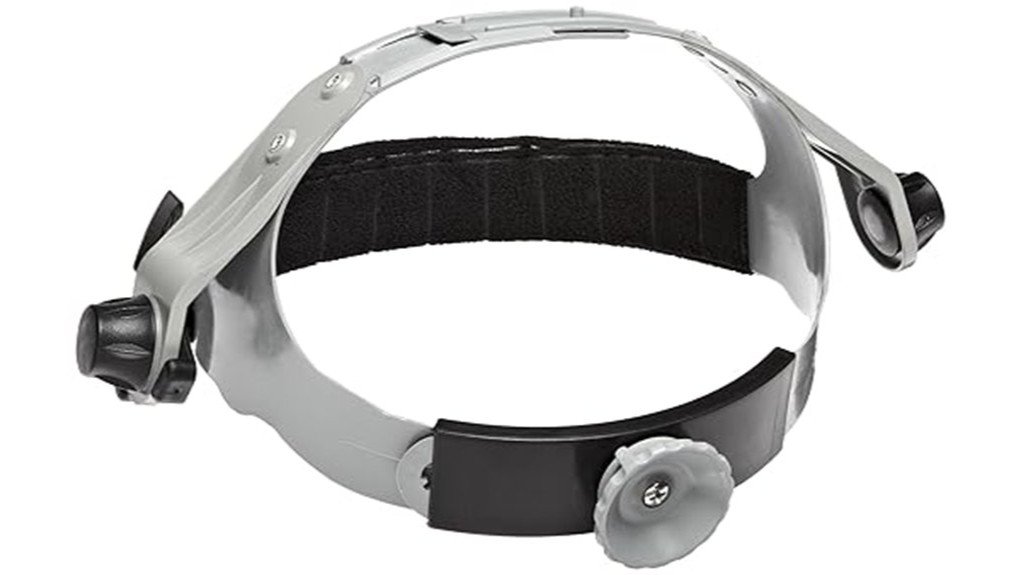
- Remember the straps adjust tightness, not the size of the hood. If you are near the limit, expect a snug fit.
- Confirm the lens sits in front of your eyes when the hood is tightened, not above or below them.
What to Confirm About the Lens
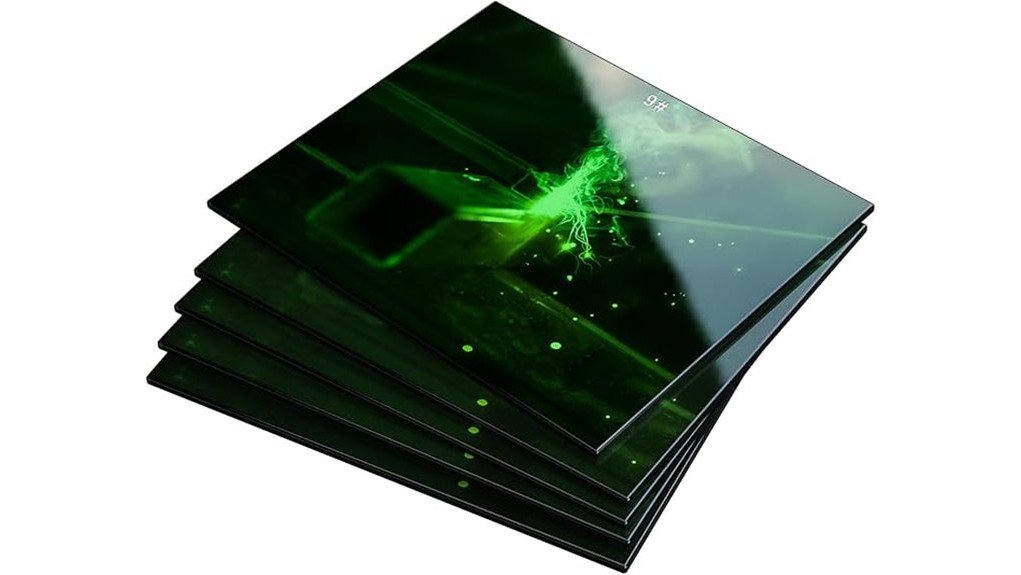
The listing gives a 1/25,000 second switching claim and a flip-open cover, but it does not clearly give a shade range or a safety standard marking such as ANSI Z87.1 or EN379. Before you rely on the hood, check the filter for those markings or ask the seller. Then test it on scrap: strike an arc and confirm the lens darkens, and do not weld if it stays light.
Pros and Limitations
Pros
- Light at about 400 g per the listing.
- Leather covers the neck and sides of the head.
- Flip-open cover gives quick access to the work.
Limitations
- Head-size limit of about 60 cm and only one size listed.
- Shade range and certification are not clearly stated.
- Leather holds heat in warm weather and needs dry storage.
- The viewing window is likely smaller than on modern full-size helmets.
Care and Inspection
Brush off dust and spatter and wipe the leather with a barely damp cloth. Keep conditioner away from the lens, dry the hood away from heat and store it out of damp. Inspect the seams, straps and lens before each session, and retire the hood if the leather is burned through or the lens is cracked.
Compare other leather hoods: SYWAN cowhide leather welder hood | cowhide leather welding hood with auto-darkening fit | premium cowhide leather welding hood
Frequently Asked Questions
Is this hood suitable for every type of welding?
That depends on the filter shade range, which the listing does not clearly state. Check the shade against your process and amperage, and test the lens on scrap. Low-amp TIG can be a problem for some solar filters.
Can I wear glasses or a respirator under it?
It may be possible, but the fit is tight near the size limit. Try the hood on with your safety glasses or respirator, and make sure the lens still lines up with your eyes.
How do I clean and store a leather welding hood?
Brush off dust, wipe with a barely damp cloth, keep conditioner off the lens and let it air dry away from heat. Store it dry and away from sharp tools.
Does it come in different sizes?
The listing describes one adjustable size, with a head circumference up to about 60 cm. Measure your head before ordering.
Bottom Line
This auto-darkening leather welding hood is a light, flexible option for welders who fit within its roughly 60 cm head-size limit. Verify the shade range and safety marking, test the lens on scrap, and choose a rigid certified helmet if you need a large window or documented compliance.