Disclosure: As an Amazon Associate, we earn from qualifying purchases. If you click a link on this page and make a purchase, we may receive a small commission at no extra cost to you.
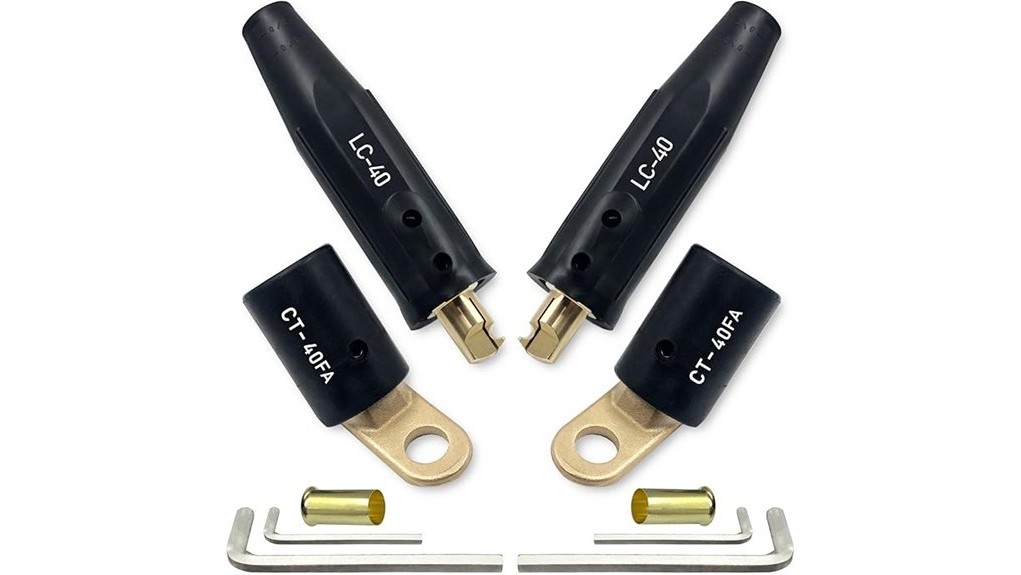
Loose welding leads waste time, create heat, and can make a simple setup feel unreliable. The CT-40FA and LC-40 connectors are made for welders who need a secure cable connection, a brass contact path, and easier access in tight spaces. This review explains what the article-supported specs mean, where these connectors make sense, and what you should check before buying. The LC-40 rating and twist-lock design are useful strengths, but compatibility depends on your cable size, machine connection style, and stud requirements.
Quick Verdict
Rating: 8/10, Recommended with caveats
Best For: Welders who need a brass LC-40 connector for 1/0 or 2/0 cable and a 45° CT-40FA terminal for tighter cable routing.
Bottom Line: This connector pairing is worth considering if your setup matches the LC-40 cable sizes and CT-40FA stud hole. Skip it if your welder uses a different connector style, a different cable gauge, or a stud size other than the listed 17/32 inch hole.
| Specification | Detail |
|---|---|
| Product type | Welding cable connector and terminal pairing |
| Included connector names | CT-40FA and LC-40 connectors |
| LC-40 current rating | Up to 350 amps, as stated in the source article |
| LC-40 cable compatibility | 1/0 and 2/0 welding cable, as stated in the source article |
| CT-40FA stud hole | 17/32 inch, as stated in the source article |
| CT-40FA design | 45° angle for easier routing in tight spaces |
| Material | Brass construction, as stated in the source article |
| Main connection feature | LC-40 twist-lock mechanism for secure cable attachment |
| Care note | Inspect and clean regularly to reduce corrosion, heat buildup, and loose connections |
Key Takeaways
- The LC-40 connector is listed in the source article as supporting up to 350 amps, which suits many demanding welding lead setups when the rest of the system is rated for the same load.
- The LC-40 is also listed for 1/0 and 2/0 welding cable, so you should confirm your cable gauge before ordering.
- The CT-40FA has a 45° angle and a 17/32 inch stud hole, which can help when a straight terminal is hard to route.
- Brass construction helps with conductivity and durability, but a clean, tight connection still matters for safe performance.
- This is not a universal fit item. Your welder, lead size, stud size, and connector style must match before it makes sense to buy.
What Is the CT-40FA and LC-40 Connector Set?
The CT-40FA and LC-40 connector set is a welding accessory pairing for cable connection, cable routing, and machine-side lead setup. The LC-40 is the twist-lock style connector in this article, while the CT-40FA is the angled terminal with a 17/32 inch stud hole.
The main appeal is practical. The LC-40 gives you a secure cable connection for 1/0 or 2/0 welding cable, and the CT-40FA angle can make installation easier where a straight lug would crowd the machine, workbench, or lead path.
This product makes the most sense for welders who already know their cable size and connector requirements. If you are replacing a worn connector, compare the old part, cable gauge, stud size, and welder manual before you rely on the Amazon listing alone.
Before You Buy: Do not assume the CT-40FA and LC-40 will fit every welder. Confirm the 1/0 or 2/0 cable size, the 17/32 inch stud hole requirement, and the connector style on your machine before ordering.
Who Should Buy It?
Best For
- Welders replacing or building leads that use 1/0 or 2/0 cable with an LC-40 style connector.
- Shop users who want a twist-lock connection to reduce the chance of a loose cable during regular setup changes.
- Installations where the CT-40FA 45° terminal angle helps route cable in a tighter machine or workbench area.
Skip If
- Your welder uses a different connector format, such as a DINSE-style port or a brand-specific plug.
- Your cable is smaller or larger than the listed 1/0 and 2/0 range for the LC-40.
- You need verified certifications, exact warranty terms, or a manufacturer data sheet before purchase.
Features and Benefits
Brass Construction and Conductivity
The source article states that both connectors use brass construction. Brass is commonly used in electrical contact hardware because it combines conductivity with better corrosion resistance than plain steel in many shop conditions.
That material choice helps the connector maintain a stable contact path, but it does not remove the need for good installation. A poorly crimped cable, dirty contact surface, or loose stud can still create heat and voltage drop.
LC-40 Twist-Lock Connection
The LC-40 uses a twist-lock mechanism to create a secure connection. This is useful when you disconnect and reconnect welding leads often, because the connector gives you a more positive lock than a loose friction fit.
For best results, the locking action should feel firm without forcing it. If it feels gritty, loose, or hard to seat, stop and inspect the connector, cable end, and matching socket before welding.
CT-40FA 45° Angled Terminal
The CT-40FA is designed with a 45° angle. That angle can make a noticeable difference when the cable exits a crowded panel, cabinet, or terminal area where a straight lug would bend the cable sharply.
Less cable strain can also help the connection stay tight over time. It still needs the correct stud size, proper torque, and enough clearance so the terminal does not contact nearby metal parts.
Installation and Performance
Installation starts with fit. Match the LC-40 to the cable size listed in the article, then match the CT-40FA 17/32 inch stud hole to your machine or connection point. Do not trim, drill, grind, or force the connector to fit a mismatched setup.
Performance depends on the entire current path. The article-supported 350 amp LC-40 rating only matters when the cable, welder, work clamp, electrode holder, and mating connector are also sized for the job.
Pro Tip: Before installing new connectors, label your welding leads by cable size and connector type. That makes future replacements easier and helps prevent mixing parts that look similar but do not carry the same rating.
Fit and Compatibility
The LC-40 is article-supported for 1/0 and 2/0 cable sizes. Those are common heavy welding lead sizes, but they are not the only sizes used in shops, mobile rigs, or small machines.
You should also confirm the mating connector on the welder or cable extension. A connector can have the right current rating and still be wrong for your machine if the lock style, plug size, or socket design does not match.
Materials, Safety, and Heat Control
Welding connectors carry high current, so safety depends on more than the metal used in the part. Keep the connector clean, fully seated, and protected from oil, grinding dust, and moisture that can increase resistance or corrosion.
Disconnect the welder from power before replacing or installing connectors. If you see melted insulation, discoloration, arcing marks, or a connector that gets hot during normal use, stop using that lead until the problem is inspected and corrected.
The source article does not verify specific safety certifications. If your workplace requires certified parts, ask the seller for documentation or use a connector specified by your welder manufacturer.
How It Performs in Real Use
For Shop Lead Changes
The LC-40 twist-lock design is helpful in a shop where leads are moved between workstations or stored between jobs. A positive lock reduces the chance that the cable backs out during normal handling.
For Tight Machine Connections
The CT-40FA 45° terminal is the more useful part when space is limited. It lets the cable leave the connection point at an angle, which can reduce sharp cable bends and make the setup easier to close or cover.
For Higher-Amperage Welding Work
The LC-40 rating of up to 350 amps gives the connector room for many demanding welding tasks when paired with the right cable and equipment. Do not treat that number as permission to exceed your welder, duty cycle, cable, or work clamp rating.
For Long-Term Use
Long-term performance depends on inspection habits. Brass can still collect grime, oxidation, and heat marks, so occasional cleaning and checking for looseness will help the connection stay reliable.
Maintenance and Storage Tips
Wipe connectors clean before storage, especially if they have been used around grinding dust or damp floors. Dirt and metal dust can shorten connector life and make a twist-lock connection feel rough.
Store welding leads without sharp bends near the connector. Repeated strain at the cable end can loosen the connection over time, even when the connector body itself is durable.
During routine checks, look for worn locking surfaces, cracked insulation, blackened brass, or loose hardware. Replace damaged parts rather than trying to keep a questionable high-current connector in service.
Pros and Cons
Pros
- LC-40 is listed for up to 350 amps, which suits many heavier welding lead setups.
- Supports 1/0 and 2/0 cable sizes, based on the source article.
- Twist-lock design helps create a more secure cable connection.
- CT-40FA 45° angle can reduce awkward cable routing in tight spaces.
- Brass construction supports conductivity and durability when kept clean.
Cons
- Not universal, so cable size, stud hole, and connector style must match your setup.
- Warranty and certification details were not independently verified from a manufacturer source.
- Requires proper installation and routine inspection to avoid heat, looseness, or corrosion issues.
Is It Worth the Price?
The CT-40FA and LC-40 connector set looks like a strong value for the price if you need the specific cable sizes and angled terminal design described in the article. You get a brass connector setup, a twist-lock LC-40 connection, and a 45° CT-40FA terminal that can help with cramped layouts.
The value drops if you are unsure about fit. A lower-cost connector is not a smart buy if it forces you to modify the cable, overbend the lead, or guess at current capacity.
This is worth considering if you care more about secure connection hardware than brand-name packaging. It is not the best fit if you need documented certifications, a published manufacturer manual, or exact warranty terms before ordering.
How It Compares to Alternatives
Compared with a straight welding lug, the CT-40FA angle is better for tight cable routing. Compared with a basic friction-style cable connector, the LC-40 twist-lock design gives you a more secure connection during lead changes.
If your machine uses DINSE-style plugs, cam-lock connectors, or a brand-specific connector, those alternatives may be the correct choice instead. The CT-40FA and LC-40 pairing makes the most sense when your existing setup already matches the listed cable range, stud hole, and connector style.
Frequently Asked Questions
Does the LC-40 connector fit 1/0 and 2/0 welding cable?
Yes, the source article lists the LC-40 as fitting 1/0 and 2/0 cable sizes. You should still confirm the cable marking on your existing lead before buying.
Can the LC-40 really handle 350 amps?
The article lists the LC-40 at up to 350 amps. Your full welding setup must also be rated for that load, including the cable, machine, mating connector, work clamp, and duty cycle.
What is the benefit of the CT-40FA 45° angle?
The 45° angle helps route the cable when the connection point is close to a panel, cabinet, bench, or other obstruction. It can reduce cable strain compared with a straight terminal in tight spaces.
Are these connectors compatible with every welding machine?
No. Compatibility depends on your machine connection style, cable size, mating connector, and stud requirement. Check your welder manual or compare the old connector before ordering.
What material are the CT-40FA and LC-40 connectors made from?
The source article describes both connectors as brass. Brass supports conductivity and durability, but clean contact surfaces and proper installation are still necessary.
How should you maintain welding connectors like these?
Keep the connector clean, dry, and fully seated. Inspect for heat marks, corrosion, looseness, worn locking surfaces, and damaged cable insulation before regular use.
What should you check before replacing an old connector?
Check the old connector type, cable gauge, stud size, and current rating. If the old part overheated or loosened often, inspect the cable end and mating socket too.
Are the warranty and safety certifications verified?
Specific warranty and certification details were not independently verified from a manufacturer source. Check the current Amazon listing or contact the seller if your shop requires documented certification.
The Bottom Line
The CT-40FA and LC-40 connectors are a good fit for welders who need the listed 1/0 or 2/0 LC-40 cable compatibility, brass construction, and a 45° CT-40FA terminal for tight routing. The main limitation is fit verification, so skip it if your welder uses a different connector format, cable gauge, or stud size.