Disclosure: As an Amazon Associate, we earn from qualifying purchases. If you click a link on this page and make a purchase, we may receive a small commission at no extra cost to you.
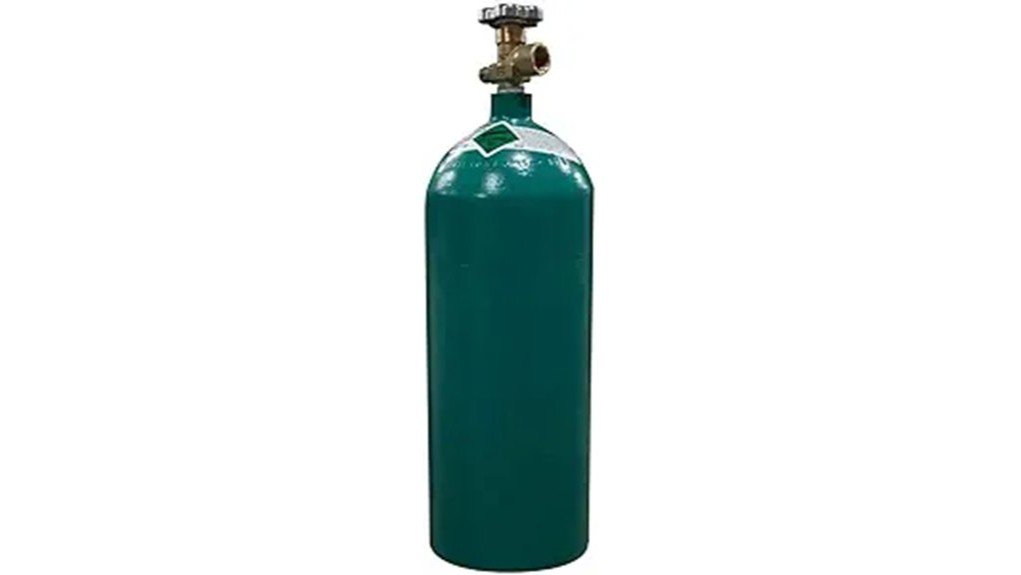
Choosing a small shielding gas cylinder can be confusing because capacity, gas mix, valve type, and refill rules all affect how useful it will be in your shop. This 40 cu ft welding gas cylinder is built around a 75% Argon and 25% CO2 blend with a CGA 580 connection, making it most relevant for light MIG welding on mild steel. It gives you a portable setup for short weld runs, practice work, and mobile repairs, but the compact size means you should not expect long production sessions. This review helps you decide if the 40 cu ft size and 75/25 gas mix fit your welding setup before you buy.
Quick Verdict
Rating: 7.5/10, Recommended with caveats
Best For: MIG welders who want a compact 75/25 Argon CO2 shielding gas cylinder for mild steel projects
Bottom Line: This 40 cu ft welding gas cylinder is useful when you need a portable C-25 style gas mix for short MIG welds, repairs, and practice. Its main tradeoff is runtime, and the 75/25 blend is not the right choice for most TIG welding jobs that call for pure argon.
Key Specifications at a Glance
| Specification | Detail |
|---|---|
| Product Type | Welding shielding gas cylinder |
| Capacity | 40 cu ft |
| Gas Mixture | 75% Argon / 25% CO2 |
| Common Gas Name | Often called C-25 or 75/25 Argon CO2 shielding gas |
| Connection Type | CGA 580 |
| Best Welding Match | MIG welding on mild steel and similar carbon steel projects |
| TIG Use Note | Not recommended for most TIG welding jobs that require pure argon |
| Compliance Claim | DOT and ISO standards, as stated in the original article |
| Maintenance Note | Original article states hydrotesting every 10 years. Confirm the cylinder stamp before filling. |
| Best Use | Small shop projects, hobby MIG welding, practice beads, brackets, repairs, and mobile maintenance |
| Safety Note | Store upright, secure from tipping, protect the valve, and keep away from heat |
What Is the 40 Cu Ft Welding Gas Cylinder?
This 40 cubic foot welding gas cylinder is a compact shielding gas tank for welders who need a smaller Argon/CO2 setup instead of a larger shop cylinder. The 75% Argon and 25% CO2 blend is a common choice for MIG welding mild steel because it supports stable arc behavior and cleaner bead appearance than straight CO2 in many short-circuit applications.
The cylinder uses a CGA 580 connection, so you need a compatible regulator and flowmeter before using it. That connection type is common on argon and argon-mix welding gas cylinders, but you should still confirm your regulator, hose, welder setup, and local refill supplier before ordering.
The 40 cu ft capacity makes the cylinder easier to move and store than 80 cu ft or 125 cu ft shop tanks. That portability helps in a garage, small work trailer, or mobile repair setup, but it also means refill frequency will be higher if you weld often.
Who Should Buy It?
Best For
- DIY MIG welders working on small mild-steel projects
- Mobile repair users who need a cylinder that is easier to transport
- Beginners who want a manageable shielding gas setup for practice welds
Skip If
- You run long continuous weld sessions or production work
- You need pure argon for most TIG welding applications
- Your local welding supplier will not refill customer-owned 40 cu ft cylinders
Before You Buy: Confirm your local welding supply shop will refill or exchange this size and gas mix. Some suppliers have rules about customer-owned cylinders, inspection dates, valve types, and out-of-test tanks.
Key Features and Performance
75/25 Argon CO2 Gas Mix
The 75% Argon and 25% CO2 blend is the main reason to consider this cylinder. For many mild-steel MIG projects, this mix helps create a smoother arc, better puddle control, and less spatter than straight CO2 when the welder is set correctly.
This gas mix is not a universal welding gas. It makes the most sense for MIG welding mild steel, not aluminum MIG, not most stainless TIG, and not most general TIG work. Always match the shielding gas to the wire, base metal, welding process, and welder manual.
CGA 580 Compatibility
The CGA 580 connection helps the cylinder work with many standard argon-style welding regulators. That matters because a mismatched valve or regulator can delay setup and create unsafe workarounds.
You should still check your regulator before ordering. A cylinder connection that looks familiar is not enough because the gas mix, pressure rating, and regulator type all need to fit your exact welding setup.
Portable 40 Cu Ft Size
The 40 cu ft capacity is the main convenience feature. It is easier to place near a small welder, load for a mobile repair, or store in a tight garage than a taller shop cylinder.
The tradeoff is runtime. A 40 cu ft cylinder can be practical for tack welds, short beads, and occasional repairs, but it will empty faster if you weld at higher flow rates or spend long periods practicing.
Refill and Inspection Considerations
Compressed gas cylinders are not like basic welding accessories because the refill experience depends on your local supplier. Some shops refill compatible cylinders, some exchange only certain brands or sizes, and some may refuse a cylinder if the stamp, valve, or test date does not meet their rules.
The original article states a 10-year hydrotest cycle. Treat that as a detail to verify on the actual cylinder markings because refill shops may check the stamped date before filling.
Pro Tip: Before your first refill, take a clear photo of the cylinder stamp, valve area, and gas label. Send it to your local welding gas supplier and ask if they will refill or exchange that exact cylinder.
How It Performs in Real Use
For Home Workshop Projects
In a home garage, the 40 cu ft size is easy to place beside a compact MIG welder. It works well for short mild-steel jobs such as brackets, small frames, patch repairs, and practice coupons.
You get the most from it when your weld runs are short and your flow rate is set correctly. If you leave the gas flowing too high, the cylinder capacity disappears quickly.
For Mobile Welding Work
For mobile repairs, this cylinder is easier to carry than a large 80 cu ft or 125 cu ft tank. That helps when you need shielding gas for quick maintenance, field repairs, or a small work trailer.
You still need to secure the cylinder during transport and protect the valve from impact. The convenience of the smaller tank does not remove the need for safe handling.
For Learning and Practice
Beginners can benefit from the smaller size because it keeps the setup manageable. It gives you enough gas for learning arc starts, bead consistency, and welder settings without bringing a full-size shop cylinder into a small space.
The downside is that practice consumes gas faster than many new welders expect. If you plan long practice sessions, compare this 40 cu ft option against an 80 cu ft cylinder before buying.
For Backup or Occasional Use
This cylinder also works as a backup tank if you already use a larger main cylinder. Keeping a smaller spare can help you finish a repair when your main bottle runs empty during a weekend project.
That backup role makes sense only if your storage area is safe and your supplier will refill the cylinder when needed. Do not store any compressed gas cylinder loose, hot, or unsecured.
Setup Tips Before First Use
Start by checking the cylinder label and valve connection before attaching your regulator. Make sure the gas is the 75% Argon and 25% CO2 blend you want, then confirm that your regulator is rated and compatible with a CGA 580 connection.
Use a proper shielding gas regulator or flowmeter, not a fuel-gas regulator or improvised adapter. After installation, open the valve slowly, check for leaks according to safe shop practice, and set flow based on your welder manual, joint position, and welding environment.
Keep the cylinder upright and secured while you weld. A small cylinder can still tip, damage the valve, or become dangerous if it falls from a cart, bench, or truck bed.
Safety and Compliance
The original article describes this cylinder as meeting DOT and ISO standards, but you should confirm the actual cylinder markings when it arrives. Look for readable stamps, current test information, and a clear gas label before taking it to a refill shop.
Store the cylinder upright, chained or strapped, and away from heat sources. Keep the valve closed when the cylinder is not in use, and remove the regulator before transport if your local rules or supplier recommends it.
Shielding gases can displace oxygen in poorly ventilated areas. Use the cylinder in a well-ventilated workspace, and do not weld in confined areas without proper training, ventilation, and safety controls.
Pros and Cons
Pros
- 75/25 Argon CO2 mix is practical for many mild-steel MIG projects
- CGA 580 connection fits many argon-style welding regulators
- 40 cu ft size is easier to move and store than larger shop tanks
- Useful for beginners, small repairs, short beads, and backup gas supply
- Orange CTA and clear product details make the buying decision simple
Cons
- Small capacity means more frequent refills during regular welding
- Not the right gas mix for most TIG welding applications
- Refill or exchange acceptance can vary by local welding gas supplier
Need a Compact MIG Gas Cylinder?
Check the current product details and confirm refill compatibility before ordering.
Is It Worth the Price?
This cylinder offers the most value if you weld occasionally and need a portable shielding gas setup. The 40 cu ft capacity is easier to manage than a large cylinder, and the 75/25 mix is a useful choice for many small MIG jobs on mild steel.
It is not the best fit if you weld every day, run long beads, or want to reduce refill trips. In those cases, an 80 cu ft or 125 cu ft cylinder may cost more upfront but can be more convenient over time.
The value also depends on local refill access. If your nearby supplier accepts this cylinder size and valve type, it can be a smart buy for light shop use. If not, the low convenience of online ordering may disappear after the first fill.
How It Compares to Alternatives
Compared to an 80 cu ft or 125 cu ft cylinder, this 40 cu ft option is easier to move but gives you less welding time between refills. Choose the larger tank if you weld often, and choose this smaller tank if space, weight, and portability matter more.
Compared to straight CO2, a 75/25 Argon CO2 blend can give smoother arc behavior and less spatter in many mild-steel MIG setups. Compared to pure argon, this mix is better matched to many steel MIG jobs but not to most TIG welding or aluminum MIG work.
Frequently Asked Questions
What welding process is this gas best for?
This 75% Argon and 25% CO2 blend is best suited for MIG welding mild steel. It is not the first choice for most TIG welding jobs, which commonly call for pure argon.
Will a CGA 580 regulator fit this cylinder?
The article lists a CGA 580 connection, so you need a regulator that matches CGA 580. Always check the regulator label and product manual before connecting it to any compressed gas cylinder.
How long does a 40 cu ft welding gas cylinder last?
Runtime depends on your flow rate, weld length, practice time, and how often you stop and start. A 40 cu ft tank is better for short jobs and occasional welding than long production sessions.
Can I refill this cylinder at any welding supply store?
Not always. Some suppliers refill customer-owned cylinders, while others exchange only certain sizes, brands, or in-date tanks. Call your local supplier before buying.
Is 75/25 Argon CO2 good for TIG welding?
No, not for most TIG welding. Many TIG setups use pure argon, so you should not buy this 75/25 cylinder as a general TIG gas unless your process instructions specifically allow it.
Is a 40 cu ft cylinder big enough for beginners?
It can be enough for beginners who practice in short sessions. If you plan to weld often or spend hours practicing beads, a larger cylinder may reduce refill trips.
How should I store this welding gas cylinder?
Store it upright, secured from tipping, and away from heat. Keep the valve closed when not in use, and protect the valve during movement or transport.
Who should skip this cylinder?
Skip it if you need long runtime, production welding capacity, or pure argon for TIG or aluminum work. You should also skip it if your local supplier will not refill this cylinder size or valve type.
The Bottom Line
This 40 cu ft welding gas cylinder makes sense for hobby MIG welders, mobile repair users, and small-shop buyers who need a portable 75/25 Argon CO2 setup for mild steel. Its biggest strength is convenience, while its biggest limitation is the short runtime compared with larger cylinders.
You should skip it if you need long production welding sessions, a pure argon TIG setup, or a cylinder your local supplier will not refill. For light MIG work and occasional repairs, it remains a practical option with clear caveats.