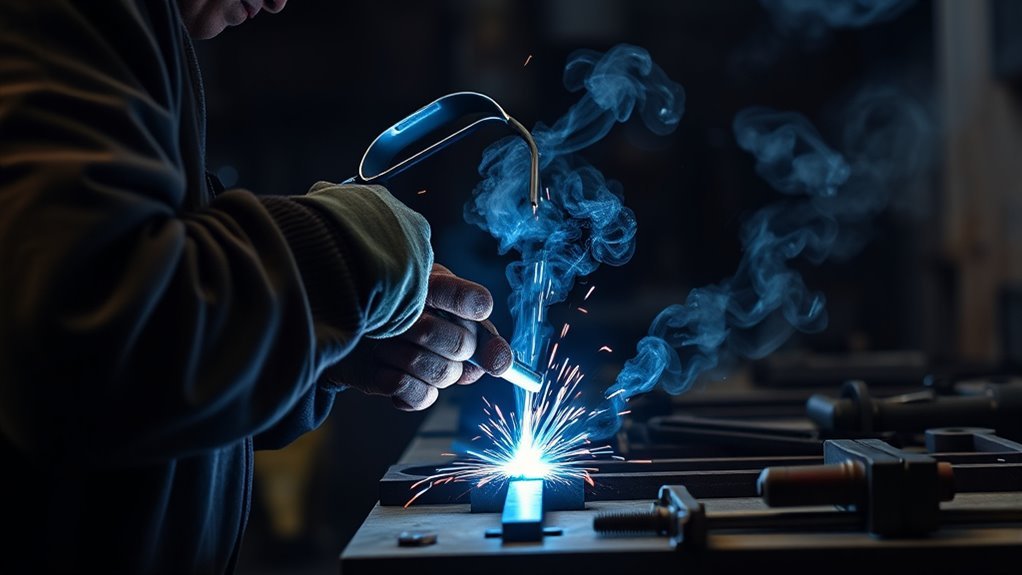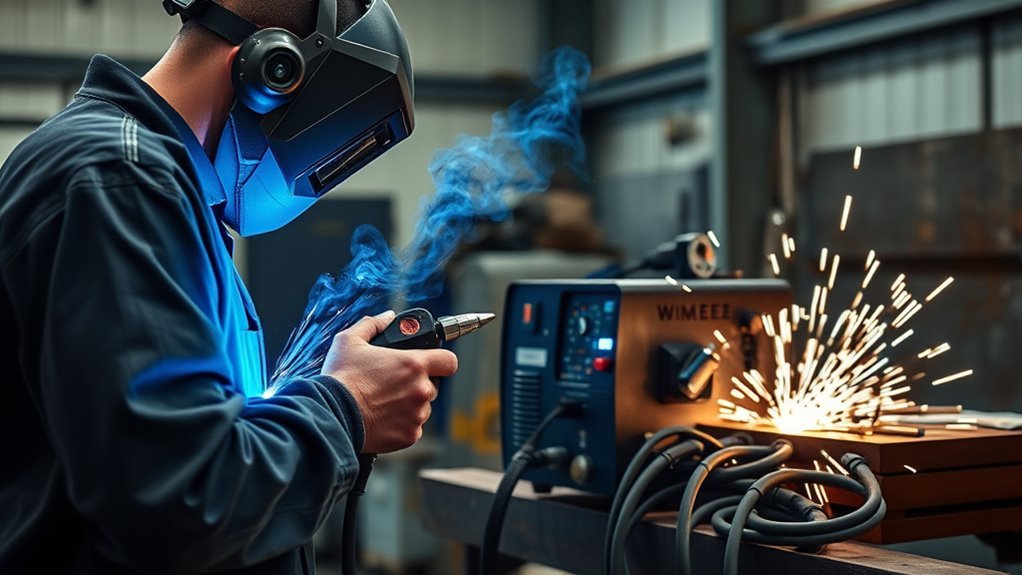
Choosing between AC and DC welding current is not just a machine setting. It affects arc stability, penetration, spatter, electrode choice, aluminum cleaning action, and how well the weld handles magnetized steel. The best choice depends on your welding process, base metal, electrode or wire, position, and the result you need.
Quick Answer
AC welding current alternates direction and is useful for AC TIG on aluminum, some stick electrodes, and reducing magnetic arc blow. DC welding current flows one way and is usually preferred for smoother starts, steadier arcs, lower spatter, and most MIG, TIG steel, and many stick welding jobs.
Key Takeaways
- Use AC when the electrode or process calls for it, when TIG welding aluminum or magnesium, or when DC arc blow is causing the arc to wander.
- Use DC for most MIG welding, TIG welding on steel or stainless steel, and many stick welding jobs where you want easier starts and a smoother arc.
- Polarity matters: DCEP, DCEN, and AC do not behave the same across stick, MIG, TIG, and flux-core welding.
- Always check the consumable chart: some rods and wires require a specific current type or polarity.
What Are AC and DC Welding Currents?
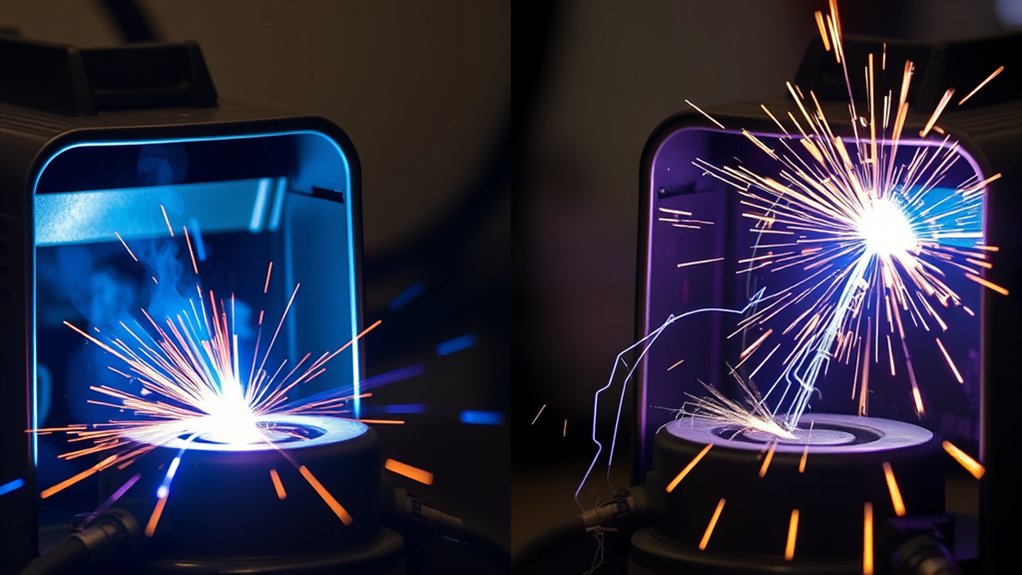
AC welding means alternating current. The current changes direction many times per second, so the electrode and workpiece keep switching between positive and negative. This helps in specific jobs, such as AC TIG welding aluminum, where the electrode-positive half of the cycle helps break up aluminum oxide while the electrode-negative half puts heat into the base metal.
DC welding means direct current. The current flows in one direction, so the arc is usually easier to start and control. DC is common for MIG welding, TIG welding steel and stainless steel, and many stick welding rods. It often gives a smoother bead, less spatter, and better control in vertical or overhead work.
Note: Welding machines may use AC input power from the wall, then transform or rectify it into AC or DC welding output. The output current at the electrode is what matters for welding performance. TWI explains that MMA welding power sources may use AC transformers, DC rectifiers, AC/DC transformer-rectifiers, or DC generators depending on the machine design.
What’s the Difference Between AC and DC Welding?
The main difference is current direction. AC reverses direction. DC stays in one direction. That simple electrical difference changes how the arc feels, how heat is distributed, which electrodes you can run, and how the puddle behaves.
| Feature | AC Welding | DC Welding |
| Current direction | Alternates between positive and negative | Flows in one direction |
| Arc feel | Can feel less smooth on basic AC machines, but modern square-wave AC is much better | Usually smoother, easier to start, and easier for beginners to control |
| Best common uses | AC TIG aluminum, some stick rods, magnetized steel, and jobs where AC is specified | MIG, TIG steel, TIG stainless, many stick rods, thin metal, vertical, and overhead welding |
| Arc blow | Often helps reduce magnetic arc blow | More likely to show arc blow on magnetized workpieces |
| Equipment cost | Simple AC-only stick welders can be cheaper | DC and AC/DC inverter machines often cost more but give more control |
For a beginner, DC is usually the easier starting point because the arc is steadier and the bead is easier to control. AC is still valuable when the material, electrode, or arc-blow problem calls for it.
AC Welding: Key Advantages and Disadvantages
AC welding is most useful when you need a current that changes polarity. That makes it a strong fit for AC TIG welding aluminum and magnesium, because the alternating cycle helps balance oxide cleaning and heat input. It can also help when welding magnetized steel, where DC arc blow pushes the arc away from the joint.
AC can also be practical for budget setups. Many older “buzz box” stick welders are AC-only machines, and many common rods have AC-compatible versions. If you are doing farm repair, basic steel repair, or occasional stick welding, an AC machine can still be useful.
The downside is that AC can feel harsher than DC on simple machines. It may be harder to start, may create more spatter, and may not run every electrode. Some rods are DC-only, so using them on AC can cause sticking, poor starts, and an unstable bead.
Pro Tip: If a stick rod keeps sticking or the arc keeps going out on AC, check the rod classification and manufacturer chart. The problem may be the current type, not your technique.
DC Welding: Key Advantages and Disadvantages
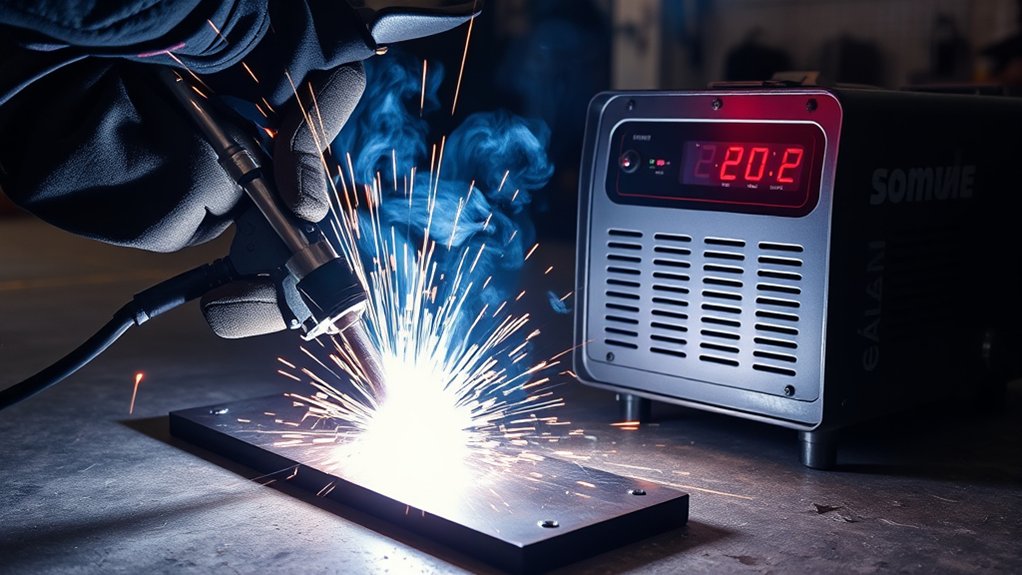
DC welding is the common choice for many shop and field jobs because it produces a steadier arc. You often get easier starts, less spatter, a smoother bead, and better puddle control. That makes DC useful for thin sheet metal, vertical welds, overhead welds, pipe work, structural steel, and precision TIG work.
DC is also more versatile when your machine allows you to choose polarity. With DCEP, the electrode is positive. With DCEN, the electrode is negative. That choice changes heat distribution and electrode behavior, but the effect depends on the process you are using.
The drawback is cost. DC-only and AC/DC inverter machines usually cost more than a basic AC transformer welder. They also give you more settings to understand. For serious welding, that extra control is usually worth it. For occasional repair work, a simple AC or AC/DC stick welder may be enough.
Polarity: DCEP, DCEN, and AC Explained
Polarity is where many AC vs DC welding explanations become confusing. The same polarity does not mean the same result in every process.
- DCEP, or direct current electrode positive: common for many stick rods and most solid-wire MIG setups. In many consumable-electrode processes, it helps with penetration and stable metal transfer.
- DCEN, or direct current electrode negative: common for TIG welding steel and stainless steel because it puts more useful heat into the work while protecting the tungsten from overheating. Some flux-core wires also require DCEN.
- AC, or alternating current: switches between electrode positive and electrode negative. In TIG aluminum, that helps combine oxide cleaning with base-metal heating.
Do not choose polarity by memory alone. Check the electrode container, wire spool, welder manual, or welding procedure specification. A rod such as E6011 may run on AC or DCEP, while other rods or wires may require one specific output.
Which Current Should You Use by Welding Process?
Use the welding process as your first filter. Then check the material and consumable.
- MIG/GMAW: most solid-wire MIG welding uses DC, usually electrode positive. AC is uncommon for regular MIG work.
- Stick/SMAW: AC, DCEP, and DCEN can all be used, but the correct choice depends on the rod. Always check the rod classification and packaging.
- TIG/GTAW on steel or stainless: DCEN is the normal starting point for clean, controlled welds.
- TIG/GTAW on aluminum or magnesium: AC is the common choice because it helps clean surface oxide while still heating the base metal.
- Flux-core/FCAW: follow the wire label. Some self-shielded flux-core wires use DCEN, while many gas-shielded flux-core wires use DCEP.
How to Choose Between AC and DC Welding for Your Project
Start with the metal, then the welding process, then the consumable. That order prevents most mistakes.
- For aluminum TIG: choose AC unless your machine, shielding gas, and procedure are set up for a special DC aluminum method.
- For mild steel MIG: choose DC and set the polarity listed on the wire or machine chart.
- For stainless steel TIG: choose DCEN unless a qualified procedure says otherwise.
- For stick welding outdoors: choose the current type printed on the electrode container. DC usually starts easier, but AC may help if arc blow is severe.
- For thin sheet metal: DC often gives better low-amp control, but polarity and amperage matter more than current type alone.
- For magnetized steel: try AC if DC arc blow keeps pushing the arc away from the joint.
Also consider your machine. A basic AC stick welder can handle simple repair work. A DC inverter is easier to use for many rods and TIG steel. An AC/DC TIG machine is the better choice if aluminum TIG is part of your work.
Products Worth Considering

【Born for Aluminum Welding】AC TIG mode is perfect for dealing with Aluminum and Aluminium alloy.

Large LED Display: Features a large LED screen for enhanced visibility and a clear display of welding parameters and settings. Its intuitive interface ensures effortless operation, enabling precise welding of diverse metals
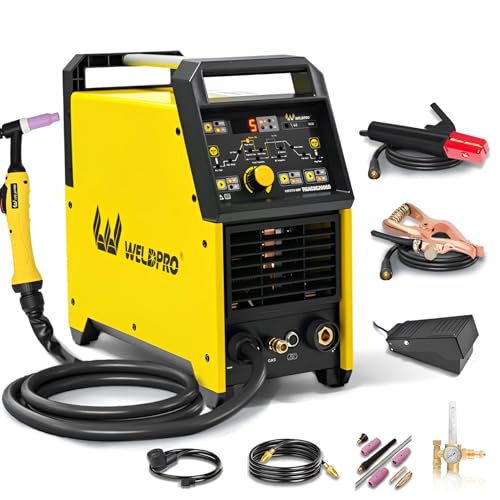
200A AC/DC TIG WELDER & 5 IN 1 MULTIPROCESS WELDING MACHINE: This versatile high frequency welder combines 5 welding modes in one portable design: High-Frequency AC TIG, DC TIG, AC Pulse TIG, DC Pulse TIG, and Stick MMA welding. Perfect for welders of all skill levels, from hobbyists doing home DIY projects to professional fabricators, this ac dc tig stick welder handles all your welding needs with consistent, reliable performance
Common AC and DC Welding Problems
If the weld looks wrong, do not blame AC or DC right away. Check polarity, amperage, travel speed, arc length, shielding gas, and metal prep.
- Arc blow: move the work clamp, shorten the arc, reduce current if possible, weld toward the ground clamp, or try AC.
- Too much spatter: confirm polarity, lower excessive amperage, clean the metal, and use the right electrode angle.
- Rod keeps sticking: increase amperage slightly, shorten the pause at arc start, and make sure the rod can run on your current type.
- Poor penetration: check joint prep, amperage, travel speed, electrode size, and polarity.
- Dirty aluminum TIG welds: clean the oxide layer, use proper shielding gas flow, check AC balance, and make sure the tungsten is prepared correctly.
Safety Checks Before You Weld
AC and DC welding both create serious hazards. Before welding, wear a proper welding helmet, gloves, flame-resistant clothing, and eye protection for chipping or grinding. Keep flammable materials away from the work area, protect bystanders from arc flash, and make sure your work clamp and cables are in good condition.
Warning: Welding can expose you to electric shock, arc radiation, hot metal, fire, and fumes. Follow your welder manual, electrode or wire data sheet, and workplace safety rules. Use ventilation or fume extraction, especially indoors or in confined spaces.
The Occupational Safety and Health Administration covers welding, cutting, and brazing hazards and standards. The CDC/NIOSH welding fumes guidance also notes that welding fumes contain metals and may include manganese, so ventilation and exposure control matter.
Frequently Asked Questions
What is the difference between AC and DC welding currents?
AC welding current alternates direction. DC welding current flows in one direction. AC is useful for aluminum TIG, some stick electrodes, and reducing arc blow. DC is usually smoother and is common for MIG, TIG steel, stainless TIG, and many stick welding jobs.
Is 220 volts AC or DC?
Voltage alone does not tell you whether power is AC or DC. In most home and shop welding setups, a 220V or 240V outlet refers to AC input power. The welder may then transform or rectify that input into the AC or DC output used at the electrode.
Is MIG welding AC or DC current?
Most MIG welding uses DC output, usually electrode positive for solid wire. Always check the welder door chart and wire label because flux-core and specialty wires may require a different polarity.
What is better for beginners, DC or AC welding?
DC is usually better for beginners because the arc starts easier, runs smoother, and creates less spatter. AC is still useful when the rod requires it, when TIG welding aluminum, or when magnetic arc blow makes DC hard to control.
Does DC always penetrate deeper than AC?
No. Penetration depends on the welding process, polarity, amperage, joint prep, electrode, travel speed, and base metal. In stick and MIG welding, DCEP is often linked with stronger penetration. In TIG welding, DCEN is commonly used for deeper base-metal heating on steel.
Can you weld aluminum with DC?
Yes, but AC TIG is the common choice for manual aluminum TIG because it helps remove aluminum oxide while heating the base metal. DC aluminum welding is possible with the right setup, shielding gas, and procedure, but it is not the easiest starting point for most welders.
Conclusion
AC and DC welding currents both have a place in metal fabrication. Choose AC welding for aluminum TIG, AC-rated stick rods, and arc-blow problems. Choose DC welding for smoother starts, cleaner control, and most MIG, TIG steel, stainless TIG, and many stick welding jobs. The safest rule is simple: match the current and polarity to the process, metal, consumable, and procedure instead of assuming one setting is always better.
Sources
- TWI: Equipment for Manual Metal Arc Welding — supports AC/DC power source types, transformer/rectifier basics, current and voltage ranges, and welding equipment safety notes.
- OSHA: Welding, Cutting, and Brazing — supports welding hazard, standards, and safety context.
- CDC/NIOSH: Welding Fumes and Manganese — supports welding fume and manganese exposure cautions.