Disclosure: As an Amazon Associate, we earn from qualifying purchases. If you click a link on this page and make a purchase, we may receive a small commission at no extra cost to you.
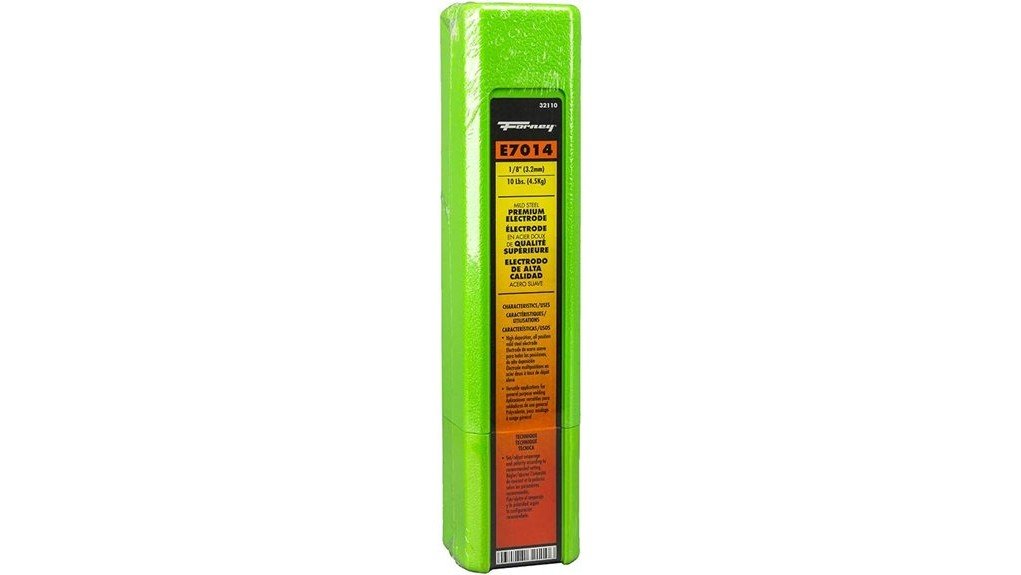
Choosing the wrong stick electrode can leave you fighting excessive spatter, poor bead appearance, or more penetration than a thin-steel project needs. The Forney 32110 E7014 Welding Rod is a 1/8-inch, high-deposition mild-steel electrode designed around smooth operation, stable arc behavior, and medium-to-shallow penetration. Its 10-pound package makes the most sense when you regularly work on sheet metal, ornamental iron, general fabrication, or poorly fitted mild-steel joints. This review explains where the E7014 performs well, where a different electrode is a better choice, and what you should know before buying a full 10-pound package.
Quick Verdict
Rating: 8/10, Recommended with caveats
Best For: Mild-steel fabrication, sheet metal, ornamental iron, and welders who value smooth arc behavior and a clean-looking bead.
Bottom Line: The Forney 32110 is a useful high-deposition E7014 electrode when you want easy operation, low spatter, and medium-to-shallow penetration. It is less suitable when your job specifically calls for deep penetration or welding through heavily contaminated steel.
| Specification | Detail |
|---|---|
| Brand | Forney |
| Model / Item | 32110 |
| Product Type | E7014 mild-steel stick welding electrode |
| Electrode Design | Iron powder-type, high-deposition electrode |
| Diameter | 1/8 inch |
| Package Weight | 10 lb (4.53 kg) |
| Recommended Amperage | 110-140 amps |
| Recommended Polarity | AC, DCEP, or DCEN |
| Tensile Strength | 83,000 PSI |
| Penetration | Medium to shallow |
| Arc Characteristics | Smooth arc, good stability, low spatter |
| Best Uses | Sheet metal, ornamental iron, mild-steel fabrication, and poorly fitted joints |
| Manufacturer Warranty | 30 days against defects in material and workmanship under normal use and care |
| Storage | Keep electrodes clean and dry before use |
Key Takeaways
- The Forney 32110 is a 1/8-inch E7014 mild-steel electrode sold in a 10-pound package.
- Forney recommends an operating range of 110-140 amps and supports AC, DCEP, and DCEN polarity.
- Its iron powder-type coating is designed for high deposition, smooth arc behavior, good arc stability, and low spatter.
- Penetration is medium to shallow, so this is not the right rod when deep digging action is the main requirement.
- Forney specifically recommends E7014 for applications such as sheet metal, ornamental iron, and poorly fitted joints.
- The 10-pound package provides better practical value for frequent users than for someone who only needs a few electrodes for an occasional repair.
What Is the Forney 32110 E7014 Welding Rod?
The Forney 32110 is a shielded metal arc welding electrode in the E7014 class. It has a 1/8-inch diameter and comes as a 10-pound package. Forney describes E7014 as an iron powder-type, high-deposition electrode intended for mild-steel work where ease of operation and bead appearance matter.
Unlike an aggressive deep-penetration electrode, this rod is designed for medium-to-shallow penetration. That makes it useful when you want to deposit filler metal efficiently without relying on a forceful digging arc. Forney highlights sheet metal, ornamental iron, and poorly fitted joints as suitable applications.
The rod also gives you flexible machine compatibility because Forney lists AC, DCEP, and DCEN as acceptable polarity choices. That can be useful if your stick welder does not limit you to one current type.
Who Should Buy It?
Best For
- Welders working regularly with mild-steel sheet, ornamental iron, and general fabrication.
- Users who want a smooth, stable arc with relatively low spatter.
- Buyers who can make practical use of a full 10-pound supply of 1/8-inch electrodes.
Skip If
- Your project specifically requires a deep-penetrating, forceful arc for dirty or rusty steel.
- Your welder cannot comfortably operate a 1/8-inch electrode within the recommended 110-140 amp range.
- You only weld occasionally and are unlikely to use a 10-pound package before storage becomes an issue.
Key Features of the E7014 Welding Rod
High-Deposition Iron Powder Design
The E7014 is an iron powder-type electrode. Its high-deposition design is useful when you want to put down filler metal efficiently rather than depend on a hard digging arc. This characteristic helps explain why Forney promotes it for fabrication and poorly fitted joints.
A high-deposition rod can also require you to pay closer attention to travel speed and puddle size. You should practice on scrap steel when moving to E7014 from a lower-deposition electrode because the puddle may behave differently from what you are used to.
Smooth Arc and Low Spatter
Forney lists smooth arc characteristics, good arc stability, and low spatter among the main advantages of its E7014. These qualities are useful when the finished appearance matters or when you want to spend less time cleaning small droplets from the surrounding work area.
Low spatter does not mean a completely spatter-free weld. Machine settings, electrode angle, arc length, base-metal condition, and technique still affect the result. Staying inside the recommended operating range gives you a better starting point than relying on a generic amperage chart.
Medium-to-Shallow Penetration
One of the most important buying details is the rod’s medium-to-shallow penetration. This makes it different from electrodes chosen specifically for a deep, forceful digging action.
That characteristic can be beneficial on sheet metal and other jobs where excessive penetration is unnecessary. It also means you should not choose the Forney 32110 simply because you need an electrode to burn aggressively through rust, scale, paint, or other contamination.
AC and DC Polarity Compatibility
Forney recommends AC, DCEP, or DCEN for the 32110. This broad polarity compatibility gives you more flexibility across common stick welding machines.
You should still follow your welder’s operating instructions and confirm that the machine can supply the required current for a 1/8-inch electrode. The electrode’s compatibility does not increase the amperage capability of a smaller welder.
1/8-Inch Diameter and 110-140 Amp Range
The 1/8-inch diameter is paired with a manufacturer-recommended range of 110-140 amps. Your exact setting within that range depends on the joint, material thickness, welding position, machine behavior, and technique.
Starting near the lower part of the recommended range on a test piece can help you judge puddle size and heat input before making the actual weld. Increase current only when the arc and joint require it rather than assuming the highest setting produces the strongest result.
Before You Buy: Do not buy the Forney 32110 expecting a deep-penetrating rod for heavily rusty or contaminated steel. Forney identifies this E7014 as a medium-to-shallow penetration electrode. A different electrode class may be a better match when strong digging action is required.
How It Performs in Real Use
For Sheet Metal Work
The medium-to-shallow penetration profile makes E7014 worth considering when you are welding sheet metal or other mild-steel work where deep penetration is not required. The 1/8-inch version still needs adequate amperage, so material thickness and heat control remain important.
If the steel is especially thin, a smaller electrode diameter may offer easier heat control. Forney sells E7014 in additional diameters, so the 1/8-inch version should not automatically be treated as the best size for every thin-metal job.
For Ornamental Iron and Visible Fabrication
Ornamental work benefits from the rod’s emphasis on smooth arc behavior and good weld appearance. A stable arc can help you maintain a more consistent bead when appearance matters in addition to basic joint strength.
You still need proper joint preparation and technique. A rod designed for good appearance cannot correct incorrect fit-up, insufficient fusion, or unsuitable welding parameters.
For Poorly Fitted Joints
Forney specifically lists poorly fitted joints among the applications for its E7014. The high-deposition design can be useful when a joint needs filler metal, provided the gap and joint configuration remain appropriate for safe welding.
Do not treat added deposition as a substitute for correct fabrication. Large gaps, damaged components, or structural repairs may require a different joint design or professional evaluation before welding.
For General Shop and Maintenance Work
The broad AC and DC polarity compatibility makes the rod convenient in a shop where more than one stick welder may be used. Its 10-pound package is also more practical for repeated fabrication and repair work than for an owner who strikes an arc only a few times per year.
For routine work on reasonably prepared mild steel, the combination of smooth operation, low spatter, and high deposition is the main reason to consider it. If the job involves heavy rust or calls for deep penetration, choose an electrode designed around those requirements instead.
How to Use the E7014 Welding Rod Effectively
Start with the specifications for the exact 1/8-inch Forney 32110 rather than a generic E7014 chart. Forney’s recommended range is 110-140 amps, with AC, DCEP, and DCEN all listed as suitable polarity options.
| Practice | What to Do | Why It Matters |
|---|---|---|
| Amperage | Work within Forney’s 110-140 amp range. | Provides a manufacturer-supported starting range for the 1/8-inch rod. |
| Polarity | Use AC, DCEP, or DCEN as supported by your machine and job. | Matches the manufacturer’s polarity specification. |
| Test Weld | Run a bead on comparable scrap before the finished part. | Lets you check heat, puddle behavior, and travel speed. |
| Surface Condition | Remove unsafe coatings and prepare the joint appropriately. | E7014 should not be treated as a substitute for proper preparation. |
| Storage | Keep unused electrodes clean and dry. | Helps protect the electrode coating during storage. |
Pro Tip: Before committing to a long weld, run a short test bead on scrap of similar thickness. Start within the 110-140 amp manufacturer range and adjust according to arc stability, puddle control, and your welder’s instructions.
Safety and Storage
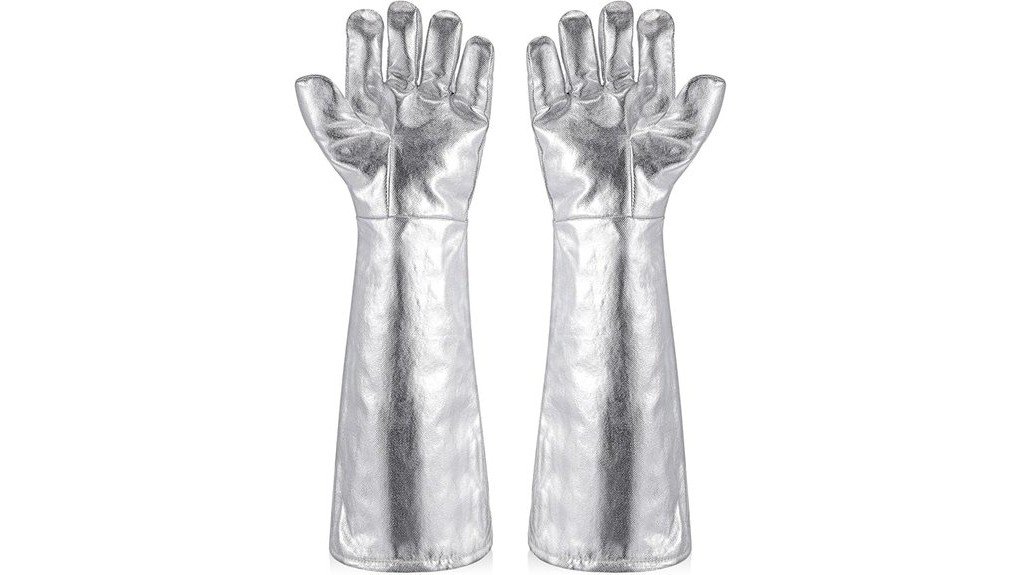
Stick welding produces intense light, heat, sparks, fumes, and molten metal. Forney’s E7014 safety information calls for appropriate protective measures, including protective gloves plus eye and face protection. Use suitable welding PPE and follow your welder manual, electrode documentation, workplace procedures, and ventilation requirements.
Be especially careful around coated or contaminated metals. Heating coatings can introduce additional hazards, so do not assume that an electrode capable of striking an arc on a surface makes that surface safe to weld.
Store unused rods in a clean, dry location and protect the coating from moisture and physical damage. If an electrode coating is visibly damaged or the rods have been stored under questionable conditions, follow the manufacturer’s guidance rather than assuming normal performance.
Pros and Cons
Pros
- High-deposition iron powder-type electrode for efficient filler-metal deposition.
- Manufacturer describes smooth arc characteristics and good arc stability.
- Low-spatter design can reduce cleanup around the weld area.
- Works with AC, DCEP, or DCEN polarity.
- 1/8-inch, 10-pound configuration suits frequent shop and fabrication use.
Cons
- Medium-to-shallow penetration is not ideal when you specifically need a strong digging arc.
- The 110-140 amp range may be too demanding for some smaller stick welders.
- A 10-pound package can be excessive for occasional users and requires proper dry storage.
Is It Worth the Price?
The Forney 32110 can offer strong value for the price when you regularly use 1/8-inch E7014 electrodes. The 10-pound package is aimed more at ongoing fabrication, repair, or shop work than at someone who needs only a handful of rods for a single project.
Its value comes from a useful combination of high deposition, low spatter, smooth arc characteristics, and compatibility with AC or either DC polarity. Those are practical advantages when the work matches the electrode’s medium-to-shallow penetration profile.
It is not the best fit if your priority is deep penetration, severe rust tolerance, or a specialized low-hydrogen application. In those cases, buying the correct electrode class matters more than buying a larger quantity of E7014.
How It Compares to Alternatives
If you want another general-purpose mild-steel option, Forney E6013 is worth comparing. Forney also describes E6013 as a medium-to-shallow penetration electrode suited to light-gauge metal and sheet metal, but its operating characteristics and amperage ranges differ by diameter.
If you specifically need a deep-penetrating rod for rusty steel, Forney’s E6011 line is a more appropriate comparison. For applications where low-hydrogen characteristics are important, Forney E7018 is another distinct option. The 32110 E7014 makes the most sense when high deposition, smooth operation, low spatter, and good bead appearance are higher priorities than aggressive penetration.
Frequently Asked Questions
What amperage should you use with the Forney 32110 E7014?
Forney specifies 110-140 amps for the 1/8-inch 32110 electrode. Your final setting within that range depends on the joint, material thickness, welding position, machine behavior, and your technique.
Can you run the Forney 32110 on AC and DC?
Yes. Forney lists AC, DCEP, and DCEN as recommended polarity options for item 32110. Your welding machine must still be capable of supplying the required amperage.
Does the Forney E7014 provide deep penetration?
No. Forney describes this E7014 as providing medium-to-shallow penetration. If your project specifically needs a deep digging arc, compare an electrode designed for that purpose instead.
Is E7014 the best Forney rod for rusty steel?
The 32110 product information emphasizes smooth operation, high deposition, low spatter, sheet metal, ornamental iron, and poorly fitted joints. Forney specifically markets its E6011 electrodes for strong arc force, deep penetration, and rusty steel, making E6011 the more relevant comparison for that use.
Can you use E7014 for aluminum welding?
No. The Forney 32110 is an E7014 mild-steel electrode, not an aluminum welding electrode. Aluminum requires a welding process and filler material specifically compatible with the alloy and application.
How should you store Forney E7014 welding rods?
Keep unused electrodes clean and dry and protect their coating from moisture and physical damage. Follow Forney’s product and safety information if rods have been exposed to poor storage conditions.
Is the 10-pound Forney 32110 package a good choice for beginners?
The smooth arc and stable operating characteristics can be useful while developing stick-welding technique, but the 10-pound quantity is substantial. A beginner who welds infrequently may prefer a smaller quantity first, while a regular shop user can make better use of the larger package.
The Bottom Line
The Forney 32110 E7014 Welding Rod is a solid choice for welders who want a 1/8-inch, high-deposition mild-steel electrode with smooth arc characteristics, low spatter, broad polarity compatibility, and medium-to-shallow penetration. It makes the most sense for sheet metal, ornamental iron, poorly fitted joints, and regular fabrication work, while buyers needing deep penetration or strong performance on heavily rusty steel should compare another electrode class.