Disclosure: As an Amazon Associate, we earn from qualifying purchases. If you click a link on this page and make a purchase, we may receive a small commission at no extra cost to you.
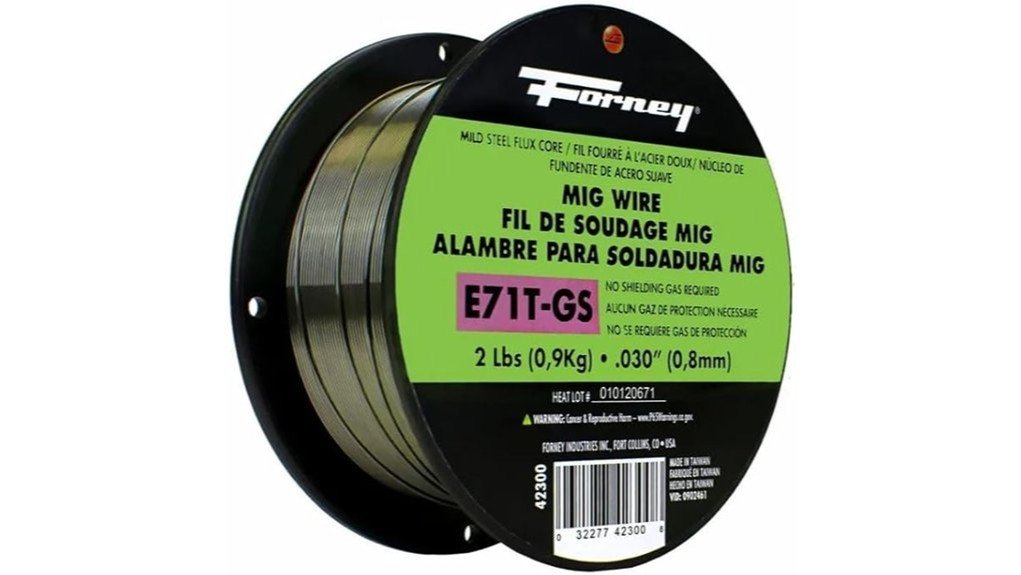
Outdoor repairs can expose the limits of gas-shielded MIG welding, especially when wind, a small portable welder, or less-than-perfect steel is involved. The Forney 42300 is a 2-pound spool of .030-inch E71T-GS self-shielded flux-core wire made for mild steel, mobile work, and single-pass jobs. It offers strong portability and useful penetration without a gas cylinder, but you still need the right polarity, careful surface preparation, and realistic expectations about slag and spatter. This review explains where the wire fits, how to set it up, and when a different filler metal is the safer choice.
Quick Verdict
Rating: 8.4/10, recommended with caveats
Best For: DIY repairs, farm and fence work, and portable mild-steel welding where shielding gas is inconvenient.
Bottom Line: The Forney 42300 combines a manageable 2-pound spool with all-position, gasless operation and a hot arc that suits outdoor single-pass repairs. Its tradeoffs are slag, cleanup, limited structural scope, and the need to confirm that your welder accepts .030-inch wire and DCEN polarity.
| Specification | Detail |
|---|---|
| Brand | Forney |
| Model | 42300 |
| Product type | Self-shielded flux-core welding wire for mild steel |
| Classification | E71T-GS |
| Wire diameter | .030 in (.762 mm) |
| Spool weight | 2 lb (.907 kg) |
| Shielding gas | Not required |
| Recommended polarity | DCEN, direct current electrode negative |
| Welding positions | All-position |
| Application type | Best suited to single-pass welding at relatively high travel speed |
| Published tensile strength | 79,000 psi |
| Best use | Outdoor and mobile mild-steel repairs |
| Manufacturer warranty | 30 days against defects in material and workmanship under normal use and care |
| Safety note | Use welding PPE and adequate ventilation. Remove hazardous coatings near the joint before welding. |
What Is the Forney 42300?
The Forney 42300 is a self-shielded flux-cored electrode for flux-cored arc welding on mild steel. The flux inside the wire creates shielding at the arc, so you do not need an external gas cylinder. That makes the spool useful for driveway repairs, farm work, field maintenance, and small shops where portability matters.
Forney classifies it as E71T-GS using American Welding Society terminology and specifies .030-inch wire on a 2-pound spool. The manufacturer lists DCEN polarity, all-position welding, 79,000 psi tensile strength, and single-pass work as its intended setup. The smaller spool is practical for occasional use, but frequent welders may get better value from a larger spool that fits their machine.
Verdict: Key Takeaways
- Best for: Outdoor mild-steel repairs, fences, brackets, equipment patches, and portable wire-feed welders.
- Main advantage: Self-shielding operation removes the need to carry or protect a gas cylinder and hose.
- Key setup: Your welder must support .030-inch flux-core wire, the 2-pound spool, and DCEN polarity.
- Performance: The hotter arc can provide useful penetration from smaller machines, but it also raises burn-through risk on very thin steel.
- Main limitation: E71T-GS is best treated as a single-pass repair wire, not a default choice for code work or critical multi-pass structures.
Before You Buy: Confirm your welder’s spool capacity, wire-size range, contact tip, drive-roll setup, and ability to switch to DCEN. Do not choose this wire for aluminum, stainless steel, or critical structural welds that require a qualified procedure or a different electrode classification.
Who Should Buy It?
Best For
- DIY welders making single-pass repairs on mild steel.
- Farm, fence, trailer-accessory, and equipment work done outdoors or in open shops.
- Owners of compatible 120-volt or compact wire-feed welders who want gasless portability.
Skip If
- You need aluminum, stainless steel, or another base-metal-specific filler wire.
- Your project requires code compliance, engineered weld procedures, or multi-pass structural work.
- You prioritize the cleanest bead appearance and least post-weld cleanup over outdoor portability.
Wire Size and Welder Compatibility
The .030-inch diameter is common in smaller wire-feed welders, but diameter alone does not guarantee compatibility. Your machine must accept a 2-pound spool, feed flux-cored wire, use the correct .030-inch contact tip, and allow the electrode lead to be connected for DCEN. Some welders arrive configured for solid wire and gas, so check the polarity diagram inside the machine or in the owner’s manual before loading the spool.
Use the drive-roll groove and tension recommended by the welder manufacturer. Too little tension can cause slipping, while too much can deform tubular wire and create feeding problems. Keep the gun cable as straight as practical during setup, trim damaged wire before feeding it, and verify that the contact tip matches the wire diameter.
Pro Tip: Start with the voltage and wire-feed settings printed on your welder’s chart for .030-inch self-shielded wire, then test on scrap of the same thickness. Adjust one control at a time until the arc is steady and the bead ties into both sides of the joint.
Outdoor Performance and Shielding
The main reason to buy the Forney 42300 is its self-shielded design. Wind can disturb the shielding envelope around solid MIG wire and create porosity. With this flux-core wire, the shielding system travels inside the electrode, which makes it better suited to breezy outdoor repairs and mobile work.
Self-shielded does not mean weatherproof. Do not weld in rain, on wet material, or while standing on a wet surface. Strong wind can still disturb the arc and blow fumes toward you, so position screens when practical and stop when conditions make puddle control or fume management unsafe.
Penetration, Spatter, and Cleanup
Forney states that this wire runs hotter than solid wire and can provide more penetration from a smaller-amperage machine. That characteristic helps on brackets, gates, farm implements, and general repair joints where fusion matters more than a polished bead. The published 79,000 psi tensile strength describes the deposited weld metal under test conditions, not the guaranteed strength of every finished repair.
You should expect slag over the bead and some spatter around the joint. Chip and brush the slag after the weld cools enough to handle safely, then inspect the bead for visible porosity, undercut, lack of fusion, or trapped slag. A clean nozzle area, correct stickout, steady travel speed, and a sound work-clamp connection all help reduce inconsistent arc behavior.
Surface Condition and Metal Preparation
The wire is more tolerant of rusty, dirty, or painted mild steel than gas-shielded solid wire, but tolerance is not a reason to skip preparation. Grind or brush the joint to bright metal when possible, remove oil and grease with an appropriate non-chlorinated cleaner, and attach the work clamp to clean bare steel. Better preparation improves arc stability and makes defects easier to see.
Paint, galvanizing, plating, and unknown coatings can create hazardous fumes when heated. Remove coatings far enough from the weld zone to prevent contamination, provide local exhaust or adequate ventilation, and follow the coating manufacturer’s safety information. Never weld near chlorinated solvents or flammable vapors.
How It Performs in Real Use
Outdoor Fence and Gate Repairs
The gasless setup removes one of the biggest obstacles in field repairs: keeping shielding gas stable in moving air. On cleaned mild-steel hinges, tabs, and brackets, the .030-inch wire is a practical match for compact welders. The tradeoff is cleanup, since slag must be removed before you paint or inspect the finished repair.
Farm and Equipment Maintenance
Forney’s hotter-running E71T-GS wire can suit noncritical single-pass fixes on mild-steel guards, brackets, and attachments. It is not a substitute for an engineered repair on a loader arm, hitch, pressure vessel, roll cage, or other safety-critical component. Those jobs may require material identification, preheat, a qualified welding procedure, and professional inspection.
Thin-Gauge Mild Steel
Forney describes the wire as suitable for thin-gauge mild steel, but the hotter arc still demands care. Use short welds, allow cooling time, and test settings on matching scrap to reduce distortion and burn-through. For cosmetic auto-body panels or very thin sheet, gas-shielded solid wire with finer heat control may produce cleaner results.
Mobile and Occasional Shop Use
The 2-pound spool is easy to store and carry, which suits infrequent repairs and small machines. The smaller quantity also limits the amount of wire left exposed to shop humidity. High-volume users should compare the per-pound cost and confirm whether their welder can accept a larger spool.
Common Setup and Use Mistakes
- Using the wrong polarity: Forney recommends DCEN. Incorrect polarity can create excessive spatter, poor penetration, and an unstable arc.
- Skipping the machine compatibility check: Confirm spool size, wire diameter, contact tip, drive roll, and liner requirements before opening the package.
- Welding directly over heavy coatings: The wire may tolerate imperfect steel, but coatings can contaminate the weld and produce dangerous fumes.
- Leaving slag between welds: Remove slag before adding another bead or making a repair pass to reduce trapped inclusions.
- Treating a repair wire as a structural procedure: Do not use E71T-GS by default for critical multi-pass or code-regulated work.
Storage and Spool Care
Keep the spool in its original closed packaging or a sealed container in a cool, dry area. Avoid extreme temperatures, acids, oxidizers, halogens, and damp storage. If the wire develops visible rust, contamination, kinks, or feeding damage, replace the affected section rather than pushing it through the gun.
Release drive-roll tension when the welder will sit unused for a long period, following your machine manual. Cover the machine or remove and seal the spool in humid shops. Dry storage helps protect the wire surface and reduces feeding trouble during the next job.
Safety and Fume Control
Flux-cored arc welding produces intense ultraviolet light, sparks, hot slag, noise, and welding fumes. Wear a properly rated welding helmet, safety glasses under the helmet, flame-resistant clothing, welding gloves, and suitable footwear. Keep combustibles away from the work area, maintain a fire watch when needed, and never weld on a container that held a flammable or unknown substance.
Use adequate ventilation and keep your head out of the fume plume. Local exhaust at the arc is preferred when practical, especially indoors or near coatings. Confined-space welding requires a formal hazard assessment, ventilation plan, atmospheric controls, and trained support. Review the product safety data sheet and follow OSHA welding, cutting, and brazing guidance.
Pros and Cons
Pros
- No external shielding gas is required.
- .030-inch wire and a 2-pound spool suit many compact welding setups.
- All-position capability supports varied repair angles.
- Hotter operation can improve penetration from smaller machines.
- More practical outdoors than solid wire that depends on a gas shield.
Cons
- Slag and spatter add cleanup compared with well-tuned gas-shielded MIG.
- Best suited to single-pass work, not general multi-pass structural welding.
- The hotter arc can be harder to control on very thin or cosmetic sheet metal.
Is It Worth the Price?
The Forney 42300 offers strong value for occasional welders who need a recognized-brand, 2-pound spool for portable mild-steel repairs. You are paying for a practical combination of .030-inch feed size, gasless operation, and outdoor usability rather than a large production quantity.
It is a smart buy for everyday repair work when your machine accepts the spool and your projects fit the wire’s single-pass scope. It is less economical for frequent fabrication, where a compatible 10-pound spool may lower the cost per pound, and it is not the best fit when clean appearance or certified structural performance is the priority.
How It Compares to Alternatives
The Forney 42302 uses the same E71T-GS product family in a .035-inch, 2-pound format, which may suit welders set up for the larger diameter. The Forney 42301 keeps the .030-inch diameter but increases the spool to 10 pounds for higher-volume work, provided your machine accepts that spool size.
For projects that call for multi-pass self-shielded welding, compare an electrode specifically approved for that use, such as Lincoln Electric Innershield NR-211-MP, and follow the wire’s procedure limits. Gas-shielded solid wire remains the better comparison when bead appearance, low slag, and fine heat control matter more than outdoor portability.
Frequently Asked Questions
What welders are compatible with the Forney 42300?
Use it only in a wire-feed welder that accepts .030-inch flux-core wire and a 2-pound spool. The machine must also support DCEN polarity and the correct contact tip, drive-roll groove, and liner setup listed in its manual.
Does this wire require shielding gas?
No. The E71T-GS wire is self-shielded, so the flux inside the electrode provides shielding at the arc. That is the main reason it works well for mobile and outdoor welding.
Can the Forney 42300 weld rusty or painted steel?
It is more tolerant of rusty, dirty, and painted mild steel than gas-shielded solid wire. You should still remove rust, paint, oil, plating, and galvanizing near the joint because clean steel improves weld quality and reduces hazardous coating fumes.
Can it be used for multi-pass structural welding?
Forney describes this E71T-GS wire as best suited to single-pass applications. Do not use it for a critical multi-pass or code-regulated joint unless the project documents, electrode data, and a qualified welding procedure specifically allow it.
Is .030-inch flux-core wire suitable for thin sheet metal?
Forney lists it for thin-gauge mild steel, but the wire runs hotter than solid wire. Test on matching scrap, use short welds, and allow cooling time. Very thin cosmetic panels may be easier with smaller solid wire and shielding gas.
Can this wire weld aluminum or stainless steel?
No. The Forney 42300 is made for mild steel. Aluminum and stainless steel require filler metal, shielding, feeding equipment, and procedures that match the specific base metal and machine.
How should the spool be stored?
Store it in the original closed package or a sealed container in a cool, dry place. Protect it from moisture, extreme temperatures, corrosive chemicals, and shop contamination, and inspect the exposed wire before loading it again.
The Bottom Line
The Forney 42300 is a strong choice for DIYers and mobile welders who need .030-inch self-shielded wire for outdoor, all-position, single-pass mild-steel repairs. Skip it for aluminum, critical structural work, or jobs where minimal slag and fine cosmetic control matter most. Its main strength is gasless portability, while its main limitation is the narrower scope and cleanup that come with E71T-GS flux-core wire.