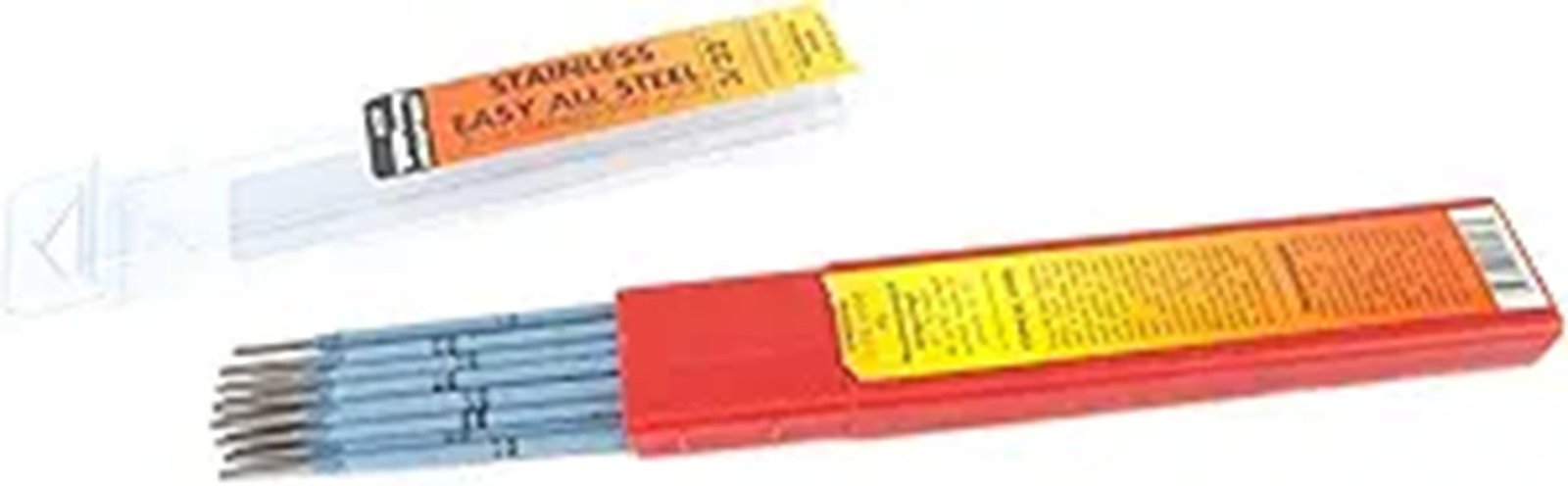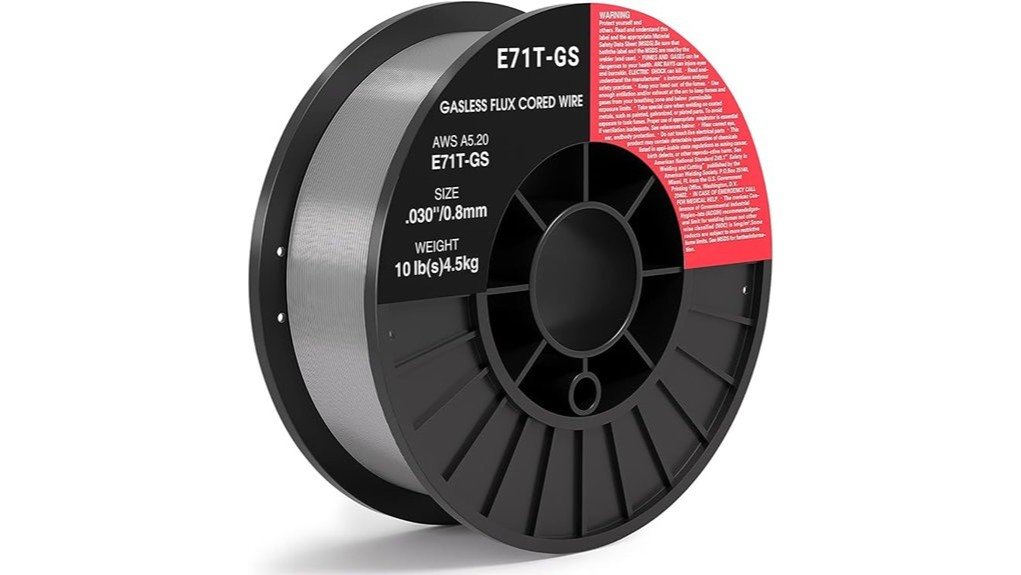
The E71T-GS .030 flux core wire in this review is a gasless, self-shielded wire for mild steel, so you can weld without a gas bottle. It suits home-shop repairs and outdoor jobs on a welder that accepts .030-inch (0.8 mm) flux-cored wire. It is not for aluminum. The spool size and specs below come from the product listing and were not hands-on tested, so confirm them on the Amazon page and in your welder manual before you order. This E71T-GS flux core welding wire is a .030 gasless wire for thin steel repairs.
Verdict
Good fit if you want an inexpensive gasless wire for mild steel repairs, brackets, fences and outdoor work, and your welder runs .030-inch flux-core wire. Skip it for aluminum, for cosmetic welds that need little cleanup, or for structural work that calls for a specific procedure or multi-pass wire.
Key Specs
| Product type | Gasless (self-shielded) flux-cored welding wire |
| AWS classification | E71T-GS |
| Wire diameter | .030 in / 0.8 mm (per the listing) |
| Spool size | 10 lb per the listing this review was based on; confirm the size on the current Amazon page |
| Shielding gas | Not required |
| Base metal | Mild steel |
| Not for | Aluminum |
| Amazon ASIN | B0BYXQGVB9 |
What Is the E71T-GS .030 Flux Core Wire?
E71T-GS is a self-shielded flux-cored wire classification. The flux inside the wire makes its own shielding as it burns, so no external gas is needed. The G in the suffix means the wire is not tied to one specific set of operating requirements, and the S means it is a single-pass wire. In practice that makes it a general-purpose choice for thin to medium mild steel, not for thick multi-pass joints.
The .030-inch size is common on small 110V flux-core and MIG machines. Check that your drive roll, liner and contact tip match .030 wire.
Who It Is For
- DIY and hobby welders working on mild steel
- Repairs and fabrication in a garage or outdoors, where wind makes gas-shielded MIG harder
- Welders who want a simple setup with no regulator or cylinder
Who Should Skip It
- Anyone welding aluminum, which needs a different wire and shielding setup
- Welders who need clean, low-slag cosmetic beads: flux-core leaves slag you must chip and brush off
- Structural or code work that requires a specific qualified procedure
Key Features
- Gasless operation: self-shielded, so it works without a gas cylinder.
- .030-inch diameter: fits many small flux-core and MIG-capable welders that accept 0.8 mm wire.
- E71T-GS classification: aimed at single-pass welds on mild steel.
- Larger spool: the listing this review used points to a 10 lb spool, which means fewer wire changes than a 2 lb spool. Check that your machine takes that spool size.
How to Use It
Prep matters more with flux-core than many people expect. Grind off paint, rust, oil and heavy mill scale before welding.
- Set voltage and wire feed speed from the chart inside your welder, then adjust on scrap steel. See our flux core MIG settings chart for starting points.
- Check polarity. Self-shielded flux-core wire usually runs on DCEN (electrode negative), but confirm in your welder manual and on the spool label.
- Drag the gun with a short stickout and keep the bead steady.
- Chip the slag and brush the weld between passes.
Strong wind and dirty metal can still cause porosity, even with a self-shielded wire.
Storage
Keep the spool in a dry place and away from damp floors. Moisture can cause feeding problems and porosity. If the wire shows rust or contamination, do not use it on important welds.
Pros and Cons
Pros
- No shielding gas needed
- Suits outdoor and breezy conditions better than gas MIG
- Simple setup for mild-steel repairs
- Larger spool per the listing
Cons
- Not for aluminum
- Slag cleanup after every pass
- More smoke and spatter than solid wire with gas
- Exact settings depend on your machine and metal thickness
- Buyer feedback and current specs should be checked on the listing page
Is It Worth the Price?
The value is convenience: no gas bottle, and a larger spool means less wire changing. Check the current Amazon price and spool size, and make sure your welder accepts .030 flux-core wire before ordering.
Alternatives to Consider
Other E71T-GS wires include Forney, Lincoln Electric Innershield NR-211-MP (a different, self-shielded E71T-11 wire) and YESWELDER spools. They are named only for comparison; match wire diameter, spool size and classification to your machine. We cover another .030 option in our 0.030 E71T-GS 2 lb spool review.
Related reading: does flux core welding require gas and the flux core welding amperage chart.
Frequently Asked Questions
Which welders can run E71T-GS .030 wire?
Many flux-core and MIG-capable welders that accept .030-inch (0.8 mm) wire. Check your manual for drive roll type, polarity and the maximum spool size.
Does E71T-GS wire need shielding gas?
No. It is a self-shielded flux-cored wire, so it does not need a gas bottle for normal use.
How does E71T-GS compare with other flux-cored wires?
It is a general-purpose, single-pass mild-steel wire. Other flux-cored wires may suit multi-pass, thicker or structural work better, so follow the wire classification and your procedure.
What wire feed speed should I use?
Start from the chart inside your welder, then adjust on scrap steel. The right setting depends on the machine, voltage, metal thickness, stickout and travel speed.
Can E71T-GS wire weld aluminum?
No. It is made for steel. Aluminum needs aluminum filler and a suitable process.
What safety precautions apply?
Wear a welding helmet, gloves, long sleeves and eye protection, work with good ventilation, and keep flammable material away from sparks and hot metal.
Final Verdict
This is a practical gasless .030 wire for mild-steel repairs and outdoor work. Expect slag cleanup, skip it for aluminum, and check the current listing, spool size and your welder manual before ordering.