Disclosure: As an Amazon Associate, we earn from qualifying purchases. If you click a link on this page and make a purchase, we may receive a small commission at no extra cost to you.
Choosing an FR shirt is not just about finding a work shirt that looks clean on the job. You need flame-resistant protection, a fit you can wear through a full shift, and care instructions that help preserve the garment’s protective properties. This FR Shirts for Men review looks at the article-supported details, including 7.5 oz cotton twill, fire-retardant treatment, FR buttons and threads, HRC2 claims, and NFPA 2112 compliance. It is a practical option if you need everyday FR workwear, but you should confirm the exact safety rating on the garment label before using it in a specific hazard environment.
Quick Verdict
Rating: 7.6/10, Recommended with caveats
Best For: Workers who want a cotton twill FR shirt for general hazardous job settings where FR apparel is required.
Bottom Line: This shirt gives you a work-ready mix of FR-treated cotton twill, FR components, and easier care features. The main tradeoff is that the listing details could not be independently verified here, so you should check the product label, rating, and workplace requirements before relying on it for a specific hazard.
Key Takeaways
- The article lists a 7.5 oz cotton twill construction, which gives the shirt a workwear feel without making it a heavy jacket.
- The shirt is described as fire-retardant treated and built with FR buttons and FR threads for more complete garment-level protection.
- Safety claims include HRC2, NFPA 2112, and a stated minimum protection level of 9.2 Cal/cm², but you should confirm the exact label before use.
- Prewashed and preshrunk fabric can help reduce fit surprises after laundering.
- Cold water washing, mild detergent, and avoiding bleach or fabric softener can help preserve the shirt’s FR properties.
| Specification | Detail |
|---|---|
| Product type | Men’s FR work shirt |
| Material | 7.5 oz cotton twill, according to the article |
| Protection type | Fire-retardant treated fabric |
| Safety claims | HRC2 and NFPA 2112 compliance claimed in the source article |
| Stated protection level | Minimum 9.2 Cal/cm², according to the article |
| FR components | FR buttons and FR threads |
| Fit notes | Prewashed and preshrunk fabric |
| Care notes | Cold water, gentle cycle, no bleach, no fabric softener, line dry or low heat |
| Best use | Work environments where FR shirts are required by a safety plan or employer policy |
What Is the FR Shirt for Men?
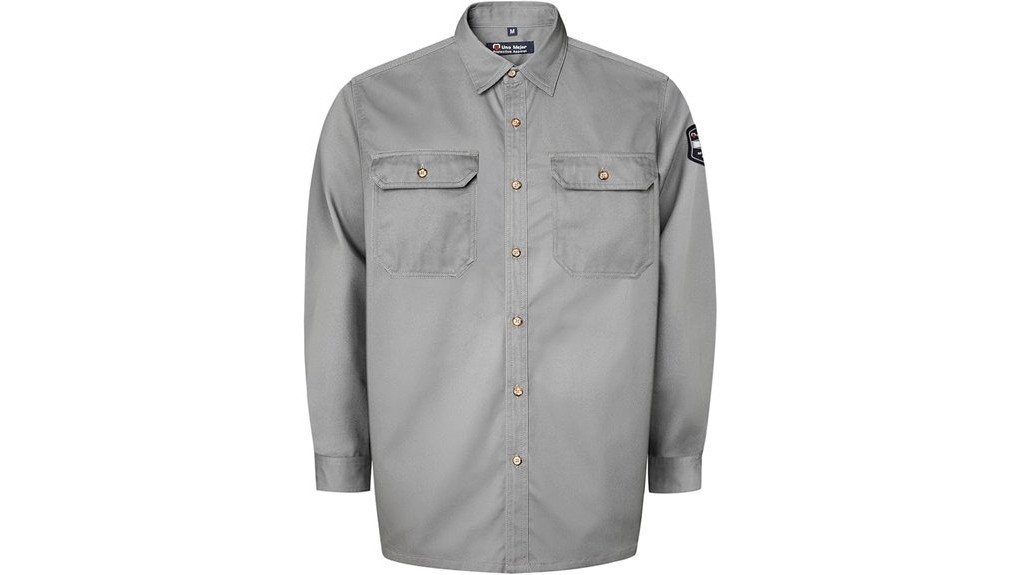
This FR shirt is a men’s work shirt designed for jobs where flame-resistant apparel may be required. The article describes it as a 7.5 oz cotton twill shirt with fire-retardant treatment, FR buttons, FR threads, and visible FR tags for compliance awareness.
The shirt aims to balance jobsite protection with a cleaner workwear appearance. That matters if you need safety apparel that still looks presentable for shop, field, inspection, utility, maintenance, or contractor settings.
Before You Buy: Do not rely on the product title alone for safety. Check the actual garment label for arc rating, NFPA 2112 marking, size, laundering limits, and your employer’s PPE requirements before wearing it in a hazardous area.
Who Should Buy It?
Best For
- Workers who need a cotton twill FR shirt for daily jobsite wear.
- Buyers who want FR buttons, FR threads, and compliance tags in one shirt.
- Anyone who prefers prewashed and preshrunk workwear to reduce early fit changes.
Skip If
- You need a verified brand, model number, or official manufacturer datasheet before purchase.
- Your job requires a different arc rating, garment category, or company-approved PPE list.
- You want lightweight casual clothing rather than protective work apparel.
Features of FR Shirts
Cotton Twill Build
The main material detail listed in the article is 7.5 oz cotton twill. That weight gives the shirt a sturdier feel than a thin casual button-up, which helps it fit better into work settings where durability matters.
Cotton twill also gives the shirt a familiar workwear texture. It should feel more like a structured uniform shirt than a slick synthetic layer, although comfort will still depend on the fit, climate, and how long you wear it.
FR-Treated Fabric and Components
The article describes the shirt as fire-retardant treated and built with FR buttons and FR threads. That detail matters because a protective shirt should not rely only on the main fabric while weaker components fail under heat exposure.
You should still confirm the garment label before use. FR apparel must match the hazard, and the correct protection level depends on your workplace risk assessment, not only the product description.
Fit and Everyday Wear
The prewashed and preshrunk fabric can help reduce major size changes after early washes. That is useful if you wear the shirt over a base layer or need enough room to move your shoulders, arms, and torso during work.
The article also mentions a wrinkle-free feature. For buyers, that means the shirt may stay more presentable with routine care, which can matter if you move between fieldwork, customer sites, and shop environments.
Importance of Safety Standards
Safety standards help you compare FR garments beyond color, fit, or general marketing claims. The article lists HRC2 and NFPA 2112, along with a stated minimum of 9.2 Cal/cm² protection.
Those claims are useful buying signals, but they should not replace label verification. Before wearing this shirt for arc flash, flash fire, welding-adjacent work, utilities, oil and gas, electrical maintenance, or industrial use, match the garment’s label to the hazard and your employer’s PPE program.
Pro Tip: Photograph the FR label and care label before the first wash. That gives you a quick reference for ratings, laundering limits, and replacement decisions later.
How It Performs in Real Use
For Daily Workwear
For regular shift use, the 7.5 oz cotton twill build gives the shirt enough structure for shop and field environments. It should make the most sense when you need a protective shirt that still looks like standard workwear.
For Hot or Active Work
A cotton twill FR shirt can feel more substantial than a light casual shirt. If you work in warm spaces or move constantly, check sizing carefully and plan for airflow, layering, and breaks according to your workplace safety rules.
For Customer-Facing Jobs
The FR buttons, FR threads, compliance tags, and wrinkle-free feature give the shirt a more professional look. That can help if you need safety apparel for service calls, inspections, maintenance visits, or contractor work where appearance still matters.
For Long-Term Use
Long-term performance depends heavily on care. The article says flame-resistant protection can last up to 100 washes, but you should follow the garment label and replace the shirt if it becomes torn, contaminated, badly faded, or no longer compliant.
Care and Maintenance Tips
Proper washing matters because harsh laundry habits can weaken fabric performance and shorten the useful life of FR apparel. Use cold water, a gentle cycle, and mild detergent unless the garment label says otherwise.
- Wash with cold water to help preserve the fabric and treatment.
- Avoid bleach because it can damage FR properties and weaken fibers.
- Skip fabric softeners unless the care label clearly allows them.
- Line dry or use low heat to reduce shrinkage and heat-related wear.
- Inspect the shirt after washing for holes, frayed seams, missing buttons, and unreadable labels.
Do not treat FR clothing like ordinary casual laundry. If the shirt becomes contaminated with oil, fuel, chemicals, or other flammable residue, follow your employer’s safety procedures or replace the garment when required.
Pros and Cons
Pros
- 7.5 oz cotton twill gives the shirt a durable workwear feel.
- FR buttons and FR threads support a more complete protective design.
- Prewashed and preshrunk fabric helps reduce fit surprises after washing.
- Wrinkle-free feature can help the shirt stay presentable for jobsite and customer-facing work.
- Care instructions are simple enough for routine workwear laundry.
Cons
- Brand and model details were not available in the source article.
- You must confirm the actual rating and certification on the garment label before hazardous use.
- Cotton twill may feel heavier than a lightweight casual shirt in hot conditions.
Is It Worth the Price?
This FR shirt is worth considering if you need a practical work shirt with article-supported FR details, including cotton twill, FR buttons, FR threads, prewashed fabric, and safety-standard claims. It fits best as a workwear purchase rather than a fashion-only shirt.
The strongest value comes from the combination of protective features and everyday wearability. The main limitation is verification: because the exact brand and model were not confirmed here, you should review the Amazon listing, garment label, and workplace requirements before buying.
How It Compares to Alternatives
Compared with heavier FR jackets, this shirt should feel easier to wear during routine tasks and indoor work. Compared with lightweight non-FR shirts, it offers safety-focused construction, but it may feel warmer and needs more careful laundering.
If you need a specific brand, official datasheet, or employer-approved garment, compare this shirt with known FR workwear lines from established safety apparel brands. This option makes the most sense if the listing, label, and your job requirements all match.
Frequently Asked Questions
How do I choose the right size for this FR shirt?
Start with the seller’s size chart and compare it with your chest, sleeve, and shoulder measurements. Leave enough room for safe movement and any approved base layer you wear underneath.
Can this FR shirt be worn outside industrial settings?
Yes, you can wear it in non-industrial settings if you like the workwear style and feel. Just remember that FR clothing is designed for safety use, so it may feel heavier and more structured than casual shirts.
Are there specific washing instructions for FR shirts?
Use cold water, mild detergent, and a gentle cycle unless the care label gives different instructions. Avoid bleach and fabric softeners because they can damage FR properties.
How long does the flame-resistant protection last?
The article states that protection can last up to 100 washes. Real service life depends on laundering, contamination, wear, label instructions, and your workplace replacement policy.
What is the difference between FR and non-FR clothing?
FR clothing is designed to resist ignition and reduce burn injury risk in certain workplace hazards. Non-FR clothing does not provide the same type of protection and may melt, ignite, or continue burning depending on the material.
Is HRC2 the same as NFPA 2112?
No. HRC2 relates to arc-rated clothing categories, while NFPA 2112 relates to flame-resistant garments for flash fire protection. Check your safety plan to confirm which standard your job requires.
Who should skip this FR shirt?
Skip it if your employer requires a specific brand, arc rating, garment system, or official certification document that you cannot confirm on the listing or label. You should also skip it if you want a very light casual shirt rather than protective workwear.
What common mistake should you avoid with FR shirts?
Do not cover an FR shirt with a non-FR outer layer in a hazard area unless your safety program allows it. Also avoid using bleach, fabric softener, or high heat unless the care label approves it.
The Bottom Line
The FR Shirts for Men option is a practical pick if you want a cotton twill FR work shirt with article-supported safety features, FR components, and simple care guidance. It is not the best fit if you need fully verified brand details, a manufacturer datasheet, or a specific employer-approved garment before purchase.