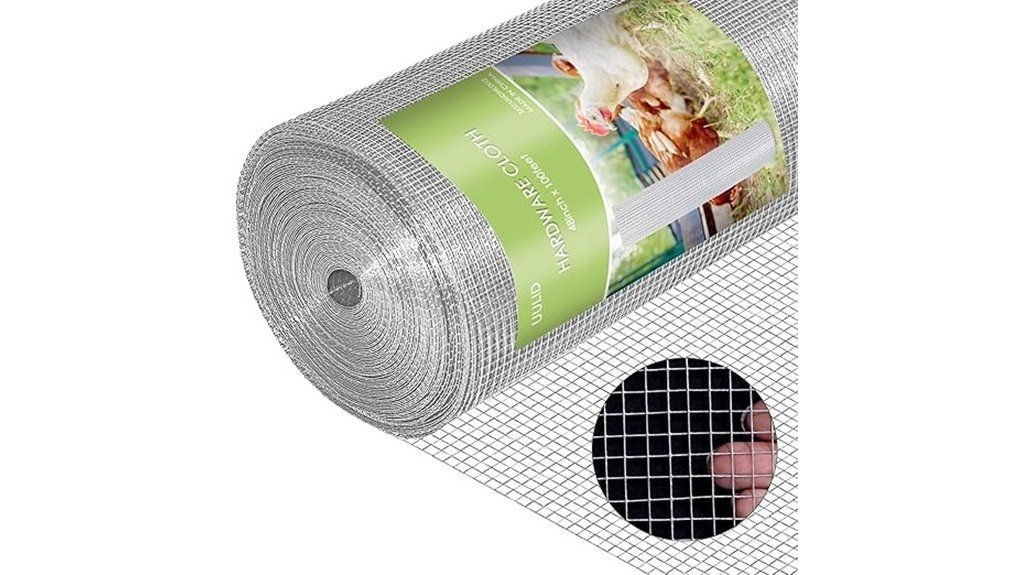
This 1/2 inch hardware cloth is a 48 in wide, 100 ft long roll of galvanized steel wire mesh sold for garden fencing, small-animal enclosures and general barrier jobs. It is a good value pick if you need a lot of mesh to keep rabbits and similar pests out; choose a smaller mesh if you are dealing with mice or small snakes, because 1/2 inch openings can let them through.
The details below come from the seller’s Amazon listing. Wire gauge and exact coating are things to confirm on the live page before you order.
Quick specs at a glance
| Item | Detail |
|---|---|
| Item | Welded wire mesh roll, commonly called hardware cloth |
| Listed mesh opening | 1/2 in |
| Listed roll size | 48 in wide x 100 ft long |
| Listed material | Galvanized steel |
| Typical uses | Garden beds, animal pens, vents, planters, craft and workshop screens |
| To confirm | Wire gauge, galvanized coating type, roll weight, whether the mesh is welded before or after galvanizing |
What 1/2 inch hardware cloth is and who it suits
Hardware cloth is a rigid grid of steel wires, welded at each crossing, then coated with zinc to slow rust. It is stiffer than chicken wire and does not unravel when cut, so it is better for holding a shape or blocking predators that can tear thin wire.
A 100 ft roll suits:
- Gardeners lining raised beds, protecting seedlings or fencing a vegetable patch.
- Owners of rabbit hutches, chicken runs, compost bins or coops who want to keep out larger pests.
- Builders and fabricators who need screens for vents, window wells, drain covers or lightweight guards.
Smaller jobs may be better served by a shorter roll, since 100 ft of 4 ft wide mesh is bulky and heavy to move.
How to choose the right mesh and check this roll
- Match the opening to the animal. 1/2 in mesh stops rabbits and many larger pests. Mice can squeeze through smaller gaps than most people expect, and young or small snakes can pass 1/2 in openings. For those, a finer mesh such as 1/4 in is a common choice.
- Check the wire gauge on the listing. Thicker wire resists predators and sagging better, while thinner wire is easier to cut and shape.
- Check the coating. Galvanized wire resists rust but is not rust-proof, especially at cut ends, in constant wet soil or near salt.
- Measure your project and allow for overlaps, corners and a buried or skirted edge if you are blocking digging animals.
- Check the roll length and weight against how you will carry and store it.
Pros and limitations
Pros
- Large 48 in x 100 ft roll covers big projects or many small ones.
- Galvanized steel holds shape and resists rust better than bare steel.
- Cuts with tin snips or bolt cutters, so no special tools are needed.
Limitations
- 1/2 inch openings are too big to stop mice or small snakes.
- The roll curls and can be hard to flatten; unroll it against the curl and weigh down the ends.
- Cut edges are sharp and can scratch skin and pets.
- Galvanized coating is not permanent in wet ground; expect eventual rust at cuts and welds.
- It is a barrier material, not a structural fence, so it needs posts or a frame.
Cutting, fastening and workshop safety
- Wear thick gloves and eye protection when cutting and handling the mesh; the cut wire ends are sharp and can spring.
- Cut with tin snips, aviation snips or bolt cutters, and bend sharp ends back or fold the edge over.
- Fasten to wood with heavy-duty staples, fence nails or screws and washers; for metal frames use wire ties, J-clips or hog rings.
- If you plan to weld or cut it with a torch or grinder, remember it is galvanized. Zinc fumes from heating galvanized steel can cause metal fume fever. Grind the coating off the area first, work outdoors or with strong ventilation and wear suitable respiratory protection.
- Touch up cut ends with cold galvanizing paint or similar to slow rust.
Alternatives and related guides
- Hardware cloth durable fencing review: a sibling hardware cloth listing to compare mesh size and roll length
- Hardware cloth review (second listing): another roll option with its own size and specs
- Wire scratch brush set: for removing zinc or rust before welding and for cleaning cut ends
- Mini wire brushes set: small brushes for cleaning mesh joints and tight corners
Frequently Asked Questions
Is 1/2 inch hardware cloth small enough to keep out mice?
Often not reliably. Mice can pass through very small openings, and 1/2 in mesh can let some through. Rabbits and larger pests are blocked. For mice and small snakes, many people choose 1/4 in mesh instead.
Is hardware cloth stronger than chicken wire?
Yes, generally. Hardware cloth uses rigid welded wire that holds its shape, while chicken wire is a thin twisted mesh that predators can tear. Hardware cloth is the usual choice for stronger enclosures and predator protection.
Can I weld galvanized hardware cloth?
You can, but take care. Heating galvanized steel releases zinc fumes that can make you sick. Grind off the coating around the weld, ventilate well, wear suitable respiratory protection and avoid working indoors without extraction.
How do I stop hardware cloth from rusting?
Keep it off wet soil where possible, avoid scratching the galvanized coating and touch up cut ends with cold galvanizing paint or a rust-inhibiting coating. Galvanized mesh resists rust but is not rust-proof, especially at cut edges.
Final verdict
The 1/2 inch hardware cloth roll is a sensible bulk buy for garden and pen barriers when rabbits and larger pests are the problem. Confirm the wire gauge, pick finer mesh for mice or small snakes, and handle cut edges and galvanized coatings carefully.