As an Amazon Associate, Garage Welding may earn from qualifying purchases. This does not change the price you pay.
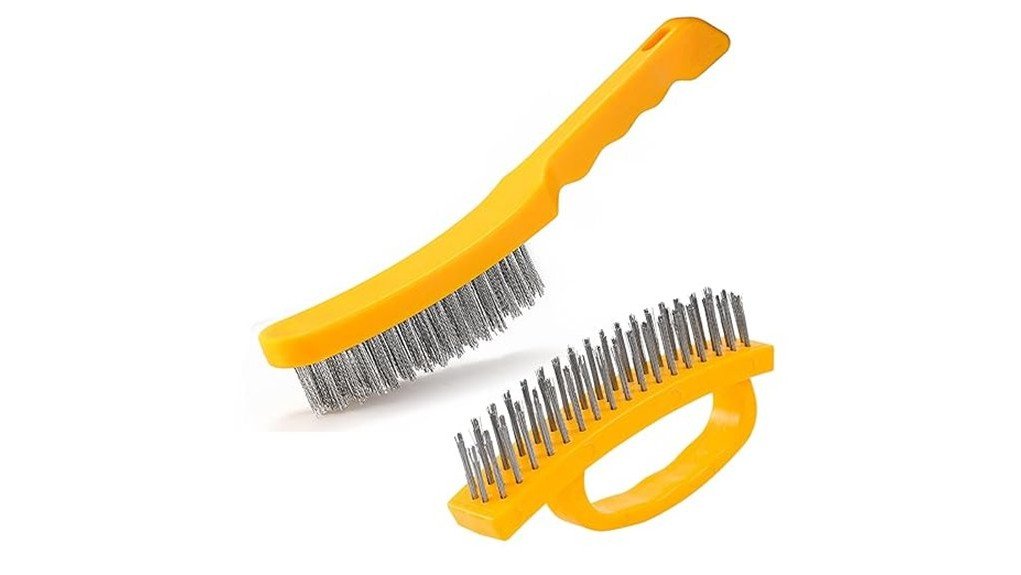
This wire scratch brush set pairs a long-handled brush (about 10.6 in) with a short-handled brush (about 6.7 in), both with stainless steel bristles. This wire scratch brush set review is based on the Amazon listing, not on hands-on testing.
It is worth considering if you want a simple manual tool for cleaning rust, old paint and scale from metal before welding or after it. Skip it if you need a power-tool wire wheel for heavy rust removal, or a brush for aluminum-only work.
Quick specs at a glance
| Item | Details |
|---|---|
| Product type | Hand wire scratch brushes, 2-piece set |
| Long brush (per listing) | About 10.6 in overall |
| Short brush (per listing) | About 6.7 in overall |
| Bristles (per listing) | Stainless steel wire |
| Uses (per listing) | Rust, paint and grime removal on metal and grills |
The listing text mentions bristle counts for each brush. Look at the listing photos to judge bristle density and row layout.
What these brushes are and who they suit
A scratch brush is a handle with several rows of stiff wire tufts. Pushing it back and forth scrapes surface rust, flaking paint, mill scale and weld discoloration. Having two lengths is practical: the long handle gives reach and leverage on flat areas, while the short one reaches inside corners and around fittings.
For welders, these brushes clean joint edges before welding, remove slag residue lines and scrub heat tint after welding. They also suit grill cleaning and general restoration.
How to check fit and suitability
- Bristle metal: stainless bristles are standard for brushing stainless steel, because carbon-steel bristles can embed iron in stainless. Keep stainless brushes dedicated to stainless if corrosion resistance matters.
- Aluminum: use a separate, clean stainless brush used only on aluminum, so you do not drag oil or steel particles into the weld.
- Handle length: the long brush gives reach; check your inside-corner clearance for the short one.
- Stiffness: hand brushes are good for light to moderate rust. Heavy scale needs a grinder or wheel.
- Coated surfaces: if you are brushing a coated or galvanized part, wear a respirator since you may release zinc or coating dust.
Pros and limitations
Pros
- Two lengths cover reach and detail work.
- Stainless bristles resist rust from damp storage.
- No power or noise, and no risk of a wheel grabbing the work.
Limitations
- Slower than a power wire wheel on heavy rust.
- Brush wires can break off, so wear eye protection.
- Won’t remove deep pitting or thick paint on its own.
- Brushing can leave scratch marks that you should consider before painting or finishing.
How to use them for weld prep and cleanup
- Brush the joint faces and about an inch around them to bare metal before welding.
- Use firm forward strokes in one direction, since a to-and-fro motion often loosens wires.
- After welding, brush slag and spatter residue lightly. Wear eye protection because hot slag and loose wires can fly.
- Do not brush a weld that is still hot; let it cool to avoid burns.
- Clean the brush by tapping or lightly wire-brushing it on a clean surface. Store it dry.
Safety: wear safety glasses, gloves and, for old paint or galvanized coatings, a suitable respirator with good ventilation. Never weld on or near old lead-based paint without proper controls.
Alternatives and related guides
- Small wire brush set review – smaller brushes for detail work
- Wire brush rust scrub tools review – a broader set of rust-scrubbing tools
- Mini wire brushes set review – mini brushes for tight spots
- Iron-shaped stainless wire brush review – a different handle style
Frequently Asked Questions
Are stainless wire brushes good for welding prep?
Yes, for light to moderate cleaning. They remove rust, scale and paint from joint edges. For stainless steel or aluminum, use a dedicated stainless brush that has not touched carbon steel, to avoid contamination.
Can I use a hand wire brush on aluminum?
You can, but use a clean brush that is only used on aluminum. A brush that has touched steel can embed iron and oil in the aluminum surface and cause weld defects.
Do I need eye protection when using hand brushes?
Yes. Wire bristles can break and fly, especially with new brushes or hard pressure. Wear safety glasses or a face shield and gloves when brushing.
Is a hand brush enough for heavy rust?
Usually not. A hand brush works on light rust and paint. For heavy rust or thick mill scale, use a power wire wheel or flap disc, with the correct PPE, then finish with a hand brush.
Final verdict
This two-brush set offers a simple, quiet way to clean joints and finished welds. Keep stainless brushes dedicated, wear eye protection and use a power tool when rust is heavy.