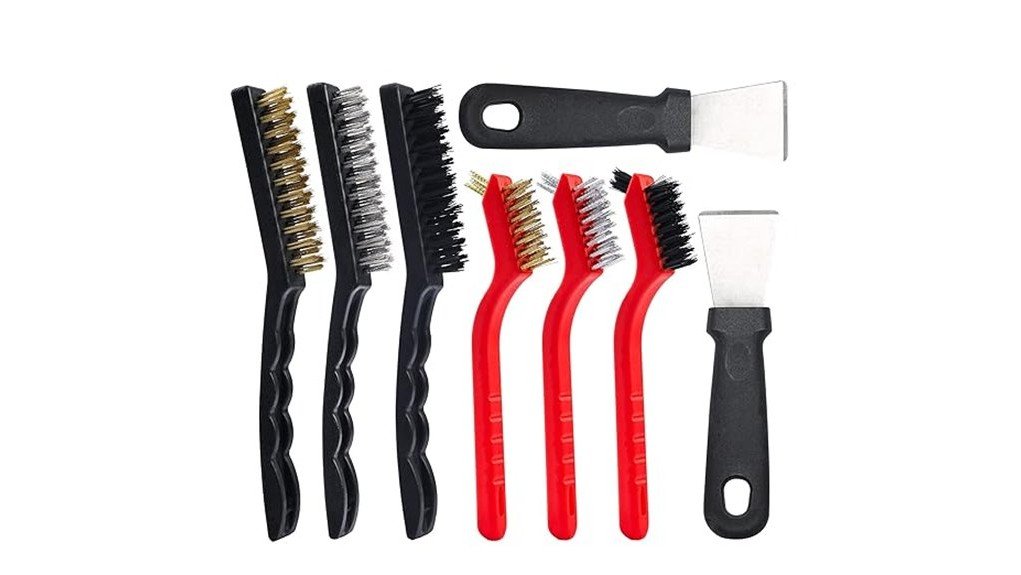
This small wire brush set mixes stainless steel, brass and nylon brushes with metal scrapers, so you can pick a different tool for rust, soft metal and delicate parts. This small wire brush set review is based on the Amazon listing, not on hands-on testing.
It is worth considering if you want one low-cost kit for general shop cleaning, from weld prep to cleaning small parts. Skip it if you need a single heavy-duty brush for thick scale, or one dedicated brush for aluminum or stainless fabrication.
Quick specs at a glance
| Item | Details |
|---|---|
| Product type | Mixed hand brush and scraper set |
| Contents (per listing) | Two stainless steel brushes, two brass brushes, two nylon brushes and two stainless scrapers |
| Brush length (per listing) | Roughly 5 to 8 in |
| Uses (per listing) | Rust, paint and grease removal, cleaning unfinished metal and delicate parts |
Verify the exact piece count and brush shapes on the listing. Photos usually show the handle style better than the text.
What is in the set and who it suits
The value of a mixed set is choosing the right bristle. Stainless bristles are hard and cut rust, scale and old paint. Brass bristles are softer than steel, so they are gentler on softer metals and finished surfaces. Nylon bristles don’t scratch and are for scrubbing off grease, grime and light residue.
The scrapers handle caked-on grease, gasket material or crud that bristles skip over. The kit suits hobbyists, mechanics and fabricators who do general cleaning rather than production work.
Which brush for which job
| Brush | Good for | Avoid |
|---|---|---|
| Stainless steel | Rust, paint, mill scale, weld joint edges on steel | Soft metals and finished surfaces; do not reuse on aluminum if it has touched steel |
| Brass | Soft metal, threads, light corrosion, cleaning welding tips and contacts | Heavy rust; may leave brass residue on some surfaces |
| Nylon | Degreasing, plastics, painted parts, final scrub | Hot parts; nylon can melt |
| Scraper | Thick grease, gaskets, crust | Soft or finished surfaces |
How to check fit and suitability
- Handle and size: shorter brushes reach tight spots but offer less leverage. Compare listed lengths with your needs.
- Dedicated brushes: keep one stainless brush only for stainless and one clean brush only for aluminum, to avoid cross-contamination.
- Welding contact parts: brass is a typical choice for cleaning contact points where you want less scratching than steel.
- Count: confirm the full list of pieces in the listing, since descriptions of mixed sets vary.
Pros and limitations
Pros
- Several bristle materials in one kit.
- Small sizes for tight corners and parts.
- Scrapers cover what brushes miss.
Limitations
- Hand brushes are slow on heavy rust.
- Brushes in a mixed set are small, so large surfaces take time.
- Steel bristles scratch soft metals and finishes.
- Wire bristles can break off and fly.
Safe use and care
- Wear safety glasses and gloves when brushing, since bristles can break off.
- Brush away from your body and in one direction.
- Ventilate when brushing old paint or galvanized coatings, and wear a suitable respirator.
- Rinse nylon and brass brushes after use; dry steel brushes to avoid rust.
- Hang brushes or store them flat so bristles keep their shape.
Alternatives and related guides
- Wire scratch brush set review – larger long and short handled stainless brushes
- Mini wire brushes set review – mini brushes for precise cleaning
- Iron-shaped stainless wire brush review – a single brush with a different handle style
Frequently Asked Questions
Which brush should I use before welding?
For steel, a stainless wire brush removes rust and scale from the joint edges. For stainless or aluminum, use a clean brush kept only for that metal. Always brush to bare metal before welding.
Are brass brushes safer on metal?
Brass is softer than steel, so it scratches less. It is a good option for threads and softer or finished metals, but it will not remove heavy rust.
Can I use nylon brushes on hot metal?
No. Nylon bristles melt or deform on hot parts. Let work cool before scrubbing with nylon, or use a wire brush if the surface is warm but safe to touch.
Do I need a respirator when brushing?
For old paint, galvanized coatings or heavy dust, yes. Wear a suitable respirator, eye protection and gloves, and work with good ventilation. Never brush lead paint without proper controls.
Final verdict
This small mixed brush set covers many cleaning jobs around the weld bench. Match bristle to metal, keep dedicated brushes for stainless and aluminum, and use power tools for heavy rust.