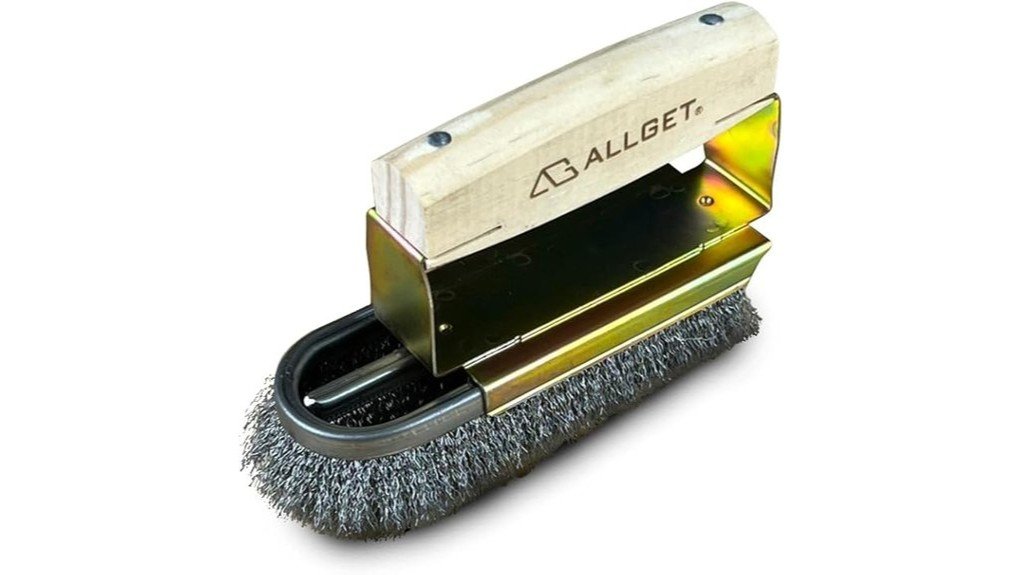
This iron-shaped stainless steel wire brush is a flat, clothes-iron style brush with a wooden handle and dense stainless bristles, sold for scrubbing rust, scale and baked-on residue. This iron-shaped wire brush review is based on the Amazon listing, not on hands-on testing.
It is worth considering if you want a palm-friendly brush that puts your weight over the bristles for flat surfaces like weld seams, plate and grill grates. Skip it if you need to reach into corners or tight grooves, where a narrow brush works better.
Quick specs at a glance
| Item | Details |
|---|---|
| Product type | Flat iron-style hand wire brush |
| Bristles (per listing) | Stainless steel, high density |
| Handle (per listing) | Wooden |
| Size (per listing) | About 5.5 x 2.4 x 3.1 in |
| Weight (per listing) | About 8.8 oz |
| Uses (per listing) | Rust removal, slag, polishing and cleaning grates and tile |
Check the listing photos for the bristle block size and row count. Confirm the wood handle finish if you plan to use it outdoors.
What this brush is and who it suits
The shape matters. The wide, flat head and a handle that sits on top (like a clothes iron) let you push down with your whole palm, so you can scrub a flat surface with more control than a long thin handle gives you. That helps on welds, large flat plates, fire pit grates and barbecue racks.
It suits fabricators and DIY users who clean beads, remove light rust from flat steel, or scrub slag and scale from finished joints. It is less useful for inside corners or round tubes.
How to check fit and suitability
- Surface shape: flat or lightly curved surfaces are ideal; tight grooves are not.
- Bristle metal: stainless bristles are standard for stainless fabrication. Do not use the same brush on carbon steel and then on stainless, since iron particles can cause rust spots on stainless.
- Aluminum: use a separate, clean brush kept only for aluminum if you plan to weld it.
- Handle: wood absorbs oil and moisture, so wipe it dry and keep it out of heat.
- Hand size: the 5.5 in length suits average hands; check if you wear thick welding gloves.
Pros and limitations
Pros
- Palm grip gives pressure control on flat surfaces.
- Dense stainless bristles stay stiff and resist rust.
- Compact and light at about 8.8 oz.
- Useful beyond welding, for grates and masonry or tile cleaning.
Limitations
- Wide head can’t reach corners or inside edges.
- Heavy rust and thick mill scale need a power brush or grinder.
- Brushing can scratch brushed or polished stainless finishes.
- Wood handle is not heat or water proof.
How to use it for weld cleanup
- Let the weld cool to a safe temperature.
- Brush along the bead in the direction of the weld, using firm, even strokes.
- Work the same area until slag or discoloration is removed; heavier heat tint on stainless may need a pickling paste or electro-cleaning.
- Brush away loosened debris and wipe the area before painting or passivating.
- Clean the bristles with a quick tap, and store in a dry place.
Always wear eye protection and gloves. Wire bristles can detach and fly. If you brush galvanized or painted parts, wear a suitable respirator and ventilate the area.
Alternatives and related guides
- Small wire brush set review – mixed brush types for tight spots
- Long and short wire scratch brush set review – scratch-style brushes with different handle lengths
- Wire brush rust scrub tools review – more manual rust removal tools
- Mini wire brushes set review – for fine detail work
Frequently Asked Questions
What is an iron-shaped wire brush?
It is a flat wire brush with a handle that sits above the bristle block, like a clothes iron. This lets you press down with your palm, which is helpful on flat surfaces.
Can I use it on stainless steel welds?
Yes, a stainless brush is the usual choice for brushing stainless welds. Use a brush that has only been used on stainless to avoid iron contamination, and note that heavy heat tint may need chemical cleaning.
Will it scratch my surface?
It can. Wire bristles are abrasive, especially on brushed or polished finishes and on paint. Test on a hidden area first and use light pressure on finished surfaces.
Is it safe to use on grill grates?
Wire bristles can break off. If you use any wire brush on food-contact grates, rinse the surface and inspect it carefully for stray bristles before cooking. Check the grill manufacturer guidance.
Final verdict
This flat iron-style brush is a comfortable tool for scrubbing flat steel surfaces and weld seams. Keep it dedicated to stainless if you need clean stainless work, wear eye protection and use a power tool for heavy rust.