Disclosure: As an Amazon Associate, we earn from qualifying purchases. If you click a link on this page and make a purchase, we may receive a small commission at no extra cost to you.
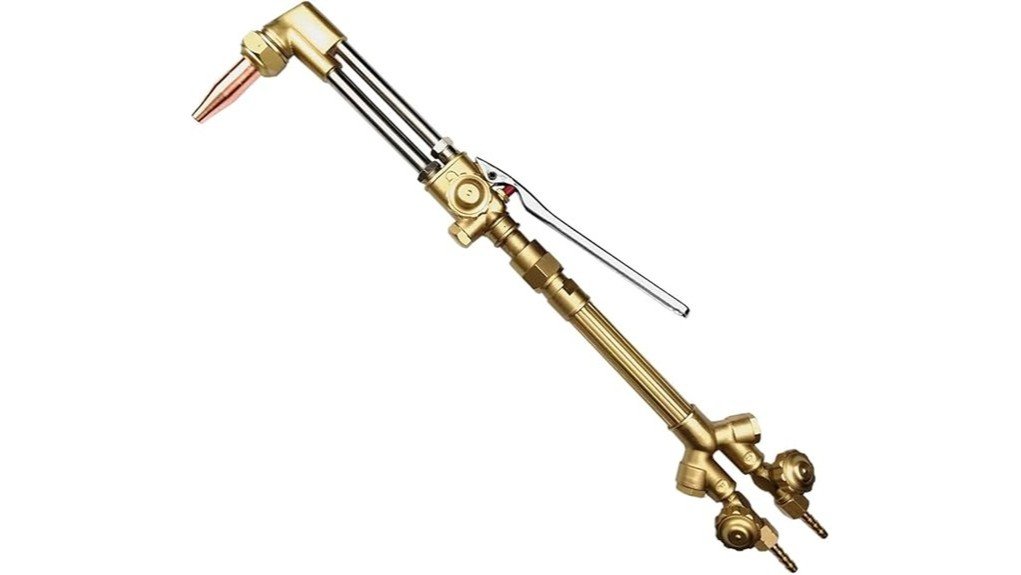
A heavy-duty cutting torch needs to give you steady control without making compatibility and setup harder than necessary. The Blawicat Heavy Duty Oxygen/Acetylene Cutting Torch combines a 300-series, 315FC-style handle with a CA2460 cutting attachment and an included 1-1-101 cutting tip. The supplied tip is listed for cutting steel up to 3/4 inch thick, while the torch is designed to work with several fuel gases when the correct tip and setup are used. Its broad compatibility is useful, but this is still professional-style oxy-fuel equipment that requires careful setup, inspection, and safe handling.
Quick Verdict
Rating: 7/10
Best For: Experienced DIY metalworkers, repair shops, and fabricators who want a Victor-style 300-series cutting setup at a value-focused price point.
Bottom Line: You get a complete basic cutting configuration with a CA2460-style attachment, 315FC-style handle, cutting tip, and hose connectors. The main tradeoff is that buyers should inspect the components carefully and confirm all gas-system safety requirements before putting the torch into service.
Key Specifications
| Specification | Detail |
|---|---|
| Brand | Blawicat |
| Product Type | Heavy-duty oxy-fuel cutting torch set |
| Series | 300 Series |
| Torch Handle | 315FC-style handle |
| Cutting Attachment | CA2460-style attachment |
| Included Cutting Tip | 1-1-101 |
| Stated Cutting Capacity | Up to 3/4-inch steel with the included 1-1-101 tip |
| Larger-Tip Capability | Seller states a 5-1-101 tip can support cuts up to 5 inches when properly configured |
| Construction | High-strength alloy, heavy-duty stainless steel, and brass |
| Fuel-Gas Compatibility | Listed for oxy-acetylene, propane, butane, natural gas, and LP gas with the correct equipment and tip |
| Package Contents | 1 torch handle, 1 CA2460 cutting attachment, 1 cutting tip, and 2 hose connectors |
| Shipping Weight | 3.74 pounds |
| Package Dimensions | 14.25 × 3.7 × 3.62 inches |
| Control | Rear-mounted pressure handle switch |
Before You Buy: This is fuel-gas cutting equipment, not a plug-and-use hand tool. Confirm that your regulators, hoses, fittings, tip, fuel gas, flashback protection, and other required safety equipment are suitable for the exact setup. Inspect every connection for damage or leaks and follow the torch, tip, regulator, and gas-supplier instructions.
What Is the Blawicat Heavy Duty Oxygen/Acetylene Cutting Torch?
This Blawicat set is a 300-series oxy-fuel cutting configuration built around a 315FC-style torch handle and CA2460-style cutting attachment. The package also includes a 1-1-101 cutting tip and two hose connectors, giving you the main torch components needed to build a compatible cutting setup.
The design follows a common heavy-duty torch format used in fabrication, repair, maintenance, and metal-cutting work. Its stated construction combines brass, stainless steel, and high-strength alloy components, while the rear-mounted cutting control is positioned to give your hand direct control over the cutting oxygen.
Its biggest attraction is flexibility. The listing describes compatibility with several fuel gases, and the 1-series-style tip format gives you options beyond the supplied cutting tip. That flexibility does not mean every gas or tip can use the same setup, so matching the tip, regulator settings, hoses, and fuel gas remains essential.
Who Should Buy It?
Best For
- Fabricators who regularly cut mild-steel plate, brackets, frames, or scrap.
- Repair shops that already use compatible 300-series oxy-fuel equipment.
- Experienced DIY users who understand regulator, tip, hose, and fuel-gas setup.
Skip If
- You need a complete cylinder, regulator, hose, and safety-equipment package.
- You want a torch with clearly documented premium-brand service and support.
- You are new to oxy-fuel equipment and do not have qualified setup guidance.
Build Quality and Materials
The product description identifies high-strength alloy, heavy-duty stainless steel, and durable brass in the torch construction. Those are sensible material choices for an oxy-fuel tool because the attachment must tolerate heat, regular handling, and repeated connection to other components.
The CA2460-style arrangement also uses a familiar two-piece design. You can separate the cutting attachment from the handle rather than storing the entire assembly as one long torch. That makes storage easier and can give you more flexibility if you already own compatible equipment.
The package is listed at 3.74 pounds shipping weight. The published 14.25 × 3.7 × 3.62-inch measurements are package dimensions, so you should not treat them as the assembled torch’s exact physical dimensions.
Cutting Performance
With the supplied 1-1-101 cutting tip, the seller states that the torch can cut steel up to 3/4 inch thick. That covers many common repair and fabrication jobs, including plate, brackets, structural pieces, and material being prepared for removal or rework.
The listing also states that larger 1-series tips can expand the cutting range. A 5-1-101 tip is specifically referenced for cuts up to 5 inches. Treat that figure as a configuration-dependent capability, not the performance of the included tip. Thick-section cutting requires the correct tip, gas flow, regulators, technique, and equipment capacity.
The rear-mounted cutting control is one of the more useful design details. It keeps the cutting-oxygen control close to your working hand, which can help you start the cutting jet without shifting your grip.
Pro Tip: Match the tip to both the fuel gas and the thickness you plan to cut. Do not choose a larger tip only because the torch can accept it. The regulator, hose, gas supply, and cutting chart must also support that tip.
Gas Compatibility
The listing describes the torch and handle as compatible with oxy-acetylene, propane, butane, natural gas, and LP gas. This can make the set more adaptable than a torch intended for one fuel only.
Gas compatibility does not mean you can switch fuels without other changes. Different fuels can require different cutting tips and operating specifications. Use the tip manufacturer’s chart and the instructions for your regulators and torch before changing gas types.
The archived product information also lists oxygen pressure of 0.21 to 0.24 MPa and acetylene pressure of 0.021 to 0.035 MPa for the included configuration. These numbers should not be treated as universal operating settings. Actual requirements depend on the tip, gas, material thickness, equipment, and manufacturer’s instructions.
How It Performs in Real Use
For General Fabrication
The supplied 1-1-101 tip gives you a practical starting point for steel up to the listed 3/4-inch capacity. For brackets, plate, damaged sections, and everyday fabrication work, that range is more useful than buying a torch that immediately requires an additional tip.
For Automotive and Repair Work
A two-piece 300-series-style setup can work well in a repair environment where you may need to cut seized or damaged steel parts. The important limitation is control around fuel lines, wiring, upholstery, tanks, pressurized components, and other fire hazards. Oxy-fuel cutting should only be used where the work area can be made safe.
For Thicker Steel
The torch gives you room to move to larger compatible tips rather than replacing the complete handle and attachment. The seller’s 5-inch claim applies to a larger 5-1-101 tip, not the included tip. Your gas-delivery system also needs enough capacity for the selected tip.
For Repeated Shop Use
Brass and stainless-steel construction should be more suitable for repeated handling than a lightweight hobby torch. Long-term reliability still depends on clean tips, undamaged seals, sound valves, correct storage, and regular leak checks.
Setup and Usage Tips
Start by checking that the cutting attachment, handle, tip, hose connectors, hoses, regulators, and cylinders are intended to work together. Never force a fitting or use a damaged sealing surface just because the thread appears close enough.
Keep the tip orifices clean and free of slag. A dirty or damaged cutting tip can disturb gas flow and make the flame harder to control. Use tools intended for cutting-tip cleaning rather than enlarging the holes with improvised objects.
Inspect hoses, fittings, seals, valves, and the attachment before use. If you detect a leak, damaged valve, loose component, or unusual flame behavior, stop using the torch until the cause has been corrected.
When changing from acetylene to another fuel gas, verify the proper tip and operating instructions first. Fuel gases do not all have the same flame characteristics or equipment requirements.
Compatibility and Safety
The product is sold as a 300-series, 315FC-style torch handle with a CA2460-style cutting attachment. That makes it relevant to buyers who use Victor-style 300-series equipment, but you should verify actual component compatibility before connecting third-party parts.
The included setup should also not be confused with a complete gas system. Cylinders, regulators, hoses, and other safety components are separate unless your specific seller listing clearly states otherwise.
Oxy-fuel equipment can cause fire, explosion, burns, eye injury, or gas-related hazards when it is damaged or set up incorrectly. Wear suitable eye and face protection, flame-resistant clothing, gloves, and other protective equipment required for the work. Keep combustible materials away from the cutting area and follow applicable workplace rules and manufacturer instructions.
Do not rely on this review as an operating-pressure chart or substitute for hands-on training. If you are unsure how to assemble, leak-test, light, adjust, shut down, or store an oxy-fuel system, get instruction from a qualified welding professional before using it.
Maintenance and Storage
Regular maintenance is simple but important. Check the cutting tip for debris and damage, inspect threaded and sealing surfaces, and keep oil or grease away from oxygen-system components. Replace damaged components rather than trying to make an unsafe fitting work.
Store the torch where the valves, attachment, and tip will not be struck or contaminated. Separating the cutting attachment from the handle can make storage more convenient, but protect exposed connection points from dirt and damage.
Before returning a stored torch to service, inspect it again. Storage does not eliminate the possibility of damaged seals, corrosion, dirt, or hose deterioration elsewhere in the gas system.
Pros and Cons
Pros
- Includes the handle, CA2460-style attachment, 1-1-101 tip, and two hose connectors.
- Included tip is listed for steel up to 3/4 inch thick.
- Supports larger compatible cutting tips for thicker material.
- Brass, stainless-steel, and alloy construction suits heavy-duty use.
- Multiple-fuel compatibility provides flexibility when properly configured.
Cons
- The package does not replace the regulators, hoses, cylinders, and other required gas-system equipment.
- Third-party Victor-style compatibility should be confirmed instead of assumed.
- Buyers who prioritize established manufacturer support may prefer a genuine Victor attachment.
Is It Worth the Price?
This Blawicat torch makes the most sense as a value-focused alternative to premium 300-series cutting equipment. You receive the main handle and cutting components together rather than starting with a bare attachment, which can make it attractive if you are building a compatible setup.
The value is strongest for someone who already understands oxy-fuel equipment and can inspect the parts, confirm compatibility, and supply the correct regulators, hoses, cylinders, and safety components. The included 1-1-101 tip also gives you a usable cutting configuration without immediately buying another tip for ordinary steel-cutting jobs.
It is less compelling if manufacturer support and documented long-term parts availability are your top priorities. In that situation, spending more on an established industrial-brand torch may be worthwhile.
How It Compares to Alternatives
A genuine Victor CA2460+ is the obvious premium comparison. Victor’s CA2460 family uses a 90-degree head, 1-series cutting tips, forged-brass construction, and stainless-steel tubes. It is a stronger choice if you specifically want genuine Victor parts and established manufacturer documentation.
Value-oriented alternatives such as the WeldingCity CA2460-style attachment and Star Tech Weld CA35 also target Victor 300-series compatibility. The Blawicat package stands out because it is sold as a broader set with the handle, cutting attachment, included tip, and hose connectors rather than only an attachment. Compare exactly what each package contains before choosing.
Frequently Asked Questions
What comes with the Blawicat cutting torch?
The listed package includes one 315FC-style torch handle, one CA2460-style cutting attachment, one 1-1-101 cutting tip, and two hose connectors. Regulators, gas cylinders, and a complete hose system are not listed as part of this package.
How thick can the included tip cut?
The supplied 1-1-101 tip is listed for cutting steel up to 3/4 inch thick. The seller also states that compatible larger tips can handle thicker material, but capacity depends on the complete gas and tip setup.
Is it compatible with Victor 300-series equipment?
The torch is sold in a Victor-style 300-series configuration using a 315FC-style handle and CA2460-style attachment. Because it is a third-party product, confirm the exact fit of any Victor or aftermarket component before connecting and using it.
Can this setup be used for welding?
The included CA2460 component is a cutting attachment, so the supplied configuration should be treated as a cutting setup. A compatible torch handle may support separate welding or heating attachments, but you would need the correct accessory and manufacturer-approved setup.
Can you use propane or natural gas instead of acetylene?
The product description lists propane, butane, natural gas, and LP gas in addition to oxy-acetylene. You still need a tip and gas-delivery setup approved for the fuel you choose, so do not switch fuels while keeping acetylene-specific settings by assumption.
What should you inspect before using the torch?
Check the tip, valves, seals, connections, hoses, regulators, and other components for damage or leakage. Confirm that required flashback and reverse-flow protection is present in the complete system according to the equipment instructions and applicable safety requirements.
How should you maintain the cutting tip?
Keep the tip holes clean and protect the tip from impact or slag buildup. Use proper tip-cleaning tools and replace a damaged tip rather than enlarging or reshaping the gas passages with improvised tools.
Who should skip this cutting torch?
It is not the best starting point if you have no experience setting up oxy-fuel equipment or need a fully documented turnkey system. Buyers who want premium-brand service, verified replacement-part support, and manufacturer-backed documentation may also prefer a genuine industrial-brand alternative.
The Bottom Line
The Blawicat Heavy Duty Oxygen/Acetylene Cutting Torch is worth considering if you want a value-oriented 300-series cutting setup with a CA2460-style attachment, 315FC-style handle, and useful 1-1-101 cutting tip included. Its broad fuel and tip flexibility is the main strength, while the need to verify compatibility, safety equipment, and setup is its main limitation.
Experienced fabricators and repair users are the best fit. If you are new to oxy-fuel equipment or want stronger manufacturer support and documentation, a premium-brand alternative may be the safer purchase.
Ready to Buy?
Check the latest price, package details, and current product information before you decide.