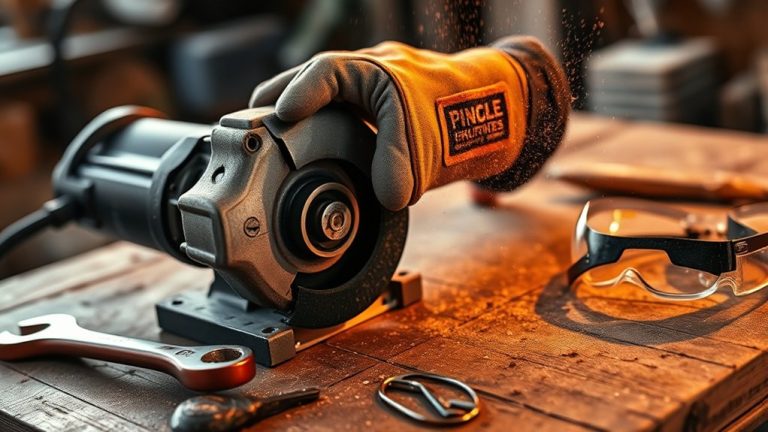
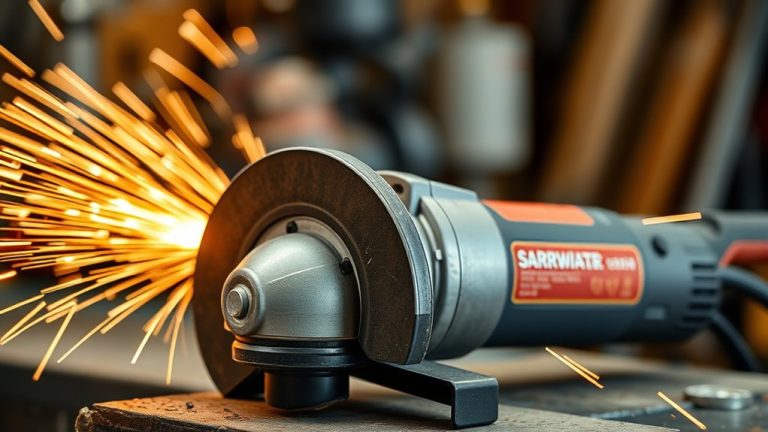
To hold an angle grinder for control, grip it with both hands—one on the main rear handle and the other on the side handle. Stand with your feet shoulder-width apart, slightly leaning toward the grinder for balance. Keep your elbows bent and close to your body. Avoid reaching too far and guarantee your workpiece is secure. Maintain a firm grip to reduce the risk of kickbacks and injury. There’s more to learn about stance and safety gear.
How to Grip an Angle Grinder for Optimal Control
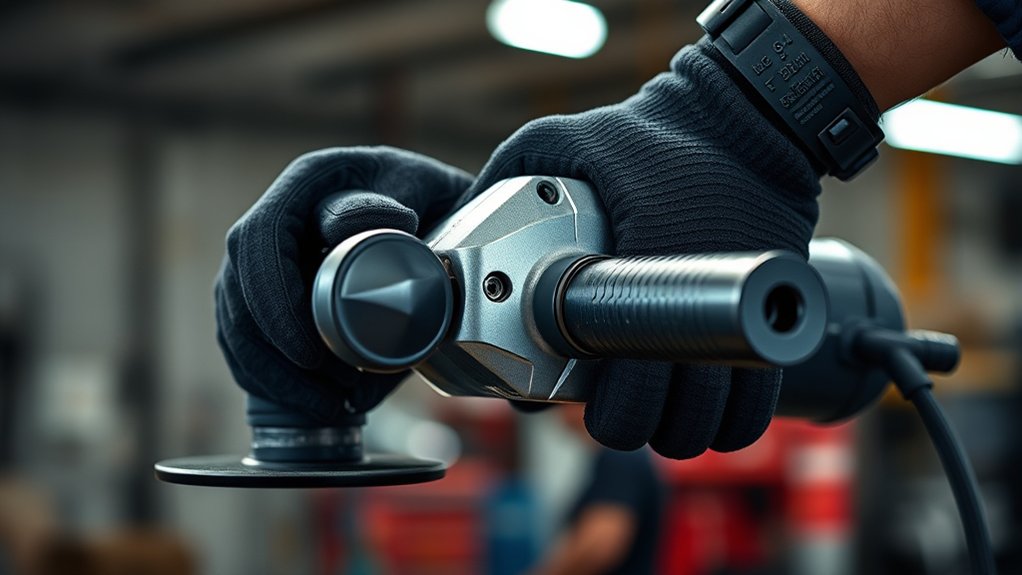
When using an angle grinder, grip it with both hands to guarantee maximum control and stability. Place one hand on the main rear handle and the other on the side handle. This dual grip is essential for ideal Angle Grinder Safety, as it prevents slipping and enables precise movements. Keep your hands dry for better grip and maintain a balanced stance over the grinder. Avoid overreaching, which can lead to loss of control and potential accidents. Bend your elbows slightly and keep them close to your body to enhance control, especially when applying pressure. Adjust your grip based on the task at hand, ensuring you’re comfortable and reducing fatigue. This approach not only improves your performance but also empowers you to work confidently and safely. Remember, maintaining a strong, stable grip is key to mastering the angle grinder and achieving your desired results.
Selecting the Right Stance for Stability
To guarantee stability while using an angle grinder, start by positioning your feet shoulder-width apart for balance. Align your body to maintain control and keep your knees slightly bent to lower your center of gravity. With a firm grip on the grinder, hold it close to your body to improve handling and reduce strain.
Feet Positioning For Balance
For ideal control and balance while using an angle grinder, it’s vital to position your feet correctly. Stand with your feet shoulder-width apart to create a stable base, which enhances your balance during operation. Position one foot slightly forward to improve control and allow for better weight distribution. Keeping your knees slightly bent lowers your center of gravity, aiding in maintaining balance and reducing the risk of falling. Avoid uneven surfaces or slopes, as these can compromise your stability and increase the chance of accidents. Verify your feet are firmly planted on the ground, allowing for quick movement or adjustments when needed. Proper feet positioning for balance is essential for a safe and effective grinding experience.
Body Alignment For Control
Proper feet positioning lays the groundwork for effective body alignment, which is key to maintaining control while using an angle grinder. Position your feet shoulder-width apart for stability and balance. Keep your knees slightly bent to absorb vibrations and reduce fatigue.
- Align your body with the grinder and workpiece to guarantee a natural posture.
- Maintain a slight lean toward the grinder, distributing your weight evenly between your feet.
- Stay aware of your surroundings and keep your body away from the cutting area to prevent injury from sparks.
Hand Placement For Stability
Effective hand placement is essential when operating an angle grinder, as it directly impacts your control and stability. Always use both hands; grip the main rear handle with one hand and the side handle with the other. This guarantees maximum control during operation. Stand with your feet shoulder-width apart for a balanced stance, preventing overreaching and enhancing stability. Position your body to the side of the grinder, avoiding direct alignment with the tool to reduce kickback risks. Keep your elbows slightly bent and close to your body for a firm grip while allowing natural movement. Maintain a straight back and slightly bent knees to prevent fatigue and guarantee continuous control throughout your grinding tasks.
Maintaining Balance While Operating the Grinder
When using an angle grinder, maintaining balance is essential for both safety and efficiency. To achieve this, follow these key practices:
- Always use both hands: grip the main rear handle with one hand and the side handle with the other for maximum control.
- Keep your feet shoulder-width apart: this stance helps maintain stability and prevents overreaching, which can lead to a loss of balance.
- Position your body to the side of the grinder: staying off-center reduces the risk of injury from kickbacks and enhances your overall control.
Additionally, keep a slight bend in your knees and stay centered over your feet. This posture helps absorb vibrations and reduces fatigue during prolonged use. Finally, verify your workpiece is securely clamped or supported at a comfortable height to minimize strain and enhance balance while grinding. Prioritizing these techniques will empower you to operate the grinder effectively and safely.
Enhancing Control While Operating an Angle Grinder
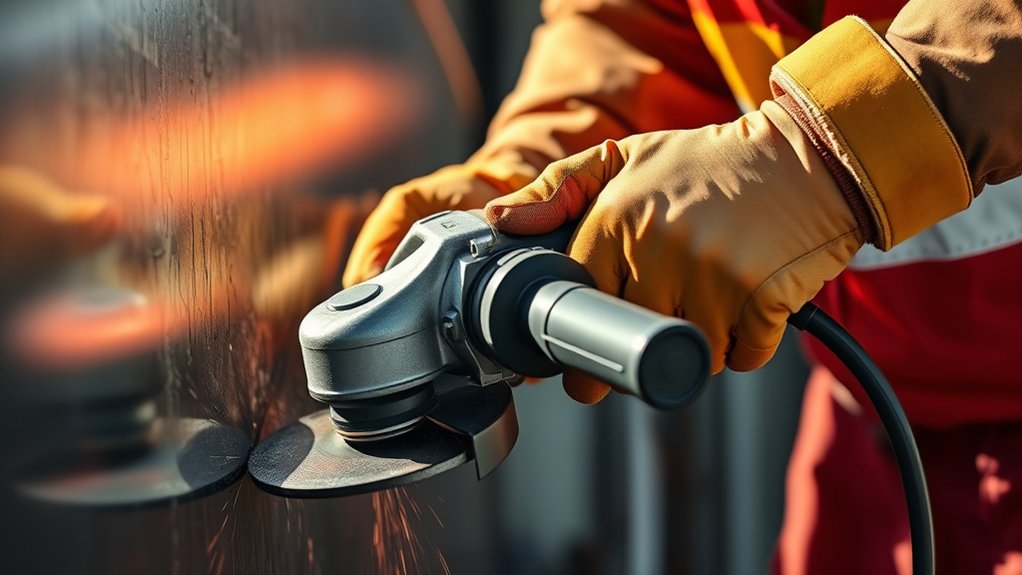
To enhance control while operating an angle grinder, proper hand placement is essential. Always use both hands—one on the rear handle for stability and the other on the side handle for better maneuverability. Maintaining a balanced stance will help you absorb vibrations and keep the grinder steady during use.
Proper Hand Placement
Proper hand placement is essential for maintaining control and stability while operating an angle grinder. To guarantee you’re handling the tool effectively, follow these tips:
- Grip the main rear handle with your dominant hand, using your other hand on the side handle for added stability.
- Keep both hands firmly on the grinder at all times, especially on uneven surfaces or at awkward angles.
- Position your body to the side of the grinder to avoid sparks and debris.
Adjust your grip as needed, ensuring your hands are comfortable and your fingers stay clear of the rotating disc. By practicing proper hand placement, you’ll enhance your control and safety while working with an angle grinder.
Maintaining Balanced Stance
A balanced stance is essential for effectively operating an angle grinder and enhancing your control over the tool. Position your feet shoulder-width apart to guarantee stability and prevent overreaching. Keeping your dominant foot slightly forward allows for improved control and quick adjustments during operation. Distribute your body weight evenly between both legs to avoid fatigue and maintain a steady grip on the grinder. Always center yourself over the workpiece, enhancing balance and minimizing kickback risk. Avoid awkward or strained positions; use your knees and hips to shift weight as needed while maintaining a firm grip. By prioritizing a balanced stance, you’ll not only improve your control but also increase safety and efficiency during your grinding tasks.
Positioning Your Body for Safety and Comfort
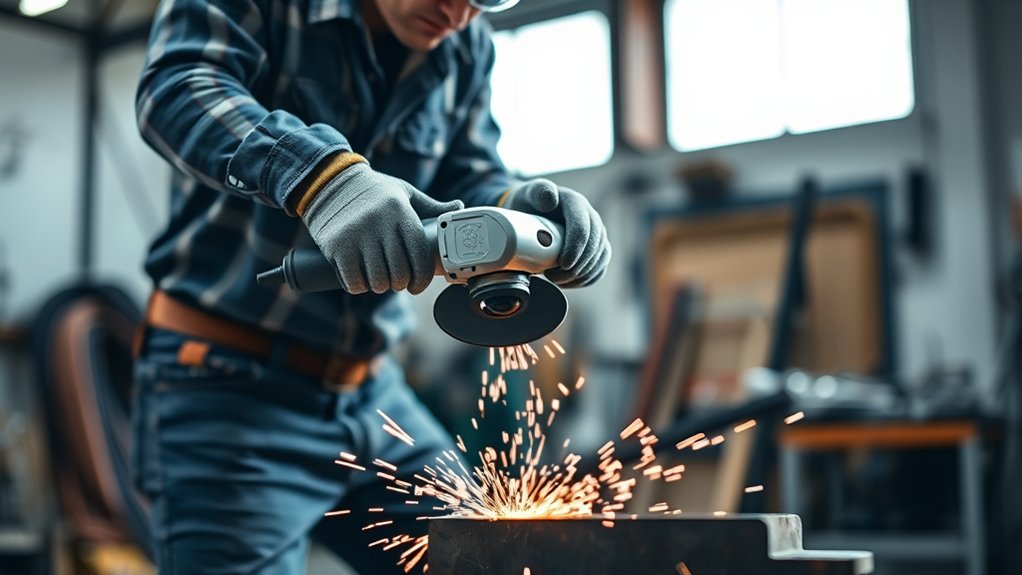
When operating an angle grinder, positioning your body correctly is essential for both safety and comfort. Implementing these safety tips will enhance your control and reduce fatigue during tasks.
- Stand with your feet shoulder-width apart to maintain balance and stability.
- Position your body at an angle to the workpiece for improved visibility and control.
- Keep your knees slightly bent and weight evenly distributed to enhance maneuverability.
Always maintain a firm grip on the grinder with both hands; place your dominant hand on the rear handle and your other hand on the side handle. This guarantees maximum control as you work. Avoid overreaching by keeping your body close to the workpiece, minimizing the risk of losing control. Proper positioning not only promotes safety but also helps you work efficiently, allowing for a more liberating experience as you tackle your projects with confidence.
Top Mistakes to Avoid While Operating an Angle Grinder
While operating an angle grinder, it’s crucial to be aware of common mistakes that can lead to accidents or inefficient work. Here are some key pitfalls to avoid:
| Mistake | Consequence |
|---|---|
| Operating with one hand | Loss of control and stability |
| Overreaching or awkward stance | Increased risk of accidents |
| Forcing the grinder | Kickbacks and potential damage |
Always maintain a two-handed grip for stability and make sure your body is positioned correctly to avoid mishaps. Never force the grinder; let it operate at full speed while you guide it. Additionally, make sure your workpiece is securely clamped to prevent unexpected shifts. Finally, always inspect the grinding disc for any cracks or damage before use. A damaged disc can lead to catastrophic failures and serious injuries, so don’t skip this critical step. Stay safe and work efficiently!
Preventing Hand and Arm Fatigue
To keep your hands and arms from getting fatigued during angle grinder use, it is essential to implement effective strategies. By taking proactive measures, you can enhance your comfort and efficiency while working. Here are some tips for preventing hand and arm fatigue:
Implementing effective strategies is key to preventing hand and arm fatigue during angle grinder use for enhanced comfort and efficiency.
- Take regular breaks every 15-30 minutes to reduce muscle strain from vibration exposure.
- Use anti-vibration gloves to greatly decrease the vibrations transmitted to your hands.
- Maintain a proper grip with both hands—one on the main handle and the other on the side handle—for better control.
Additionally, adjust your work position to avoid awkward postures, keeping the workpiece at a comfortable height and angle. Opt for grinders with ergonomic features, like padded handles and reduced weight, to lessen strain. By following these strategies, you’ll not only improve your control but also guarantee a more enjoyable and productive grinding experience.
What Safety Gear Do You Need While Grinding?
Proper safety gear is essential for protecting yourself during grinding operations. First and foremost, wear safety goggles to shield your eyes from flying debris and sparks. Next, choose gloves that fit well and provide a solid grip, protecting your hands from cuts and abrasions while handling the grinder. For added facial protection, consider using a face shield—this will guard against hot sparks and debris that can cause injury.
Don’t forget about your hearing; if your grinder exceeds 85 decibels, wear earmuffs or earplugs to avoid noise-induced hearing loss. Finally, if you’re grinding materials that generate harmful dust, a dust mask or respirator is vital to prevent respiratory issues. By equipping yourself with the right safety gear, you empower your grinding experience, reducing risks and enhancing your focus on the task at hand. Stay safe and grind with confidence!
Frequently Asked Questions
How to Correctly Hold an Angle Grinder?
To correctly hold an angle grinder, use a firm grip technique with both hands. Keep your arms slightly bent, maintain a safe distance from the cutting area, and position the grinder at a 15 to 30-degree angle.
How to Use an Angle Grinder for Safety?
To use an angle grinder safely, grip it firmly with both hands, keep a secure stance, and check the blade and guards regularly. Prioritize grinder maintenance to guarantee peak performance and minimize risks during operation.
How to Use Angle Grinder Step by Step?
To use an angle grinder effectively, grip it firmly with both hands, maintain a proper angle to the workpiece, allow it to reach full speed, and guarantee the workpiece is secured for safe grinding techniques.
How to Position Guard on Angle Grinder?
To position the guard on your angle grinder, adjust it between 20 to 45 degrees, ensuring it covers the disc properly. Secure it tightly to guarantee safety and peak performance during your work.
Conclusion
In the world of power tools, mastering the angle grinder is like dancing with a partner—you need rhythm and control. By holding the grinder correctly, maintaining a stable stance, and prioritizing safety, you can enhance your efficiency and minimize risks. Remember, it’s not just about strength; finesse matters too. Equip yourself with the right gear and stay aware of your posture to keep fatigue at bay. With practice, you’ll turn grinding into a seamless performance.