
Disclosure: As an Amazon Associate, we earn from qualifying purchases. If you click a link on this page and make a purchase, we may receive a small commission at no extra cost to you.
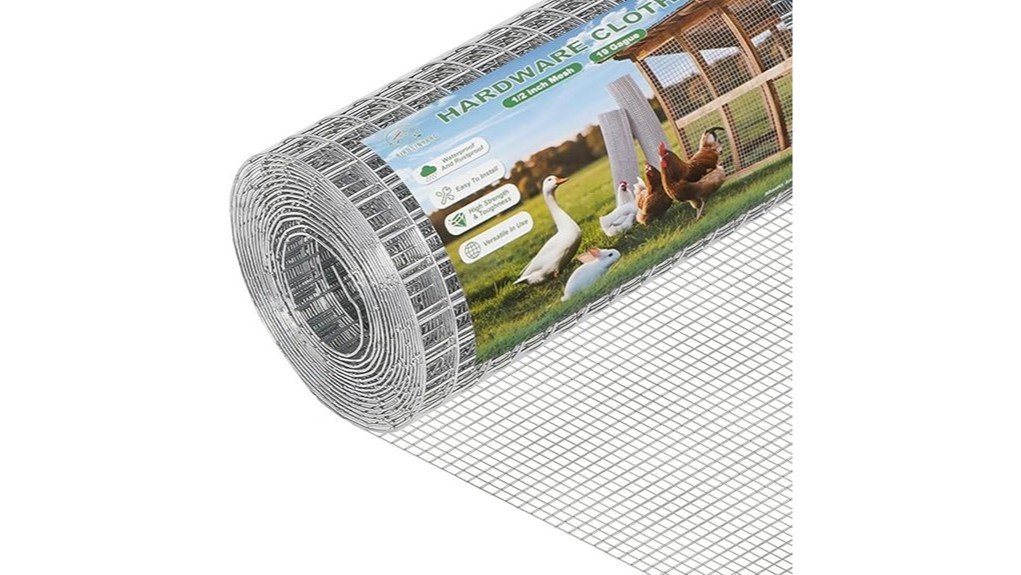
Choosing hardware cloth is mostly about matching the mesh size, wire strength, and roll dimensions to the job you need to complete. This 16IN X 10FT hardware cloth combines 1/2-inch square openings with 19-gauge low-carbon steel and a hot-dip galvanized finish for garden barriers, animal enclosures, and general outdoor projects. Its compact 16-inch width makes it easier to handle than a large fencing roll, but the 10-foot length can be limiting for bigger installations. This review explains where it makes sense, where a different mesh may work better, and what you should know before cutting or fastening it.
Quick Verdict
Rating: 8.5/10
Best For: Small garden barriers, chicken coop reinforcement, rabbit enclosures, plant protection, and compact DIY fencing projects.
Bottom Line: The 1/2-inch mesh and 19-gauge galvanized steel provide a useful balance of strength, airflow, and manageable cutting for many home and garden projects. The main tradeoff is its 16-inch by 10-foot size, which is better for targeted barriers and repairs than large perimeter fencing.
Key Specifications
| Specification | Detail |
|---|---|
| Product Type | Hardware cloth / wire mesh |
| Roll Size | 16 inches × 10 feet |
| Mesh Opening | 1/2 × 1/2 inch square openings |
| Wire Gauge | 19 gauge |
| Material | Low-carbon steel |
| Finish | Hot-dip galvanized |
| Typical Uses | Garden barriers, chicken coops, rabbit cages, plant protection, trellises, and general outdoor projects |
| Recommended Cutting Tool | Heavy-duty wire cutters |
| Installation Considerations | Measure before cutting, use suitable fasteners, and wear gloves around cut wire edges |
What Is the 16IN X 10FT Hardware Cloth?
This hardware cloth is a 16-inch-wide, 10-foot-long roll of 19-gauge low-carbon steel mesh. Its openings measure 1/2 inch by 1/2 inch, making the spaces considerably smaller than traditional poultry wire while still allowing light and air to pass through.
The steel has a hot-dip galvanized finish designed to improve resistance to outdoor rust and corrosion. That makes the mesh suitable for projects exposed to normal rain, humidity, and changing outdoor conditions, although galvanized steel should not be treated as permanently corrosion-proof.
The relatively narrow roll is especially useful when you need to cover a garden bed edge, reinforce part of an enclosure, protect young plants, or complete a small repair without handling a much wider roll of fencing.
Who Should Buy It?
Best For
- Gardeners who need a compact barrier around vegetables, flowers, or young plants.
- Chicken or rabbit owners reinforcing sections of an enclosure with smaller mesh openings.
- DIY users who want a manageable 16-inch-wide roll for repairs, trellises, guards, or small fencing jobs.
Skip If
- You need to cover a large perimeter and would benefit from a wider or much longer roll.
- You need openings smaller than 1/2 inch for very small pests or fine screening.
- Your project requires heavier structural fencing rather than general-purpose hardware cloth.
Before You Buy: Measure the area you need to cover before ordering. A 16-inch × 10-foot roll is convenient for targeted projects, but it can be too small for a full-size enclosure or long garden perimeter.
Build Quality and Materials
The main structural feature is the 19-gauge low-carbon steel construction. For home and garden work, this gives you a mesh that can hold its shape better than very light netting while remaining practical to cut with suitable wire cutters.
The hot-dip galvanized finish is another important feature for outdoor use. Galvanizing adds a protective zinc layer over the steel, helping slow the rust and corrosion that can occur when bare steel remains exposed to moisture.
That does not mean the mesh is maintenance-free. Cut edges, scratches, coastal salt exposure, standing moisture, or long-term contact with wet soil can affect how the material ages. Periodic inspection is sensible when the mesh is part of an animal enclosure or another installation where a failed section could create a safety problem.
1/2-Inch Mesh and Pest Protection
The square openings measure 1/2 inch by 1/2 inch. This is one of the product’s most useful characteristics because it creates a tighter physical barrier than fencing with large openings while maintaining ventilation and visibility.
For garden use, the mesh can help create a barrier around vulnerable plants and planting beds. For animal care, it can be used as part of chicken coops, rabbit cages, and similar enclosures where smaller openings are useful.
No single wire mesh can guarantee protection against every pest or predator. Effectiveness depends on the animal involved, the strength of the framing, how securely the mesh is attached, whether edges are buried or otherwise protected, and whether gaps remain around doors or corners.
Why Galvanized Wire Works Well Outdoors
Outdoor wire is repeatedly exposed to humidity, rain, condensation, and temperature changes. The galvanized finish helps protect the underlying steel from these conditions, which can make the mesh a more practical outdoor choice than untreated steel.
This is useful for garden supports, plant guards, enclosure panels, and other installations that may remain outside for an extended period. The coating also reduces the amount of immediate maintenance you would expect from unprotected steel.
There is no verified fixed service-life figure for this particular roll. How long galvanized mesh lasts depends on weather exposure, installation quality, physical damage, salt, chemicals, and how frequently the material stays wet.
Top Uses for Gardening and Animal Care
Hardware cloth earns its place in many sheds and workshops because the same roll can serve several different jobs. The 1/2-inch openings are small enough for many barrier applications, while the 16-inch width is easy to position around compact areas.
Garden Barriers
You can use the mesh around raised beds, vegetable patches, seedlings, or other vulnerable plants. It provides a physical barrier without blocking the airflow and light that plants need.
Chicken Coop Reinforcement
The mesh can reinforce sections of chicken coops, runs, ventilation openings, or other areas where larger-opening poultry wire may leave more space than you want. Secure attachment to a solid frame is essential because the wire itself is only one part of a reliable enclosure.
Rabbit and Small-Animal Enclosures
The article also supports use for rabbit cages and similar animal-care projects. Here, careful finishing matters. Cut wire can leave sharp points, so exposed edges should be positioned and secured so animals and people are not brushing against them.
Plant Supports and Trellises
The grid can serve as a simple support surface for climbing plants. Because the roll is only 16 inches wide, it works best for smaller trellises, extensions, guards, or targeted support sections rather than a tall standalone trellis.
How It Performs in Real Use
For Raised Beds and Vegetable Gardens
The compact width is useful when you need a low barrier around a bed rather than a full-height fence. The 1/2-inch grid maintains airflow and gives you many attachment points for stakes or a wooden frame.
For Coop Repairs
A 10-foot roll can be convenient for patching damaged sections, covering ventilation areas, or reinforcing a limited part of an existing enclosure. For a complete coop build, calculate the total square footage first because several rolls may be required.
For Small DIY Projects
The mesh can be cut into smaller rectangles for plant guards, screens, cages, or other utility projects. Its grid pattern also makes measuring and keeping cuts reasonably straight easier than working with irregular netting.
For Longer-Term Outdoor Use
The galvanized finish gives the steel better corrosion resistance than bare wire, which matters when an installation remains outdoors. You should still inspect fasteners, cut edges, bends, and areas that remain wet because those points can experience wear sooner.
Installation Tips for Your Hardware Cloth
Hardware cloth is easier to install when you plan the cut and fastening points before unrolling the entire piece. The original article recommends heavy-duty wire cutters for cutting and a staple gun for fastening the mesh to suitable surfaces.
| Step | Practical Tip |
|---|---|
| Measure | Measure the opening or project area before cutting and allow enough material for secure fastening. |
| Mark | Use the square grid as a guide so the cut follows a straight row. |
| Cut | Use heavy-duty wire cutters rather than forcing the wire with unsuitable household scissors. |
| Position | Keep the mesh flat and aligned before securing the first side. |
| Fasten | Use fasteners appropriate for the frame or mounting surface and secure the perimeter well. |
| Inspect | Check for loose wire, exposed sharp points, gaps, and weak attachment areas. |
Pro Tip: Cut along one complete row of the mesh instead of cutting diagonally across several squares. This makes sizing easier and gives you a cleaner edge to position against the frame.
Choosing 19-Gauge Wire for Your Project
Wire gauge matters because it affects how rigid and difficult to cut the mesh feels. This product uses 19-gauge wire, giving it enough structure for common gardening, animal enclosure, and DIY barrier applications without turning it into heavy structural fencing.
The right gauge still depends on the job. A plant barrier does not face the same loads as a permanent animal enclosure, and an enclosure for small pets may have different requirements from one intended to resist determined predators.
For higher-risk containment or security applications, evaluate the complete system rather than relying on gauge alone. Frame strength, fastener spacing, doors, corners, ground gaps, and the size of the mesh openings can be just as important as the wire itself.
Installation and Material Safety
Cut hardware cloth can produce sharp wire ends. Wear suitable work gloves and eye protection while cutting and handling the mesh, and keep hands away from freshly cut edges.
If you are using the mesh around animals, inspect the finished installation for protruding wire and loose fasteners. Secure edges so an animal cannot rub against, push through, or become caught on an unfinished section.
The product is described for garden use, but this review does not have evidence of a specific food-contact certification. Using the mesh as a barrier around edible plants is different from using it as a food-preparation or direct food-contact surface.
Pros and Cons
Pros
- 19-gauge low-carbon steel provides useful rigidity for common home and garden projects.
- Hot-dip galvanized finish improves outdoor corrosion resistance.
- 1/2-inch square mesh is useful for plant protection and smaller-opening enclosure work.
- 16-inch width is manageable for repairs, guards, and compact projects.
- Can be cut and shaped for several gardening, animal-care, and DIY applications.
Cons
- The 10-foot length can be too short for larger fences or complete enclosures.
- 1/2-inch openings are not fine enough for every small-pest or screening application.
- Cut edges are sharp and require careful handling and finishing.
Is It Worth the Price?
This hardware cloth makes the most sense for buyers who specifically need a compact roll with 1/2-inch openings and 19-gauge steel. You are paying for a combination of manageable size, tighter mesh, and galvanized outdoor construction rather than simply buying the largest amount of wire possible.
It can offer strong value for small garden projects, repairs, plant guards, and targeted enclosure work because you may avoid buying a much wider roll than you actually need. For a large chicken run, long fence line, or extensive pest barrier, a larger roll may provide better overall value and reduce the number of seams.
How It Compares to Alternatives
A 1/4-inch hardware cloth is worth comparing when you need smaller openings for finer screening or very small pests. The tradeoff is that finer mesh can be more restrictive and may use a different wire gauge depending on the product.
A wider or longer 1/2-inch galvanized hardware cloth is the better comparison if your main concern is covering a large area. Traditional poultry wire may also be easier to shape for some chicken applications, but its larger openings do not provide the same type of tight grid as 1/2-inch hardware cloth.
Frequently Asked Questions
What size is this hardware cloth?
The reviewed roll measures 16 inches wide by 10 feet long. Its square mesh openings measure 1/2 inch by 1/2 inch, and the wire is listed as 19 gauge.
Can you use it for a chicken coop?
Yes, chicken coops are one of the uses supported by the product description. The mesh still needs to be attached securely to a suitable frame, and doors, corners, ground-level gaps, and other weak points must also be addressed.
Is 1/2-inch mesh suitable for garden pest protection?
The 1/2-inch grid can form a useful physical barrier around plants and garden beds while maintaining airflow. It will not stop every insect or very small pest, so choose a finer mesh when openings smaller than 1/2 inch are required.
Is the hardware cloth safe to use around edible plants?
The product is described for garden applications, so it can be used as a physical barrier around vegetable plants and similar areas. No specific food-contact certification is stated here, so it should not be treated as a certified food-preparation surface.
How do you cut and install the mesh?
Measure the project area first, then cut along a straight row with heavy-duty wire cutters. Wear gloves and eye protection, position the mesh securely, and use fasteners suitable for your frame or mounting surface.
How long does the galvanized coating last?
There is no verified fixed lifespan provided for this roll. Durability depends on exposure to moisture, salt, chemicals, damaged coating, cut edges, installation quality, and other environmental conditions.
Who should choose a different hardware cloth size?
Choose a wider or longer roll if you need to cover a large fence or enclosure with fewer seams. Choose a smaller mesh opening when your project requires finer screening than the 1/2-inch grid provides.
The Bottom Line
The 16IN X 10FT hardware cloth is a practical choice when you need 1/2-inch mesh, 19-gauge steel, and a galvanized finish for a small garden, animal-care, or DIY project. Its strongest advantages are the useful mesh size and outdoor-ready steel construction, while its biggest limitation is the relatively compact 16-inch × 10-foot roll size.
It earns an 8.5/10 recommendation for targeted barriers, repairs, plant guards, and enclosure reinforcement. Buyers covering a large area or needing finer mesh should compare other sizes before ordering.
Ready to Buy?
Check the latest price, size selection, and current product details before you decide.


