Disclosure: As an Amazon Associate, we earn from qualifying purchases. If you click a link on this page and make a purchase, we may receive a small commission at no extra cost to you.
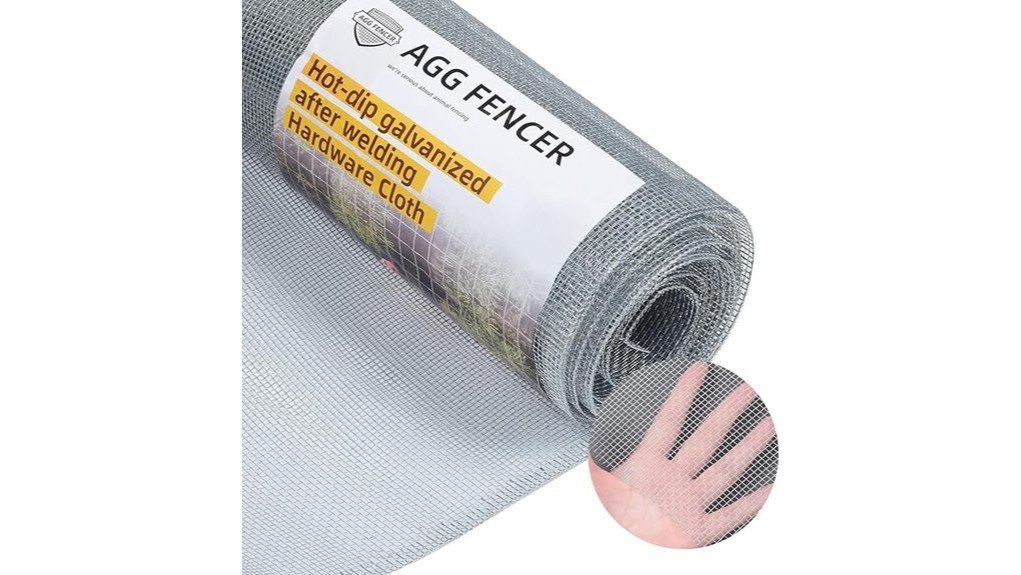
Fine wire mesh can help you protect seedlings, close small openings, build screens, or reinforce an animal enclosure, but the mesh size and wire thickness must suit the job. This 16in x 10ft hardware cloth combines a small 1/8-inch grid with 27-gauge low-carbon steel wire and a hot-dipped galvanized finish. It is a practical choice for light-duty screening and garden projects, although its narrow width and relatively fine wire may not suit large fencing jobs or areas exposed to strong animals.
This review explains the supported specifications, realistic uses, installation needs, and limitations so you can decide whether this roll fits your project.
Quick Verdict
Rating: Recommended with caveats
Best For: Small garden barriers, vent screens, soil-sifting projects, craft work, and light-duty animal enclosures.
Bottom Line: The 1/8-inch mesh gives you much smaller openings than standard chicken wire, while the galvanized low-carbon steel is intended to resist outdoor corrosion. The main tradeoffs are the 16-inch width and 27-gauge wire, which may require overlapping sections or a stronger outer barrier for demanding jobs.
Key Specifications
| Specification | Detail |
|---|---|
| Product type | Welded hardware cloth roll |
| Roll dimensions | 16 inches wide by 10 feet long |
| Mesh opening | 1/8 inch |
| Wire gauge | 27 gauge |
| Material | Low-carbon steel wire |
| Finish | Hot-dipped galvanized coating |
| Supported uses | Garden protection, small animal enclosures, poultry projects, soil screens, vent covers, and decorative work |
| Installation needs | Cutting tool, protective gloves, suitable fasteners, secure edges, and a stable support frame |
Before You Buy: A 16-inch-wide roll covers only a narrow strip. Measure the full height, width, and overlap needed for your project before ordering. The 27-gauge wire is also better suited to light-duty screening than to resisting large predators, heavy impact, or determined chewing.
What Is the 16in x 10ft Hardware Cloth?
This product is a roll of square welded wire mesh made from low-carbon steel. It measures 16 inches from edge to edge and provides 10 feet of material, giving you about 13.3 square feet of coverage before you account for overlaps, trimming, or waste.
The openings measure 1/8 inch, so the grid is much finer than the large hexagonal openings found in common poultry netting. That small mesh can help close narrow gaps, protect garden areas from small pests, cover ventilation openings, or create a fine screen for soil and craft projects.
The wire has a hot-dipped galvanized finish intended to slow rust and corrosion. Galvanization improves outdoor suitability, but it does not make cut edges or damaged areas permanently rustproof. Placement, drainage, maintenance, and exposure conditions still affect service life.
Who Should Buy It?
Best For
- Gardeners who need a fine barrier around seedlings, planters, or narrow openings.
- DIY users building soil sifters, vent covers, cabinet screens, or decorative mesh panels.
- Animal owners who need an inner screen or small-gap layer as part of a properly designed enclosure.
Skip If
- You need a wide roll for a full-height fence, large run, or broad garden perimeter.
- Your project requires heavy-gauge wire that can resist strong predators or repeated impact.
- You want a ready-to-use barrier that does not require cutting, framing, and edge fastening.
Mesh Size and Screening Performance
The 1/8-inch square mesh is the most important feature when you are trying to close small gaps. Fine openings can help stop larger debris from passing through a screen and may reduce access for small garden pests that could pass through standard poultry wire.
The finer grid also gives you more support points across a small panel. That can be useful when you are building a soil screen, covering an air opening, or adding mesh to a wood frame. However, fine mesh can collect leaves, soil, feathers, and other debris more quickly than a wider grid, so outdoor panels may need regular brushing or rinsing.
Do not choose mesh size alone when planning an enclosure. The supporting frame, wire gauge, fasteners, buried depth, edge treatment, and expected animal pressure are also important.
Wire Gauge and Build Quality
The product uses 27-gauge low-carbon steel wire. This creates a lighter and more flexible roll than many heavy-duty hardware cloth products. You can shape it around compact frames and cut it for small projects without handling a very rigid panel.
That flexibility comes with a limitation. Fine 27-gauge wire is not the best choice when your project must resist heavy loads, large animals, aggressive chewing, or repeated impact. For demanding enclosure walls or predator barriers, you may need thicker wire, a smaller framed section, or a second structural layer.
The welded grid helps the material hold a regular square pattern. Still, you should inspect the roll before installation for bent edges, broken welds, uneven coating, or shipping damage.
Galvanized Finish and Outdoor Durability
The hot-dipped galvanized finish places a protective zinc-based coating over the steel to improve corrosion resistance. This makes the roll more suitable for outdoor garden and enclosure projects than untreated low-carbon steel.
Outdoor life will depend on how you install and maintain it. Constant contact with wet soil, trapped leaves, salt exposure, fertilizer, animal waste, or standing water can shorten the life of metal mesh. Cut ends may also have less coating protection than the rest of the wire.
Position the mesh so water can drain and air can circulate. Check cut edges, staple points, and lower sections from time to time. If corrosion appears, address it before the affected area becomes weak.
Installation and Ease of Use
You can attach the mesh to a wood frame with corrosion-resistant staples or suitable screws and washers. On metal frames, you may use compatible wire ties or fasteners designed for the frame material. Fastener spacing should be close enough to stop the mesh from lifting, bowing, or leaving gaps.
Wear work gloves and eye protection when unrolling or cutting the material. The cut wires can be sharp, and the roll may spring back as its tension is released. Use wire cutters or snips that are suitable for the gauge rather than household scissors.
Keep the mesh square to the frame as you work. Start at one corner, fasten a short section, pull the material firm without overstretching it, and continue along the edge. Finish by folding, covering, or fastening all exposed wire ends.
Pro Tip: Cut the panel slightly larger than the opening so you can overlap the frame on every side. A full edge overlap gives your fasteners more material to hold and helps prevent small gaps from forming at the corners.
How It Performs in Real Use
For Garden Protection
The small mesh can work well around raised beds, planter openings, seed-starting areas, and narrow gaps where larger fencing leaves too much space. The 16-inch height is convenient for short borders, but you may need multiple rows for taller plants or deeper barriers.
When installing it near soil, avoid leaving loose lower edges. Secure the bottom to the frame or anchor it according to the pest and layout you are dealing with.
For Chicken Coops and Small Animal Projects
You can use this hardware cloth to cover vents, close small openings, line selected sections, or add a fine inner screen to a framed enclosure. Its 1/8-inch mesh gives you smaller openings than standard chicken wire.
Do not assume the fine mesh makes the entire enclosure predator-proof. The 27-gauge wire, frame strength, door latches, fasteners, roof, floor, and perimeter protection all affect safety. A stronger structural mesh may be needed where animals can push, pull, bite, or strike the barrier.
For Soil Sifting and Workshop Screens
The fine grid can separate small stones, roots, and larger debris from soil or other dry material. Mounting the mesh tightly across a solid wood frame makes the screen easier to shake and reduces sagging.
A 1/8-inch screen produces a finer result than a 1/4-inch or 1/2-inch screen, but it may process material more slowly. Damp soil can clog the small openings, so dry material is usually easier to sift.
For Crafts and Decorative Projects
The narrow roll can fit cabinet inserts, frames, wall organizers, model-making projects, and rustic decorations without requiring you to cut down a very wide sheet. Its square grid can also give decorative work a cleaner geometric appearance than hexagonal poultry wire.
Cover every cut edge when the finished item will be handled, displayed near children, or installed in a high-contact area. A wood trim strip or folded edge can improve both safety and appearance.
Common Installation Mistakes to Avoid
- Ordering by length alone: Measure the required width, height, overlap, and waste before deciding how many rolls you need.
- Leaving exposed cut ends: Sharp wire points can injure people or animals and may catch clothing or fur.
- Using weak fasteners: Indoor staples or widely spaced attachments may loosen outdoors.
- Relying on mesh without a frame: Fine wire needs suitable support to stay flat and resist pressure.
- Stretching the roll too tightly: Excess tension can distort the grid or pull fasteners loose.
- Assuming galvanized means maintenance-free: Inspect wet, buried, cut, and fastened areas for corrosion.
Installation Safety and Maintenance
Keep gloves on while handling the roll, even before you cut it. Factory edges and welded intersections may still feel rough, and the coiled material can move suddenly when released.
After installation, run a gloved hand near the perimeter to locate raised wires or unfinished corners. Do not leave accessible sharp points inside an animal enclosure. Cover them with trim, fold them away from the occupied area, or secure them firmly against the frame.
For cleaning, remove loose debris with a soft brush and use mild soap and water when needed. Avoid aggressive grinding or abrasive cleaning that could damage the protective finish. Allow the mesh to dry and replace sections with broken welds, deep corrosion, or significant deformation.
Pros and Cons
Pros
- Small 1/8-inch openings suit fine screening and small-gap coverage.
- Hot-dipped galvanized finish improves corrosion resistance compared with untreated steel.
- Ten-foot length provides enough material for several compact projects.
- Narrow 16-inch width is easy to handle for borders, vents, frames, and craft work.
- Flexible 27-gauge wire is easier to shape and cut than many heavy welded panels.
Cons
- The 16-inch width may require seams or multiple rows on larger projects.
- The 27-gauge wire may be too light for strong predators, large animals, or high-impact areas.
- Cut edges are sharp and must be covered or secured carefully.
Is It Worth the Price?
This hardware cloth can offer strong value when you need a small quantity of fine galvanized mesh rather than a large commercial roll. The 16-inch width also reduces unused material for compact screens, narrow garden borders, cabinet panels, and small frame projects.
You get the most value when the 1/8-inch opening is necessary. If a wider mesh can handle your job, a 1/4-inch or 1/2-inch roll may be easier to clean and could provide thicker wire at a similar budget level.
It is not the best fit when your main priority is structural strength or wide-area coverage. Compare the current price with the total square footage, gauge, coating, and number of rolls needed rather than judging the purchase by roll price alone.
How It Compares to Alternatives
A 1/4-inch hardware cloth roll gives you larger openings that are less likely to clog with soil and debris. It may be a better option for general garden screening when you do not need a 1/8-inch grid. A heavier 19-gauge or 23-gauge welded mesh may be better for enclosure walls that need more resistance to pushing and pulling.
Traditional chicken wire is lighter and useful for keeping poultry inside a controlled area, but its larger hexagonal gaps provide less small-pest exclusion. This 1/8-inch hardware cloth makes the most sense when fine screening and compact project coverage matter more than wide coverage or heavy structural strength.
Frequently Asked Questions
What are the dimensions of this hardware cloth?
The roll is listed as 16 inches wide and 10 feet long. That equals about 13.3 square feet before trimming, overlapping, or accounting for installation waste.
Is 1/8-inch hardware cloth suitable for a chicken coop?
It can be useful for covering vents, closing small gaps, and adding a fine screen to selected coop areas. Because the wire is 27 gauge, you should not assume it can replace a heavier structural or predator-resistant barrier throughout the enclosure.
Will the galvanized wire rust outdoors?
The hot-dipped galvanized finish is intended to improve rust and corrosion resistance, but no coating makes steel immune to damage. Cut edges, scratched areas, wet soil contact, salt, and trapped moisture can increase the chance of corrosion.
What tools do you need for installation?
Useful tools include protective gloves, eye protection, measuring tape, wire cutters or metal snips, and fasteners suited to your frame. You may also need pliers and wood trim to fold or cover sharp edges.
Can you cut the hardware cloth to a custom size?
Yes. The roll can be cut into smaller panels with suitable wire cutters or snips. Measure twice, allow enough material for edge overlap, and cover the sharp cut wires after installation.
Can this galvanized mesh be painted?
Galvanized metal can be painted, but the surface normally requires cleaning and a coating system made for galvanized steel. Follow the paint manufacturer’s preparation instructions because poor surface preparation can cause peeling.
How should you clean and maintain it?
Brush away dirt and trapped leaves, then use mild soap and water when deeper cleaning is needed. Inspect welds, cut edges, fasteners, and damp lower sections regularly, and replace damaged mesh before it creates an opening.
Who should choose a heavier hardware cloth instead?
Choose a thicker wire when the mesh must resist large animals, predators, frequent impact, heavy loads, or long unsupported spans. The 27-gauge roll is better matched to fine screening and light-duty framed applications.
The Bottom Line
The 16in x 10ft hardware cloth is worth considering when you need a manageable roll with fine 1/8-inch openings for garden screens, vents, soil sifters, crafts, or selected enclosure areas. Its galvanized finish and flexible wire support many small projects, but buyers needing wide coverage or strong predator resistance should choose a wider and heavier-gauge alternative.
Ready to Buy?
Check the latest product details, seller information, and current price before you decide.