Disclosure: As an Amazon Associate, we earn from qualifying purchases. If you click a link on this page and make a purchase, we may receive a small commission at no extra cost to you.
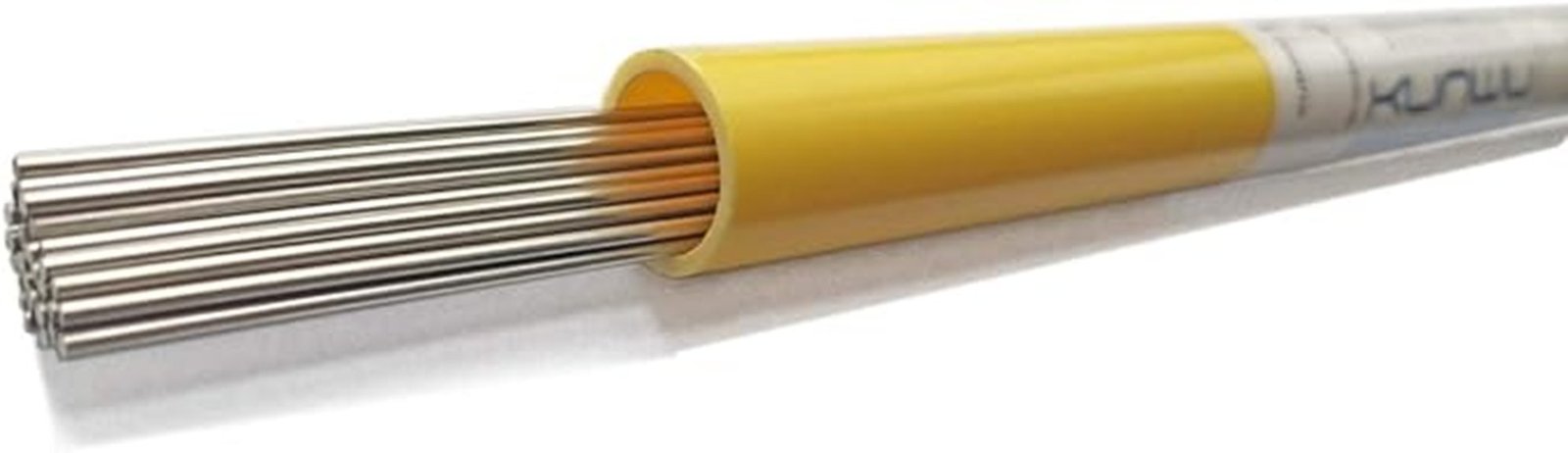
Choosing stainless TIG filler is less about buying the most expensive rod and more about matching the filler classification to the base metal and service conditions. The KUNWU ER308L Stainless Steel TIG Welding Rods reviewed here are the 1/16-inch by 36-inch, 2 lb version sold under ASIN B08F5F31RP. They are aimed at common austenitic stainless work, especially 304L, 308L, and related grades, with a low-carbon ER308L composition intended to improve resistance to intergranular corrosion. The main limitation is equally important: ER308L is not a universal filler for every stainless grade, aluminum, mild steel, or every elevated-temperature job.
Quick Verdict
Rating: 8.5/10, Recommended with caveats
Best For: TIG welders joining compatible 300-series stainless steels who want a 1/16-inch ER308L filler rod in a 2 lb package.
Bottom Line: KUNWU gives you a straightforward ER308L filler option with a useful 1/16-inch diameter, 36-inch straight length, low-carbon chemistry, and protective PVC tube. It is a good fit for compatible stainless fabrication, but you still need to confirm that ER308L is the correct filler classification for your exact base metal and service conditions.
| Specification | Detail |
|---|---|
| Brand | KUNWU |
| Manufacturer | Kunwu Advanced Materials |
| Model | KB800040093 |
| Part number | KB800040096 |
| Filler classification | ER308L stainless steel TIG filler rod |
| Diameter | 1/16 inch (0.063 inch, 1.6 mm) |
| Rod length | 36 inches |
| Package weight | 2 lb |
| Material | Stainless steel |
| Shape | Straight |
| Carbon content | 0.03% maximum |
| Typical compatible stainless grades listed by KUNWU | 304L, 308L, 321, and 347, plus similar 19% chromium and 9% nickel austenitic stainless steels |
| Packaging | PVC tube, tube color may vary |
| Listed applications | Kitchen and furnace work, dairy and food equipment, restaurant equipment, chemical tanks, general-purpose stainless fabrication, and cryogenic applications |
Key Takeaways
- This Amazon listing is for KUNWU ER308L stainless TIG filler rods in a 1/16-inch by 36-inch size and 2 lb package.
- ER308L has a maximum carbon content of 0.03%, which helps reduce intergranular carbide precipitation and supports corrosion resistance.
- KUNWU lists the filler for similar austenitic stainless steels, including 304L, 308L, 321, and 347.
- The rods are straight and stored in a PVC tube, which is practical for keeping long filler rods organized and protected from shop dirt.
- You should not treat ER308L as a universal filler. Confirm your base metal, joint requirements, and service temperature before welding.
What Is the KUNWU ER308L Stainless Steel TIG Welding Rod?
KUNWU ER308L is a stainless steel filler rod for TIG, or GTAW, welding. The reviewed Amazon variant uses straight 36-inch rods with a 1/16-inch diameter, and the listing identifies the package as 2 lb. KUNWU Advanced Materials is listed as the manufacturer, with model KB800040093.
The key feature is the ER308L filler classification. KUNWU states that the low-carbon version contains no more than 0.03% carbon and is commonly used for similar austenitic stainless steels, particularly 19% chromium and 9% nickel compositions such as 304L and 308L. The manufacturer also lists stabilized grades 321 and 347 among the intended applications.
This makes the product most relevant when your project already calls for ER308L. The filler classification should come before brand preference. If your base metal or service environment needs ER309L, ER316L, a nickel alloy, aluminum filler, or another classification, this KUNWU rod is not the correct substitute simply because the diameter fits your torch work.
Who Should Buy It?
Best For
- You regularly TIG weld compatible 300-series stainless and your procedure calls for ER308L.
- You prefer a smaller 1/16-inch filler diameter for controlled manual feeding and relatively precise stainless work.
- You want a 2 lb supply of 36-inch straight filler rods stored in a reusable PVC tube.
Skip If
- Your base metal requires a different filler classification, such as ER309L or ER316L.
- You need filler for aluminum, mild steel, cast iron, or another non-matching metal family.
- Your job has elevated-temperature or code requirements that call for a different filler or documented qualification.
Before You Buy: Check the required filler classification, not just the rod diameter. KUNWU notes that ER308L has lower elevated-temperature strength than niobium-stabilized alloys or Type 308H, so it should not be chosen for every high-temperature stainless application.
Key Features and Benefits
Low-Carbon ER308L Chemistry
The defining feature is the “L” grade. KUNWU states that ER308L has a maximum carbon content of 0.03%. That lower carbon level reduces the possibility of intergranular carbide precipitation, which helps the deposited weld metal resist intergranular corrosion.
For you, the practical benefit is straightforward: when ER308L is the correct filler for the joint, its chemistry is designed for stainless work where corrosion resistance matters. This is particularly relevant in fabrication that may see moisture, cleaning, food-service environments, or moderate chemical exposure.
1/16-Inch Diameter and 36-Inch Straight Length
The reviewed version measures 1/16 inch, or 1.6 mm, in diameter and 36 inches in length. A 1/16-inch rod gives you a relatively fine filler size for controlled hand feeding, while the 36-inch length is a common shop-friendly format that reduces how often you need to pick up a new rod during longer welds.
Rod diameter still needs to match the joint, material thickness, amperage range, and your welding procedure. A smaller filler can be easier to meter into a small puddle, but it may require more frequent feeding on heavier work.
PVC Tube Storage
KUNWU packages the straight rods in a PVC tube, with the tube color listed as random. The tube is useful because stainless filler should be kept clean and separated from sources of dirt, oil, moisture, and metal contamination. The packaging does not replace good shop storage, but it gives you a practical container for keeping the 36-inch rods together.
Pro Tip: Keep the rods in their tube until you need them and handle them with clean gloves when possible. Contamination on stainless filler can work against the clean weld surface you are trying to achieve.
Recommended Applications and Performance
KUNWU lists ER308L for welding similar steels, especially 19% chromium and 9% nickel austenitic stainless steels such as 304L and 308L. It also lists stabilized grades 321 and 347. The product description names kitchen and furnace work, dairy and food or restaurant equipment, chemical tanks, general-purpose applications with moderate corrosion concerns, and cryogenic applications.
Those application notes make this a focused filler product rather than an all-purpose welding rod. Your results will still depend on joint preparation, shielding, machine setup, heat input, technique, and the condition of the base metal. The filler rod can only do its job when the rest of the TIG process is set up correctly.
How It Performs in Real Use
For 304L and Similar Stainless Fabrication
When your weld procedure calls for ER308L, the KUNWU rod provides the expected low-carbon stainless filler chemistry in a manageable 1/16-inch size. That makes it a sensible option for brackets, light fabrication, restaurant equipment, and other compatible stainless parts where you want controlled filler addition.
For Food and Dairy Equipment Work
KUNWU specifically lists dairy, food, and restaurant equipment among its common applications. In this type of work, material compatibility and clean technique matter as much as the filler itself. Keep the rod clean, avoid cross-contamination from carbon steel tools, and follow the fabrication and sanitary requirements that apply to your project.
For Chemical Tanks and Moderate Corrosion Service
The manufacturer also lists chemical tanks and general-purpose work where corrosion conditions are a moderate concern. The low-carbon ER308L chemistry is the main reason this filler can make sense in those settings. You still need to verify that the actual chemical exposure, base-metal grade, and engineering requirements are compatible with ER308L.
For Cryogenic or Specialized Work
KUNWU lists the rods as suitable for cryogenic applications, but specialized or code-governed work should never be selected by product-page wording alone. If the weld is safety-critical, pressure-containing, structural, or subject to a welding procedure specification, use the filler classification and procedure required by the governing documentation.
How to Use and Store It Correctly
- Confirm the filler first: Make sure ER308L is specified or appropriate for the stainless grades you are joining.
- Keep filler clean: Store unused rods in the PVC tube and away from moisture, grinding dust, oil, and carbon-steel contamination.
- Prepare the joint: Clean the stainless surfaces and use dedicated clean tools where contamination control matters.
- Match the rod size to the job: The 1/16-inch diameter is useful for controlled feeding, but thicker material or a different joint may call for another filler diameter.
- Follow your welding procedure: Machine settings, shielding gas, tungsten selection, joint design, and heat input should follow the requirements for your material and project.
Compatibility and Safety
These rods are stainless steel ER308L filler, so they should not be used as a direct substitute for aluminum filler or unrelated steel classifications. For stainless jobs outside the ER308L application range, confirm the correct filler with the material specification, welding procedure, filler manufacturer, or a qualified welding professional.
Welding can expose you to intense light, heat, hot metal, fumes, and electrical hazards. Use appropriate welding PPE, ventilation or fume control, and the safety practices required for your shop and process. KUNWU also provides safety data and product documentation through its website, which is worth checking before professional or regulated work.
Pros and Cons
Pros
- Verified ER308L stainless TIG filler classification.
- Low carbon content of 0.03% maximum helps resist intergranular corrosion.
- 1/16-inch diameter supports controlled filler feeding for compatible stainless work.
- 36-inch straight rods are convenient for normal bench and fabrication use.
- PVC tube helps keep the filler organized and protected during storage.
Cons
- ER308L is not suitable for every stainless grade or dissimilar-metal joint.
- The 1/16-inch diameter may be slower to feed on heavier joints than a larger filler size.
- KUNWU notes lower elevated-temperature strength than niobium-stabilized alloys or Type 308H.
Is It Worth the Price?
Value depends mostly on whether you actually need ER308L in this diameter and quantity. The reviewed Amazon variant gives you 2 lb of 1/16-inch by 36-inch filler, placing it between small 1 lb tubes and larger bulk boxes. That makes it a practical mid-quantity option for repeat stainless work without committing to a large shop-size supply.
It is worth considering if your projects regularly use 304L, 308L, or another compatible stainless grade and you want a dedicated supply of small-diameter filler. It is not the best fit if you rarely weld stainless, need a different alloy family, or normally use a larger filler diameter for heavier fabrication.
How It Compares to Alternatives
Harris sells an ER308L TIG rod in the same 1/16-inch by 36-inch format, including a 1 lb tube option, while Blue Demon also offers ER308L in 1/16-inch by 36-inch sizes. Those are useful comparisons if you want another established filler-metal brand or a different package quantity.
The bigger decision, though, may be filler classification rather than brand. KUNWU also sells ER309L and ER316L stainless TIG rods. ER309L and ER316L are not interchangeable with ER308L, so compare them only if your base metals and welding procedure call for those alloys.
Frequently Asked Questions
What stainless steels are KUNWU ER308L rods intended for?
KUNWU lists similar 19% chromium and 9% nickel austenitic stainless steels, including 304L and 308L, plus stabilized grades 321 and 347. Confirm your exact base metal and welding procedure before choosing filler.
Can you use these ER308L rods on aluminum?
No. This product is stainless steel ER308L filler. Aluminum welding requires a compatible aluminum filler classification selected for the aluminum alloy and application.
What size are the rods in this Amazon listing?
The B08F5F31RP listing is for 1/16-inch (0.063-inch, 1.6 mm) diameter rods that are 36 inches long. The listing title identifies this specific variant as a 2 lb package.
Why does the 0.03% maximum carbon content matter?
KUNWU states that the lower carbon content reduces the possibility of intergranular carbide precipitation. That supports better resistance to intergranular corrosion in appropriate stainless welds.
How should you store KUNWU TIG filler rods?
Keep the rods clean and dry, preferably in the supplied PVC tube when they are not in use. Avoid contact with oil, shop dirt, moisture, and carbon-steel contamination that can affect stainless welding quality.
Are these rods compatible with every TIG welding machine?
The filler rod is manually added to the weld puddle, so the main issue is not a brand-specific machine connection. Your TIG machine, tungsten, shielding setup, amperage, polarity, and welding procedure still need to be suitable for the stainless material you are welding.
Does KUNWU state a shelf life for these rods?
The product information reviewed does not state a specific shelf-life period. Keep the filler clean, dry, and protected in storage, and inspect it for contamination or damage before use.
The Bottom Line
KUNWU ER308L 1/16-inch by 36-inch TIG rods are a solid choice when your stainless project specifically calls for ER308L filler and you want the 2 lb Amazon package. Their low-carbon chemistry, straight 36-inch format, and PVC storage tube are practical strengths, while the main limitation is that ER308L is not the correct filler for every alloy or high-temperature application. If your base metal and welding procedure match this filler classification, this version is easy to recommend with those caveats.