As an Amazon Associate, Garage Welding may earn from qualifying purchases. This does not change the price you pay.
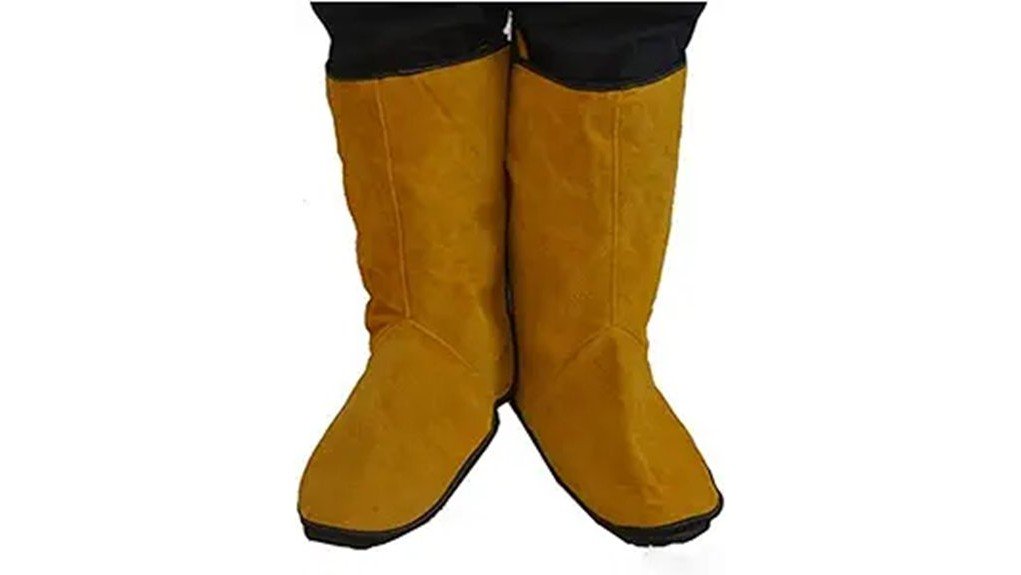
These leather welding boot and shoe covers are cowhide spats that strap over work boots to shield laces and the boot top from sparks and slag. They are worth considering if you weld or grind in boots you want to keep from burning, or if you want an extra layer where spatter lands. They do not replace proper work boots, and they are not a substitute for flame-resistant trousers.
This page is based on the seller’s Amazon listing and common welding-PPE practice, not hands-on testing.
Leather boot and shoe covers at a glance
| Item | Per the listing |
|---|---|
| Material | Cowhide leather |
| Stitching | Kevlar thread, as listed |
| Height | About 12.99 inches |
| Weight | About 12.6 oz, as listed |
| Closure | Adjustable hook-and-loop straps; universal size |
| Lining | Cotton lining per the listing |
Check Current Price on Amazon →
What they are and who they suit
Leather spats cover the top of the boot and lower shin. When you weld standing up, spatter bounces off the floor and lands on the instep and laces. When you grind, sparks fly the same way. Spats stop that from reaching your laces and tongue gap, which is where burns often happen.
- Best for: welders in lace-up boots, pipe and structural work, grinders, fabricators who work standing.
- Not needed if: you already wear tall welding boots with a covered tongue and fit well under your trousers.
How to check they fit your boots
- Measure boot height and width. Compare with the listed 12.99 inch height and the strap range in the listing.
- Check the heel and toe. The cover should sit over the boot top without leaving a gap at the tongue.
- Fasten snugly. Loose straps let slag slide in.
- Wear your trousers over the cover. This stops slag from falling into the gap.
- Check with steel toe. A universal size usually fits, but check with your actual boots.
Pros and limitations
Pros
- Cowhide with heat-resistant stitching suits a slag and spatter environment.
- Hook-and-loop closures make them quick to put on and take off.
- Extends the life of regular boots.
Limitations
- The listing does not describe water resistance, so wet outdoor use may be rough on the leather.
- Not insulated against cold; any lining is about heat, not winter warmth.
- Universal sizing can be loose on small boots.
Using and maintaining welding spats
Put the covers on over dry boots, secure the straps, and keep trousers over the top. Brush off dust, wipe with a damp cloth if needed, and let them air dry away from direct heat. Condition the leather now and then so it does not stiffen.
Inspect stitching and straps. If leather has burned through, or hook-and-loop no longer holds, replace them. Avoid using them near open flame or as a replacement for fire-resistant clothing.
Alternatives and related guides
- Add Black Stallion BX9C welding jacket for upper-body cover.
- See fabricator sleeves for arm protection.
- Match with TecWeld 14 inch welding gloves.
- Browse MACARRIE welding hats for head protection.
Frequently Asked Questions
Do welding boot covers replace welding boots?
No. Covers add a layer of protection over your boots, but you still need sturdy leather work boots with a covered, non-melting upper, and ideally steel or composite toe. Covers help keep sparks and slag from landing on laces and in the tongue gap.
Do leather spats fit over steel-toe boots?
The listing describes a universal size with adjustable hook-and-loop closures designed to go over most work boots, including steel toe. Very wide or tall boots may be tight, so check the current listing and compare boot height with the 12.99 inch listed height.
Should pant legs go over or under boot covers?
Over the cover. Spatter and slag roll off the outside of the leather and away from your body. If trousers are tucked into the cover, molten metal can fall in the gap. Wear flame-resistant or cotton trousers without cuffs and keep them long enough to overlap.
How do I clean and store leather welding spats?
Brush off dust, wipe with a damp cloth if needed, let them air dry away from heat, and condition the leather occasionally so it does not stiffen. Store them dry to avoid mildew. Replace them if the leather is burned through or stitching comes undone.
Conclusion
Leather boot and shoe covers are a cheap way to keep sparks and slag out of your laces and off your boots. Check boot height and width against the listing, wear trousers over them, and keep wearing real work boots underneath.