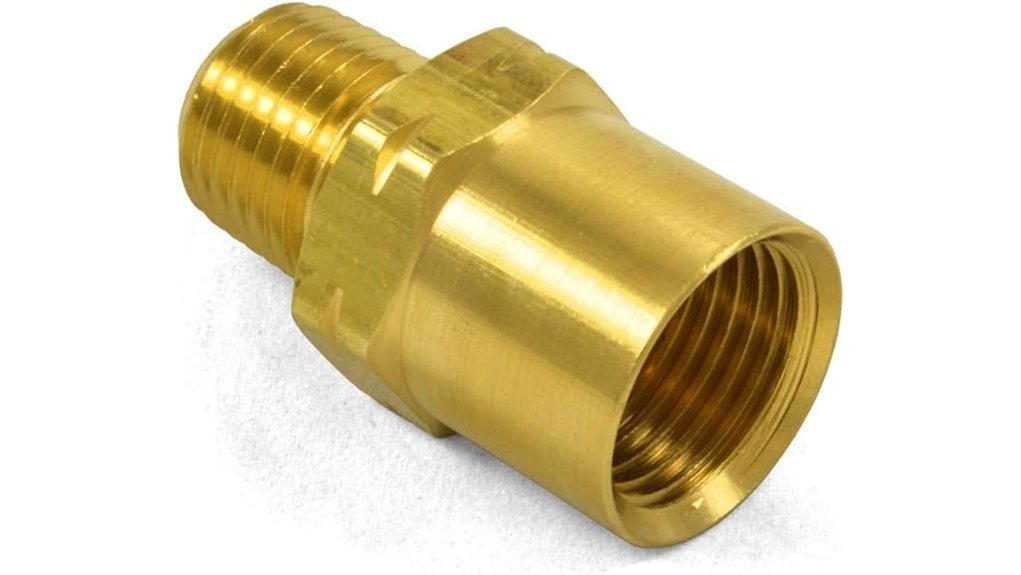
The 5/8-18 LH TIG fitting is a small brass adapter sold for argon gas lines, with a left-hand 5/8-18 thread on one end and a 1/4 NPT connection on the other, per the listing. Check the thread hand before you buy: left-hand 5/8-18 is the B-size thread normally used on fuel-gas hoses, while argon and other inert-gas lines usually use right-hand 5/8-18. This review is based on the Amazon listing and general TIG practice, not hands-on testing.
5/8-18 LH TIG Fitting at a Glance
| Item | Per the listing |
|---|---|
| Type | Brass gas fitting for TIG argon lines |
| Thread | 5/8-18 left-hand (LH) to 1/4 NPT. Confirm the NPT end is male or female on the listing. |
| Brand named in the listing | SuperiorProducts |
| Pressure | Listing states up to 200 PSI |
| Weight | About 0.05 kg per the listing |
| Price | Changes often. Check the current listing. |
Is a 5/8-18 LH TIG Fitting Right for Argon?
Welding gas hoses use a standard family of B-size fittings. Fuel gases such as acetylene and propane use left-hand threads, with a groove cut into the nut so you can tell them apart by feel. Oxygen and inert gases such as argon use right-hand threads.
That makes the “LH” in this listing the first thing to double-check. If your TIG regulator, flowmeter or torch hose has a right-hand 5/8-18 nut, you want the RH version of this part instead. If your equipment really does use a left-hand thread on the argon line, this adapter is the matching size. Either way, the fitting should only go on the gas it is rated for.
How to Check It Fits Your Setup
- Look for a groove. A notch cut around a hex nut usually marks a left-hand fuel-gas thread. A plain hex nut is normally right-hand.
- Match the thread. Hold the existing nut against a 5/8-18 fitting or use a thread gauge to confirm pitch and hand.
- Confirm gender on the NPT end. A male 1/4 NPT end needs a female 1/4 NPT port, and the reverse.
- Confirm the gas. Use the fitting only on the gas the listing names. Oxygen and fuel-gas service need parts rated for them.
- Check pressure. Regulator outlet pressure for TIG is low. Cylinder-side pressure is far higher, so do not fit this part to a cylinder valve.
Pros and Limitations
- Pro: simple brass part, and brass is the usual material for gas hardware.
- Pro: lets you adapt a 5/8-18 hose nut to a 1/4 NPT port.
- Limitation: it is a single adapter, not a regulator or hose, so you still need compatible mating parts.
- Limitation: left-hand 5/8-18 is not what most argon equipment uses, so fit needs checking.
- Limitation: the listing gives little detail on the seal type or the NPT gender.
Installation and Safety Tips
- Close the cylinder valve and bleed pressure from the regulator before changing any fitting.
- Use a properly sized wrench. Brass rounds off easily with a pipe wrench.
- Apply sealant only to the NPT threads, and keep it off the first thread.
- Do not over-tighten. Snug plus a quarter turn is often enough on tapered threads.
- Open the cylinder valve slowly and leak-test with soapy water.
- Never use oil or grease on a gas fitting.
An argon leak is not flammable, but it wastes gas and can cause porosity in TIG welds. In a small closed space escaping argon can also displace air, so ventilate.
Alternatives and Related Guides
- Most argon lines use the right-hand thread: see the 5/8-18 RH x 1/4 male pipe fitting review.
- Need a whole new regulator? Read the dual output argon regulator and flow meter review.
- For a hose connection that swaps quickly, see the Riverweld argon quick connect review.
- Flow meter options: the HTP argon/CO2 flow meter review.
Frequently Asked Questions
Is 5/8-18 LH the right thread for argon?
Usually not. Left-hand 5/8-18 (B size) is the thread normally used on fuel-gas hoses, while argon and other inert gases normally use right-hand 5/8-18. The listing sells this part for argon and TIG, so compare it with the fitting on your own regulator, flowmeter or torch hose before ordering.
Can I use this fitting on an acetylene or propane line?
Do not assume so. Fuel-gas connections often use left-hand threads, but the listing describes this part for argon and TIG use. Gas fittings are not interchangeable between gases, so use parts that are specified for the gas you are running.
Do I need thread sealant on the 1/4 NPT end?
Tapered NPT threads normally need a sealant rated for the gas in use, such as PTFE tape or gas-rated paste on the male threads only. Keep sealant off the first thread so it cannot enter the gas stream, then leak-test.
How do I leak-test a new gas fitting?
Open the cylinder valve slowly, brush soapy water over each joint and watch for growing bubbles. Do not use oil-based products. If bubbles appear, close the valve, release the pressure and re-seat or re-seal the joint.
Verdict
This brass adapter is worth considering only if you have confirmed that your equipment needs a left-hand 5/8-18 thread on an argon line. Most TIG setups use the right-hand thread, so check first, leak-test after installation and read the current listing for specs.