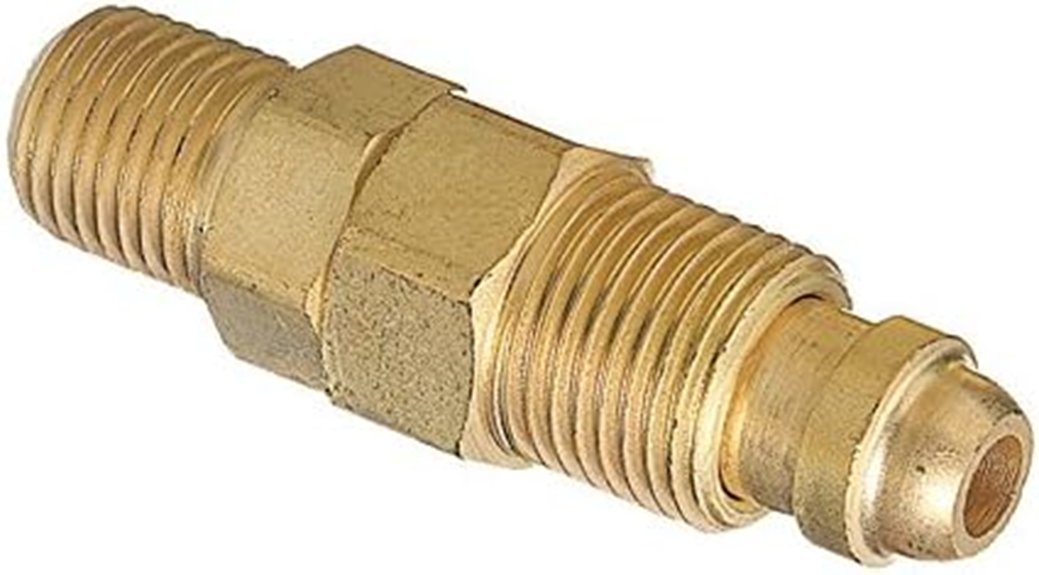
The 5/8-18 RH male pipe fitting, which steps a 5/8-18 right-hand thread down to a 1/4 male pipe end, is a small brass adapter listed for TIG and MIG argon gas lines. It suits anyone replacing a worn regulator outlet fitting or adapting a gas hose to a 1/4 NPT port. This 5/8-18 RH fitting review is based on the Amazon listing, so confirm the thread type and gender against your own parts before buying. This 5/8-18 RH x 1/4 male pipe fitting adapts gas hoses to pipe threads.
5/8-18 RH Male Pipe Fitting: Quick Specs
| Item | Per the listing |
|---|---|
| Type | Brass gas fitting, 5/8-18 right-hand thread to 1/4 male pipe |
| Intended use | TIG / MIG argon gas lines |
| Pressure | Listing states up to 200 PSI |
| Material | Brass |
| Compatibility note | Listing mentions standard B-size fittings; verify against your hose and regulator |
What it is and who it suits
A 5/8-18 right-hand thread is a very common size for inert-gas hose nuts and flowmeter outlets. This adapter converts that thread to a tapered 1/4 NPT male end, so it can thread into a gas solenoid, a bulkhead, a flowmeter port or a manifold fitting.
It is a sensible repair part if you already know which thread you need. It is not a good buy if you are guessing, because gas fittings are not forgiving about mismatched threads.
Why brass
Brass is the normal material for gas hardware. It machines well, resists corrosion in a workshop and is soft enough to seal against mating surfaces. It does not make a fitting suitable for every gas, so material is not a substitute for checking the connection standard.
How to check it fits your setup
- Identify the thread on your mating part. Count the thread pitch with a gauge or compare to a known 5/8-18 fitting.
- Confirm gender. The listing calls the pipe end male, so your port must be a 1/4 NPT female.
- Confirm the gas. Argon, argon/CO2 mixes and CO2 are inert or shielding gases. Oxygen and fuel gases use different connection systems.
- Check the sealing method. Tapered NPT threads seal on the thread and need sealant; the 5/8-18 end normally seals on a washer or cone, not on the threads.
- Check your working pressure. Regulator outlet pressure for welding is a small fraction of the listing’s pressure figure, but cylinder-side pressure is much higher, so do not put this part on a cylinder valve.
Pros and limitations
- Pro: simple, low-cost brass part for a very common thread size.
- Pro: useful for adapting an argon flowmeter or hose to an NPT port.
- Limitation: it is a single adapter, not a regulator or a hose. You still need compatible mating parts.
- Limitation: listings for small fittings can be unclear on thread gender, so measure first.
- Limitation: not for oxygen or fuel gas service.
Installation and safety tips
- Close the cylinder valve and bleed pressure from the regulator before changing any fitting.
- Use the right size wrench. Brass rounds off easily if you use a pipe wrench or oversized adjustable wrench.
- Apply sealant only to the NPT threads and keep it off the first thread.
- Do not over-tighten. Snug plus a quarter turn is often enough on tapered threads.
- Open the cylinder valve slowly and leak-test with soapy water.
- Never use oil or grease on any gas fitting.
An argon leak is not flammable, but it wastes gas and can ruin TIG welds with porosity. In a small closed space, escaping argon can also displace air, so ventilate.
Alternatives and related guides
- If you need a whole new regulator, see the dual output argon regulator and flow meter review.
- For a flow meter with a different design, read the HTP argon/CO2 flow meter review.
- For a quick-connect style hose connection, see the Riverweld argon quick connect review.
- For a gas valve at the torch, read the Boltigen gas valve review.
Frequently Asked Questions
Is a 5/8-18 RH fitting the same as a CGA 580 connection?
No. CGA 580 is the cylinder valve outlet for argon and other inert gases. A 5/8-18 RH thread is commonly found on the regulator or flowmeter outlet where the gas hose attaches. Check which end of your setup you are replacing before ordering.
Can I use this fitting on an acetylene or fuel gas line?
Not unless the listing explicitly says so. Fuel-gas connections generally use left-hand threads, and gas fittings are not interchangeable between gases. The listing describes this part for argon and TIG use, so keep it on inert-gas lines.
Do I need thread sealant on the 1/4 NPT end?
Tapered NPT threads normally need a sealant rated for the gas in use. PTFE tape or gas-rated paste is common, applied to the male threads only. Keep sealant off the first thread so it cannot enter the gas stream, then leak-test.
How do I leak-test a new gas fitting?
Open the cylinder valve slowly, then brush soapy water over each joint and watch for growing bubbles. Do not use oil-based products. If bubbles appear, close the valve, release pressure, and re-seat or re-seal the joint.
Conclusion
This is a basic brass adapter worth considering if you have already confirmed that you need a 5/8-18 RH to 1/4 NPT male connection. Measure your threads, leak-test after installation, and check the current listing for specs.