Disclosure: As an Amazon Associate, we earn from qualifying purchases. If you click a link on this page and make a purchase, we may receive a small commission at no extra cost to you.
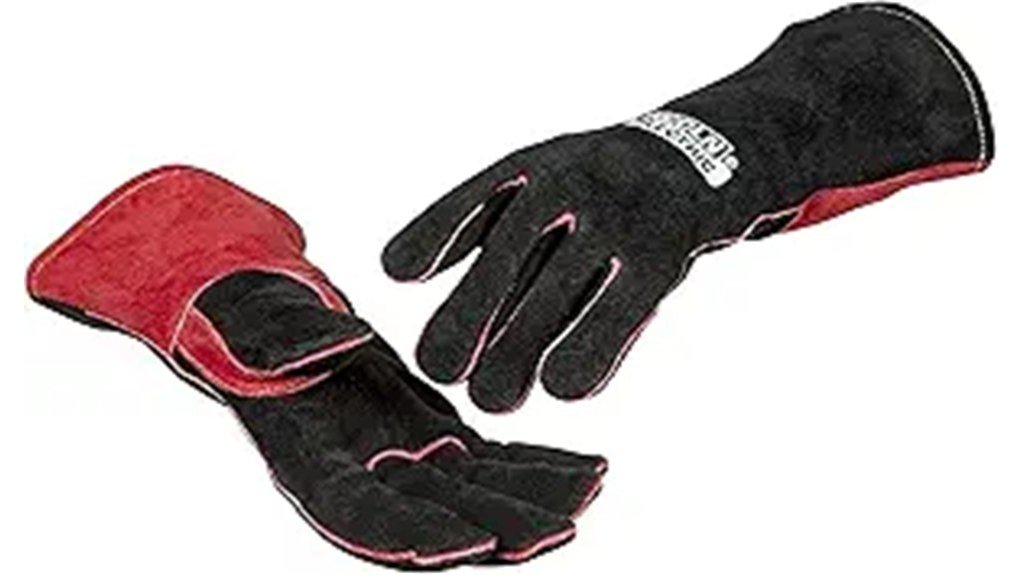
Finding welding gloves that protect well without feeling bulky can be difficult, especially if standard unisex gloves feel too wide or stiff on your hands. The Lincoln Electric Jessi Combs MIG Stick Welding Gloves are built around split cowhide leather, Kevlar-reinforced stitching, and a soft cotton liner to balance heat protection with comfort. They are best suited for MIG, stick, and flux-core welding tasks where sparks, spatter, and wrist coverage matter. This review helps you decide if their smaller-hand fit, 14-inch coverage, and leather construction match the way you weld.
Quick Verdict
Rating: 8.4/10
Best For: Welders with smaller hands who want leather MIG, stick, or flux-core gloves with longer wrist coverage.
Bottom Line: These gloves make the most sense if you want split cowhide protection, reinforced stitching, and a softer liner in a smaller-hand design. Skip them if you need ultra-thin TIG-style finger feel or a larger standard men’s glove fit.
| Specification | Detail |
|---|---|
| Brand | Lincoln Electric |
| Model line | Jessi Combs |
| Product type | MIG, stick, and flux-core welding gloves |
| Main material | High-grade split cowhide leather |
| Stitching | Kevlar-reinforced threading at stress points |
| Liner | Soft cotton liner |
| Approximate length | About 14 inches |
| Design notes | Ergonomic shape, straight thumb design, reinforced leather areas, moisture-absorbing cuffs |
| Fit focus | Designed for smaller hands, including many women and younger supervised learners |
| Best use | MIG, stick, flux-core welding, fabrication, shop projects, and heat-heavy repair work |
| Care note | Hand clean only. Do not machine wash. |
What Are the Lincoln Electric Jessi Combs Gloves?
The Lincoln Electric Jessi Combs Gloves are leather welding gloves made for buyers who want protection without the loose feel that can come from oversized shop gloves. The article-supported construction centers on high-grade split cowhide, Kevlar threading, and reinforced leather areas that help the gloves handle heat, sparks, spatter, and wear.
The smaller-hand design is the main reason to consider this model. If many welding gloves feel sloppy around your fingers or palm, the ergonomic cut and straight thumb design may give you better control while still covering your wrist and lower forearm.
Before You Buy: These gloves are designed around smaller hands. If you usually need a larger standard men’s glove, check sizing and return terms carefully before ordering.
Who Should Buy It?
Best For
- Welders with smaller hands who find many shop gloves too bulky.
- MIG, stick, and flux-core users who need leather protection from sparks and spatter.
- Fabricators and hobby welders who want a cotton-lined glove for longer work sessions.
Skip If
- You need a larger glove fit with extra palm and finger room.
- You want very thin TIG-style gloves for maximum fingertip feel.
- You need verified certification details that are not listed in the article.
Material and Construction Quality
Split cowhide is a practical choice for welding gloves because it gives you a tougher outer layer than lightweight work gloves. On this model, the cowhide construction supports heat resistance, abrasion resistance, and the durability needed around rough metal edges, clamps, and welding tables.
The reinforced leather areas matter because gloves often wear first around the palm, thumb, and high-contact zones. Kevlar threading adds another durability layer at the seams, which helps reduce the chance of early stitching failure when the gloves face daily bending and heat exposure.
The soft cotton liner improves comfort by adding a gentler contact layer between your hand and the leather shell. That matters during longer sessions because stiff, scratchy gloves can distract you and make tool control harder.
Heat Resistance and Protection
These gloves are built for heat-heavy welding use, including MIG, stick, and flux-core work. The leather shell helps shield your hands from sparks, spatter, and flame exposure during normal welding tasks.
The approximate 14-inch length gives you more coverage than short work gloves. That extra length helps protect the wrist and lower forearm area, which often sits close to sparks when you are holding material, reaching near a joint, or repositioning a workpiece.
No glove makes welding risk-free. You should still pair these gloves with a proper welding helmet, jacket or sleeves, eye protection, and safe work habits based on your equipment and project.
Comfort, Fit, and Dexterity
The ergonomic design is the main comfort feature. Instead of relying only on thick leather, the gloves are shaped to follow the hand more naturally, which can help reduce hand fatigue during repeated gripping and repositioning.
The straight thumb design supports better fingertip sensitivity than a loose, oversized glove. You should still expect a protective welding-glove feel, not the thin precision of TIG gloves or mechanic gloves.
The fit focus makes these gloves especially useful if you have smaller hands. A closer fit can improve control, but it can also feel restrictive if your hands are broader or you prefer extra room inside your gloves.
Pro Tip: Try the gloves with your usual welding grip before starting a long job. Check finger reach, palm tightness, and cuff comfort while holding your stinger, MIG gun, or clamps.
How It Performs in Real Use
For MIG Welding
For MIG welding, the gloves give you the leather coverage you need around sparks and light spatter while still helping you hold the gun with control. The cotton liner also helps during longer bead runs where bare leather can feel harsh inside the glove.
For Stick Welding
Stick welding often creates more heat and sparks than light shop work, so the split cowhide and longer cuff are useful. The gloves should work best when you need a protective barrier around the hand and wrist while still moving rods, clamps, and workpieces.
For Flux-Core Welding
Flux-core welding can be messy, so reinforced construction is a plus. The gloves help protect your hands while you deal with spatter, slag, and rough material edges, but you still need safe positioning and proper protective clothing.
For Shop and Fabrication Work
In general fabrication, the gloves are useful for handling warm metal, gripping tools, and moving parts around a bench. They are not a replacement for cut-rated gloves, but the leather build gives you more protection than basic cotton or light-duty work gloves.
Fit Tips Before You Buy
Start with fit. These gloves are described as sized for women’s and children’s hands, so they are best for smaller-hand users who need better control than oversized gloves provide. Younger users should only weld with proper training, qualified adult supervision, and full safety gear.
Check cuff length and sleeve overlap before you weld. The glove cuff should work with your jacket or sleeve setup so sparks do not land on exposed skin between the glove and clothing.
Do not judge fit only by how the gloves feel while your hand is open. Grip your welding gun, electrode holder, pliers, or clamps to make sure the palm and fingers do not pull too tightly during real use.
Material Safety and Care
The article describes the gloves as high-grade split cowhide with Kevlar threading and a soft cotton liner. Those materials are common in welding gloves because they balance heat protection, seam strength, and comfort.
The article does not list a specific safety certification, so you should not treat these gloves as certified for every industrial setting unless the current product listing or manufacturer documentation confirms it. For professional work, follow your workplace PPE requirements.
For cleaning, avoid machine washing. Hand clean the gloves as needed, then let them dry naturally away from direct high heat so the leather does not stiffen or crack too quickly.
Pros and Cons
Pros
- Split cowhide leather gives you strong protection for MIG, stick, and flux-core work.
- Kevlar-reinforced stitching improves durability at important seam areas.
- Soft cotton liner helps comfort during longer welding sessions.
- Approximate 14-inch length adds wrist and lower forearm coverage.
- Smaller-hand design can improve control for users who dislike oversized gloves.
Cons
- May feel too snug if you have larger hands or prefer a roomy glove.
- Not the best fit if you need thin TIG-level fingertip sensitivity.
- Certification and warranty details should be confirmed on the current listing before purchase.
Is It Worth the Price?
The Lincoln Electric Jessi Combs Gloves are worth considering if your main priorities are leather protection, smaller-hand fit, and reinforced construction. They offer strong value for the price when you need welding gloves that feel more controlled than oversized shop gloves.
The best value comes from the fit and material combination. You get split cowhide, Kevlar threading, a cotton liner, and longer coverage in one glove, which makes sense for regular MIG, stick, or flux-core use.
The main limitation is fit. If you need large glove sizing or very fine torch control, you may get better value from a different glove style.
How It Compares to Alternatives
Compared with standard unisex MIG or stick welding gloves, the Jessi Combs model stands out because it focuses on smaller hands. That can give you better grip control if regular gloves leave too much extra material around the fingers.
Compared with thinner TIG-style gloves, these give you more leather coverage and heat protection, but less fine fingertip feel. Choose them for protection-focused MIG, stick, and flux-core work rather than precision-first welding tasks.
Frequently Asked Questions
Are the Lincoln Electric Jessi Combs Gloves good for beginners?
Yes, they can work well for beginners who need real welding protection and a smaller-hand fit. New welders should still use a complete PPE setup and learn safe welding technique before starting.
Are these gloves suitable for left-handed welders?
Yes, left-handed welders can use them because they are welding gloves rather than a single-hand tool. The bigger question is fit, so check how the fingers, thumb, and palm feel when you grip your welding equipment.
Can these gloves be machine washed?
No. Machine washing can damage leather and shorten glove life. Hand clean them as needed, then let them dry naturally before storage.
What types of welding are they best for?
They are best suited for MIG, stick, and flux-core welding. Those jobs benefit from leather protection, reinforced stitching, and longer cuff coverage.
Do they work for TIG welding?
They may feel too thick if you need fine TIG control. For TIG work, many welders prefer thinner gloves designed for fingertip sensitivity.
Do the gloves come in other colors?
The article describes them as primarily black and red. Check the current product listing before purchase if color matters to you, since available variants can change by seller.
What should you check before buying?
Check the size, current listing details, return terms, and any warranty information before ordering. You should also confirm that the glove type matches your welding process and workplace safety requirements.
The Bottom Line
The Lincoln Electric Jessi Combs MIG Stick Welding Gloves are a strong choice if you want split cowhide protection, Kevlar-reinforced stitching, a soft cotton liner, and a smaller-hand fit. They are best for MIG, stick, and flux-core users who value protection and control, but they are not the right pick if you need a larger fit or thin TIG-style dexterity.