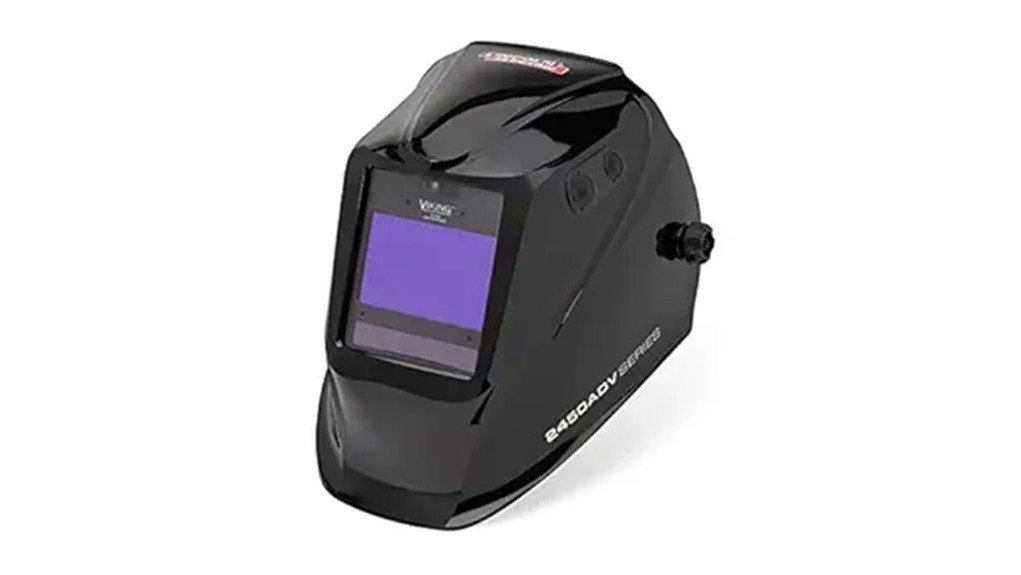
The Lincoln Electric Viking 2450 is an auto-darkening welding helmet with a large 9.3 square inch viewing area and variable shade 5 to 13. It suits hobbyists and working welders who want a wide field of view and digital controls in a mid-priced helmet. If you mostly do very low-amp TIG, test the sensitivity first or compare other options.
Viking 2450 at a Glance
| Item | Detail |
|---|---|
| Viewing area | 3.82 x 2.44 in (9.3 sq in), per retailer specifications |
| Shade range | Variable 5 to 13 |
| Lens technology | 4C lens, rated 1/1/1/1 optical clarity per the listing |
| Sensors | 4 arc sensors |
| Switching speed | About 1/25,000 second light-to-dark per a retailer spec sheet |
| Power | Two replaceable CR2450 batteries with solar assist, per a retailer spec sheet |
| Controls | Digital controls for shade, sensitivity, delay and mode |
| Warranty | The listing says 5 years; confirm the terms for your exact model |
Check the current price on Amazon →
Key Features That Matter in Use
Large viewing area and optical clarity
The 9.3 square inch window lets you see more of the joint and your surroundings, which helps with awkward positions and positioning the torch or electrode. The 1/1/1/1 optical clarity rating is the top grade in the ANSI/EN optical classification, which means low distortion across the lens.
Digital controls
Instead of a tiny dial, the helmet has push-button digital controls for shade, sensitivity, delay and mode. That is easier to repeat from job to job. Set the shade for your process and amperage, then confirm on scrap before you start the real weld.
Weight and comfort
A retailer spec sheet lists the weight at about 20.5 ounces. Comfort depends on fit and how well the headgear is adjusted, so use the ratchet and tilt adjustments and try it for a full session before you rely on it.
LED light
The product page describes a built-in LED light that helps you see the joint before striking an arc. Not all retail spec sheets mention it, so check your listing if this feature matters to you.
How to Check the Viking 2450 Fits Your Work
- Process: MIG, stick and TIG are all possible, but pick a shade from the filter chart and test sensitivity at your lowest amperage.
- Version: several Viking 2450 versions exist (different graphics, some with added features). Compare the model number in the listing with what you want.
- Spare parts: cover lenses and headgear are model-specific. Match them to the Viking 2450 before buying replacements.
- Standards: look for ANSI Z87.1 marking on the lens and helmet, and wear safety glasses underneath.
- Head fit: check that the headgear adjusts to your head size, including if you wear a cap or respirator.
Pros and Limitations
Pros
- Wide 9.3 sq in viewing area
- Variable shade 5 to 13 covers common arc welding work
- Digital controls for shade, sensitivity, delay and mode
- Replaceable batteries and a reputable brand name with a published warranty
Limitations
- Very low-amp TIG may need testing and sensitivity tuning
- Not a substitute for a grinding shield
- Several variants, so confirm the exact model
- Cover lenses and parts are model-specific
Setup and Safety Tips
- Choose the shade by process and amperage, using the filter chart in the manual. Most MIG and stick work on mid amperages sits around shade 10 to 13.
- Test the helmet by striking a short arc on scrap before real welding. If the lens flickers, raise sensitivity or adjust sensors.
- Replace scratched or spattered cover lenses before they limit your visibility.
- Never use a cracked helmet or lens, and never weld with an auto-darkening filter that has failed a test.
- Welding fumes are hazardous. Ventilate, and use proper respiratory protection where needed.
View the Viking 2450 helmet on Amazon →
Alternatives and Related Guides
- Want a classic option from another major brand? Read the Miller Classic Series helmet review.
- Looking at premium headgear? See the 3M Speedglas 9100 helmet review.
- Protect the lens with a cover: YesWelder lens cover review (verify fit for your helmet).
- Pair it with gloves: Lincoln Electric welding gloves review.
Frequently Asked Questions
What shade range does the Lincoln Viking 2450 have?
Retail listings for the Viking 2450 give a variable shade range of 5 to 13 with a 3.82 by 2.44 inch (9.3 square inch) viewing area. Always match the shade to your process and amperage using the filter chart, and check your exact model listing because Viking 2450 versions differ in graphics and features.
Does the Viking 2450 work for TIG and low-amp welding?
The 4 sensors and variable shade control are aimed at MIG, stick and TIG work, but low-amp TIG is where auto-darkening helmets differ most. Set sensitivity high and delay appropriately, test on scrap, and consult Lincoln’s manual for the lowest amperage the filter reliably triggers on.
Is the Viking 2450 good for grinding?
Auto-darkening helmets usually have a grind mode that keeps the lens at a light shade, but a welding helmet is not a substitute for a grinding face shield and safety glasses. Check the product manual for the grind setting, and wear safety glasses under the helmet whenever you grind.
How long is the Viking 2450 warranty?
The listing describes a 5-year warranty, but warranty terms can vary by version and by what is covered, such as the auto-darkening filter versus headgear and lenses. Read the warranty page for your exact model from Lincoln Electric before you buy, and keep your receipt.
Verdict
The Viking 2450 is a solid pick if you want a big window, variable shade and digital control from a well-known welding brand. Confirm the exact version, check the warranty terms, and test the filter at your lowest amperage before you rely on it.
Check the current price on Amazon →