Disclosure: As an Amazon Associate, we earn from qualifying purchases. If you click a link on this page and make a purchase, we may receive a small commission at no extra cost to you.
When your MIG gun needs quick cleaning or wire adjustment, stopping to hunt for three separate tools slows you down. MIG Welding Pliers give you a compact 6-in-1 hand tool for common welding tasks like wire drawing, spatter removal, nozzle work, and clamping. This review helps you decide if the carbon steel build, serrated jaws, and spring-loaded design make sense for your shop, garage, or farm kit. The main strength is convenience, but you should still check the live listing for exact brand, size, warranty, and package details before buying.
Quick Verdict
Rating: 8/10
Best For: MIG welders who want one affordable tool for wire handling, nozzle maintenance, spatter cleanup, and light clamping.
Bottom Line: These MIG welding pliers are worth considering if you want a simple multi-function tool that stays close to your welder. The tradeoff is that the article-supported details do not confirm brand, exact dimensions, weight, or warranty terms, so you should verify those details on Amazon before purchase.
| Specification | Detail |
|---|---|
| Product type | MIG welding pliers |
| Design | 6-in-1 multi-function hand tool |
| Material | Polished carbon steel, based on the source article |
| Jaw style | Long serrated jaws for clamping and gripping workpieces |
| Nozzle support | Large serrated holes for rotating or tightening MIG nozzles |
| Operation | Spring-loaded design for easier one-handed use |
| Main uses | Wire drawing, spatter removal, nozzle installation, nozzle rotation, tightening, and clamping |
| Best use | MIG welding setup, gun maintenance, shop repairs, farm maintenance, and DIY welding tasks |
| Warranty note | Not independently verified in this edit. Check the current Amazon seller terms before buying. |
What Are the MIG Welding Pliers?
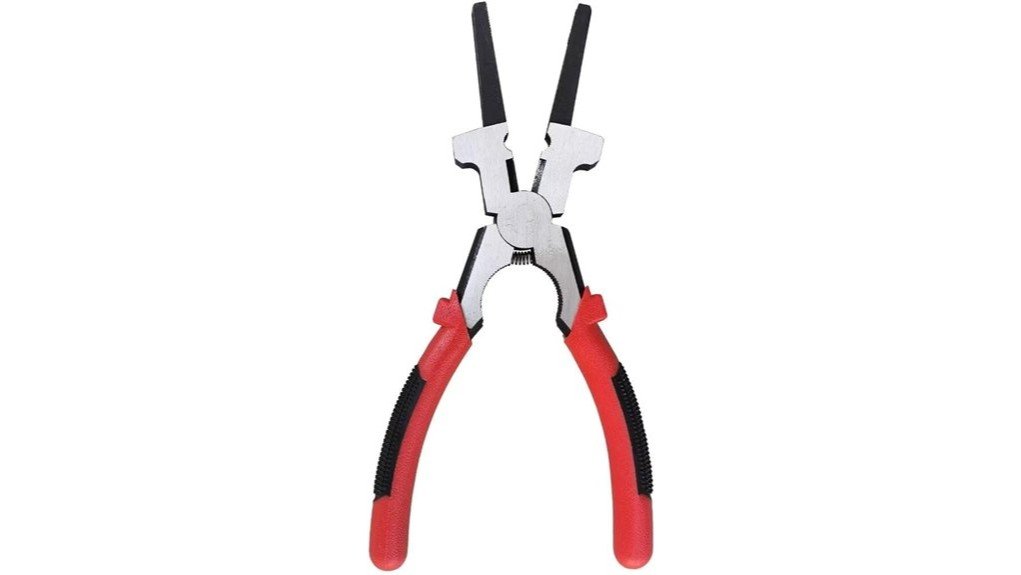
These MIG welding pliers are a 6-in-1 tool made for the small but frequent tasks that happen around a MIG welder. Instead of switching between regular pliers, a nozzle tool, and a cleanup tool, you can keep one purpose-built tool near your machine.
The source article describes polished carbon steel construction, long serrated jaws, ergonomic grips, and a spring-loaded mechanism. Those details matter because MIG work often involves hot parts, stuck wire, spatter buildup, and nozzle adjustments that need a firm grip.
The tool is best viewed as a convenience and maintenance accessory, not as a replacement for your welder, welding gun, clamps, grinder, or safety gear. It can help you work faster, but it still needs proper use, cleaning, and safe handling around hot metal.
Before You Buy: The live product listing should be checked for exact brand, size, weight, warranty, and package contents. Those details were not independently verified, so do not buy based only on assumed specs.
Who Should Buy It?
Best For
- You use a MIG welder and want one tool for wire handling, nozzle work, and quick cleanup.
- You work in a garage, workshop, farm shed, or maintenance area where tools need to be easy to grab.
- You prefer spring-loaded pliers because they are easier to open and close during repeated tasks.
Skip If
- You need verified brand-name specs, exact dimensions, or confirmed warranty terms before ordering.
- You only weld occasionally and already have separate tools that handle nozzle and wire tasks well.
- You need heavy fabrication clamps or locking pliers for structural hold-down work.
Features and Benefits of MIG Welding Pliers
The biggest benefit is tool consolidation. A MIG setup often needs wire trimming, wire pulling, nozzle adjustment, and spatter cleanup during the same project. A 6-in-1 plier design keeps those tasks in one hand tool, which can reduce interruptions while you work.
The long serrated jaws are useful when you need a stronger grip than smooth pliers can provide. Serrations can help hold wire, grab small parts, and clamp light workpieces, but they can also mark softer materials if you squeeze too hard.
The large serrated holes are designed for nozzle rotation or tightening. That makes the tool more useful for MIG gun maintenance because nozzle buildup can affect gas coverage and weld consistency if ignored.
Design and Comfort for Enhanced Usability
The source article highlights ergonomic grips and a spring-loaded design. This matters during longer welding sessions because you may open and close the pliers many times while feeding wire, cleaning the nozzle, or adjusting the gun.
Spring-loaded pliers can be easier to use one-handed because the handles reopen after each squeeze. That can help when your other hand is holding a workpiece, moving a lead, or steadying your position.
The carbon steel construction is a practical choice for a shop tool because it supports durability and firm gripping. Even so, you should keep the tool dry, clean it after heavy spatter exposure, and store it away from moisture to reduce rust risk.
Materials and Build Quality
The article-supported material is polished carbon steel. For a welding accessory, that is important because the tool may be exposed to heat, grime, dust, metal particles, and rough bench use.
The polished finish can make wiping the tool easier, but it does not mean the pliers are maintenance-free. After use, wipe away metal dust and debris, check the hinge action, and add a light tool-safe lubricant if the joint starts to feel stiff.
Ease of Use
These pliers are designed for quick shop tasks, not complex setup. You can use the jaws for gripping and wire handling, then use the nozzle area when the MIG gun needs tightening or cleanup.
The one-handed operation is the most useful comfort feature. If you often pause to adjust wire or clear spatter, a spring-loaded tool can feel faster than a standard plier that needs more hand movement.
Pro Tip: Keep these pliers on a hook or magnetic tray near your MIG welder, not buried in a general toolbox. The tool is most useful when you can grab it during wire feeding, nozzle checks, and quick cleanup.
Practical Applications in Various Industries
MIG welding pliers can be useful in more than one setting because the same wire, nozzle, and gripping tasks show up in many repair environments. The source article mentions workshops, farms, plumbing, electrical work, and mechanical maintenance as practical use cases.
In a welding shop, the pliers help with setup and maintenance around the MIG gun. In a farm or repair shed, they can serve as a compact tool for quick fabrication repairs, equipment brackets, light clamping, and nozzle care.
For DIY users, the value is convenience. You may not need a large tool cart for small projects, but you still need a reliable way to handle wire, remove spatter, and adjust the nozzle without stopping every few minutes.
How It Performs in Real Use
For Daily MIG Welding
During daily MIG work, the pliers help most with repeated small tasks. You can pull wire, handle sharp wire ends, clean spatter, and adjust the nozzle without switching tools as often.
For Garage and DIY Repairs
For home garage use, the 6-in-1 design keeps your setup simpler. This is helpful if you work from a small bench or roll your welder out only when needed.
For Farm and Maintenance Work
In farm and maintenance settings, tools often need to be sturdy, simple, and easy to carry. The carbon steel body and serrated jaws make these pliers useful for light clamping and gripping during field repairs, but they are not a substitute for locking clamps when you need strong holding force.
For Long-Term Use
Long-term performance will depend on care. The pliers should last longer if you clean the hinge, remove grit, avoid leaving them outside, and use the right tool for heavy clamping jobs instead of forcing these beyond their purpose.
How to Use It Correctly
Use the jaws for gripping wire, holding small parts, and light clamping. Use the nozzle holes only for compatible MIG nozzle work, and avoid forcing the tool if the nozzle is stuck from heat, spatter, or thread damage.
Let hot parts cool before handling when possible. If you must work near heat, wear proper welding gloves and eye protection because nozzle parts, wire ends, and spatter can burn or cut you.
Do not use these pliers as a hammer, pry bar, or substitute for dedicated locking pliers. Misuse can damage the hinge, jaw alignment, or serrated gripping surfaces.
Safety and Maintenance Notes
MIG welding pliers are hand tools, but they are used around hot metal, sharp wire, spatter, electricity, and shielding gas equipment. You should still wear welding gloves, eye protection, and other PPE that fits your welding process.
After welding, wipe the tool clean and inspect the jaws, hinge, and spring action. If the pliers become loose, badly rusted, cracked, or difficult to control, replace them rather than risking a slip near hot or sharp material.
Pros and Cons
Pros
- 6-in-1 design supports common MIG welding tasks in one hand tool.
- Polished carbon steel construction gives the tool a durable shop-ready build.
- Long serrated jaws help with gripping, wire handling, and light clamping.
- Spring-loaded action supports easier one-handed operation.
- Nozzle rotation and tightening support makes it more useful than basic pliers.
Cons
- Brand, dimensions, weight, and exact warranty terms were not verified in this edit.
- Not a replacement for heavy clamps, locking pliers, or dedicated fabrication fixtures.
- Serrated jaws can mark softer parts if you apply too much pressure.
Is It Worth the Price?
These MIG welding pliers offer strong value for the price if you want a single tool for several common welding support tasks. The most value comes from the 6-in-1 layout because it reduces how often you need to switch between basic pliers, nozzle tools, and cleanup tools.
They make the most sense for everyday MIG users, DIY welders, and maintenance workers who want a low-complexity tool near the welder. They are not the best fit if you need premium verified specs, exact sizing, or a known professional brand before buying.
How It Compares to Alternatives
Compared with regular needle-nose pliers, these MIG welding pliers are better suited for nozzle and spatter-related tasks. Compared with separate nozzle cleaners, diagonal cutters, and standard pliers, the 6-in-1 design saves space and keeps common functions together.
A dedicated tool may still be better if you need maximum cutting strength, locking clamping pressure, or a specific nozzle size tool. These pliers make the most sense when you want convenience for general MIG maintenance rather than a specialized tool for one demanding job.
Frequently Asked Questions
What are MIG welding pliers used for?
MIG welding pliers are used for common support tasks around a MIG gun, including wire handling, spatter removal, nozzle installation, nozzle rotation, tightening, and light clamping. They help you keep several small welding tasks in one tool.
Are these pliers only for MIG welding?
They are designed around MIG welding tasks, especially wire and nozzle work. You may use them for general gripping or light maintenance, but they are most useful when paired with a MIG welder.
Can they replace regular shop pliers?
They can replace regular pliers for some light gripping and wire tasks, but not for every job. Keep locking pliers, clamps, cutters, and other dedicated tools available for heavier work.
How do you maintain MIG welding pliers?
Wipe off metal dust, spatter debris, and grime after use. Store the pliers dry, keep the hinge moving smoothly, and inspect the spring and jaws before each welding session.
Are the brand and exact size verified?
No. The source article supports the 6-in-1 design, polished carbon steel material, serrated jaws, ergonomic grips, and spring-loaded action, but the exact brand, size, and weight were not independently verified in this edit.
Is the warranty confirmed?
The warranty was not independently verified. Check the current Amazon listing, seller page, and product package details because warranty coverage can vary by seller and date.
Who should skip these MIG welding pliers?
Skip them if you need verified professional-brand specs, heavy clamping force, or a tool made for one exact nozzle size. They are better as a general MIG support tool than as a heavy-duty fabrication clamp.
The Bottom Line
The MIG Welding Pliers are a smart buy for everyday MIG users who want one compact tool for wire handling, nozzle maintenance, spatter cleanup, and light gripping. The main strength is the practical 6-in-1 design with carbon steel construction, while the main limitation is the lack of independently verified brand, size, weight, and warranty details.
If you want a simple shop tool and will verify the current listing before checkout, they are recommended with caveats. Skip them if you need confirmed premium specs or a tool for heavy clamping work.