MIG pliers help you cut wire, remove nozzles, clean spatter, and handle small MIG gun maintenance jobs. A good pair gives you wire cutters, a nozzle grip, a contact-tip grip, and a pointed nose in one hand tool. That saves time at the bench and helps you keep your welds cleaner. This guide explains how MIG pliers work, why they matter, and how you can use them safely.
Quick Answer
MIG pliers are multi-use welding pliers made for metal inert gas welding tasks. You use them to trim welding wire, remove nozzles, clean spatter, grip contact tips, and make small adjustments. They help you work faster, keep the torch cleaner, and reduce the need to switch tools often.
Key Takeaways
- MIG pliers combine several torch-care tasks in one simple hand tool.
- Clean wire cuts help you keep a stable wire stickout and smoother arc starts.
- Nozzle cleaning helps protect shielding gas flow and reduce weld defects.
- Heat-resistant gloves and eye protection matter every time you handle hot parts.
- Regular plier inspection helps you avoid slips, weak cuts, and damaged torch parts.
Why MIG Pliers Are Essential for Efficient Welding
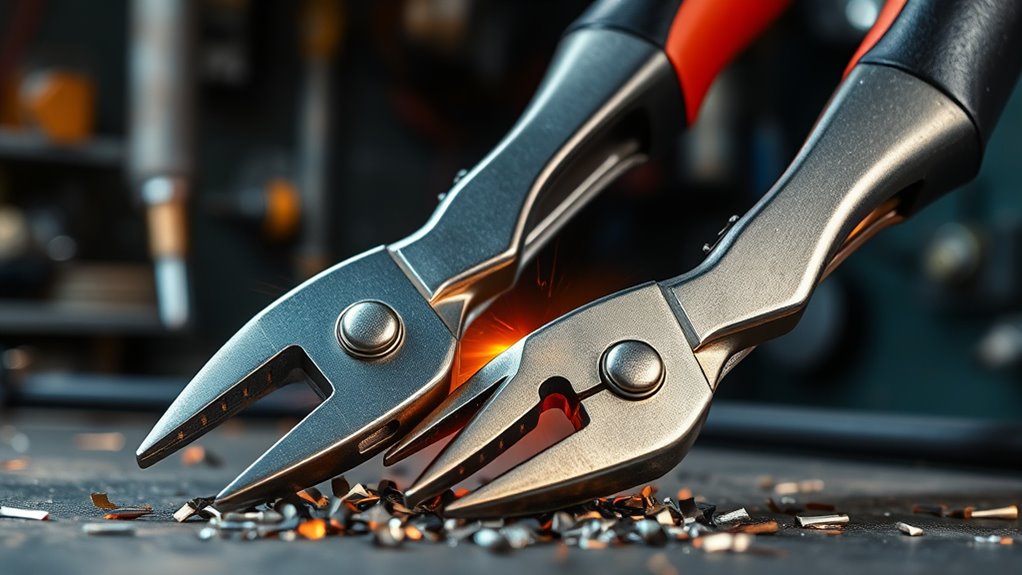
MIG pliers help you weld with better control because they combine key torch-care tasks in one tool. You can cut wire, clean nozzles, and install contact tips without searching for separate tools. This simple setup reduces delays during long welding sessions.
The offset cutters help you trim wire to a clean stickout, often around 1/4 inch to 1/2 inch. That range can support steady arc starts when it matches your machine, wire, and joint setup. Regular maintenance with MIG pliers, such as removing spatter and adjusting contact tips, helps protect gas flow and weld quality. Using protective gear like heat-resistant gloves can also improve your safety during welding tasks.
Most MIG pliers use strong metals, such as carbon steel or chrome vanadium steel. These materials help the tool handle heat, pressure, and repeated shop use.
Cutting Wire and Removing Nozzles: Key Functions of MIG Pliers
One main job of welding pliers is cutting wire to the right length. Many welders aim for a wire stickout near 1/4 inch to 1/2 inch, depending on the job and setup. MIG welding pliers include integrated wire cutters that make clean, repeatable cuts easier.
The round gripping section helps you remove the nozzle when it feels tight. This feature improves control and can reduce direct hand contact with hot or sharp torch parts. The knurled jaws also help you install or remove contact tips without slipping. Regularly using these MIG welding pliers for cutting wire and removing nozzles can improve your workflow and support cleaner, higher-quality welds. Checking for wire feed problems can also improve the quality of your welding projects.
Products Worth Considering

Nozzle Cleaner and Tip Installer: The jaw tips and interior gripping sections are designed for rapid contact tip installation, general spatter removal and internal and external MIG nozzle cleaning.

Features a specially-designed nose for efficient removal of welding spatter.

High-Quality Construction: Our welding pliers, also known as MIG pliers or welpers, are made from premium steel, polished to a smooth finish, and precision processed to ensure sturdiness and durability for extended use.It is reliable welding tools
Cleaning Spatter and Nozzle Maintenance
Cleaning spatter and maintaining nozzles help you protect weld quality. Spatter can narrow the nozzle opening and disturb shielding gas coverage.
MIG welding pliers let you remove spatter buildup and keep the nozzle clear. Regular maintenance can improve welding performance and help your consumables last longer. Proper cleaning methods can support a more consistent bead and reduce defects in your welds.
Effective Spatter Removal Techniques
The pointed nose on MIG pliers helps you remove spatter inside the nozzle. Clean the nozzle every few welds when spatter starts to build up. This habit supports better arc starts and fewer interruptions.
You can also use the back side of the plier tips to scrape stubborn spatter. Keep the pressure controlled so you don’t damage the nozzle or contact tip. This simple cleaning step helps protect the nozzle and the overall weld quality.
Nozzle Cleaning Methods
Regular nozzle care helps your MIG gun perform well. Cleaning the nozzle helps prevent spatter buildup, which can block shielding gas flow and hurt weld quality. With MIG gun pliers, you can ream inside the nozzle and clear small obstructions.
| Method | Description |
|---|---|
| Reaming | Use pointed MIG pliers to clear the nozzle |
| Scraping | Use serrated edges for tough spatter |
| Regular Checks | Clean every few welds to protect gas flow |
| Preventive Care | Help extend nozzle and machine life |
| Efficient Welding | Keep your torch ready for steady work |
Consistent nozzle cleaning improves efficiency and helps prevent overheating during operation.
Maintaining Weld Quality
Nozzle maintenance directly affects weld quality in MIG welding. When you clean spatter from the nozzle, you help prevent gas flow problems and overheating.
The pointed nose of MIG pliers removes buildup around the contact tip. Spatter can collect there during normal welding work. Frequent maintenance, ideally every few welds, supports steady shielding gas flow and stronger weld results.
Serrated edges on MIG pliers help you scrape spatter with better control. A cleaner nozzle can support better arc starts and a neater bead. Good nozzle care also helps protect the strength and appearance of your welded joints.
Using Welding Pliers for Efficient Wire Handling
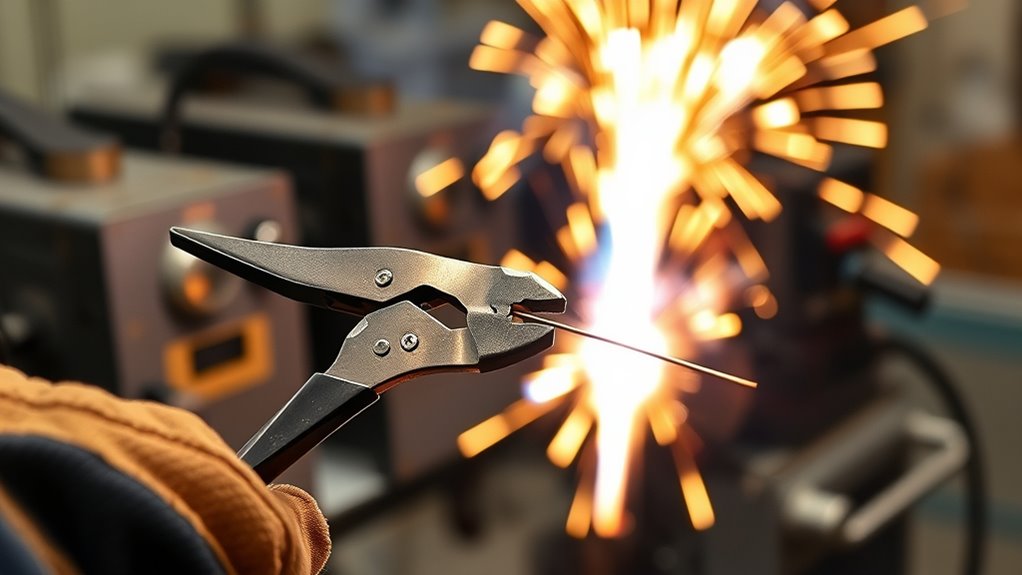
Using welding pliers for wire handling can make your MIG welding process smoother. The cutters help you trim wire cleanly, while the jaws help you guide and grip parts.
Precise wire cutting helps you keep the wire stickout in a workable range. The needle nose jaws also help you control wire without bending it too sharply.
Nozzle handling becomes easier because the pliers include built-in gripping and cleaning features. These features support consistent arc starts and faster torch maintenance. Using proper welding settings can also improve the quality of your welds.
Precise Wire Cutting Techniques
When you cut wire for MIG welding, the right length matters. Welding pliers with inline cutters make this step fast and simple.
Precise wire cutting can help you with these common needs:
- Workable Length: Keep the wire stickout near your machine and wire setup.
- Clean Cuts: Use sharp cutters to reduce crushed or uneven wire ends.
- Better Feeding: Avoid wire kinks that can affect feeding and arc stability.
Regular use of MIG welding pliers can support smoother arc starts. It can also help you get better penetration and cleaner welds when your settings match the work.
Efficient Nozzle Handling Methods
Efficient handling of MIG welding nozzles helps you protect weld quality and performance.
Welding pliers help you remove and install nozzles on the MIG gun with a firmer grip. The serrated surface improves control, so you can twist or pull without damaging the nozzle.
Use the built-in cutting edges for precise trimming of the wire electrode. Many welders use a stickout near 1/4 inch to 1/2 inch, but your setup may need a different length. The needle nose jaws also help clean spatter buildup and protect shielding gas flow.
Regular use of welding pliers for contact tips and nozzles makes torch care faster. It also helps you stay focused during welding tasks.
Unique Features of MIG Pliers: Hammering and More
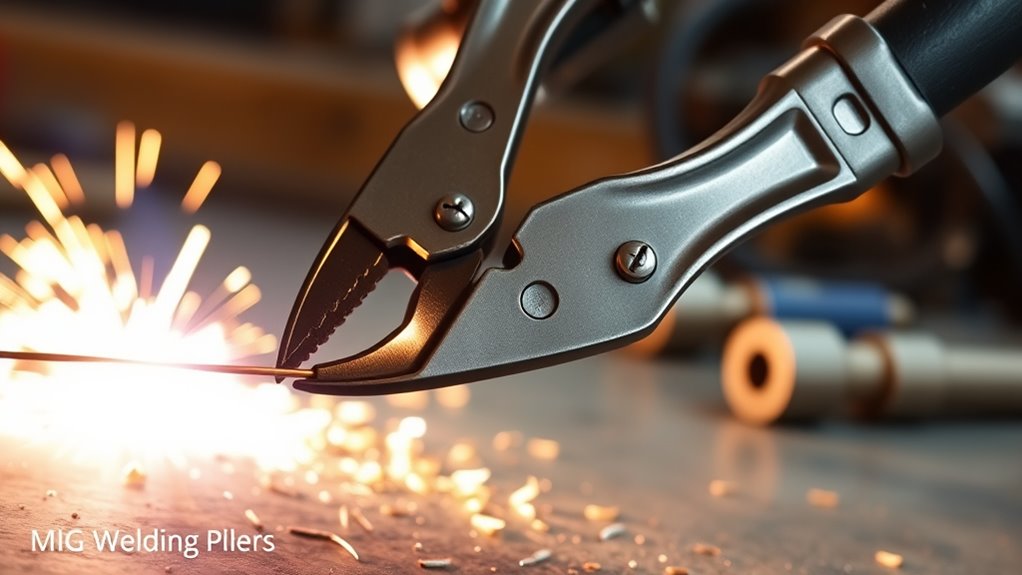
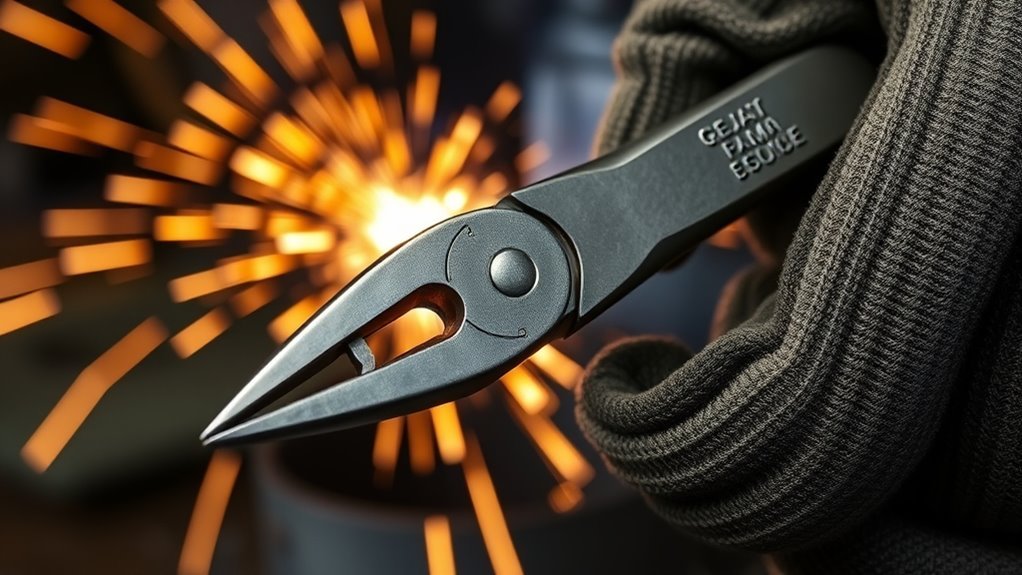
MIG pliers stand out because many models include a small hammerhead design. You can use it for light tapping, small realignment tasks, or knocking away loose scale. Avoid using the hammerhead for heavy striking, since that can damage the tool.
Common MIG pliers features include:
- Hammering Capability: Use it for light tapping and minor part adjustment.
- Tapered Tip: Scrape spatter and slag in tight nozzle areas.
- Ergonomic Design: Improve control during repeated cutting and gripping tasks.
These multi-functional capabilities reduce the need to switch tools during short maintenance tasks. They can also help when you work with metals that need careful setup and clean torch handling. Some materials, such as stainless steel and aluminum, may need extra care because weld quality depends on clean preparation and stable settings.
When you use these features well, you can work with more control and fewer interruptions. That helps you focus on the weld instead of stopping for small tool changes.
Staying Safe While Using Welding Pliers
Using MIG pliers safely matters because welding creates heat, sparks, sharp wire, and fumes. Treat the pliers as both a helpful tool and a possible hazard.
Warning: Always let hot torch parts cool before you grip them, or use proper welding gloves when heat remains.
Wear personal protective equipment (PPE), including welding gloves and safety goggles or a proper welding helmet. PPE helps protect you from sparks, hot metal, sharp wire ends, and flying debris.
Keep a firm grip on the welding pliers while you work. A slip can cause cuts, burns, or damaged torch parts when you handle hot or sharp components.
Inspect your pliers often for dull cutters, loose joints, worn grips, or cracked handles. Damaged pliers can reduce control and increase risk. Keep your work area clear so you can move safely while using welding pliers. Make sure your protective clothing is flame-resistant for better protection.
How to Choose Good MIG Pliers
Good MIG pliers should feel solid in your hand and close smoothly without wobble. Look for sharp cutters, strong jaws, and a grip that stays secure when your gloves feel dusty or sweaty.
Choose pliers that match the tasks you do most often. If you clean nozzles often, a strong pointed nose and serrated jaws matter. If you trim wire all day, focus on durable cutters and comfortable handles.
Pro tip: Keep one clean pair near your MIG station so you don’t use general shop pliers on torch parts.
Products Worth Considering
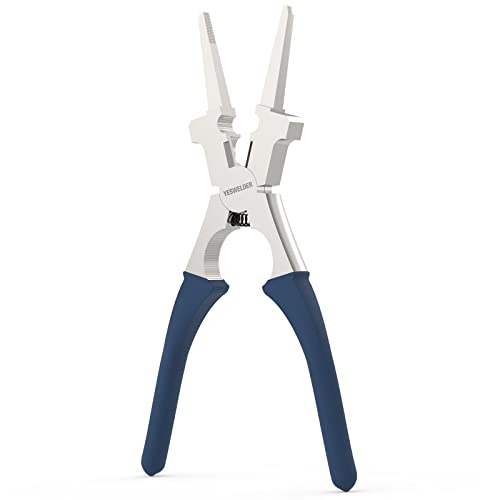
MULTI-FUNCTIONALITY: The welding pliers are meticulously designed for welders who demand precision and efficiency. Perfect for Wire Cutting, Gripping, Tip Removal & Installation, Nozzle Removal & Installation, Inside & Outside Spatter Cleaning, Grooved Tips for Drawing Wire, Hammering and more, this essential tool has you covered.

MULTI-FUNCTIONALITY: The welding pliers are meticulously designed for welders who demand precision and efficiency. Perfect for Wire Cutting, Gripping, Tip Removal & Installation, Nozzle Removal & Installation, Inside & Outside Spatter Cleaning, Grooved Tips for Drawing Wire, Hammering and more, this essential tool has you covered.
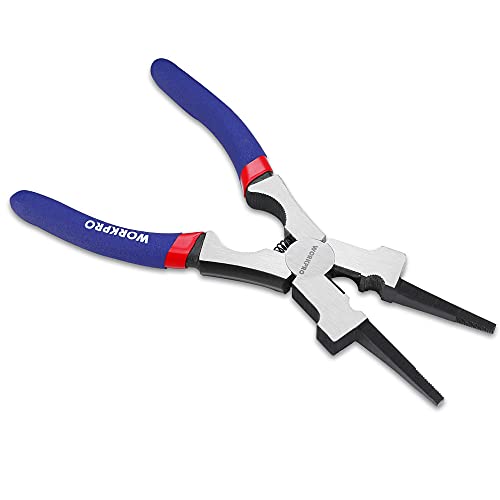
High quality CR-V steel material makes it durable and long lasting
Frequently Asked Questions
What Are MIG Welding Pliers Used For?
MIG pliers help you cut wire, remove nozzles, install contact tips, and clean spatter. They also help you grip small torch parts without switching between several tools. For best results, keep the cutters sharp and inspect the jaws often.
Why Do Welders Face Health and Safety Risks?
Welders can face risks from fumes, heat, ultraviolet (UV) radiation, noise, and sharp metal. Good ventilation, correct PPE, and safe work habits help reduce those risks. If you weld often, follow your workplace safety rules and ask a qualified safety professional about exposure control.
Are MIG Pliers and Welding Pliers the Same?
MIG pliers are a type of welding plier made for MIG torch tasks. General welding pliers may grip, bend, or cut metal, but they may not include nozzle and contact-tip features. Choose MIG pliers when you need a tool for MIG gun maintenance.
What Tools Are Used for MIG Welding?
Common MIG welding tools include a MIG welder, MIG gun, welding wire, shielding gas, contact tips, nozzles, clamps, and a wire brush. You also need safety gear, such as a welding helmet, gloves, jacket, and eye protection. MIG pliers help with wire trimming and torch maintenance during the job.
How Often Should You Clean a MIG Nozzle?
Clean the nozzle whenever you see spatter buildup or notice poor gas coverage. Many welders check the nozzle every few welds during regular shop work. Heavy spatter, dirty metal, or long weld runs may require more frequent cleaning.
Safety Disclaimer: This article is for informational purposes only and does not replace professional welding training or workplace safety guidance. Always follow your equipment manual, local safety rules, and guidance from a qualified welding instructor or safety professional.
Conclusion
MIG pliers matter because they keep your wire, nozzle, and contact tip work simple and controlled. Use them to trim wire, clean spatter, remove nozzles, and handle small torch-care tasks with less tool switching. Choose a strong pair, inspect it often, and wear proper protective gear every time you weld. With better tool habits, your welding work can feel safer, cleaner, and more consistent.