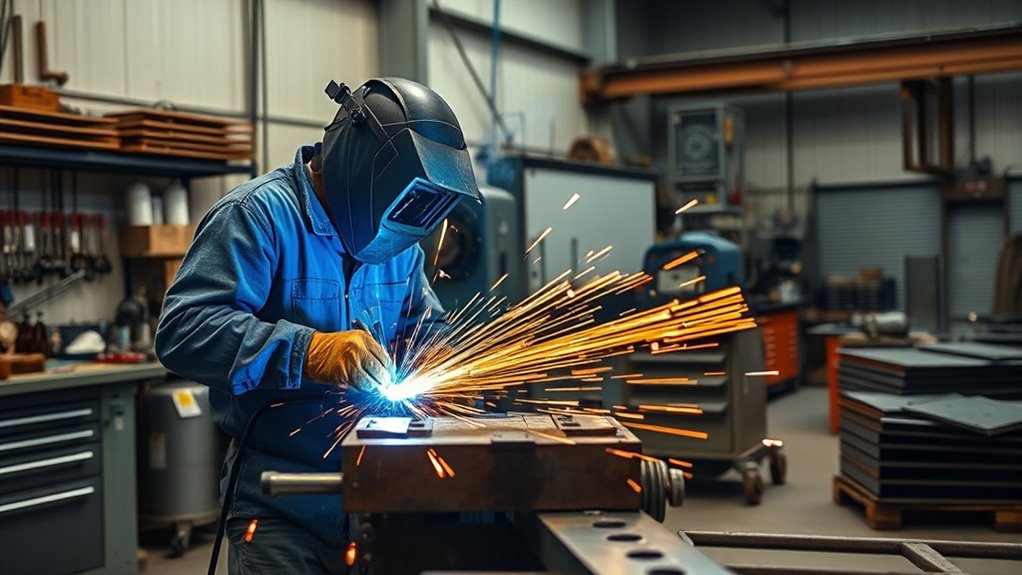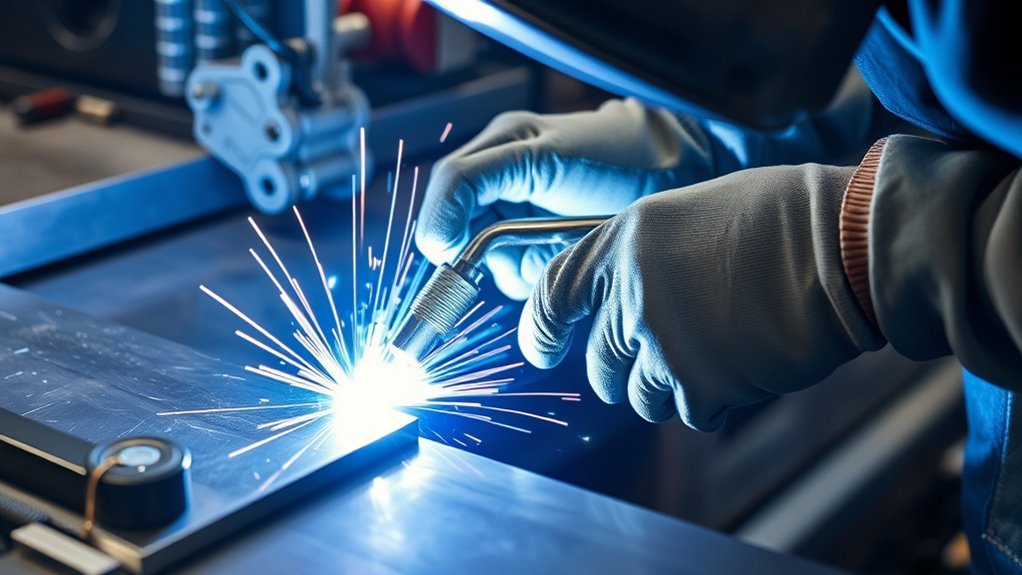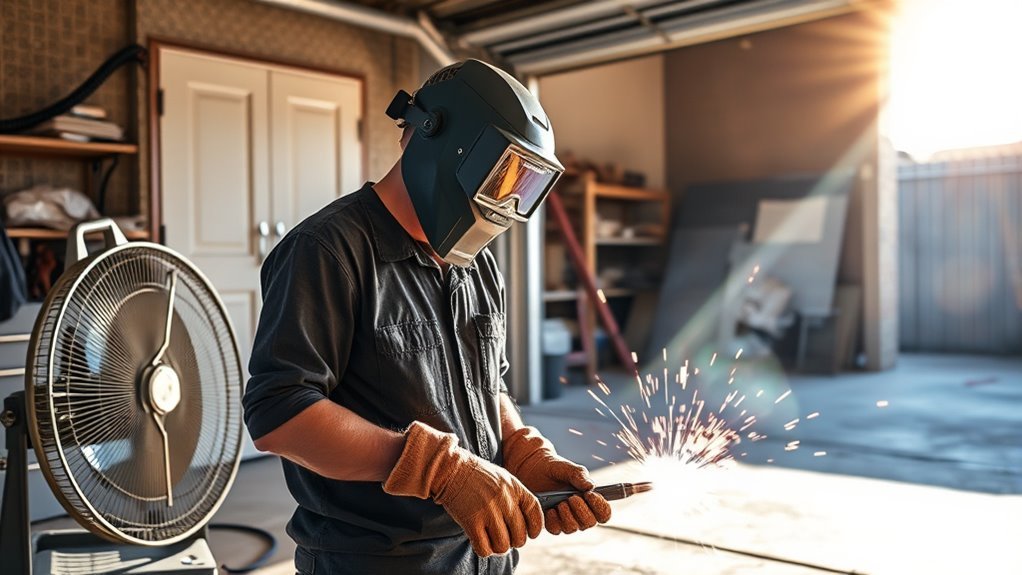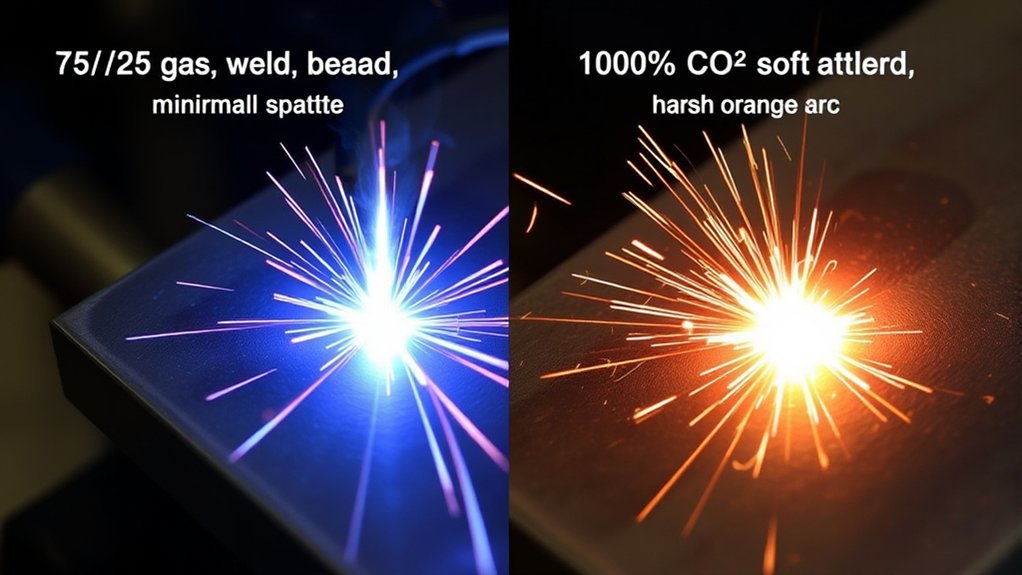
Choosing between 75/25 gas and 100% CO2 for MIG welding depends on the metal thickness, the finish you want, your welder’s supported gas programs, and the total cost of cleanup. For most hobby and light-fabrication work on mild steel, C25 is the easier all-around choice. Straight CO2 can be economical and useful on thicker steel, but it needs compatible gas equipment and careful tuning.
Quick Answer
Choose 75/25 argon/CO2, or C25, for a smoother arc, less spatter, easier control, and cleaner-looking mild-steel welds. Choose 100% CO2 when lower gas cost and deeper penetration matter more than appearance. Before switching, confirm that your welder, wire, regulator or flowmeter, and cylinder connection are approved for CO2.
Key Takeaways
- C25 is the best general-purpose choice for short-circuit MIG welding on thin to medium mild steel.
- 100% CO2 usually produces deeper penetration, but it also creates more spatter and a rougher bead than C25.
- Gas price is only part of the cost. Grinding, nozzle cleaning, consumables, and rework can reduce CO2’s savings.
- Do not assume the same regulator fits both gases. Follow the welder and regulator manufacturer’s instructions for CO2 service.
- Neither C25 nor straight CO2 is the usual first choice for true spray transfer. An argon-richer blend such as 90/10 is commonly used when the machine and wire support spray transfer.
Why Choose CO2 or C25 for MIG Welding?
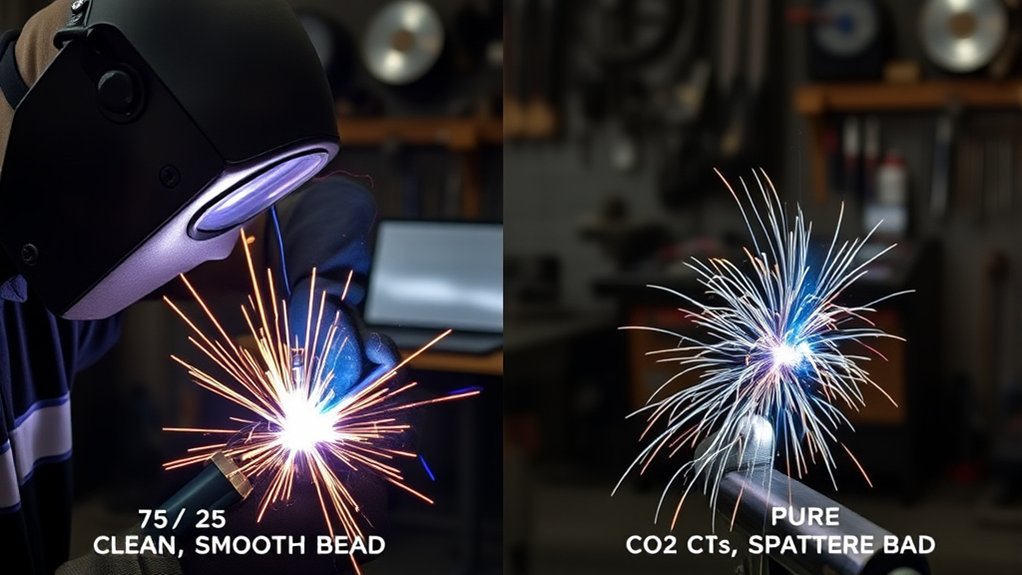
Shielding gas changes how the arc starts and transfers metal, how the puddle wets into the joint, how much spatter forms, and how the finished bead looks. Both C25 and CO2 shield the molten weld from air, but they do not produce the same arc behavior.
C25 is 75% argon and 25% carbon dioxide. It is widely used for solid-wire MIG welding on mild steel because it gives stable arc characteristics, low spatter, and a bead that wets well at the toes. Miller describes C25 as a common mild-steel gas with good arc characteristics and bead profile in its current MIG shielding-gas guide.
100% CO2, also called C100, is a lower-cost alternative in many areas. On mild steel it can produce deeper penetration, but it normally creates more spatter, a rougher bead, and a less stable-feeling arc than C25. Modern machines with a dedicated C100 program can run straight CO2 better than older basic machines, so check your welder’s setup chart rather than copying settings from another model.
This comparison applies to solid-wire GMAW on carbon or mild steel. Stainless steel and aluminum require different wire-and-gas combinations. Straight argon is common for aluminum MIG, while stainless-steel MIG often uses a low-CO2 argon blend or a trimix specified by the machine and filler-wire manufacturer.
CO2 vs C25: Quick Comparison
| Factor | 75/25 Argon/CO2 (C25) | 100% CO2 (C100) |
| Best use | Thin to medium mild steel, beginner practice, auto body work, and visible welds | Thicker mild steel, budget-focused fabrication, and repair work where cleanup is acceptable |
| Arc feel | Smoother and more forgiving | More active and more sensitive to setup |
| Spatter | Lower spatter and less cleanup | More spatter and faster nozzle buildup |
| Penetration | Controlled penetration for thin to medium steel | Generally deeper penetration, with more burn-through risk on thin sheet |
| Bead appearance | Flatter, smoother, and easier to blend at the toes | Often rougher or more crowned if the settings are not tuned |
| Common transfer range | Commonly used for short-circuit transfer; not the usual gas for true spray transfer | Short-circuit and globular behavior; not a normal spray-transfer gas |
| Gas equipment | Uses an argon/mixed-gas cylinder connection and compatible regulator or flowmeter | May require a CO2-specific regulator, flowmeter, washer, or adapter |
| Gas cost | Usually higher because the blend contains argon | Usually lower, depending on cylinder size and local supplier pricing |
Cost Comparison: CO2 vs. C25
CO2 usually wins on refill price, but the cheapest gas is not always the lowest-cost welding choice. Your total cost includes the cylinder, ownership or lease fees, exchanges, regulator hardware, wasted gas, consumables, grinding time, and any rework caused by poor settings.
Products Worth Considering

CGA580 Inlet Connection: Welding gas regulators connects easily to argon and Co2 tanks, note that a CGA-320 adapter is required for use with Co2 cylinders. This product comes standard with the CGA-580 connector only

Argon/CO2 Regulator with Flowmeter: Designed for MIG and TIG welding with argon, CO2, and argon/CO2 mixed gas tanks; CGA-580 inlet fits standard gas cylinders
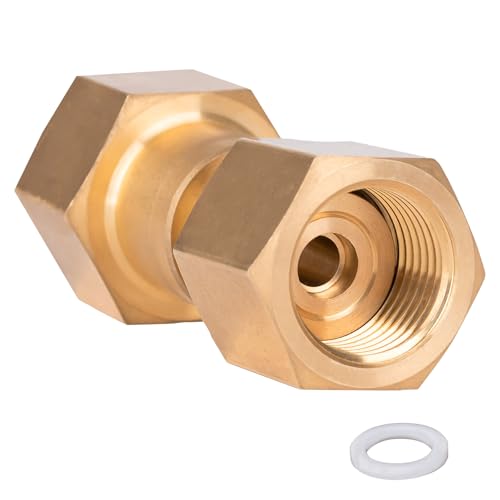
Compatible Design: CGA-320 to CGA-580 adapter designed to connect a CO₂ cylinder to compatible gas regulators, flow meters, or welding equipment. Commonly used in CO₂ or mixed-gas welding setups for MIG and related applications, such as connecting a CO₂ cylinder to an argon regulator
Initial Purchase and Cylinder Costs
Argon is separated from air, while industrial CO2 is commonly recovered from other processes. That helps explain why straight CO2 generally costs less than an argon-rich blend. Local prices can still vary widely, so compare equivalent cylinder capacity and the same ownership or exchange terms.
Before buying or exchanging a cylinder, ask your welding-gas supplier:
- Do they fill customer-owned cylinders, exchange them, or require a lease?
- Is the cylinder within its required test period and accepted by that supplier?
- What is the refill or exchange price for a comparable amount of usable gas?
- Does your setup need a CO2-specific regulator, adapter, sealing washer, or heater for the planned flow and duty cycle?
Note: Do not compare a small C25 cylinder with a larger CO2 cylinder and treat the refill prices as a fair test. Match usable capacity, exchange policy, regulator cost, and expected flow before deciding which gas is cheaper.
Operating Cost Analysis
For a compressed-gas cylinder rated in cubic feet, a rough runtime estimate is:
Approximate shielding-gas runtime = usable cylinder volume ÷ flow rate.
For example, a cylinder rated for 80 cubic feet of usable gas would provide about four hours of trigger-on gas flow at 20 cubic feet per hour under ideal conditions. Actual service time is lower when leaks, purge time, pre-flow, post-flow, and frequent starts are included. CO2 cylinders are commonly labeled by pounds of product rather than the same cubic-foot convention used for mixed-gas cylinders, so use the supplier’s usable-gas figure instead of comparing label numbers directly.
CO2 may save money when you weld a large amount of thicker steel and do not need a cosmetic finish. C25 may be cheaper overall when lower spatter reduces grinding, nozzle cleaning, contact-tip damage, and rework.
Will Your Welder and Regulator Work With CO2?
Do not treat a switch from C25 to CO2 as only a cylinder change. Check the complete gas and electrical setup before opening the valve.
- Welder program: Confirm that the machine’s manual or setup chart allows C100 with your wire diameter and metal thickness. Some newer machines include separate C25 and C100 programs.
- Regulator or flowmeter: Use equipment approved by its manufacturer for straight CO2. Some welder manuals specifically warn not to use the supplied argon/mixed-gas regulator with CO2.
- Cylinder fitting: A CO2 cylinder may need a different connection, adapter, or sealing washer. Use only listed parts from the equipment or gas supplier.
- Polarity: Solid steel MIG wire normally runs DC electrode positive, also called DCEP or reverse polarity. Confirm the diagram inside your machine.
- Wire classification: Check the wire label or data sheet to make sure the filler metal is approved for C25, C100, or both.
- Material: Do not apply this mild-steel gas comparison to aluminum or stainless steel without checking the correct wire and shielding-gas specification.
Warning: Never force mismatched cylinder fittings or improvise gas adapters. Secure the cylinder upright to a cart, wall, or other stationary support, and follow the cylinder, regulator, and welder instructions.
Products Worth Considering

APPLICATION: The ARCCAPTAIN gas pressure regulator can be used with argon, helium, and carbon dioxide gas tanks.

WIDE APPLICATION: It easily connects to Argon, Helium, and Argon/CO₂ mixed gas tanks via the CGA-580 inlet nut. No additional adapters are required. Featuring superior airtight and leak-proof performance, it achieves stable and sealed gas supply with minimal gas loss. This regulator is ideal for MIG/TIG welding, chemical processing, general industrial use, and electronics industry applications.

APPLICATION: The ARCCAPTAIN gas pressure regulator can be used with argon, helium, and carbon dioxide gas tanks.
How Gas Selection Affects Weld Quality and Appearance
Shielding gas affects the puddle, bead profile, spatter, penetration pattern, and the range of settings that produces a stable arc. C25 is usually the easier choice when appearance and control matter. CO2 can work well when deeper penetration and gas price matter more.
Penetration Depth Differences
100% CO2 generally provides deeper penetration than C25 on mild steel when both processes are set correctly. That can help on thicker plate, brackets, frames, and repair work. It does not replace correct joint preparation, adequate amperage, proper fusion, or a qualified welding procedure where one is required.
C25 gives more controlled arc behavior on thin material and is less likely to promote burn-through when the machine is set correctly. It is usually the better choice for auto body panels, light tubing, small projects, and clean shop fabrication.
Spatter Levels Comparison
CO2 normally produces more spatter than C25. That spatter can stick to the workpiece, collect inside the nozzle, disturb gas coverage, and add grinding time.
C25 usually produces less spatter and a smoother arc. This is one reason it is easier for beginners to see and control the puddle. Low spatter still depends on clean metal, stable wire feeding, sound work-clamp contact, correct voltage and wire speed, and a consistent contact-tip-to-work distance.
Bead Appearance Quality
C25 usually produces a smoother bead that wets into the toes more easily. This helps on visible welds and parts that will receive only light finishing.
CO2 can make sound welds, but the bead may look rougher or more crowned if the settings are not matched to the gas. Judge the weld by fusion, bead shape, tie-in, undercut, porosity, and the requirements of the joint—not appearance alone.
What Spatter Levels Should You Expect With Each Gas?
With C25, expect relatively low spatter when voltage, wire speed, travel speed, gun angle, and stickout are balanced. Dirty steel, poor grounding, excessive wire speed, low voltage, worn consumables, or a blocked nozzle can still create heavy spatter.
With 100% CO2, expect more spatter even when the weld is tuned well. Reduce it by cleaning the base metal, keeping a steady stickout, using the welder’s C100 chart or program, and adjusting voltage and wire speed in small coordinated steps. A welding settings chart can provide a starting range, but your machine’s door chart and wire manufacturer’s data take priority.
If the weld must look clean with little grinding, C25 is usually worth the higher refill price. If the work is thicker, hidden, and cost-driven, CO2 can be practical when the equipment and settings are correct.
How Transfer Mode Changes the Gas Choice
Gas choice also affects the way molten wire crosses the arc. This matters because the same machine can behave very differently as voltage, amperage, wire size, and gas composition change.
- Short-circuit transfer: Common for thin material and all-position work. Both C25 and CO2 can be used when the machine and wire support them, but C25 normally runs smoother and with less spatter.
- Globular transfer: Large, irregular droplets cross the arc and create more spatter. This behavior is commonly associated with straight CO2 at higher settings.
- Spray transfer: True spray transfer normally needs an argon-rich shielding gas and enough current. Miller lists 90% argon/10% CO2 as an option for spray transfer on thicker plate. C25 contains only 75% argon, and straight CO2 is not a normal spray-transfer gas.
- Pulsed spray: Use the gas blend, wire, and program specified by the machine manufacturer. Do not assume a C25 short-circuit setup will work correctly in a pulsed program.
Note: If your goal is spray transfer rather than ordinary hobby short-circuit welding, choose the gas from the welder and filler-wire data sheet. The correct choice may be C10 or another argon-rich blend instead of either gas compared here.
How CO2 Changes Your Welding Techniques
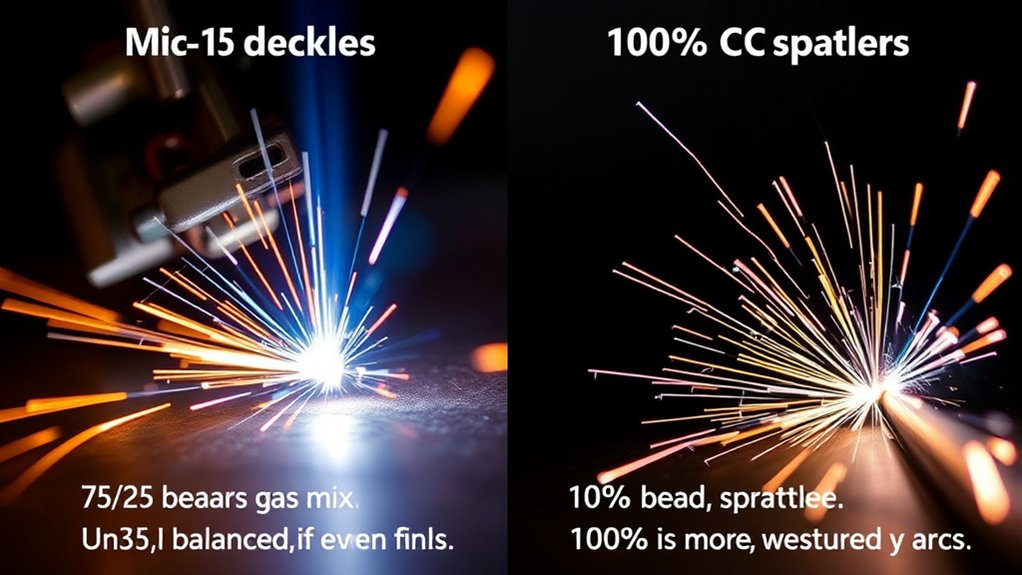
Switching from C25 to CO2 usually requires a new setup. CO2 changes arc behavior, penetration, spatter, and the voltage-to-wire-speed balance.
- Start with the machine chart. Select the C100 program or the manufacturer’s CO2 starting values for the wire size and metal thickness.
- Adjust voltage and wire speed together. Make one small change at a time and test on scrap that matches the joint material and thickness.
- Hold a consistent stickout. Excessive contact-tip-to-work distance can make the arc unstable, reduce penetration, and weaken shielding.
- Control travel speed. Moving too slowly can overheat thin steel. Moving too fast can cause poor tie-in, undercut, or lack of fusion.
- Clean the nozzle more often. CO2 spatter can block gas flow and create porosity.
- Watch the bead, not only the sound. Confirm wetting at both toes, adequate fusion, and no visible porosity or undercut.
- Record the final setup. Save the gas, wire size, thickness, voltage, wire speed, and flow so you can repeat the result.
Pro Tip: Write down your working C25 settings before changing gases. Tune CO2 on matching scrap, then keep a separate C100 setup note for each wire size and material thickness.
Troubleshooting CO2 and C25 MIG Welds
| Symptom | Likely causes | What to check |
| Heavy spatter | CO2 arc behavior, poor voltage/wire-speed balance, long stickout, dirty metal, or worn tip | Use the correct gas program, clean the joint, shorten and steady the stickout, and retune in small steps |
| Porosity | Leaks, drafts, blocked nozzle, dirty metal, too little flow, or turbulence from excessive flow | Leak-test the hose, clean the nozzle and metal, block drafts, and set flow from the manual |
| Burn-through | Too much heat for the sheet, slow travel, wide gap, or CO2 on very thin metal | Use the thin-metal chart, reduce heat in a balanced way, shorten weld time, improve fit-up, or switch to C25 |
| Tall or ropey bead | Low voltage, fast travel, poor work angle, or weak toe wetting | Check the chart, correct the gun angle, and retune voltage and wire speed together |
| Erratic arc | Wrong gas mode, poor work-clamp contact, wire-feed drag, damaged liner, or incorrect tip | Confirm the gas selection, clean the clamp area, and inspect the drive rolls, liner, and contact tip |
| Regulator frost or falling flow | CO2 expansion, high continuous demand, or equipment not designed for the service | Stop welding and follow the regulator manufacturer’s instructions; use a CO2-rated regulator or approved heater when specified |
Which Gas Is Better for Your Project?
Pick the gas for the material, joint, machine, and finish—not only the refill price.
- Choose C25 for thin sheet metal: It is easier to control and less likely to promote burn-through when the setup is correct.
- Choose C25 for beginner practice: The smoother arc makes the puddle easier to see and control.
- Choose C25 for visible welds: It normally leaves a cleaner bead with less spatter.
- Choose CO2 for thicker mild steel: It can provide deeper penetration and lower gas cost.
- Choose CO2 for rough repair or production work: It can make sense where cleanup is acceptable and the machine has a stable C100 setup.
- Do not use 100% argon as a substitute for C25 on mild-steel solid-wire MIG: Straight argon is normally selected for nonferrous metals such as aluminum, not carbon-steel GMAW.
- Use another blend for spray transfer: Follow the welder and wire data; a 90/10 argon/CO2 blend is a common option for spray transfer on carbon steel.
Gas Flow and Shielding Checks
A common starting range for indoor mild-steel MIG is about 20 to 25 cubic feet per hour, but the correct setting depends on the nozzle, joint, amperage, gas, transfer mode, and air movement. Your welder and wire instructions control. More flow is not automatically better because excessive flow can create turbulence and draw air into the shielding envelope.
Use these checks before blaming the gas:
- Listen and test for leaks at the regulator, hose, solenoid, and gun connection.
- Keep the nozzle clean and close enough to shield the puddle.
- Block fans, open doors, and wind across the weld.
- Use clean, dry metal and clean wire.
- Confirm solid wire is on the polarity specified by the manufacturer, normally DCEP.
- Make a test bead after every cylinder or gas-type change.
- Do not raise flow simply to overcome a major draft; shield the work area or use a process intended for outdoor conditions.
Safety Notes for MIG Shielding Gases
Warning: Argon and carbon dioxide can displace oxygen. Never weld in a tank, pit, pipe, trailer, or other confined or low area without the required training, ventilation, atmospheric testing, entry controls, and rescue plan.
MIG welding produces fumes, gases, ultraviolet radiation, sparks, and hot metal. OSHA explains that welding exposure depends on the process, base and filler metals, coatings, work location, ventilation, and work practices. Its welding fume and gas fact sheet also warns that argon and CO2 can displace oxygen in confined or enclosed spaces.
Use a welding helmet with the correct shade, safety glasses, leather gloves, flame-resistant clothing, and hearing protection when needed. Provide effective ventilation or local exhaust, remove flammable materials, keep a suitable fire extinguisher nearby, and do not weld on an unknown container or tank.
OSHA requires adequate ventilation for welding in confined spaces and states that oxygen must never be used for ventilation. Review the applicable requirements in 29 CFR 1910.252 before confined-space work.
Inert-gas hazards can become deadly without warning because the gas may be colorless and odorless. A NIOSH argon asphyxiation case report documents a fatal oxygen-displacement incident during welding-related work in a pipe.
Community Preferences: Practical CO2 and C25 Usage
C25 remains the practical default for many garage and light-fabrication jobs because it is easy to set up, produces little spatter, and gives a clean bead on mild steel. It fits auto body work, furniture, carts, gates, tubing, and beginner practice.
CO2 remains useful for welders who work mainly on thicker carbon steel, have a machine with a stable C100 program, and value lower gas cost more than appearance. It is also reasonable when the bead will be ground, painted, or hidden.
The best choice is therefore not a universal winner. Start with C25 when control and finish matter. Test CO2 on matching scrap when penetration, operating cost, and production needs justify the added tuning and cleanup.
Frequently Asked Questions
What is a disadvantage of using 100% CO2 as a shielding gas?
The main disadvantages are more spatter, a rougher bead, a more active arc, extra cleanup, and a greater risk of burn-through on thin steel. CO2 can still make sound welds, but it normally needs more tuning than C25.
Is 75/25 gas better than 100% CO2 for MIG welding?
For most hobby and light-fabrication work on mild steel, C25 is the better all-around choice because it is easier to control, produces less spatter, and leaves a cleaner bead. CO2 is better when lower gas cost and deeper penetration matter more than appearance.
Can you use 100% CO2 for MIG welding?
Yes. You can use welding-grade CO2 for solid-wire MIG on mild steel when the welder, wire, cylinder connection, regulator, polarity, and settings are compatible. Check the machine manual before changing from C25.
Do you need a different regulator for 100% CO2?
Possibly. Some regulators and flowmeters are rated for both mixed gas and CO2, while some welder manuals require a CO2-specific regulator or approved adapter. Use only equipment listed for straight CO2 by the regulator and welder manufacturer.
Can C25 or 100% CO2 be used for spray transfer?
Straight CO2 is not a normal spray-transfer gas, and C25 is usually used for short-circuit work rather than true spray transfer. For carbon-steel spray transfer, use the argon-rich blend specified by the machine and wire manufacturer; 90% argon and 10% CO2 is one common option.
Is 75 argon 25 CO2 better than 100% argon for mild-steel MIG?
Yes. For mild-steel MIG with solid wire, C25 is normally a much better choice than straight argon. Pure argon is commonly used for aluminum and other nonferrous applications, while carbon-steel GMAW needs an active-gas component for suitable arc and bead behavior.
Is CO2 good for auto body welding?
CO2 can weld thin steel, but C25 is usually the better choice for auto body panels. It is easier to control and helps reduce spatter and burn-through when the welder is set correctly.
Does CO2 make MIG welds stronger?
Not automatically. CO2 can increase penetration, but weld strength still depends on the joint design, base metal, filler wire, preparation, settings, technique, fusion, and any code or procedure requirements.
Do MIG welding fumes change when using CO2 instead of C25?
They can. Shielding gas can affect fume generation, but exposure also depends on the wire, base metal, coatings, voltage, amperage, transfer mode, ventilation, and work practices. Use effective ventilation and the respiratory protection required for the job.
Conclusion
For most mild-steel MIG welding, 75/25 gas is the better all-around choice because it produces a smoother arc, less spatter, and a cleaner bead. It is especially useful for beginners, thin steel, auto body work, light fabrication, and projects where the finished weld will remain visible.
100% CO2 is still a useful shielding gas when lower refill cost and deeper penetration matter more than appearance. Plan for more spatter and more tuning, and confirm that the welder, wire, regulator, and cylinder connection support C100. When uncertain, start with C25 and test CO2 later on clean scrap that matches the real joint.
Sources
- Miller: What Type of Gas Is Best for MIG Welding in DIY Applications? — C25, C100, C10, material compatibility, arc behavior, and transfer-mode guidance.
- Miller: Understanding the Basics of MIG Welding for Mild Steel — polarity, gas-flow starting range, wire selection, penetration, spatter, and bead appearance.
- Miller Owner’s Manual OM-1327 — cylinder restraint, typical flow, DCEP for solid wire, and model-specific CO2 regulator warning.
- ESAB: MIG Welding Guide — transfer modes, common defects, spatter, porosity, and parameter troubleshooting.
- OSHA: Controlling Hazardous Fume and Gases During Welding — fume factors, oxygen displacement, ventilation, and respiratory hazards.
- NIOSH FACE Report 94AK012 — fatal argon oxygen-displacement incident in a confined space.