Disclosure: As an Amazon Associate, we earn from qualifying purchases. If you click a link on this page and make a purchase, we may receive a small commission at no extra cost to you.
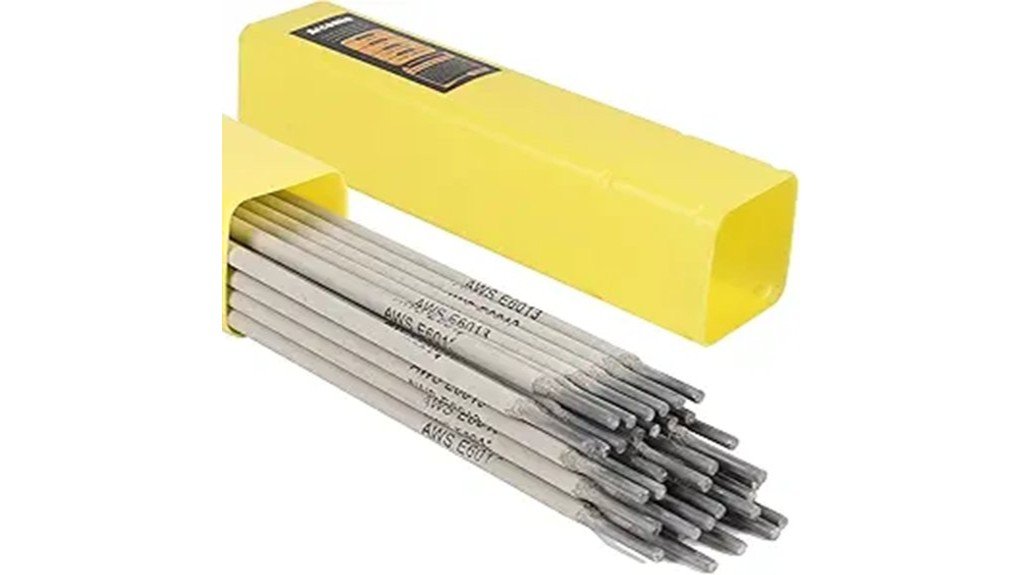
Stick welding rods can be frustrating when the arc is hard to start, the slag sticks, or the weld leaves too much spatter to clean up. The E6013 3/32" Welding Rods are designed for easier arc starts, smoother beads, and general carbon steel repair work. This review helps you decide if this 2 lb pack makes sense for light fabrication, sheet metal work, pipe repairs, and multi-position welding. The main strength is ease of use, while the main limitation is that E6013 rods are not the right choice for every metal or heavy-duty welding procedure.
Quick Verdict
Rating: 8/10, Recommended with caveats
Best For: Beginners, home repair users, and welders who need a 3/32" E6013 rod for carbon steel projects.
Bottom Line: These rods are a practical pick when you want easy arc starts, low spatter, and cleaner slag removal on light carbon steel work. Skip them if you need rods for aluminum, stainless steel, deep-penetration work, or a code-specific welding procedure.
| Specification | Detail |
|---|---|
| Product type | Carbon steel stick welding electrodes |
| Electrode classification | E6013 |
| Rod diameter | 3/32" (2.5 mm) |
| Package size | 2 lb package |
| Compatible machines | AC and DC stick welding machines, including low-voltage setups noted in the source article |
| Welding positions | Flat, vertical, overhead, and horizontal |
| Best use | Light fabrication, sheet metal work, carbon steel repairs, pipe repairs, and general structural welding tasks where E6013 is appropriate |
| Flux design | Refined flux coating for easier arc starts, reduced spatter, and self-releasing slag |
| Penetration profile | Shallow penetration, useful for cleaner welds and some poorly fitted joints |
| Storage note | Moisture-resistant construction for long-term storage when kept dry |
What Are the E6013 3/32" Welding Rods?
The E6013 3/32" Welding Rods are carbon steel stick electrodes made for general-purpose welding. They use a 3/32" diameter, also listed as 2.5 mm, which makes them a manageable size for lighter repairs and everyday shop work.
The article-supported feature set focuses on easy arc initiation, minimal spatter, and self-releasing slag. Those traits matter because you spend less time fighting arc starts and cleanup, especially when you are still building consistency with stick welding.
These rods are meant for carbon steel applications, not aluminum. They can be used with AC or DC welding machines and support flat, vertical, overhead, and horizontal positions when your machine settings, base metal, and welding technique are correct.
Before You Buy: These are carbon steel E6013 rods. Do not buy them for aluminum welding, stainless steel welding, or jobs that require a different electrode classification, deep penetration, or a code-approved welding procedure.
Who Should Buy It?
Best For
- Beginner stick welders who want easier arc starts and less cleanup.
- DIY users handling light fabrication, sheet metal, and carbon steel repairs.
- Welders who need a 3/32" E6013 rod that works with AC and DC machines.
Skip If
- You need rods for aluminum, stainless steel, cast iron, or specialty alloys.
- Your project requires deep penetration or a specific electrode listed in a weld procedure.
- You want a large bulk pack instead of a smaller 2 lb package.
Product Features and Benefits
Easy Arc Starts
The refined flux coating is one of the most useful features of these E6013 rods. A rod that starts more easily helps you avoid repeated sticking, rough restarts, and wasted time at the beginning of a bead.
This makes the rods especially friendly for practice work, light repair jobs, and short welds where you may need to stop and restart often. Experienced welders may also appreciate the smoother setup when moving between small jobs.
Low Spatter and Cleaner Slag Removal
The article notes minimal spatter and self-releasing slag. That combination can make your workspace easier to manage and reduce the amount of chipping and brushing needed after each pass.
Cleaner slag release does not remove the need for inspection or cleanup. You should still chip, brush, and check each weld before adding another pass or putting the finished part into use.
3/32" Size for Light Fabrication
The 3/32" diameter gives these rods a practical size for lighter carbon steel work. It is a common choice when you want more control than a larger rod may provide on thinner material.
You still need to match your amperage to the rod, base metal, position, and machine instructions. Running too hot can create burn-through on thin metal, while running too cold can cause sticking and poor bead shape.
AC and DC Machine Compatibility
These rods are described as compatible with both AC and DC stick welding machines. That makes them easier to fit into a home garage, small shop, farm repair setup, or training environment where machine type may vary.
Compatibility does not mean every setting will work well. Start with the rod packaging and welder manual, then adjust carefully based on arc stability, bead appearance, and the thickness of the carbon steel you are welding.
Performance and Compatibility
The E6013 3/32" Welding Rods are built around usability. They support flat, vertical, overhead, and horizontal positions, giving you more flexibility when the part cannot be placed on a bench.
The shallow penetration profile can help on light-gauge carbon steel and some poorly fitted joints where a more aggressive rod may be harder to control. The tradeoff is that shallow penetration is not always ideal for thick material, root passes, or jobs that need deeper fusion.
These rods fit common repair and fabrication tasks, including sheet metal work, pipe repairs, and general carbon steel projects. For critical structural jobs, always follow the required welding procedure, electrode specification, and inspection standard for the project.
Pro Tip: Store the rods in a dry place and close the package between uses. Even moisture-resistant rods can weld poorly if they sit in damp shop air for too long.
How It Performs in Real Use
For Beginner Practice
For practice beads on carbon steel, the easy-start arc helps reduce one of the most common beginner frustrations. You can focus more on travel speed, rod angle, and puddle control instead of constantly restarting a stuck electrode.
For Sheet Metal and Light Fabrication
The 3/32" diameter and shallow penetration profile make these rods a sensible match for lighter carbon steel projects. They can be useful for brackets, small repairs, shop fixtures, and sheet metal work when your settings are dialed in.
For Pipe Repairs and Poorly Fitted Joints
The article notes that these rods can perform well on pipe repairs and poorly fitted joints. The cleaner arc behavior and manageable penetration can help when the fit-up is not perfect, but the joint still needs proper prep and cleaning.
For Outdoor or Garage Work
These rods can be used in varied work areas, but wind, moisture, dirty steel, and poor grounding can still affect weld quality. Keep your work area safe, protect the arc when needed, and avoid welding on wet or contaminated material.
How to Use These Rods Correctly
Start by confirming that your project is carbon steel and that E6013 is an appropriate electrode for the job. Clean the base metal before welding, remove paint or rust from the weld area, and use a solid ground connection.
Set your welder according to the rod package and your machine manual. Then test on scrap metal with a similar thickness before welding the final part.
Keep your travel speed steady and watch the puddle instead of only watching the arc. After each weld, let the slag cool enough to remove safely, then chip and brush it away before judging the bead.
Compatibility and Safety
These rods are made for carbon steel stick welding. They are not suitable for aluminum welding, and they should not be used as a substitute when a project calls for another electrode type.
Welding produces heat, sparks, UV light, fumes, and hot slag. Use proper welding gloves, a welding helmet with the correct shade, protective clothing, eye protection, and ventilation. Avoid welding near flammable materials.
If you are welding a load-bearing part, vehicle component, pressure part, or anything safety-critical, get professional guidance. The right electrode, joint prep, welding procedure, and inspection process matter more than convenience.
Technical Specifications: What the Specs Mean
The E6013 classification is commonly associated with general-purpose carbon steel stick welding. In this article, the key practical details are the 3/32" diameter, 2 lb package size, AC/DC compatibility, and multi-position use.
The 3/32" rod size is a useful middle ground for many light jobs. It is small enough for control on thinner carbon steel, yet still practical for repairs and general fabrication when your welder is set correctly.
The 2 lb package makes sense for occasional use, practice, and repair kits. Heavy shop users may prefer a larger package if they weld often and already know E6013 is the right rod for their work.
Customer Reviews and Feedback
Based on the supplied article content, customer feedback focuses on easy arc initiation, reduced spatter, and smooth weld appearance. Those are the right performance areas to watch when buying a general-purpose E6013 rod.
The most useful feedback is not just that the rods weld well, but that they reduce frustration during setup and cleanup. For beginners and occasional welders, that can make a real difference in how confidently you complete small projects.
Still, user feedback should not replace your own testing. Base metal condition, amperage, rod angle, storage conditions, and welding position can all change the final result.
Pros and Cons
Pros
- 3/32" diameter is practical for light fabrication and repair work.
- Works with both AC and DC welding machines.
- Refined flux coating supports easier arc starts and lower spatter.
- Self-releasing slag can make post-weld cleanup faster.
- Supports flat, vertical, overhead, and horizontal welding positions.
Cons
- Not suitable for aluminum or other non-carbon steel materials.
- Shallow penetration is not ideal for every structural or heavy-duty job.
- Smaller 2 lb package may not be enough for frequent shop use.
Is It Worth the Price?
These rods look like a strong value for the price if you need a smaller pack of E6013 electrodes for carbon steel projects. The main value comes from easy arc starts, reduced spatter, multi-position use, and AC/DC compatibility.
They make the most sense for home repair, beginner practice, and light fabrication. You get less value if you weld every day and need bulk quantities, or if your projects require a different electrode classification.
Before buying, compare the package size against your actual workload. A 2 lb pack is convenient for occasional jobs, but frequent welders may go through it quickly.
How It Compares to Alternatives
Compared with deeper-penetrating rods such as E6010 or E6011, E6013 is usually easier to manage for clean, light-duty carbon steel work. That makes it friendlier for beginners and small repairs, but less suitable when you need aggressive penetration.
Compared with E7018, these E6013 rods are simpler for many casual users because the article emphasizes easy starts, low spatter, and moisture-resistant storage. If your project requires a specific strength rating or welding procedure, choose the rod type required by that procedure instead.
Frequently Asked Questions
Can these E6013 3/32" rods be used for aluminum welding?
No. These rods are described as carbon steel stick electrodes, so they are not the right choice for aluminum welding. Use a welding process, filler, and setup made for aluminum instead.
Do these rods work with AC and DC welders?
Yes. The article states that these rods are compatible with both AC and DC welding machines. You should still follow your welder manual and the rod package for the correct setup.
What is the 3/32" size best for?
The 3/32" size is useful for light fabrication, sheet metal work, and general carbon steel repairs. It offers good control, but you still need to match amperage and technique to the metal thickness.
Are these rods good for beginners?
Yes, they are beginner-friendly because the article highlights easy arc starts, minimal spatter, and self-releasing slag. Those features can make practice sessions less frustrating.
Can you use these rods in all welding positions?
The article states that they can be used in flat, vertical, overhead, and horizontal positions. Your results will still depend on machine settings, joint prep, rod angle, and welding skill.
How should you store these welding rods?
Keep them dry and protected from damp shop air. The article describes them as moisture-resistant, but dry storage still helps maintain more consistent welding performance.
What safety gear should you use with these rods?
Use a proper welding helmet, gloves, protective clothing, eye protection, and ventilation. Welding can expose you to sparks, hot slag, UV light, and fumes.
Who should skip these rods?
Skip them if you need rods for aluminum, stainless steel, cast iron, or a code-specific welding procedure that calls for another electrode. They are also not the best fit if you need a large bulk supply.
The Bottom Line
The E6013 3/32" Welding Rods are worth considering if you want a manageable 2 lb pack for carbon steel stick welding, light fabrication, and practice work. Their biggest strengths are easy arc starts, reduced spatter, and multi-position compatibility, while the main limitation is that they are not suitable for every material or heavy-duty welding requirement.
Buy them if you need a user-friendly E6013 rod for general carbon steel work. Skip them if your project requires aluminum compatibility, deep penetration, specialty materials, or a specific welding procedure.