Disclosure: As an Amazon Associate, we earn from qualifying purchases. If you click a link on this page and make a purchase, we may receive a small commission at no extra cost to you.
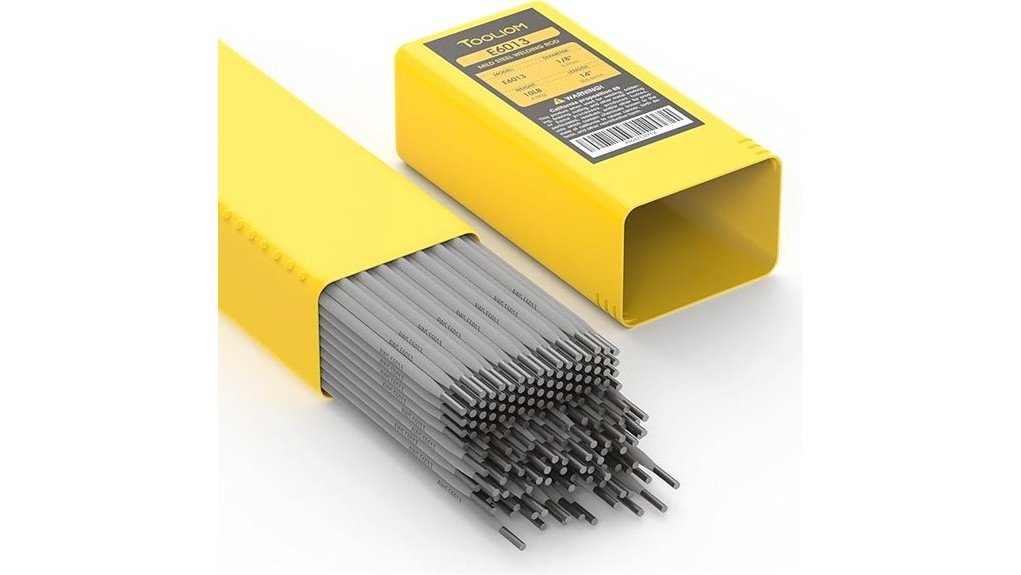
Choosing a stick welding rod is not just about grabbing the right diameter. You also need a rod that matches your base metal, amperage range, joint fit-up, and welding position. The TOOLIOM E6013 Welding Rod is a 1/8-inch, 14-inch electrode sold in a 10 lb pack, with an article-supported amperage range of 70A to 120A. It makes the most sense if you want a soft, stable arc for light fabrication, sheet metal work, repair jobs, and all-position welding. The main tradeoff is that E6013 is better for medium to shallow penetration, so it is not the best choice for every heavy structural or deep-penetration job.
Quick Verdict
Rating: 8/10
Best For: Welders who need a general-purpose E6013 rod for light to medium carbon steel work, sheet metal, brackets, repairs, and position changes.
Bottom Line: The TOOLIOM E6013 Welding Rod is a practical choice if you want a controllable arc, easy restarts, and cleaner operation with minimal smoke and spatter. Skip it if your job requires deep penetration, a code-qualified electrode, or a rod for stainless steel, aluminum, or heavy critical welds.
| Specification | Detail |
|---|---|
| Brand | TOOLIOM |
| Model / Electrode Type | E6013 welding rod |
| Product Type | Stick welding electrode |
| Diameter | 1/8 inch |
| Length | 14 inches |
| Pack Weight | 10 lb |
| Material Support | Low-carbon steel welding applications, based on the article description |
| Recommended Amperage | 70A to 120A |
| Welding Position | All-position welding |
| Penetration Style | Medium to shallow depth |
| Arc Character | Soft and stable arc |
| Best Use | Sheet metal, light repairs, brackets, non-critical pipe-style work, and intermittent welding tasks |
| Storage Note | Store in a cool, dry place away from moisture and extreme temperatures |
What Is the TOOLIOM E6013 Welding Rod?
The TOOLIOM E6013 Welding Rod is a general-purpose stick welding electrode for carbon steel work. It uses a 1/8-inch diameter and 14-inch length, which gives you a common size for many shop, repair, and fabrication jobs. The 10 lb pack is useful if you weld often enough to need more than a small starter quantity.
This rod is made for welders who want easier arc control, smooth starts, and a rod that can work in multiple positions. The article-supported 70A to 120A range gives you room to tune the heat based on metal thickness, joint fit, and your welder’s output. Because the rod is described as medium to shallow penetration, it is better suited to clean general work than heavy deep-fusion welds.
Before You Buy: Match this rod to your base metal, weld position, and project requirements before you order. E6013 is a good general-purpose rod, but it is not a universal electrode for stainless steel, aluminum, code-critical repairs, or heavy structural welds that require a qualified procedure.
Who Should Buy It?
Best For
- Welders who want a 1/8-inch E6013 rod for light to medium carbon steel projects.
- Shop users who need all-position flexibility for brackets, frames, sheet metal, and repair work.
- Beginners who want a softer, more forgiving arc for practice and basic fabrication.
Skip If
- You need a deep-penetration rod for heavy structural work or critical repairs.
- You are welding stainless steel, aluminum, cast iron, or another metal that needs a different electrode.
- Your welder cannot run the article-supported 70A to 120A range for this rod size.
Key Features of TOOLIOM E6013 Welding Rod
1/8-Inch Diameter and 14-Inch Length
The 1/8-inch diameter is a common size for stick welding, especially when you want a balance between control and deposition. It gives you enough rod size for medium work while still being manageable for sheet metal and smaller shop repairs when your machine is set correctly.
The 14-inch length also helps with general-purpose use. You get enough electrode length for steady beads without handling a rod that feels too short for routine shop welding.
70A to 120A Recommended Range
The article lists a recommended amperage range of 70A to 120A. That range gives you a clear starting window instead of forcing you to guess from scratch. Lower settings can help on thinner stock, while higher settings may suit thicker material within the rod’s intended use.
You should still test on scrap before welding the actual part. Metal thickness, joint gap, machine type, lead condition, and your travel speed can all affect the best setting.
Soft, Stable Arc
A soft, stable arc is one of the main reasons to choose this rod. It can help you keep the puddle under control, especially when you are welding short beads, tack welds, or parts that are not perfectly fitted.
This arc behavior also helps beginners because the rod feels less aggressive than a deep-digging electrode. That does not remove the need for practice, but it can make setup and bead control easier to learn.
All-Position Welding Flexibility
The TOOLIOM E6013 rod is described as suitable for all-position welding. That matters when the workpiece cannot be moved flat on a bench. You may need to weld a bracket in place, repair a small frame part, or work around a pipe, rail, or panel.
All-position capability does not mean every position is equally easy. Vertical and overhead welds still require careful amperage control, proper technique, and safe body positioning.
Minimal Smoke and Spatter
The article notes minimal smoke and spatter. This can make a real difference in a small shop because less spatter means less cleanup around the bead and less time spent grinding small BBs from nearby surfaces.
You still need proper ventilation, eye protection, gloves, and a welding helmet. Minimal smoke is not the same as no fumes, and welding should never be done in a closed or poorly ventilated area.
Applications and Use Cases
The TOOLIOM E6013 works best when you need a manageable rod for carbon steel projects that do not demand deep penetration. It can be a useful match for sheet metal, light repair work, brackets, small frames, non-critical pipe-style seams, and general workshop fabrication.
- Sheet metal work: The medium to shallow penetration style can help reduce burn-through when the rod is set correctly for thinner material.
- Brackets and shop repairs: The 1/8-inch size and stable arc make it practical for small assemblies, repairs, and intermittent welding.
- Poorly fitted joints: The article notes that the rod can handle poorly fitted joints, which helps when the workpiece is not perfectly aligned.
- Practice and skill-building: The softer arc can make this rod easier to control for welders still improving their bead consistency.
How It Performs in Real Use
For Sheet Metal and Thin Stock
On thinner carbon steel, the TOOLIOM E6013 gives you a controllable arc when you stay within the correct amperage range. The rod’s medium to shallow penetration makes it better suited to light work than rods built for aggressive digging.
For best results, use scrap pieces first and adjust your heat before welding the final part. If you see burn-through, excessive spatter, or a wide overheated bead, reduce heat or change your technique.
For General Shop Repairs
For brackets, small frames, fixtures, and everyday shop repairs, this rod gives you a practical balance of control and versatility. The 10 lb quantity also makes sense if you expect repeat use across many small projects.
The easy arc re-start capability mentioned in the article helps when you are working with short beads or stop-start repairs. That is useful for tack welds, intermittent welding, and small adjustments during fit-up.
For Position Changes
Because the rod is listed for all-position welding, it can help when you cannot place the work flat. That flexibility is useful for mounted parts, pipe-style joints, or repairs on items that are awkward to move.
For vertical or overhead use, your setup matters more. Keep your work area stable, use proper PPE, and avoid welding above yourself unless you have the skill and protection to do it safely.
For Longer Shop Sessions
Minimal smoke and spatter can make longer work sessions easier to manage. You spend less time cleaning the surrounding area and more time focusing on bead placement.
The tradeoff is storage. A 10 lb pack is useful only if you can keep the rods dry. If rods absorb moisture or show coating damage, performance can suffer.
Setup Tips Before First Use
Start within the listed 70A to 120A range and make a test bead on scrap material similar to your project. Look for a stable arc, controlled puddle, and bead profile that is not too tall, cold, wide, or overheated.
Keep the rods dry before and after opening the package. Moisture can make rods harder to run and may increase defects. Store them in a cool, dry place away from damp floors, open doors, and major temperature swings.
Pro Tip: Before welding the actual part, run two short beads on scrap at different amperage settings inside the recommended range. Choose the setting that gives you the smoothest arc and cleanest bead without overheating the metal.
Compatibility and Safety Notes
The TOOLIOM E6013 is described as a low-carbon steel rod, so treat it as a carbon steel welding electrode unless the product label says otherwise. Do not assume it is suitable for stainless steel, aluminum, cast iron, galvanized material, or pressure-rated work without proper guidance.
Wear a welding helmet, gloves, long sleeves, and proper eye and skin protection. Work with good ventilation, remove nearby flammables, and keep your workpiece stable. If the weld affects a vehicle frame, trailer, lifting point, pressure system, or load-bearing part, get professional guidance and follow the required welding procedure.
Pros and Cons
Pros
- 1/8-inch diameter and 14-inch length suit many light to medium welding jobs.
- 70A to 120A range gives you a clear setup window for compatible welders.
- Soft, stable arc helps with control, especially for short beads and practice work.
- All-position design adds flexibility when the part cannot be moved flat.
- Minimal smoke and spatter can reduce cleanup and improve shop comfort.
Cons
- Medium to shallow penetration is not ideal for every heavy-duty or critical weld.
- The 10 lb pack may be more than occasional welders need if they cannot store rods dry.
- Not the right choice for metals or applications that require a different electrode type.
Is It Worth the Price?
The TOOLIOM E6013 Welding Rod offers strong value for the price if you need a 10 lb pack of general-purpose 1/8-inch rods for repeat shop use. You get a common rod size, an article-supported 70A to 120A range, and all-position flexibility in one package.
It is a smart buy for everyday use if you weld carbon steel parts often and want a rod that is easy to control. The best value goes to welders who can store the pack properly and use the rods over time.
It is not the best fit if you only need a few rods for one small project, or if your work requires deeper penetration, a different electrode classification, or a certified welding procedure.
How It Compares to Alternatives
Compared with more aggressive stick electrodes, an E6013 rod is usually chosen for smoother operation, easier starts, and cleaner-looking beads on light to medium work. If you need deeper penetration, you may want to compare it with rods intended for that purpose before you buy.
The TOOLIOM E6013 makes the most sense when you care about arc control, all-position convenience, and general shop versatility. It is less appealing when the project calls for a specialty rod, a different base metal, or strict procedure requirements.
Frequently Asked Questions
What is the TOOLIOM E6013 Welding Rod best used for?
It is best for light to medium carbon steel work where you want a soft, stable arc and all-position flexibility. It suits sheet metal, brackets, small repairs, practice welds, and intermittent shop tasks.
What amperage should you use with this 1/8-inch E6013 rod?
The article-supported range is 70A to 120A. Start with scrap metal, then adjust within that range based on thickness, bead shape, arc stability, and how hot the metal becomes.
Can beginners use the TOOLIOM E6013 Welding Rod?
Yes, beginners may find it easier to manage because the article describes a soft, stable arc and easy arc re-starts. You still need proper PPE, scrap practice, and safe setup before welding finished parts.
Is this rod good for sheet metal?
It can work well for sheet metal when your amperage, travel speed, and joint fit are controlled. Because it is described as medium to shallow penetration, it may be easier to manage on thinner steel than a more aggressive rod.
How should you store TOOLIOM E6013 rods?
Store them in a cool, dry place away from moisture and extreme temperatures. Keep the packaging closed when possible, and do not use rods with damaged coating or signs of moisture exposure.
What is the shelf life of E6013 welding rods?
Welding rods can last for years when they are stored dry and protected from damage. Shelf life depends on storage conditions, so inspect the coating and performance before using old rods on important work.
Is this the right rod for heavy structural welding?
Not always. The article describes medium to shallow penetration, so this rod is better for general light to medium work than critical heavy welds. For load-bearing, vehicle, trailer, pressure, or code work, follow the required procedure and get qualified guidance.
Where can you buy the TOOLIOM E6013 Welding Rod?
You can check the product details through the Amazon link on this page. Review the current listing, pack size, and seller information before you buy.
The Bottom Line
The TOOLIOM E6013 Welding Rod is recommended with caveats for welders who want a 1/8-inch, 14-inch, 10 lb pack for carbon steel shop work, sheet metal, light repairs, and all-position welding. Its main strengths are arc control, easy restarts, and cleaner operation, while its main limitation is medium to shallow penetration. Skip it if your project requires a specialty electrode, deep penetration, or a qualified procedure for critical welds.