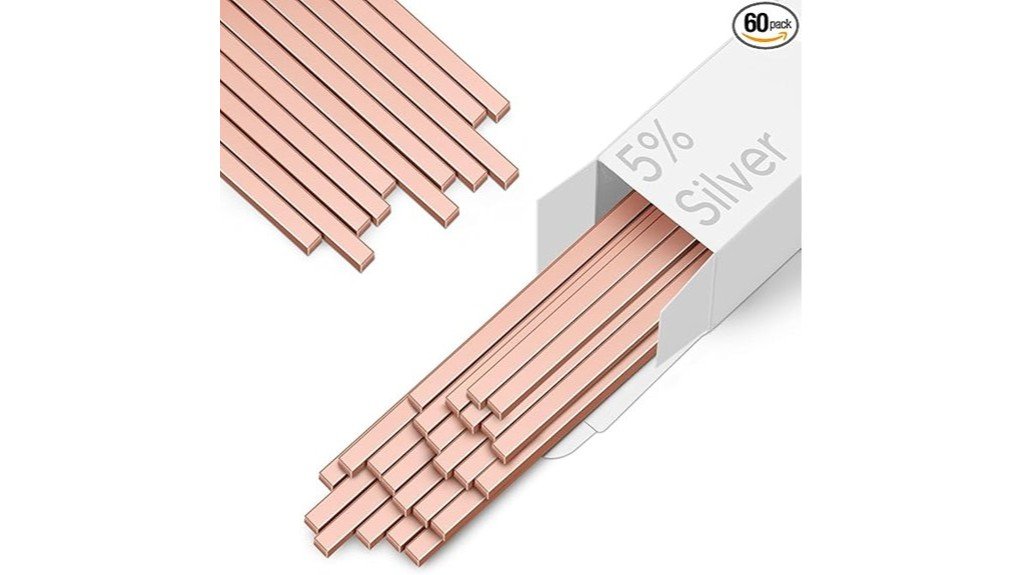
BCuP-3 5% silver brazing rods are a phosphorus-copper-silver filler (about 89% copper, 6% phosphorus, 5% silver) used to braze copper and brass, most often in HVAC and refrigeration lines. On clean copper-to-copper joints the phosphorus works as a flux, so you do not need a separate flux. Do not use it on steel or other ferrous metals. This page covers what the rod does, how to use it, and what to check on the listing.
Quick Verdict
Best for: Brazing copper lines and copper-to-brass fittings where you want a self-fluxing 5% silver rod.
Watch out: Not for steel or aluminum, and confirm the count per pack on the listing.
Key Specifications
| Specification | Detail |
|---|---|
| Classification | AWS A5.8 BCuP-3 |
| Nominal composition | About 89% copper, 6% phosphorus, 5% silver (Harris data) |
| Melting range | About 1190°F to 1500°F (643°C to 816°C), per Harris |
| Listed rod size | 0.050 x 1/8 x 10 inches, per the listing |
| Count per pack | Check the listing |
| Self-fluxing on copper | Yes, copper-to-copper |
| Flux needed on | Brass and bronze |
| Base metals | Copper, brass, bronze; not steel or aluminum |
The melting range comes from alloy-maker data for BCuP-3 (Harris lists 1190°F solidus and 1500°F liquidus). The listing may state slightly different figures, so use the temperatures on your actual package.
What Are BCuP-3 5% Silver Brazing Rods?
BCuP-3 is an AWS A5.8 classification. The 5% silver adds flow and a bit of ductility over plain phosphorus-copper rod (BCuP-2). It tolerates wider joint gaps than BCuP-2, which helps when fit-up is not perfect, and it runs at lower temperatures than a high-silver brazing alloy.
The rods in this listing are described as 0.050 x 1/8 x 10 inch pieces. Confirm the size and the count per pack on the Amazon page before you order.
Best Uses for BCuP-3
- Copper-to-copper joints in HVAC and refrigeration lines.
- Copper to brass or bronze fittings, with a suitable flux on the brass side.
- Plumbing and repair work where the joint will not see heavy vibration or impact.
When Not to Use It
- Steel, cast iron, and other ferrous metals. Phosphorus forms brittle compounds with iron and nickel.
- Aluminum. Use aluminum-specific brazing rod instead.
- Joints under heavy vibration or impact. Use a higher-silver alloy if the design requires it.
How to Braze Copper With BCuP-3
- Clean the tube and fitting with an abrasive pad until bright, then wipe off residue.
- Fit the parts with a tight, even gap. Press-fit the tube fully into the fitting.
- Heat the fitting and tube evenly with a suitable torch. Avoid heating the rod directly.
- When the copper reaches brazing temperature, touch the rod to the joint and let the heat melt it so it flows into the gap.
- Remove the heat, let the joint cool without quenching, then clean off flux residue if flux was used.
- Pressure-test and leak-check refrigerant lines before putting them into service.
If you work on air-conditioning lines, see our guides on how to braze HVAC copper lines without leaks and brazing HVAC copper pipe without soldering.
Safety and Storage
- Braze with good ventilation. Flux and metal fumes can irritate the lungs.
- Wear eye protection and gloves, and keep a fire blanket and extinguisher nearby.
- Purge refrigerant lines with nitrogen when brazing to limit scale inside the tube.
- Store rods in a dry place to avoid surface oxidation.
Pros and Cons
Pros
- Self-fluxing on copper-to-copper joints.
- Handles wider gaps than BCuP-2.
- Lower silver content than higher-silver alloys keeps the cost down.
Cons
- Not for ferrous metals or aluminum.
- Needs flux for brass and bronze.
- Count per pack and package details should be confirmed on the listing.
BCuP-3 vs BCuP-2 vs BCuP-5
| Alloy | Typical traits |
|---|---|
| BCuP-2 | About 92.8% Cu, 7.2% P, no silver; 1310°F to 1460°F; best for tight fit-up copper joints |
| BCuP-3 | About 5% silver; 1190°F to 1500°F; wider gap tolerance |
| BCuP-5 | About 15% silver; 1190°F to 1480°F; better for joints with more movement |
For the other grades, see our BCuP-2 brazing rods review and 15% silver brazing rods (BCuP-5) review.
Is It Worth Buying?
It is a reasonable pick if you braze copper lines and want a little more gap tolerance than BCuP-2 without paying for a high-silver alloy. For tight, well-made joints, BCuP-2 is cheaper. For joints that see more movement, consider BCuP-5.
Frequently Asked Questions
What is BCuP-3 used for?
BCuP-3 is used for brazing copper and, with flux, brass and bronze. It is common in HVAC and refrigeration work.
Do I need flux with BCuP-3?
Not for clean copper-to-copper joints, because the phosphorus acts as the flux. Use flux when brazing copper to brass or bronze.
Can BCuP-3 braze steel or aluminum?
No. Phosphorus-bearing alloys make brittle joints on steel and other ferrous metals, and aluminum needs its own brazing rod.
What is the melting range of BCuP-3?
Alloy-maker data such as Harris lists about 1190°F solidus and 1500°F liquidus. Check the figures on your own package.
How is BCuP-3 different from BCuP-2?
BCuP-3 contains 5% silver, tolerates wider gaps, and runs at a lower temperature range than BCuP-2, which has no silver.