Disclosure: As an Amazon Associate, we earn from qualifying purchases. If you click a link on this page and make a purchase, we may receive a small commission at no extra cost to you.
Choosing the right stick welding rod affects how easily you strike an arc, how clean your weld looks, and how much cleanup you face after each pass. The E6013 welding rod is a common choice for mild steel work because it is known for easy arc starts, stable operation, low spatter, and removable slag. This review helps you decide whether it fits your repair, fabrication, or hobby welding needs. It looks strongest for general-purpose work, though you should confirm the exact rod diameter and package details on the current Amazon listing before ordering.
Quick Verdict
Rating: Recommended with caveats
Best For: DIY welders, repair work, mild steel projects, and users who want an easy-starting stick electrode.
Bottom Line: The E6013 welding rod is a practical option when you want smooth arc control, low spatter, and clean slag removal on mild steel. The main tradeoff is that the exact package variant should be checked before purchase, especially if you need a specific diameter or rod count.
| Specification | Detail |
|---|---|
| Product type | E6013 stick welding electrode |
| Welding process | Stick welding |
| Supported power type | AC and DC applications, based on the supplied product details |
| Diameter range mentioned | 1/16 inch to 1/8 inch range mentioned in the product copy |
| Amperage guidance mentioned | Works with portable welders operating around 60 to 90 amps, based on the supplied article |
| Package size mentioned | 4.4 lb box |
| Compatible materials mentioned | Mild steel and sheet metal |
| Welding positions mentioned | Flat, horizontal, vertical, and overhead positions |
| Best use | Light-duty fabrication, repairs, automotive work, furniture frames, and art projects |
| Care note | Store rods in a dry place to reduce moisture exposure and help maintain consistent performance. |
What Is the E6013 Welding Rod?
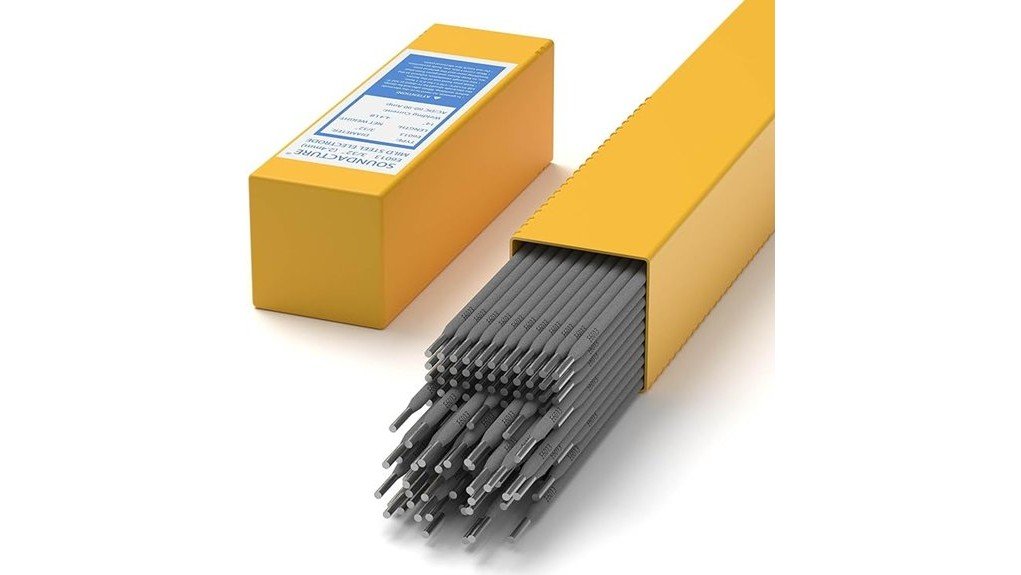
The E6013 welding rod is a general-purpose stick electrode used for welding mild steel and sheet metal. It is often chosen for repair work, light fabrication, and shop projects because it starts easily and produces a stable arc when used with the right welder settings.
The supplied product details describe a rod that works with AC and DC welding applications and portable welders in the 60 to 90 amp range. That makes it useful for smaller shop setups, hobby welders, and users who do not want a rod that is difficult to start or control.
Its main appeal is cleanup and control. Low spatter helps keep the work area cleaner, while removable slag helps you inspect the bead and finish the project with less grinding or chipping.
Key Takeaways
- The E6013 welding rod is best suited for mild steel, sheet metal, repairs, furniture frames, and light fabrication.
- It supports AC and DC welding applications, based on the supplied product details.
- The rod is designed for easy arc striking, stable operation, low spatter, and removable slag.
- The article mentions a 4.4 lb box and a 1/16 inch to 1/8 inch diameter range, but you should confirm the exact variant before buying.
- It is beginner-friendly compared with harder-to-control electrodes, but safe welding setup and proper amperage still matter.
Before You Buy: Confirm the exact rod diameter, package quantity, and recommended amperage on the Amazon listing before ordering. E6013 rods can come in different sizes, and the right size depends on your welder and metal thickness.
Who Should Buy It?
Best For
- DIY welders who want an easy-starting stick electrode for mild steel projects.
- Shop users working on small repairs, frames, brackets, exhaust parts, or light fabrication.
- Beginners who need stable arc behavior and easier slag removal while building technique.
Skip If
- You need a verified brand, certification, warranty, or exact rod count before purchase.
- You are welding specialty metals that require a different electrode type.
- You need deep structural welding guidance for critical load-bearing work.
Welding Performance and Quality
The E6013 welding rod stands out for easy arc striking, which helps reduce the frustration of repeated sticking when you start a bead. That matters most for beginners, quick repairs, and shorter welds where you stop and restart often.
Arc stability is another major benefit. A steady arc gives you more control over bead shape, travel speed, and heat input. When your settings match the rod diameter and metal thickness, this can help you produce cleaner welds with less rework.
The supplied article also highlights strong weld penetration. For everyday mild steel repairs and light fabrication, this helps create a more secure bond than a shallow, inconsistent bead. Still, penetration depends on correct amperage, joint preparation, travel angle, and clean base metal.
Low spatter and removable slag make the rod easier to live with after the weld is complete. Less spatter means less time cleaning nearby metal, and slag that lifts away cleanly makes it easier to check the bead before painting, grinding, or moving to the next pass.
Project Versatility and Applications
The E6013 welding rod works across several common project types, especially when you are welding mild steel in a home garage, farm shop, or small fabrication space. It can be used for flat, horizontal, vertical, and overhead positions, based on the supplied product details.
| Project Type | Suitable Applications | Why E6013 Helps |
|---|---|---|
| Light-duty fabrication | Brackets, light frames, small shop fixtures | Easy starts and stable control help with shorter welds. |
| Automotive repairs | Exhaust sections, mild steel repair pieces, non-critical brackets | Low spatter can reduce cleanup around tight areas. |
| Household repairs | Tools, gates, shelves, and simple metal items | Good for quick repair jobs when the metal is clean and compatible. |
| Furniture frames | Mild steel frames, supports, and shop-built furniture | Removable slag helps you inspect and finish visible welds. |
| Art projects | Sculptures, decor, and creative metalwork | Smooth arc behavior helps when working across mixed angles and positions. |
Convenience and Specifications
Convenience starts with the 4.4 lb box size mentioned in the supplied article. A larger box can support longer work sessions than a small sample pack, which is helpful when you are practicing, repairing several parts, or working through a multi-step fabrication job.
The article states that the rod works effectively with portable welders operating at 60 to 90 amps. That range may suit many compact stick welders, but the right setting depends on rod size, metal thickness, polarity, and your machine. Start with the rod label or welder chart, then adjust only within safe operating guidance.
Storage also affects performance. Keep the rods dry, sealed when possible, and away from damp floors or humid storage areas. Moisture can make rods harder to run and may lead to poor arc behavior.
Pro Tip: Before starting a visible weld, run a short test bead on scrap metal of similar thickness. This helps you dial in amperage, travel speed, and rod angle before working on the final part.
How It Performs in Real Use
For Beginner Practice
E6013 is a sensible practice rod because it is known for easy arc starts and stable operation. If you are learning stick welding, that gives you more time to focus on travel speed, rod angle, and bead consistency instead of fighting constant sticking.
For Garage Repairs
For mild steel repairs around the garage, the rod’s low-spatter behavior can save cleanup time. It works best when you remove paint, rust, oil, and dirt from the weld area before striking the arc.
For Light Fabrication
When you build brackets, frames, furniture pieces, or small fixtures, removable slag helps you inspect each pass. That is useful when the weld will be visible or when you need to clean the bead before adding another pass.
For Positional Welding
The article mentions vertical, overhead, flat, and horizontal applications. Position welding still takes practice, so use proper safety gear, keep your work secure, and avoid critical structural jobs unless you have the training to evaluate the weld.
How to Use It Correctly
Start by matching the rod diameter to your metal thickness and welder output. Thin sheet metal usually needs more care because too much heat can burn through the workpiece, while thicker mild steel may require better joint prep and multiple passes.
Clean the base metal before welding. Remove rust, paint, oil, galvanizing residue where appropriate, and loose scale from the weld area. Clean metal improves arc consistency and reduces defects.
Keep your arc length short and steady. A long arc can increase spatter and reduce control, while an overly tight arc may cause sticking. A steady hand and a consistent travel angle usually produce a better bead.
Let the weld cool safely, then chip and brush the slag before judging the final bead. Do not paint over slag, and do not assume a bead is sound just because it looks smooth on the surface.
Compatibility and Safety Notes
The E6013 welding rod is described as suitable for mild steel and sheet metal. Do not assume it is correct for stainless steel, cast iron, aluminum, or specialty alloys. Those materials often require different filler metals, preparation steps, or welding processes.
Use proper safety gear every time. A welding helmet, welding gloves, flame-resistant clothing, closed-toe boots, and eye protection help protect you from sparks, heat, UV radiation, and slag chips. Work in a well-ventilated area and follow your welder manual and electrode packaging.
Be careful with automotive parts, galvanized metal, painted metal, and coated surfaces. Some coatings can create hazardous fumes when heated. When in doubt, clean the material properly and seek professional guidance before welding.
Pros and Cons
Pros
- Easy arc striking helps beginners and occasional welders start beads with less frustration.
- Stable arc behavior supports smoother operation during light fabrication and repair work.
- Low spatter can reduce cleanup time around the weld area.
- Removable slag helps you inspect and finish the weld more easily.
- AC/DC compatibility gives it flexibility across common stick welding setups.
Cons
- Exact package details and rod diameter should be confirmed on the Amazon listing before purchase.
- Not the right choice for every metal type or critical structural welding job.
- Performance still depends on correct amperage, clean base metal, and dry rod storage.
Is It Worth the Price?
The E6013 welding rod is worth considering if you want a practical, general-purpose stick electrode for mild steel repairs and light fabrication. Its value comes from easy arc starts, smoother control, low spatter, and simple slag removal rather than from advanced specialty-metal performance.
It makes the most sense for buyers who want a dependable rod for everyday shop use, practice, and common repair jobs. It is not the best fit if you need a fully verified brand specification, exact rod count, or certified electrode details for professional code work.
How It Compares to Alternatives
Compared with more aggressive stick electrodes, E6013 is usually easier to run and cleaner to finish, which makes it appealing for beginners and light-duty work. If you need deeper penetration for heavier structural steel, you may want to compare it with other electrode types that better match that job.
The E6013 welding rod makes the most sense when ease of use, arc stability, and clean appearance matter more than heavy industrial performance. For critical welds, match the electrode to the material, joint design, and required strength before you start.
Frequently Asked Questions
What materials can the E6013 welding rod be used on?
The supplied article describes E6013 as suitable for mild steel and sheet metal. Do not assume it is correct for stainless steel, aluminum, cast iron, or specialty alloys unless the electrode label and your welding procedure support that use.
Is E6013 good for beginners?
Yes, E6013 is often beginner-friendly because it is known for easy arc striking and stable operation. You still need proper safety gear, clean metal, correct amperage, and practice to get consistent results.
What amperage should I use with this E6013 rod?
The article mentions use with portable welders around 60 to 90 amps. Treat that as general guidance only, because the correct amperage depends on rod diameter, metal thickness, polarity, and your welder.
How should I store E6013 welding rods?
Store them in a dry, sealed location away from moisture. Damp rods can become harder to run and may produce less consistent welds.
Can I use E6013 rods for vertical or overhead welding?
The supplied article mentions vertical and overhead applications. These positions require better control, so practice on scrap material first and use proper protective gear against falling sparks and slag.
What safety gear should I use with E6013 rods?
Use a welding helmet, welding gloves, flame-resistant clothing, closed-toe boots, and eye protection. Also keep the work area ventilated and follow your welder manual.
Who should skip this welding rod?
Skip it if you need a verified electrode for critical structural work, specialty metals, or a job that requires exact certification details. You should also compare other rods if your main goal is maximum penetration on heavy steel.
The Bottom Line
The E6013 welding rod is a strong fit if you want an easy-starting, general-purpose stick electrode for mild steel repairs, light fabrication, furniture frames, and hobby projects. Its biggest strengths are arc stability, low spatter, and removable slag, while its main limitation is that exact package and variant details should be confirmed before purchase.
Buy it if you want a practical everyday rod for shop use and practice. Skip it if your project requires specialty-metal compatibility, verified certification details, or structural welding beyond your training and equipment.