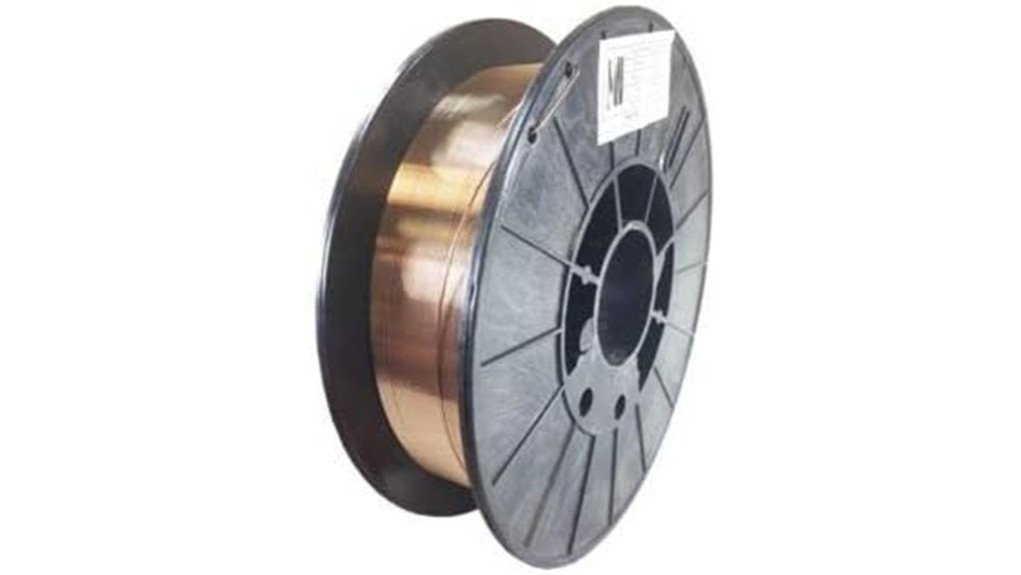
The ERCuSi-A welding wire is a silicon bronze filler (AWS A5.7) used for MIG brazing, most often on thin or galvanized steel and for joining copper alloys. The listing shows a .030 to .035 in wire on a 10 lb spool. Unlike steel MIG wire, it joins the parts with a brazed bead rather than a fusion weld, so the joint behaves differently and the heat input is lower. This review explains what the wire is for, how to set up for it, and when to use steel or stainless wire instead. It is based on the Amazon listing and standard AWS classification knowledge, not hands-on testing. ERCuSi-A silicon bronze MIG welding wire is used for MIG brazing thin and coated steel.
Quick Verdict
Best For: Auto body and light fabrication users who want to MIG braze thin or galvanized steel with low heat, and anyone joining copper alloys.
Bottom Line: ERCuSi-A is a specialist wire. It is a good fit for low-heat brazing of thin or coated steel and for copper-alloy repairs. It is not the right wire for load-bearing structural welds, and it needs a drive roll and liner suited to soft wire.
| Specification (per the listing) | Detail |
|---|---|
| Product type | Silicon bronze MIG brazing wire |
| Classification | ERCuSi-A, AWS A5.7 (per the listing) |
| Alloy | Copper with about 3 percent silicon |
| Wire diameter | .030 to .035 in (per the listing); confirm the size you receive |
| Spool weight | 10 lb (per the listing) |
| Shielding gas | Pure argon is the usual choice |
| Typical use | MIG brazing of galvanized and thin steel, copper alloy repair |
| Not for | Structural welds, aluminum, or jobs that need a steel-colored fusion weld |
What Is ERCuSi-A Welding Wire?
ERCuSi-A is a copper-silicon alloy, commonly called silicon bronze. It melts at a much lower temperature than steel, so you can lay a bead on steel without melting the base metal. That limits distortion and burn-through on thin panels, and on galvanized steel it damages less of the zinc coating than a steel wire does.
Because the joint is brazed, its strength comes from the bond and the bronze itself, not from fused steel. It is well suited to sheet metal, exhaust brackets and cosmetic repairs, and it is not a substitute for ER70S-6 on structural parts.
Before You Buy: Check the wire diameter and spool size on the listing and confirm that your MIG welder and gun can feed soft bronze wire. A 10 lb spool is a lot of silicon bronze for occasional use.
Where Silicon Bronze Wire Fits
- Galvanized steel: brazing keeps heat low and can preserve more of the coating than steel wire.
- Thin auto body steel: lower heat means less warping.
- Copper alloys: brass, bronze and copper repairs.
- Dissimilar joints: joining steel to copper alloys where a steel filler would not bond.
Skip it where the weld must carry heavy load, run hot in service, or be painted a perfect match, since the bronze bead stays gold-colored.
Setup for MIG Brazing
- Use pure argon shielding gas.
- Fit a U-groove drive roll and a liner that suits soft wire. Keep drive roll tension low to avoid deforming the wire.
- Use a contact tip sized for the wire diameter you are running.
- Run lower voltage and a faster travel speed than you would for steel.
- Clean the joint. Remove paint, grease and heavy rust, and brush off galvanized coating where you need a clean bond.
- Practice on scrap of the same thickness before working on the part.
Pro Tip: Aim the arc at the bronze puddle and let it flow onto the steel rather than melting the steel itself. If the base metal is melting, lower the voltage.
Safety
Brazing copper alloys and galvanized steel can produce fume containing copper and zinc. Ventilate well, use local exhaust and wear a respirator when your workplace rules require it. Wear a properly shaded helmet, gloves and flame-resistant clothing.
Is It Worth the Price?
This page does not quote a price because it changes. Silicon bronze wire costs more per pound than steel wire, so judge the value by the job: it is worth it for brazing thin or coated steel and copper alloys, and not worth it for general steel welding.
Pros and Limitations
Pros
- Low-heat brazing limits distortion on thin steel
- Suited to galvanized steel and copper alloys
- Smooth, easy-to-file bronze bead
- Standard AWS A5.7 ERCuSi-A classification per the listing
Limitations
- Not for structural or high-load welds
- Bead stays gold-colored and does not match steel
- Soft wire needs a suitable drive roll and liner
- Costs more per pound than steel MIG wire
Related guides: SÜA ERCuSi-A welding rod review | MIG wire types for auto body | MIG wire size chart by metal thickness
Frequently Asked Questions
What is ERCuSi-A wire used for?
It is a silicon bronze wire used for MIG brazing thin or galvanized steel and for joining copper alloys, where low heat matters more than maximum strength.
What shielding gas do I use with ERCuSi-A?
Pure argon is the usual choice for silicon bronze MIG brazing. Check the wire maker data sheet and your welder manual.
Can I use ERCuSi-A for structural welding?
No. Silicon bronze is brazed, not fused, and it is not a substitute for ER70S-6 on load-bearing steel parts.
Does ERCuSi-A work on galvanized steel?
Yes, it is commonly used on galvanized steel because the low heat disturbs less of the coating. Ventilate well because zinc and copper fume are hazardous.
Why does my machine struggle to feed bronze wire?
Silicon bronze is a soft wire. Use a U-groove drive roll, light roll tension and a clean liner to avoid bird-nesting.
The Bottom Line
The ERCuSi-A welding wire is a good fit for low-heat MIG brazing of thin or galvanized steel and for copper-alloy repairs, with pure argon and a feed setup suited to soft wire. Choose steel or stainless wire for structural welds, and confirm the diameter and spool size on the listing before you order.
Ready to Buy?
Confirm the wire diameter and spool size, then check the current price and details.