Disclosure: As an Amazon Associate, we earn from qualifying purchases. If you click a link on this page and make a purchase, we may receive a small commission at no extra cost to you.
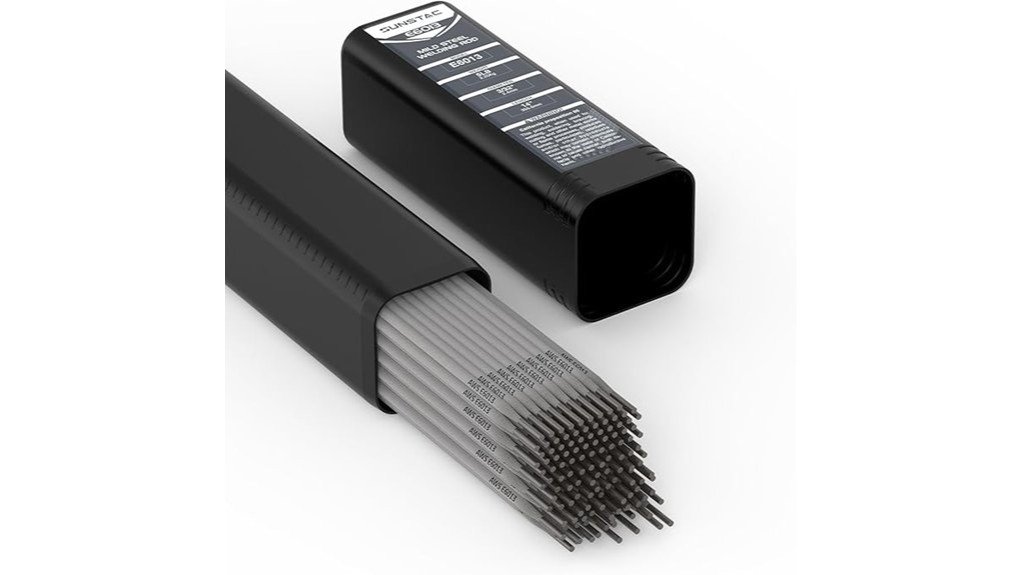
Choosing the right stick welding rod matters when you want clean beads without fighting constant sticking, heavy spatter, or burn-through on thin steel. E6013 welding rods are a common choice for light repair, beginner practice, and general fabrication because they run smoothly and are easier to control than many deeper-penetrating electrodes. This review helps you decide where E6013 rods make sense, how to use them well, and when you should choose a stronger welding rod instead. Their biggest strength is easy arc control, but their lower penetration makes them a poor fit for critical structural welds.
Quick Verdict
Rating: 7.5/10, recommended with caveats
Best For: Beginner welders, thin steel repairs, light fabrication, maintenance work, and cosmetic welds on clean mild steel
Bottom Line: E6013 rods are easy to strike, smooth to run, and useful when you care about bead appearance on light steel. They are not the right choice for heavy structural joints, high-load repairs, or dirty steel that needs deep penetration.
| Specification | Detail |
|---|---|
| Product Name | E6013 welding rods |
| Product Type | Stick welding electrode for shielded metal arc welding |
| Electrode Classification | E6013 mild steel electrode |
| Common Diameter Range | 1/16 inch to 1/8 inch, depending on the pack |
| Common Size Mentioned | 3/32 inch × 14 inch |
| Typical Pack Weight | 5 lb pack, based on the supplied listing details |
| Coating | Titanium oxide flux coating |
| Welding Positions | Flat, horizontal, vertical, and overhead |
| Approximate Amperage Range | About 70 to 130 amps, depending on rod diameter and setup |
| Best Use | Thin steel, light fabrication, repair work, practice beads, and general shop welding |
| Main Limitation | Lower penetration than rods made for heavier structural work |
What Are E6013 Welding Rods?
E6013 welding rods are mild steel stick electrodes made for general-purpose arc welding. They use a titanium oxide flux coating that helps stabilize the arc, reduce spatter, and leave a smoother-looking bead on clean steel. That forgiving arc behavior makes them easier to manage when you are still learning stick welding or working on light repair jobs.
The rods are most useful when you do not need aggressive penetration. They suit sheet metal, brackets, gates, small fixtures, automotive bodywork, and light workshop fabrication. They are less suitable when the joint carries heavy loads or when you need deep fusion through rust, paint, scale, or thick steel.
Who Should Buy It?
Best For
- Beginners who want an easier rod for practicing arc starts and bead control
- Home repair users working on thin mild steel, brackets, gates, or small shop projects
- Welders who want a smoother bead appearance with lower spatter on clean steel
Skip If
- You need deep penetration for heavy structural steel or high-load joints
- You often weld rusty, dirty, painted, or heavily scaled metal without prep work
- You need a low-hydrogen electrode for demanding strength requirements
Welding Performance and Arc Stability
E6013 rods are known for smooth arc starts, easy re-strikes, and steady operation. That helps when you are running short beads, stopping and starting often, or learning how to keep a consistent travel speed. The stable arc also makes it easier to keep the puddle under control on thinner steel.
The titanium oxide coating supports a cleaner weld appearance with lower spatter compared to rougher-running rods. This matters when the weld will be visible or when you want less cleanup after a repair. You still need proper amperage, good work clamp contact, and clean base metal to get the best result.
Penetration and Strength Limits
The main tradeoff is penetration. E6013 rods do not dig into the base metal as aggressively as electrodes such as E6011, and they are not a direct replacement for stronger low-hydrogen rods such as E7018. That makes them better for light-duty welds than for critical frame, trailer, lifting, or load-bearing repairs.
For non-critical work, their lighter penetration can be an advantage. You have less risk of blowing through thin material, especially when the rod size and current setting match the metal thickness. For thick steel or high-stress joints, you should choose the electrode type required by the project, code, or qualified welding procedure.
Application Versatility
One strong advantage of E6013 rods is all-position usability. You can use them in flat, horizontal, vertical, and overhead positions, which helps when you cannot rotate the workpiece into a perfect position. This makes them practical for maintenance jobs where the repair area is fixed in place.
They also work well for small projects where appearance matters. Fence repairs, light brackets, sheet metal patches, and small fixtures can all benefit from a rod that runs smoothly and leaves a neater bead. For best results, remove paint, oil, moisture, rust, and mill scale before welding.
Surface Prep, Safety, and Materials
E6013 rods perform best on clean mild steel. They can struggle when the surface is rusty, oily, painted, or contaminated. Cleaning the joint area before welding improves arc stability, bead shape, and fusion.
Use proper welding PPE, eye protection, gloves, sleeves, and ventilation any time you weld. Be extra careful around galvanized steel because zinc-coated metal can create hazardous fumes when heated. Remove coatings safely when appropriate, follow the product label and your welder manual, and get qualified guidance for any safety-critical job.
Before You Buy: These rods are not ideal for heavy structural welding or high-load joints. If you need deep penetration, certified strength, or a code-compliant weld, choose the correct electrode for that job and follow a qualified welding procedure.
Setup Tips Before First Use
Match the rod diameter to the metal thickness and the amperage range on your welder. Smaller rods need less current and give you more control on thinner material. Larger rods need more current and can add heat too quickly if the steel is thin.
Keep your travel speed steady and hold a short arc length. A long arc can increase spatter and make the bead look rough. If the rod sticks often, the amperage may be too low, the surface may need cleaning, or your arc length may be inconsistent.
Pro Tip: Start with scrap metal close to your project thickness before welding the final part. Adjust amperage until the rod starts cleanly, the bead wets in smoothly, and the metal does not overheat or burn through.
How It Performs in Real Use
For Beginner Practice
E6013 rods make practice sessions less frustrating because they strike and re-strike more easily than many stronger rods. You can focus on bead width, travel speed, rod angle, and puddle control without fighting constant arc loss. That makes them a smart practice rod for learning basic stick welding movement.
For Light Repair Work
They work well for household steel repairs such as small brackets, gates, light frames, and workshop fixtures. The smoother arc helps you make cleaner beads when the steel is prepared well. Just avoid treating them as a heavy-duty fix for parts that carry serious load or impact.
For Thin Metal Fabrication
The lighter penetration helps reduce burn-through on thinner steel when you use the right rod size and current setting. This is useful for sheet metal patches, small panels, and light fabrication where appearance and control matter. You still need to manage heat input carefully, especially near edges or gaps.
For Tight or Awkward Positions
All-position capability helps when you are welding in a corner, near a fence post, or on a part you cannot move easily. The stable arc gives you better control in these positions. Overhead and vertical work still require practice, so test your settings before welding the actual joint.
Pros and Cons
Pros
- Stable arc helps beginners maintain better control during practice
- Easy re-strike capability works well for short repair beads
- Lower spatter can reduce cleanup on clean mild steel
- All-position use supports flat, horizontal, vertical, and overhead welding
- Good option for thin steel when you want to reduce burn-through risk
Cons
- Limited penetration compared to electrodes made for deeper fusion
- Not suitable for critical structural or high-load welding
- Needs clean surface prep for the best arc stability and bead quality
Want a smooth-running rod for light steel repair?
Is It Worth the Price?
E6013 rods are worth considering if you need a practical everyday electrode for light shop work, beginner practice, or clean mild steel repairs. They offer strong value for the price when your main goals are easy arc control, smoother bead appearance, and lower spatter.
The value drops if you expect one rod type to handle every welding job. For heavy steel, structural repairs, or dirty material, a different electrode may save time and produce a stronger weld. Buy E6013 rods for the right use case, not as a universal replacement for every stick welding rod.
How It Compares to Alternatives
Compared with E6011 rods, E6013 rods usually feel smoother and easier to control, but they do not offer the same digging arc or penetration on less-than-perfect steel. Compared with E7018 rods, E6013 rods are easier for many beginners to run, but E7018 is better suited for stronger welds when the job calls for a low-hydrogen electrode.
E7014 is another option to compare if you want an easy-running rod with more deposition for certain flat or horizontal jobs. E6013 makes the most sense when you want a forgiving electrode for thin mild steel, general repair, and bead control practice.
Frequently Asked Questions
What amperage should I use for E6013 rods?
The supplied article lists an approximate range of 70 to 130 amps, depending on rod diameter. Smaller rods need lower current, while thicker rods need more heat for a stable arc. Always check your rod packaging and welder manual before final setup.
Are E6013 rods good for beginners?
Yes. E6013 rods are beginner-friendly because they strike easily, run smoothly, and help you practice bead control. They are a good learning rod for light mild steel projects.
What materials are E6013 rods best for?
They are best suited for clean mild steel, especially thinner sections and light fabrication work. They are not the best choice for thick, dirty, rusty, or critical structural steel.
Do E6013 rods work in all positions?
Yes. The article supports use in flat, horizontal, vertical, and overhead positions. Position welding still takes practice, so test your settings on scrap before welding the final part.
Can E6013 rods weld galvanized steel?
They can be used on galvanized steel only with proper preparation and safety precautions. Heating zinc-coated metal can create hazardous fumes, so use correct ventilation, PPE, and safe coating-removal practices. When in doubt, ask a qualified welding professional.
Are E6013 rods strong enough for structural welding?
They are not the best choice for heavy structural or high-load welding. E6013 rods are better for light repair and general fabrication where deep penetration is not the main requirement. Use the electrode specified for any code, structural, or safety-critical job.
How do E6013 rods compare with E7018 rods?
E6013 rods are easier for many casual users because they run smoothly and re-strike well. E7018 rods are often chosen when the job needs stronger low-hydrogen welds and proper storage control. Pick based on the joint, material, and strength requirement.
What mistakes should I avoid with E6013 rods?
Avoid running the rod too hot, using it on dirty steel, or treating it as a heavy structural electrode. Also avoid a long arc length because it can increase spatter and make the bead harder to control. Practice on scrap before welding the final part.
The Bottom Line
E6013 welding rods are a solid choice if you want a smooth, forgiving electrode for beginner practice, thin mild steel, and light repair work. You should skip them for critical structural welds, heavy-load joints, or dirty steel that needs deeper penetration. The 7.5/10 verdict fits their role well: easy to use and practical for light work, but limited outside that range.