Disclosure: As an Amazon Associate, we earn from qualifying purchases. If you click a link on this page and make a purchase, we may receive a small commission at no extra cost to you.
Faiuot E6013 Welding Rods at a Glance
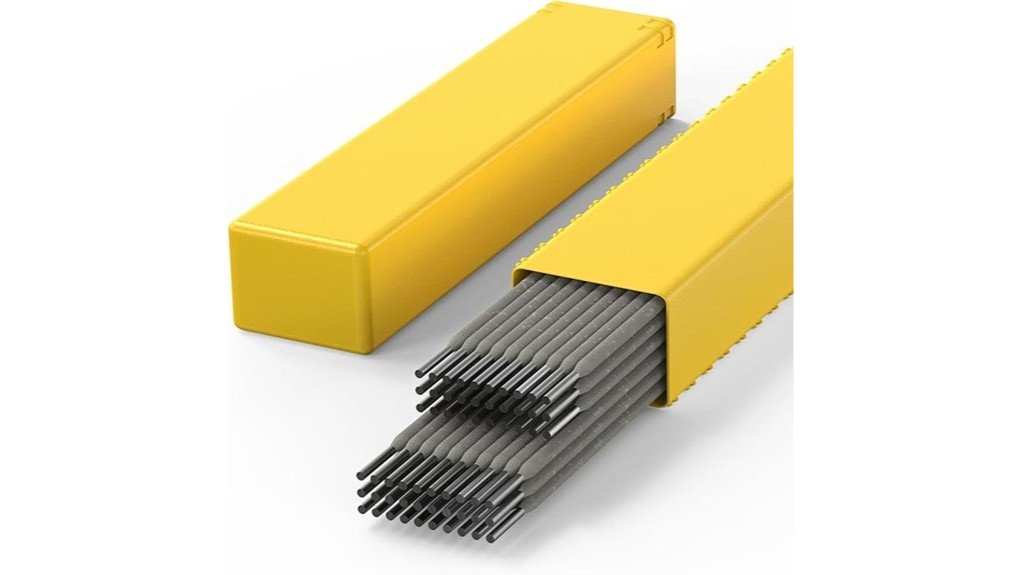
A smooth-looking bead is not enough if the rod is too large for your metal, difficult to run on your machine, or wrong for the joint. The Faiuot E6013 1/8-inch welding rods are made for general mild-steel repairs where easy arc starts, all-position use, and lower spatter matter more than deep penetration. This 2.5 lb pack is best suited to brackets, gates, farm equipment, shop projects, and other light-to-medium fabrication. The main tradeoff is that the 1/8-inch size can be too hot for thin sheet metal and is not the right choice for critical structural welds.
Quick Verdict
Rating: 8/10
Best For: DIY welders, hobbyists, and maintenance users working on mild-steel brackets, gates, farm equipment, and general shop projects.
Bottom Line: These rods offer a stable arc, all-position flexibility, and relatively low spatter in a practical 1/8-inch size. Their medium penetration and 80-120A operating range make them less suitable for thin body panels, low-output welders, and code-critical work.
| Specification | Detail |
|---|---|
| Brand | Faiuot |
| Model | E6013-32MM32-1/8" |
| Product Type | SMAW stick-welding electrodes |
| Classification | E6013 |
| Compatible Base Metal | Mild and low-carbon steel |
| Diameter | 1/8 inch (3.2 mm) |
| Length | 14 inches (355.6 mm) |
| Listed Pack Weight | 2.5 lb |
| Rod Count | 32 electrodes |
| Recommended Amperage | 80-120A |
| Current Compatibility | AC and DC |
| Welding Positions | Flat, horizontal, vertical, and overhead |
| Penetration | Medium |
| Included Components | 32 welding rods and one manual |
| Best Use | General fabrication, brackets, gates, farm equipment, maintenance, and practice on mild steel |
| Storage | Keep dry in a sealed container and follow the package instructions |
Key Takeaways
- The verified listing identifies Faiuot model E6013-32MM32-1/8", with 32 rods and a manual in the package.
- The 1/8-inch diameter and 80-120A range suit medium-gauge mild steel better than thin automotive sheet metal.
- AC/DC compatibility and all-position use make the rods practical for common home, farm, and maintenance welders.
- E6013 favors a smooth arc, lower spatter, and bead appearance over deep penetration.
- Critical structural, pressure, vehicle-frame, or code work requires the specified electrode, procedure, and qualified welding judgment.
What Are the Faiuot E6013 Welding Rods?
The Faiuot E6013 rods are 1/8-inch stick electrodes for shielded metal arc welding on mild and low-carbon steel. The E6013 classification is commonly associated with a steady arc, all-position operation, easy slag control, and shallow-to-medium penetration. A general manufacturer reference from Washington Alloy describes E6013 as an AC/DC electrode intended for smooth welds on thin-to-medium-gauge steel.
This specific pack contains 32 electrodes that measure 14 inches long, plus a manual. The listed 80-120A range fits many home-shop stick welders, but your machine still needs enough output and duty cycle to run a 1/8-inch rod without an unstable or cold arc.
The product makes the most sense when you want easy handling and clean-looking welds on noncritical mild-steel projects. It is not a universal rod for aluminum, stainless steel, cast iron, pressure vessels, or joints that require a documented low-hydrogen procedure.
Who Should Buy It?
Best For
- DIY welders using an AC or DC stick welder that can deliver a stable 80-120A output.
- Home, farm, and maintenance users repairing mild-steel gates, brackets, supports, guards, and equipment parts.
- Beginners practicing bead control, restarts, and positional welding on properly prepared scrap steel.
Skip If
- You mainly weld thin auto-body panels, ductwork, or light tubing that is easier to burn through with a 1/8-inch rod.
- Your project specifies E7018, E6010, E6011, or another electrode for strength, penetration, code, or procedure requirements.
- You need to weld aluminum, stainless steel, cast iron, or another metal that requires a different filler classification.
Before You Buy: Confirm that your welder can run a 1/8-inch electrode in the 80-120A range. For thin sheet metal, a 3/32-inch E6013 rod or a properly set MIG process usually gives you better heat control.
Arc Performance and Weld Quality
The strongest reason to choose E6013 is arc behavior. These rods are designed to start and restart more easily than many deeper-penetrating electrodes, which helps when you are learning or completing short repair welds. A stable arc also makes travel speed and bead placement easier to control.
Spatter is generally lower than with aggressive digging rods, so you spend less time grinding small metal droplets from the surrounding surface. Slag should release cleanly when your amperage, arc length, travel speed, and joint preparation are in the right range. You still need to chip and brush every pass before adding another bead.
The limitation is penetration. E6013 is chosen more often for smooth bead appearance and general fabrication than for digging through heavy scale or producing deep root fusion. A neat surface bead does not prove that the joint has adequate penetration.
Current, Polarity, and Welder Compatibility
Faiuot lists these rods for AC and DC operation, with a recommended range of 80-120A. That gives you flexibility with transformer-style AC machines and common inverter stick welders. Actual settings depend on joint type, steel thickness, welding position, cable condition, arc length, and the accuracy of your machine’s output display.
Start on clean scrap made from the same steel thickness as your project. Use the lower part of the range for vertical or overhead practice, then increase current only when the arc feels weak, the rod sticks repeatedly, or the bead sits high without wetting into the toes. Reduce current if the puddle becomes difficult to control, undercut appears, or the base metal begins to burn through.
A small 110V welder may advertise enough peak amperage but still struggle to maintain it at a useful duty cycle. Check the machine manual for its 1/8-inch E6013 recommendation rather than relying only on the number printed on the front panel.
Material Compatibility and Common Applications
These rods are intended for mild and low-carbon steel. Suitable jobs include shop brackets, frames made from moderate-thickness angle or flat bar, gates, machinery guards, farm implements, and maintenance welds where appearance and ease of use matter.
The listing says the rods can run on slightly rusted or painted metal, but that should not replace sound preparation. Remove oil, moisture, heavy rust, scale, and paint from the weld zone whenever possible. Unknown coatings, galvanized layers, and older paint can create hazardous fumes and poor fusion.
Do not use this product as a default choice for aluminum, stainless steel, cast iron, hardened steel, or dissimilar-metal joints. Those materials need a compatible filler metal and often require a specific procedure.
How It Performs in Real Use
Home-Shop Brackets and Fabrication
For brackets, tabs, and frames made from moderate-thickness mild steel, the 1/8-inch diameter deposits metal faster than a smaller 3/32-inch rod. The steady arc and lower spatter help you keep fillet welds tidy, especially after you dial in current on scrap.
Gates, Fences, and Farm Equipment
All-position capability is useful when a hinge plate, support, or equipment part cannot be moved to a flat bench. E6013 can make clean maintenance welds, but heavily rusted or load-bearing parts still need proper cleaning, joint preparation, and an electrode suited to the required strength.
Vertical and Overhead Repairs
The rod classification supports vertical and overhead welding, yet those positions demand more control than flat work. Use a short arc, reduce current as needed, and practice on scrap before welding an important part. Clean slag completely between passes because trapped slag can weaken a multi-pass joint.
Automotive and Equipment Repairs
These rods can work on noncritical mild-steel brackets, mounts, and shop-made supports when the metal thickness suits a 1/8-inch electrode. They are a poor match for thin exterior body panels, fuel containers, suspension components, or vehicle-frame repairs that require a qualified procedure and inspection.
How to Use E6013 Rods Correctly
Prepare the Joint
Grind or brush the weld area to clean metal. Remove oil with an appropriate cleaner before welding, let the part dry fully, and keep flammable solvents away from the hot-work area. Bevel thicker joints when the design calls for more fusion than a surface fillet can provide.
Set Amperage on Scrap
Test within the listed 80-120A range on scrap that matches the project. Watch how the puddle wets into both sides of the joint. Adjust in small steps instead of assuming one setting will work for every machine and position.
Keep a Short, Controlled Arc
E6013 usually responds well to a short arc and a modest drag angle. Move steadily enough to avoid excessive buildup, but not so fast that the bead becomes narrow and fails to tie into the joint edges. Let each pass cool as needed, then remove all slag before inspecting or welding again.
Store the Rods Dry
Return unused rods to a sealed container after the job. Keep them away from damp floors, open sheds, and large temperature swings that can cause condensation. Do not attempt high-temperature reconditioning unless the manufacturer provides a specific procedure.
Pro Tip: Write the successful amperage, polarity, steel thickness, and welding position on a label inside your rod container. That gives you a reliable starting point the next time you use the same welder and material.
Safety and Material Limitations
Stick welding exposes you to arc radiation, sparks, hot slag, electric shock, and metal fumes. Wear a properly rated welding helmet, safety glasses, flame-resistant clothing, dry welding gloves, long pants, and sturdy boots. Keep combustible materials away from the work area and maintain suitable ventilation.
Painted, plated, or galvanized metal deserves extra caution because the coating may release hazardous fumes when heated. Remove coatings from the weld zone when safe to do so, identify the base material, and follow workplace requirements. OSHA’s welding, cutting, and brazing guidance explains common fume, radiation, burn, and electrical hazards.
Never weld on wet surfaces, in rain, on a sealed container, or on a tank that held fuel or chemicals unless it has been professionally prepared under an approved procedure. For vehicle frames, lifting equipment, pressure-containing parts, structural members, or code work, use the required electrode and qualified welding process.
Pros and Cons
Pros
- Verified 1/8-inch, 14-inch format with 32 rods in the listed package.
- AC and DC compatibility suits a wide range of home-shop stick welders.
- Stable arc behavior supports easier starts, restarts, and practice.
- All-position classification covers flat, horizontal, vertical, and overhead work.
- Lower spatter and manageable slag can reduce cleanup when settings and technique are correct.
Cons
- The 1/8-inch diameter and 80-120A range can be too hot for thin sheet metal.
- Medium penetration is not ideal for dirty root passes, heavy structural work, or joints that specify a different electrode.
- Flux-coated rods need dry storage, and the listing does not provide a separate code-certification document for critical applications.
Is It Worth the Price?
The Faiuot pack is a general-purpose value option rather than a premium consumable positioned for documented code work. You get 32 full-length 1/8-inch rods, AC/DC flexibility, and a useful amperage range for common repair and fabrication jobs.
It offers strong value when your projects involve mild steel, your welder can run 80-120A comfortably, and you care about easy handling and clean bead appearance. It is not the best fit when you need a smaller rod for thin metal, deeper penetration through contamination, or a verified low-hydrogen electrode for critical joints.
How It Compares to Alternatives
A 3/32-inch E6013 rod is easier to control on thinner steel and usually runs at lower amperage. E6011 is better when you need deeper penetration or must deal with less-than-perfect field conditions, while E7018 is the common comparison for higher-strength, low-hydrogen work where the procedure calls for it.
The Faiuot 1/8-inch E6013 makes the most sense when you want a smoother arc and cleaner-looking general-purpose welds on mild steel, without the handling demands of a more aggressive electrode.
Frequently Asked Questions
Are Faiuot E6013 welding rods suitable for beginners?
Yes, the steady arc and relatively low spatter make E6013 approachable for practice. The 1/8-inch size still requires enough amperage and can be less forgiving on thin steel, so begin on moderate-thickness scrap.
What amperage should you use for these 1/8-inch E6013 rods?
The product lists an 80-120A range. Start on matching scrap near the lower or middle part of that range, then adjust for steel thickness, position, joint type, and your welder’s actual output.
Can you run these rods on both AC and DC welders?
Yes, the listing identifies AC and DC compatibility. Check your welder manual for the recommended connection and make sure the machine can sustain the current needed for a 1/8-inch electrode.
Can E6013 weld rusty or painted steel?
It may tolerate light surface contamination better than a perfectly clean-shop process, but you should still remove rust, oil, scale, and coatings from the weld area. Cleaning improves fusion and reduces the risk of porosity, inclusions, and hazardous fumes.
Are 1/8-inch E6013 rods good for automotive body panels?
Usually not. Thin body panels are easy to warp or burn through at the current needed for a 1/8-inch rod, so a smaller electrode or a properly configured MIG process is normally easier to control.
How should you store the rods after opening the package?
Keep them in a dry, sealed container away from damp floors and temperature swings. A clean rod tube or airtight box with a dry desiccant pack can help limit moisture exposure.
Can you use these rods outdoors or for structural repairs?
You can use stick electrodes outdoors when the work area is dry and protected from unsafe conditions. For structural, vehicle-frame, lifting, pressure, or code-regulated work, follow the specified welding procedure and use a qualified welder rather than choosing an electrode only for convenience.
The Bottom Line
The Faiuot E6013 1/8-inch rods are a practical buy for DIY welders and maintenance users who need smooth AC/DC performance on mild-steel brackets, gates, equipment, and general fabrication. Their main strengths are easy arc behavior, all-position use, and lower cleanup, while the main limits are medium penetration and excessive heat for thin sheet. Skip them for critical structural work or any job that specifies another electrode classification.
Ready to Buy?
Check the latest price, seller details, and package information before you decide.