Disclosure: As an Amazon Associate, we may earn from qualifying purchases made through links on this page, at no extra cost to you.
Overhead welding puts the puddle, slag, and sparks above you, so rod choice has a direct effect on control and cleanup. This guide compares six stick electrodes with all-position classifications for carbon steel or stainless steel, helping you choose between deep-penetrating E6011, beginner-friendly E6013, low-hydrogen E7018, and E308L-16 stainless options.
The right choice depends on the base metal, surface condition, required strength, welder output, electrode diameter, and storage. The products below are organized by real use case instead of unverified scores or changing review counts.
Top Picks
| Product | Best For | Key Detail | Amazon |
|---|---|---|---|
| ARCCAPTAIN E6011 | Rusty or less-than-perfect carbon steel | E6011, 3/32 in, 5 lb | Check Price |
| YESWELDER E7018 | Clean steel and low-hydrogen applications | E7018, two diameters, 5 lb | Check Price |
| YESWELDER Stainless | Stainless repair and fabrication | E308L-16, 3/32 in, 5 lb | Check Price |
| WISUNO E6013 | Practice and clean thin steel | E6013, 3/32 in, 1 lb | Check Price |
| Sunstac E6013 | Frequent clean-steel repairs | E6013, 3/32 in, 5 lb | Check Price |
| Saker E6013 | Occasional repairs and storage | E6013, 3/32 in, 1 lb | Check Price |
How We Chose
We kept products that match the core buyer intent: stick electrodes suitable for overhead work through an all-position classification. We compared electrode type, base-metal compatibility, surface condition, pack size, diameter, moisture sensitivity, ease of puddle control, and the type of work each rod suits. Low-temperature brazing rods and TIG filler rods were excluded because they belong to different joining processes and can confuse a shopper looking for overhead stick electrodes.
1. ARCCAPTAIN E6011: Best Overall for Repair Work
This E6011 pack is the strongest match for repair work where the steel is not perfectly clean. The E6011 classification is intended for all-position stick welding, and its digging arc makes it useful when you need penetration on maintenance joints.
The fast-freezing puddle can be easier to control against gravity than a slow, fluid puddle. The 3/32-inch diameter is also a practical size for smaller machines and thinner repair parts, although your actual settings must follow the electrode label and welder manual.
Who should buy this
Choose this pack for outdoor repairs, farm equipment, gates, brackets, or maintenance work where surface preparation is limited.
Who should avoid this
Skip it when appearance and low spatter matter more than penetration, or when a qualified structural procedure calls for a different electrode.
- All-position E6011 classification
- Useful penetration on less-than-perfect steel
- 5 lb pack suits repeated repair work
- More spatter and a more forceful arc than E6013
- Requires good overhead technique and close arc control
Check Product Details on Amazon
2. YESWELDER E7018: Best for Clean Structural Steel
This mixed-size E7018 pack gives you 3/32-inch and 1/8-inch electrodes in one box. E7018 is an all-position, low-hydrogen classification commonly selected for clean carbon steel when strength, toughness, and crack control matter.
The two diameters let you match the rod more closely to the joint and available amperage. For overhead work, use a tight arc and small stringer beads rather than allowing a large puddle to build.
Who should buy this
Choose it for clean steel fabrication and repairs where the welding procedure permits E7018 and you can keep the electrodes dry.
Who should avoid this
Avoid treating any retail electrode as automatic approval for critical structural work. Follow the drawing, welding procedure, code requirements, and storage instructions.
- All-position low-hydrogen classification
- Two useful diameters in one pack
- Suitable for clean carbon steel applications
- Moisture control is important
- Less forgiving on dirty, painted, or rusty metal
Check Product Details on Amazon
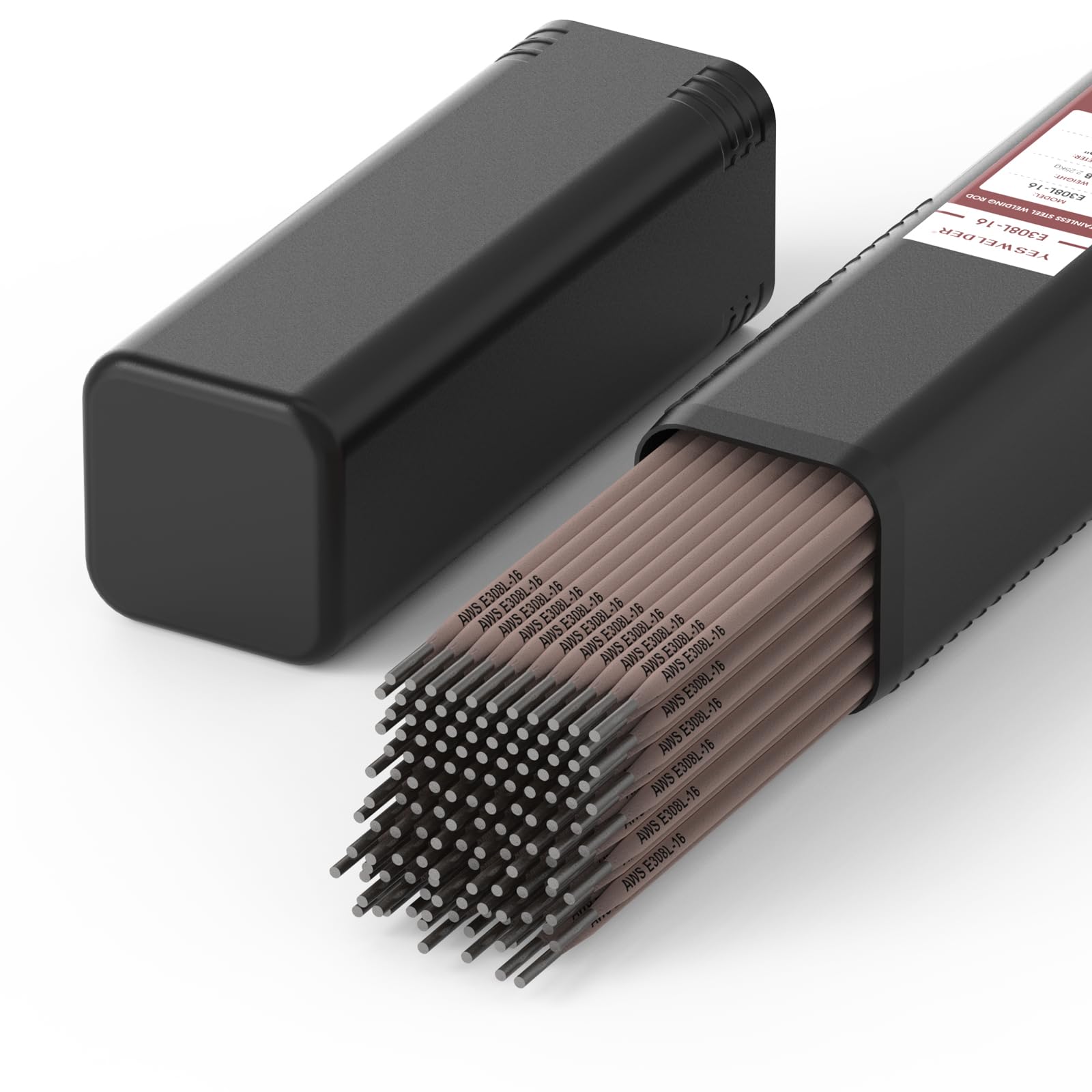
3. YESWELDER Stainless: Best for 304-Type Stainless
This E308L-16 option is the only stainless stick electrode in the retained list. It is a better fit than a carbon-steel rod when the base metal and welding procedure call for a 308L stainless deposit.
The 3/32-inch diameter is manageable for smaller stainless repairs, and the -16 usability designation is commonly associated with AC or DCEP operation and all-position welding. Confirm the exact base-metal grade, polarity, and amperage on the product label before starting.
Who should buy this
Choose it for suitable austenitic stainless repairs, brackets, fittings, or light fabrication where stick welding is more practical than TIG or MIG.
Who should avoid this
Do not use it as a universal stainless solution. Dissimilar metals, unknown alloys, pressure parts, and code work may require another filler or a qualified procedure.
- Relevant stainless electrode classification
- All-position usability for suitable applications
- 5 lb pack supports repeated shop work
- Not suitable for every stainless alloy
- Base-metal identification matters before welding
Check Product Details on Amazon
4. WISUNO E6013: Best Beginner Pack
This small E6013 pack is a sensible starting point when you want to practice overhead beads without buying a large box. E6013 is an all-position classification with a softer arc and moderate penetration.
The 3/32-inch size gives you better puddle control than a large electrode on lighter material. It is best on clean steel with sound fit-up, not as a substitute for E6011 on rusty or contaminated surfaces.
Who should buy this
Choose it for practice plates, clean sheet or light-gauge repair, and occasional jobs where a one-pound pack is enough.
Who should avoid this
Skip it for heavy structural joints, dirty steel, or applications that require low-hydrogen electrodes.
- Small pack lowers the commitment for beginners
- Soft arc and manageable puddle on clean steel
- All-position E6013 classification
- Only a 1 lb supply
- Moderate penetration limits heavy repair use
Check Product Details on Amazon
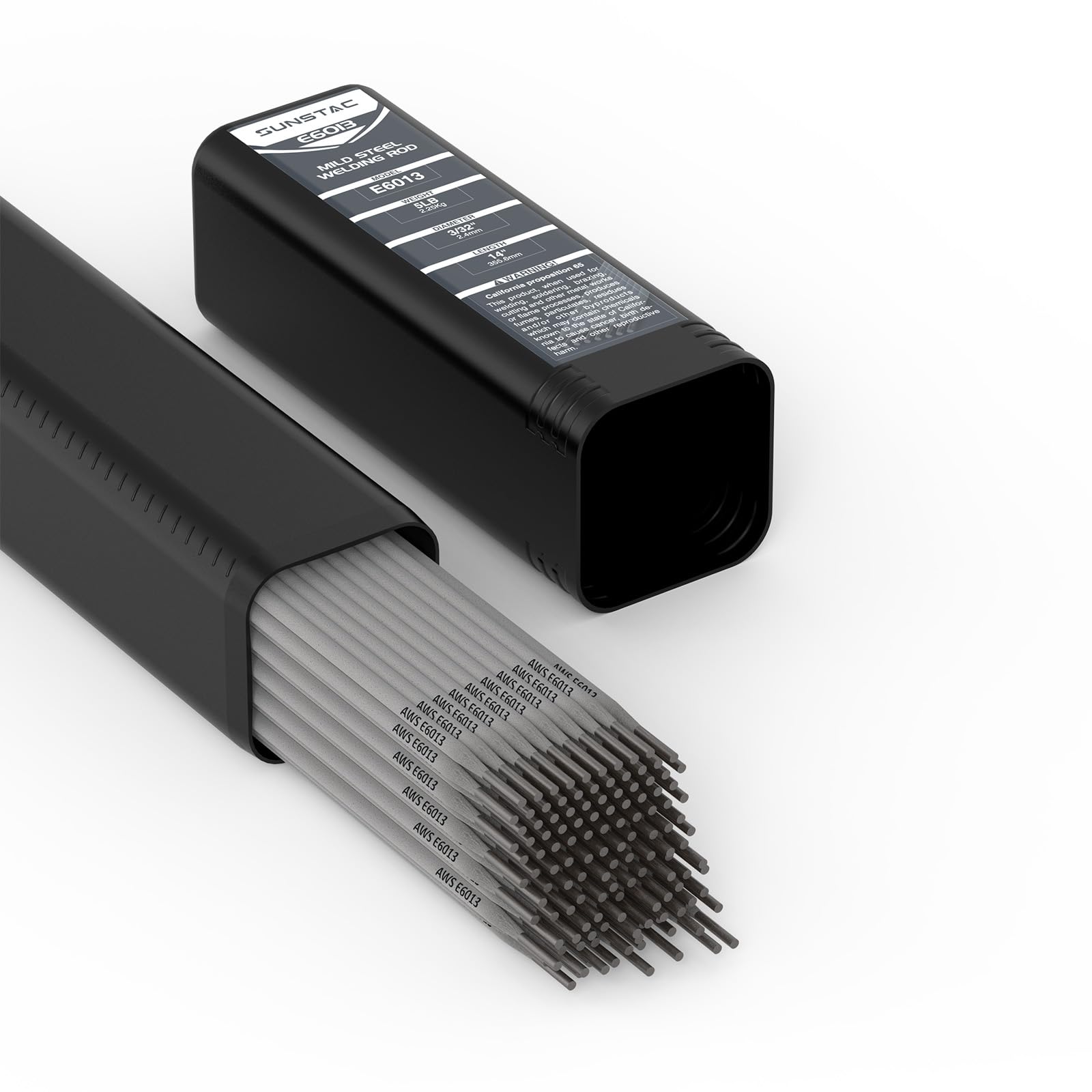
5. Sunstac E6013: Best Value E6013 Pack
The Sunstac pack gives frequent users a larger supply of 3/32-inch E6013 electrodes. It targets the same clean, lighter-duty work as the smaller E6013 options, but the 5 lb quantity is more practical when you weld often.
You get a consistent rod type and diameter for practice, maintenance, and light fabrication. For overhead work, keep the puddle small and remove slag fully between passes.
Who should buy this
Choose it when you already know E6013 suits your machine and projects and you want a larger pack.
Who should avoid this
Avoid it for dirty steel, deep root penetration, or low-hydrogen structural requirements.
- Larger 5 lb supply
- All-position E6013 classification
- Useful for repeated clean-steel work
- Less versatile on contaminated metal than E6011
- Not the first choice for critical structural joints
Check Product Details on Amazon
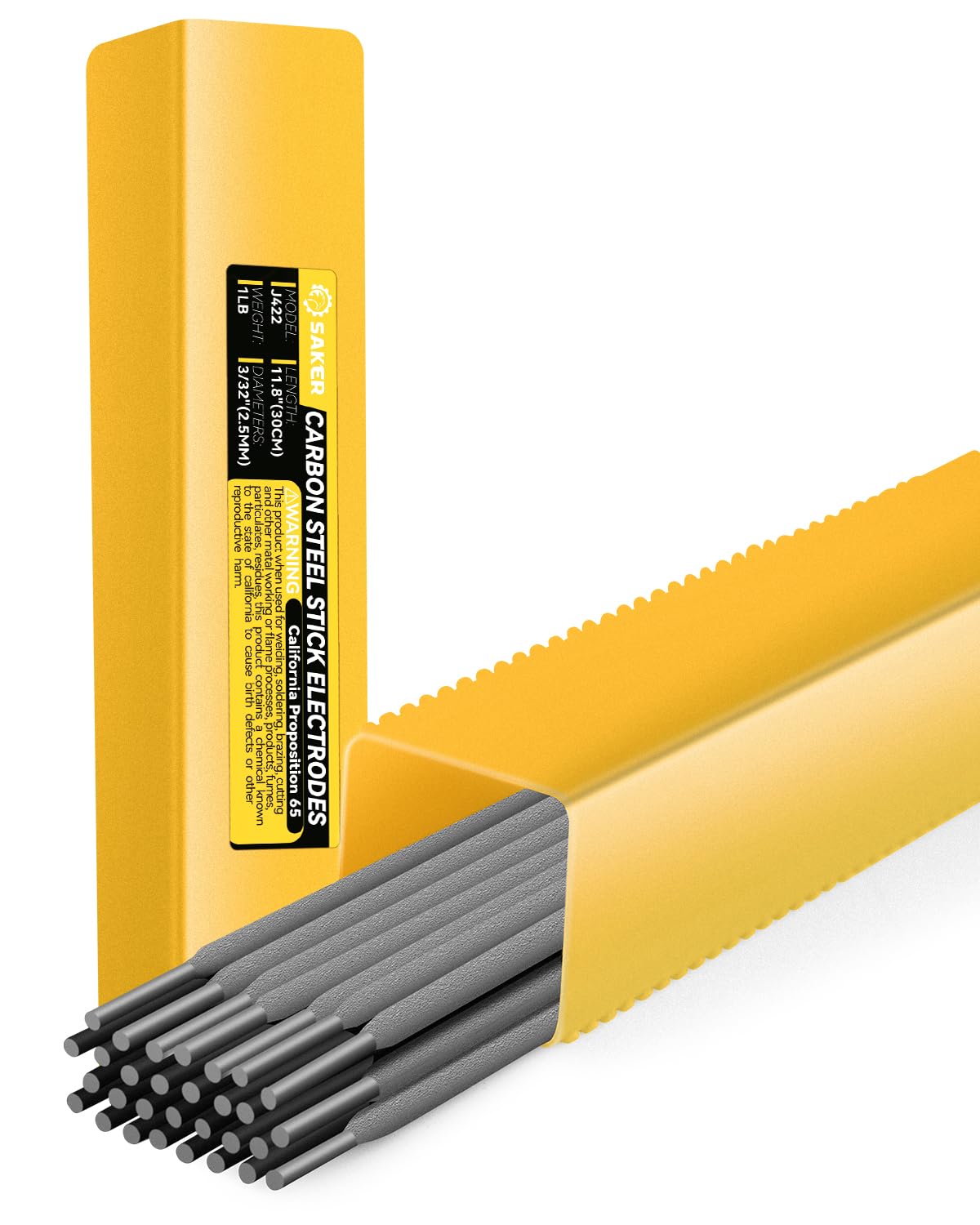
6. Saker E6013: Best Compact E6013 Pack
The Saker option is another compact E6013 pack for occasional work. Its main advantage is convenience: you can keep a smaller quantity in the shop without committing to a 5 lb box.
It fills the same role as the WISUNO pack, so the decision mainly comes down to packaging preference and current product details. Use it on clean carbon steel and verify polarity and current recommendations on the label.
Who should buy this
Choose it for occasional practice, light repair, or a compact backup supply.
Who should avoid this
Skip it if you weld frequently, because the 1 lb pack will run out sooner than the Sunstac option.
- Compact one-pound quantity
- All-position E6013 classification
- Useful as a practice or backup pack
- Overlaps heavily with other E6013 picks
- Not intended for dirty steel or heavy structural work
Check Product Details on Amazon
How to Choose a Welding Rod for Overhead Welding
Check the position classification first
For common carbon-steel stick electrodes, a 1 as the third digit in classifications such as E6011, E6013, and E7018 indicates all-position use, including overhead. Position capability does not make every rod equally easy to control. Puddle behavior, slag, amperage, diameter, and operator technique still matter.
Match the electrode to the base metal
Use carbon-steel electrodes only where they match the base metal and procedure. E308L-16 is intended for specific stainless applications, not as a universal rod for every stainless grade or dissimilar-metal joint. When the alloy is unknown, identify it before choosing filler metal.
Choose by surface condition and penetration
E6011 is the better match when repair steel has rust, paint, or contamination that cannot be removed completely, although cleaning is still recommended. E6013 gives a softer arc and moderate penetration on clean, lighter material. E7018 is used on clean steel when low-hydrogen properties and stronger deposits are required by the job.
Use a manageable diameter
Smaller electrodes usually create a smaller puddle and need less current, which can help on thinner material and restricted overhead joints. Larger electrodes raise deposition rate but also require more machine output and puddle control. Follow the manufacturer’s current range rather than relying on a universal setting.
Keep the puddle small
Overhead welding rewards a tight arc, correct work angle, short stringer beads, and steady travel. Avoid building an oversized puddle that gravity can pull away from the joint. Remove slag fully before the next pass.
Store electrodes correctly
Keep every pack dry and reseal it after use. E7018 requires especially careful moisture control. Follow the manufacturer’s storage and reconditioning instructions, because an improvised rebake can damage the coating or fail to restore the electrode.
Quick Comparison
| Product Name | Image | Best For | Material | Size | Pack | CTA |
|---|---|---|---|---|---|---|
| ARCCAPTAIN E6011 |
 |
Rusty or less-than-perfect carbon steel | Carbon steel | 3/32″ | 5 lb | Check Price |
| YESWELDER E7018 |
 |
Clean steel and low-hydrogen applications | Carbon steel | 3/32″ + 1/8″ | 5 lb total | Check Price |
| YESWELDER Stainless |
 |
Stainless repair and fabrication | Stainless steel | 3/32″ x 14″ | 5 lb | Check Price |
| WISUNO E6013 |
 |
Practice and clean thin steel | Carbon steel | 3/32″ | 1 lb | Check Price |
| Sunstac E6013 |
 |
Frequent clean-steel repairs | Carbon steel | 3/32″ | 5 lb | Check Price |
| Saker E6013 |
 |
Occasional repairs and storage | Carbon steel | 3/32″ | 1 lb | Check Price |
Before You Buy
- Confirm the process: This list is for stick welding electrodes, not TIG filler rods or low-temperature brazing rods.
- Identify the metal: Carbon steel and stainless steel require different filler choices.
- Check your machine: Confirm the electrode diameter, current type, polarity, and amperage range your welder can support.
- Review the job requirements: Critical, load-bearing, pressure, vehicle, or code work may require a qualified welding procedure and inspection.
- Plan for storage: Buy only the pack size you can keep dry and use responsibly.
FAQ
Which welding rod is easiest to use overhead?
For clean, thinner carbon steel, many beginners find a 3/32-inch E6013 easier to start with because it has a softer arc and moderate penetration. E6011 can be a better repair rod on dirty steel, but its digging arc and spatter require more control. E7018 can produce strong, smooth welds, but moisture control and technique are more demanding.
Is E6011 or E7018 better for overhead welding?
Neither is best for every job. E6011 is useful for maintenance work, deeper penetration, and less-than-perfect surfaces. E7018 is the better fit when the steel is clean and the procedure calls for a low-hydrogen electrode. Match the rod to the joint, base metal, service condition, and welding procedure.
Can E6013 be used overhead?
Yes. E6013 is an all-position classification. It is best suited to clean, lighter material where moderate penetration is acceptable. Keep the puddle small and use the current range printed by the manufacturer.
Can I use these rods for critical structural welding?
Do not choose a retail electrode by product description alone for critical work. Structural, pressure, lifting, vehicle, and code-governed welds may require approved filler metal, a qualified welding procedure, certified personnel, controlled storage, and inspection.
How should I store E7018 rods?
Keep unopened and opened electrodes dry according to the manufacturer’s instructions. Professional low-hydrogen work may require heated storage and controlled exposure time. Do not guess at rebaking temperature or time.
Final Recommendation
For general repair work: Start with ARCCAPTAIN E6011.
For clean steel and low-hydrogen requirements: Consider YESWELDER E7018.
For suitable stainless applications: Choose YESWELDER E308L-16.
For beginner practice on clean steel: A 3/32-inch E6013 pack such as WISUNO, Sunstac, or Saker is the simpler starting point.
This roundup is reader-supported. When you click qualifying Amazon links, we may earn a referral commission at no extra cost to you.