Disclosure: As an Amazon Associate, we earn from qualifying purchases. If you click a link on this page and make a purchase, we may receive a small commission at no extra cost to you.
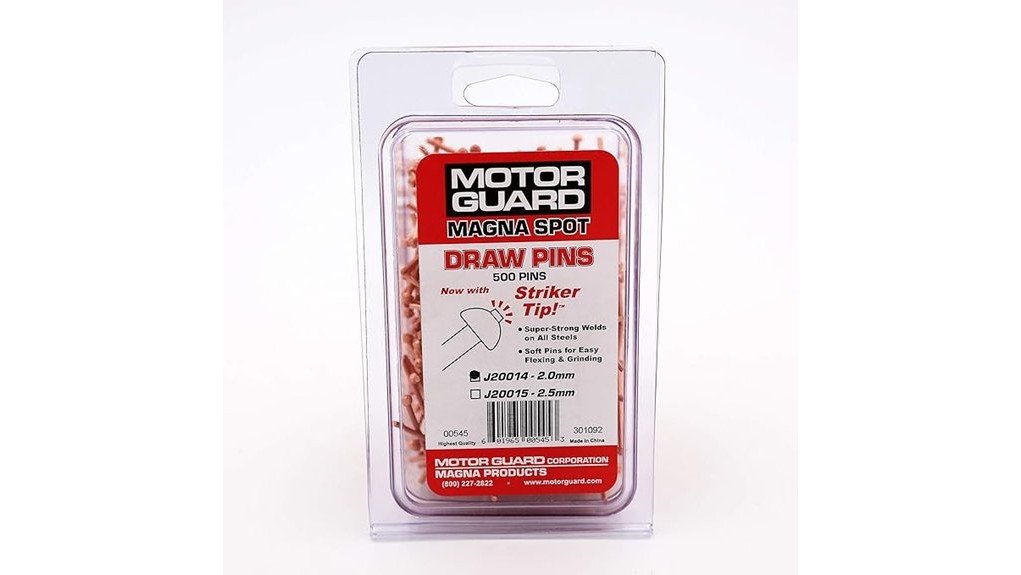
Dent pulling depends on getting a solid weld without using a draw pin that is unnecessarily hard to bend or remove afterward. Motor Guard J20014 2.0mm Welding Studs, also sold as Magna-Spot draw pins, combine copper-coated steel construction with a manufacturer-stated 500 lb pull. The 500-pack is intended for automotive dent repair and collision work rather than general structural welding. This review explains where these pins make sense, how their 2.0mm size affects compatibility, and the limitations you should check before buying.
Quick Verdict
Rating: 8.5/10
Best For: Auto body technicians, collision-repair shops, restorers, and DIY users with a stud welder that accepts 2.0mm draw pins.
Bottom Line: The Motor Guard J20014 is a practical 500-pack when you need flexible copper-coated steel pins for dent pulling. Its main limitation is specialization: these are consumable body-repair draw pins, not general-purpose structural fasteners, and your electrode or pin holder still needs to fit the 2.0mm size.
| Specification | Detail |
|---|---|
| Brand | Motor Guard |
| Product Type | Automotive dent-pulling draw pins / welding studs |
| Manufacturer Part Number | J20014 |
| Amazon Model Reference | JLM20014 |
| Diameter | 2.0mm |
| Material | Steel with copper coating |
| Package Quantity | 500 pins |
| Pull Rating | Manufacturer-stated 500 lb pull |
| Compatibility | Motor Guard states they can be used with all brands of stud welders; confirm your tool accepts 2.0mm pins |
| Packaging | Reclosable clamshell |
| Country of Manufacture | USA |
| Best Use | Automotive dent pulling, collision repair, and steel body-panel straightening |
What Are the Motor Guard J20014 Welding Studs?
The Motor Guard J20014 is a pack of 2.0mm copper-coated steel draw pins made for use with automotive stud welders. During dent repair, you weld a pin to the damaged steel panel, attach the appropriate pulling tool, and use that attachment point to work the panel back toward its original shape.
Motor Guard makes these pins soft enough to flex and grind during the repair process while still stating a 500 lb pull capability. Each package contains 500 pins, making the product more practical for shops or users who expect to perform repeated dent-pulling jobs than for someone who needs only a few pins for one repair.
Key Takeaways
- 2.0mm diameter: Check that your stud welder’s electrode or pin holder accepts this size before ordering.
- Copper-coated steel: The pins are designed to weld securely while remaining flexible enough for bending and post-repair grinding.
- 500 lb stated pull: Motor Guard specifies substantial pulling capability for automotive dent-repair work.
- 500-pin package: The bulk quantity suits regular collision-repair work and keeps replacement pins available between jobs.
- Broad stud-welder compatibility: Motor Guard states that the pins work with all brands of stud welders, although the 2.0mm holder fit should still be confirmed.
Before You Buy: These are 2.0mm consumable draw pins for automotive dent pulling. Do not buy them as general structural welding studs, permanent fasteners, or an automatic solution for aluminum body panels. Confirm the pin size, electrode, pulling tool, panel material, and repair procedure first.
Who Should Buy It?
Best For
- Auto body technicians doing repeated steel-panel dent repairs.
- DIY restorers who already own a compatible 2.0mm stud welder setup.
- Shops that benefit from keeping a 500-pin supply of consumable draw pins available.
Skip If
- Your stud welder or electrode is designed for a different pin diameter.
- You need structural studs or permanent welded fasteners.
- Your repair involves a panel material or process that does not permit conventional steel draw-pin welding.
Key Features of Motor Guard Welding Studs
2.0mm Size for Dent-Pulling Systems
The 2.0mm diameter is one of the most important specifications because it determines whether the pin physically matches your stud-welder electrode or chuck. Motor Guard markets the J20014 for broad stud-welder compatibility, but that does not remove the need to confirm the pin-holder size on your particular tool.
This size is aimed at conventional automotive dent-pulling work. A correct mechanical fit helps keep the pin positioned properly during the welding cycle and makes the repair process more predictable.
Copper-Coated Steel Construction
Motor Guard uses steel with a copper coating rather than making the pin excessively rigid. The manufacturer specifically describes the pins as soft enough for easy flexing and grinding. That matters after the pulling stage, when you need to remove or grind the attachment point as part of preparing the panel for further bodywork.
The design therefore balances two different needs: the pin must tolerate pulling force during dent correction, but it should not become unnecessarily difficult to bend or remove once the pulling step is finished.
Evaluating Pull Strength and Flexibility
Motor Guard states that the J20014 pins can deliver a 500 lb pull. That figure describes the pin’s stated pulling capability, not permission to apply 500 pounds of force to every vehicle panel. The amount of force a repair can safely tolerate depends on the panel, damage, weld quality, pulling technique, and equipment being used.
Flexibility is just as relevant as raw pull strength. A draw pin that can be bent and ground more easily can simplify cleanup and help you reposition pulling tools during a repair. For collision work, this practical balance is more useful than choosing a pin only because it sounds stronger.
Pro Tip: Check the diameter marked for your electrode or pin holder before opening a bulk package. A stud welder may support several accessories, but that does not mean every electrode accepts the same 2.0mm pin size.
What Makes Motor Guard Welding Studs Compatible?
Motor Guard states that the J20014 draw pins are for use on all brands of stud welders. That broad compatibility is useful when you use a non-Motor Guard stud gun or work in a shop with several machines.
However, brand compatibility should not be confused with universal accessory fit. Your electrode, chuck, or pin holder still needs to accept a 2.0mm draw pin, and your pulling attachment must work with the welded pin. Check your stud welder’s manual and accessory specifications before ordering.
How It Performs in Real Use
Small Automotive Dent Repairs
For localized dents in suitable steel body panels, the 2.0mm pins provide attachment points that can be distributed across the damaged area. You can then use the pulling method specified for your stud-welder system to gradually work the metal rather than relying on one concentrated pull.
Collision-Repair Shop Use
The 500-pin quantity is particularly useful when dent pulling is a routine task. Because draw pins are consumables, a large package reduces the need to reorder after every few jobs. The reclosable clamshell also gives you a simple way to keep unused pins together between repairs.
Vehicle Restoration Projects
For a restorer working on compatible steel panels, these pins can provide weld-on pulling points without drilling permanent pulling holes. The final result still depends heavily on panel condition, heat control, pulling technique, and the rest of the refinishing process.
Post-Pull Cleanup
Once the pulling work is complete, Motor Guard’s flexible, grindable pin design becomes useful. The pins are intended to be removed as part of the body-repair process, after which the panel still requires proper finishing according to the repair procedure.
Setup Tips and Common Mistakes to Avoid
- Confirm 2.0mm compatibility first. Check the electrode or stud holder rather than relying only on the welder brand name.
- Prepare the panel according to your welder instructions. Proper surface preparation is important for a consistent attachment.
- Use the correct machine setting for the repair. Too little energy can produce a weak attachment, while excessive heat can damage thin automotive sheet metal.
- Pull gradually. Dent correction usually benefits from controlled movement rather than one aggressive pull.
- Inspect the repair area afterward. Remove the draw pins using the recommended procedure and finish the panel correctly before refinishing.
Your stud-welder manual and the vehicle manufacturer’s collision-repair information should take priority over generic technique advice, especially on modern vehicles that may use multiple metals, coatings, adhesives, or special repair procedures.
Compatibility and Safety
These pins are designed around steel automotive dent repair. Do not assume that a steel draw-pin process is appropriate for aluminum, advanced high-strength steel, coated panels, or any other material simply because the stud physically fits your welding gun. Follow the repair information for the specific vehicle and panel.
Motor Guard’s product information also carries a California Proposition 65 warning concerning DINP. Review the manufacturer’s current warning and product information before use. Welding and grinding can create heat, sparks, fumes, and debris, so use suitable eye, face, hand, and body protection, provide appropriate ventilation, and follow the safety instructions supplied with your welding equipment.
Pros and Cons
Pros
- 2.0mm size suits common automotive stud-welding and dent-pulling applications.
- Copper-coated steel construction is designed for both pulling strength and post-repair flexibility.
- Manufacturer-stated 500 lb pull capability provides substantial capacity for the intended repair process.
- 500-pin package is practical for repeated shop or restoration work.
- Motor Guard states compatibility with all brands of stud welders.
Cons
- They are consumable draw pins rather than reusable permanent fasteners.
- The 2.0mm diameter still needs to match your specific electrode or pin holder.
- They are intended for automotive steel dent repair, so they are not a universal solution for every panel material or welding job.
Is It Worth the Price?
The J20014 makes the most sense as a bulk consumable for regular dent-pulling work. A 500-pin pack offers better convenience to a body shop, restoration garage, or frequent DIY user than to someone who expects to perform only one small repair.
Its value comes from the combination of the 2.0mm format, flexible copper-coated steel construction, broad stated stud-welder compatibility, and large package quantity. It is less attractive if your equipment requires another pin size or you need a completely different welding accessory.
How It Compares to Alternatives
Motor Guard also sells the J20015 2.5mm Draw Pins in a 500-pack. The larger 2.5mm version is worth comparing when your electrode and repair process call for that diameter. Do not choose the thicker pin simply because it is larger; select the size specified for your equipment and intended repair.
Another option is the H&S 2.2mm replacement stud format. Its 2.2mm diameter sits between the two Motor Guard sizes, so the deciding factor should again be compatibility with your stud welder, electrode, pulling accessories, and repair procedure rather than brand name alone.
Frequently Asked Questions
Are Motor Guard J20014 welding studs reusable?
Treat them as consumable draw pins. They are welded to the vehicle panel for pulling and then removed or ground as part of the repair process, so a fresh pin should be used for the next attachment.
Do these pins work with every stud welder?
Motor Guard states that the pins can be used with all brands of stud welders. You should still confirm that your electrode or pin holder accepts a 2.0mm draw pin before ordering.
How many welding studs come in the package?
The J20014 package contains 500 individual 2.0mm draw pins. Motor Guard packages them in a reclosable clamshell for storage between repair jobs.
Can these studs be used on aluminum body panels?
Do not assume they can. These are copper-coated steel draw pins intended for conventional automotive dent-repair applications. Aluminum repair commonly requires different equipment and procedures, so follow the vehicle manufacturer and tool instructions.
Are they suitable for structural welding?
No. The J20014 pins are dent-pulling accessories used to create temporary pulling points on suitable automotive panels. They should not be treated as structural studs or permanent welded fasteners.
Why are the pins designed to flex?
Motor Guard describes the copper-coated steel pins as soft enough for easier flexing and grinding while still delivering the stated pulling capability. That flexibility is useful when manipulating and removing the pins during body-panel repair.
How should unused Motor Guard welding studs be stored?
Keep unused pins clean, dry, and inside the reclosable package when possible. Avoid contaminating the welding surfaces with oil, moisture, excessive dirt, or shop debris that could interfere with later use.
The Bottom Line
The Motor Guard J20014 2.0mm Welding Studs are a strong choice for auto body technicians and DIY restorers who need a large supply of flexible, copper-coated steel draw pins for compatible stud-welder dent repairs. The 500-pin quantity, manufacturer-stated 500 lb pull, and broad stated welder compatibility are useful strengths, but these remain specialized consumables and your 2.0mm equipment fit and panel-repair procedure should be confirmed before buying.
If you need permanent structural studs, a different diameter, or a solution for a panel material that requires another repair process, you should choose the appropriate alternative instead.